Hobo dinner foil packets deliver the kind of no-fuss comfort that makes campfires, backyard grills, and oven nights feel easy in the best way. The beef stays juicy, the potatoes turn tender, and the carrots and onions soften into the buttery drippings underneath. When the foil opens, everything smells like dinner should: savory, steamy, and a little smoky if you cooked them over fire.
What makes this version work is the order. The vegetables go on the bottom so they get the longest cook time and can soak up the butter and beef juices. The patties are shaped thin on purpose, which helps them cook through at the same pace as the potatoes instead of leaving you with raw meat and overcooked vegetables. Heavy-duty foil matters here too because thin foil tears easily when you flip hot packets.
Below, you’ll find the timing that keeps the vegetables tender without turning them mushy, plus a few smart swaps if you want to make these packets in the oven or change up the vegetables.
The potatoes came out tender and the butter kept everything from drying out. I cooked these on the grill and the foil packets held up perfectly when I flipped them halfway through.
Save these hobo dinner foil packets for a campfire meal with tender potatoes, buttery vegetables, and juicy beef in every packet.
The Part Most Foil Packet Recipes Get Wrong
Foil packets fail for one simple reason: the vegetables and meat don’t get the same head start. Potatoes need the most time, carrots need a little less, and the beef cooks faster than both if it’s packed too thick. Layering the vegetables underneath the patty gives the heat a direct path to the starches first, which is what keeps the whole packet balanced instead of ending up with done meat and crunchy potatoes.
The other thing that matters is sealing the foil tight enough to trap steam, but not so tight that the packet bursts when the butter melts and the juices start bubbling. A loose fold leaks heat. A tight crimp at the edges holds everything in place while the vegetables steam and the beef cooks through.
What Each Ingredient Is Doing in the Packet
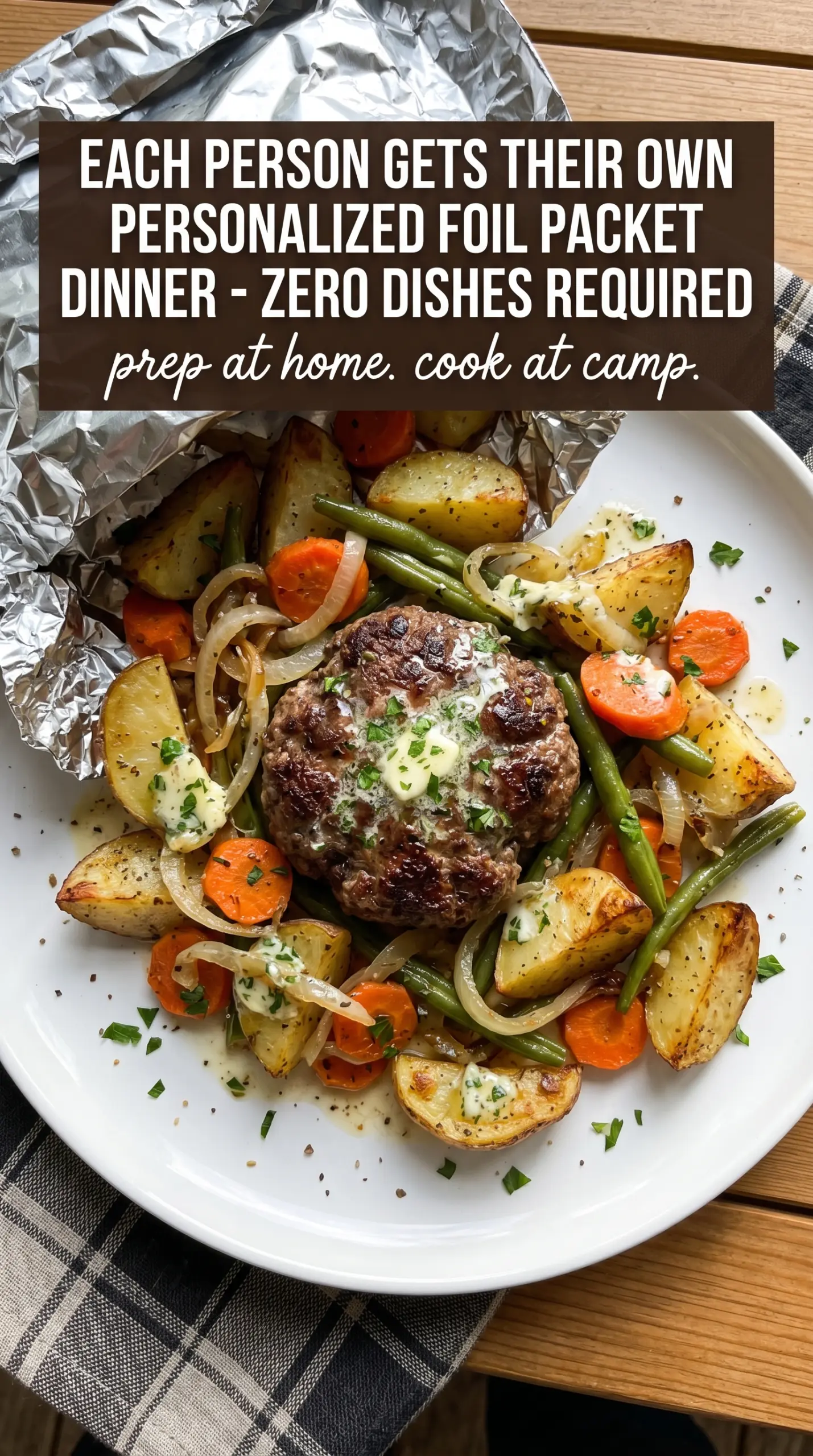
- Ground beef — Thin patties cook more evenly than loose crumbles in a foil packet. They stay juicy and give the vegetables something savory to cook under. Use an 80/20 blend if you can; leaner beef works, but it won’t baste the potatoes as well.
- Potatoes — These are the anchor of the dish, and slicing them evenly matters more than the variety. Cut them about 1/4-inch thick so they turn tender in the same window as the beef. If they’re thicker, they’ll lag behind and stay firm.
- Carrots and onion — Carrots bring sweetness and the onion melts into the drippings, which keeps the packet from tasting flat. Slice both thin so they soften fully over the campfire or grill. Chunky pieces need a much longer cook time and throw off the balance.
- Butter — This is what carries the seasoning and keeps the packet from tasting dry. It melts over the vegetables, pools under the beef, and makes the foil packet taste like more than just meat and starch. If you need a swap, a drizzle of olive oil works, but the flavor will be less rich.
- Heavy-duty aluminum foil — This is not the place for flimsy foil. The packets need to survive flipping, steam, and melted butter without tearing. If you only have regular foil, double it so the bottom sheet can take the heat.
Getting the Vegetables Tender Before the Beef Overcooks
Build the Base First
Lay the potatoes down first, then the carrots and onions, and keep the beef patty on top. That stacking order matters because the vegetables need direct contact with the hot foil and the melting butter. If you scatter everything together, the juices pool unevenly and the potatoes cook at a different pace from the meat.
Seal the Packets Without Squashing Them
Fold the foil over the food and crimp the edges tightly so steam stays inside. Leave a little space above the ingredients so the packet can puff as it cooks; if you press the foil down onto the food, the butter and moisture can’t circulate properly. A tight seal with a little air space gives you tender vegetables instead of steamed mush.
Cook Over Medium Heat and Flip Once
Set the packets over medium campfire heat or on a grill grate for 25 to 30 minutes, then flip them halfway through. The flip helps the potatoes and carrots cook evenly from both sides. If your fire is too hot, the foil will scorch before the vegetables soften, so keep the heat steady and move the packets to a cooler spot if the foil starts to darken too fast.
Open Carefully and Rest Briefly
When the beef is cooked through and the vegetables are tender, open the packets slowly because the steam comes out fast. Let them rest for 5 minutes before serving so the juices settle back into the potatoes and beef instead of rushing onto the plate. That short rest keeps the packet tasting moist instead of watery.
How to Change These Packets Without Breaking the Timing
Make It in the Oven
Bake the sealed packets at 400°F on a sheet pan for about 30 to 35 minutes. Oven heat is more even than a campfire, so the potatoes usually soften a little more predictably. Check one packet before serving; if the potatoes still have resistance, give them another 5 minutes.
Swap the Beef for Turkey
Ground turkey works if you want a lighter packet, but it needs the butter more than beef does. Use a little extra seasoning because turkey tastes flatter on its own, and don’t overcook it while waiting for the potatoes to finish. The result is leaner and less rich, but still satisfying.
Use a Different Vegetable Mix
Zucchini, bell peppers, and mushrooms can replace some of the carrots and onions, but they cook faster and release more liquid. Add them in thicker pieces so they don’t disappear into the packet, and keep at least part of the potato base so the meal still has enough substance. This version tastes lighter and cooks a little faster.
Storage and Reheating
- Refrigerator: Store leftovers in an airtight container for up to 3 days. The potatoes soften a bit more after chilling, but the flavor holds up well.
- Freezer: These freeze, but the potatoes turn softer after thawing. Wrap tightly and freeze for up to 2 months if you need a make-ahead option.
- Reheating: Reheat covered in a 350°F oven until hot, or warm gently in a skillet with a splash of water. The mistake people make is blasting them in the microwave, which makes the potatoes rubbery and the beef unevenly hot.
Answers to the Questions Worth Asking
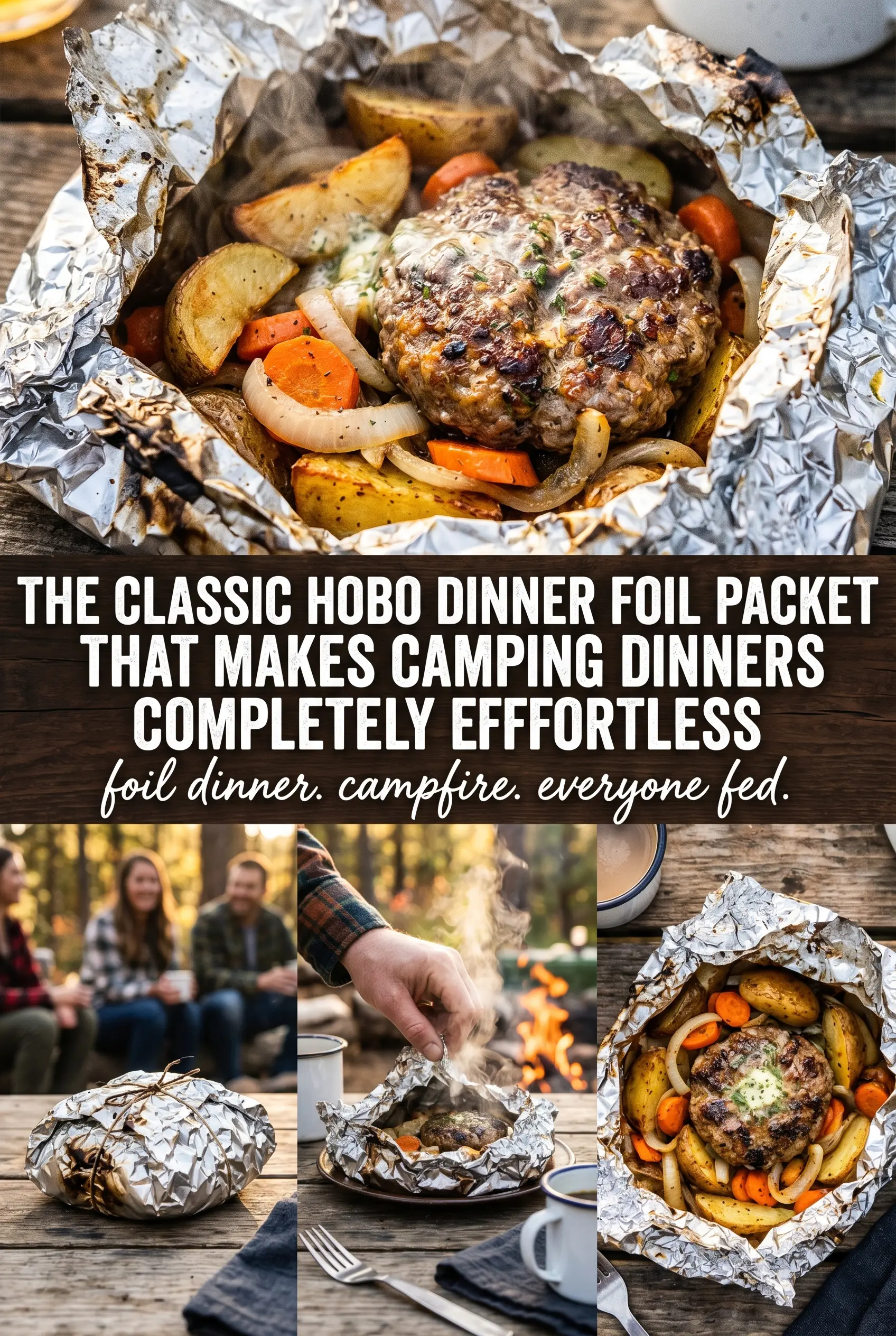
Hobo Dinner Foil Packets
Ingredients
Equipment
Method
- Divide the ground beef into 4 portions and shape each into a thin patty so it cooks quickly inside the sealed foil. Aim for even thickness for steady doneness.
- Place one sheet of heavy-duty aluminum foil on a flat surface and layer sliced potatoes, sliced carrots, and sliced onion in that order. Keep the layers centered so the packet seals cleanly.
- Set a beef patty on top of the vegetables in the middle of the foil sheet. Press gently so the patty contacts the veggie layer.
- Season each packet with salt and pepper to taste and sprinkle garlic powder over the top. Finish by topping with butter for moisture and flavor.
- Fold the foil into a sealed packet and crimp the edges tightly to prevent steam from escaping. Leave no openings along the seam.
- Place the packets on a campfire grate over medium heat for 25-30 minutes. Flip the packets halfway through so the foil heats evenly.
- Carefully open the packets (watch for steam) and check that the beef is cooked through and the vegetables are tender. If needed, re-seal and cook a few more minutes.
- Let the packets cool for 5 minutes before serving directly from the foil. The steam will calm down and the layers will settle.