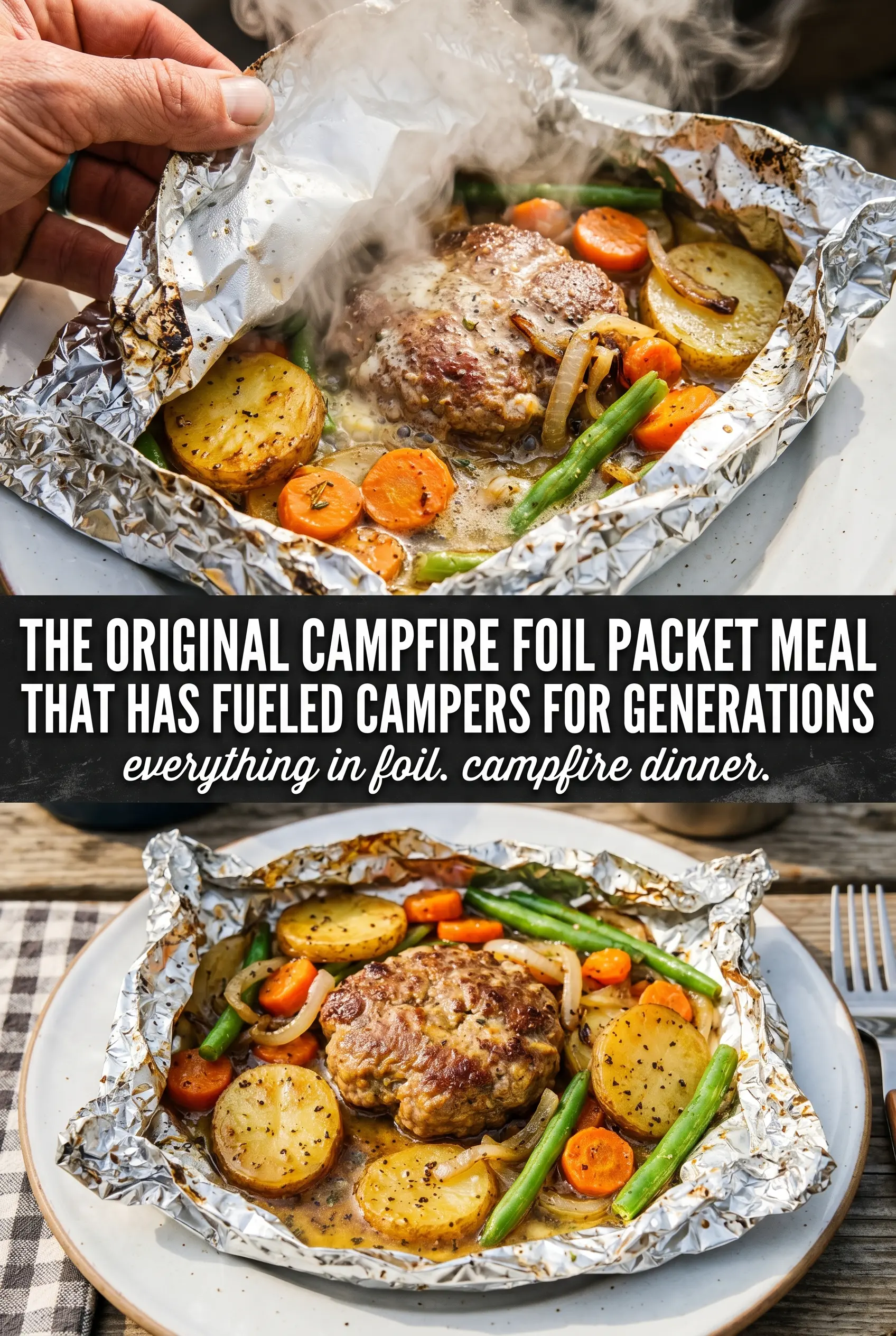
Hobo foil packets cook up with tender potatoes, soft carrots, and savory beef all in one sealed bundle, and that’s what makes them such a reliable campfire dinner. When the foil comes open, you get steam, buttery juices, and vegetables that have soaked up every bit of seasoning instead of drying out over the fire.
This version works because the vegetables go in first and the meat sits on top, so the drippings run downward and season everything underneath. Heavy-duty foil matters here, too; thin foil tears too easily when the packets are flipped or moved over hot coals. A little butter on top keeps the contents from tasting flat and gives the potatoes a richer finish than oil alone.
Below, I’ve included the details that keep the packets from turning mushy or burning on the bottom, plus a few smart swaps if you’re cooking at home, at a campsite, or feeding a crowd.
The potatoes were tender all the way through and the butter kept the vegetables from drying out. I opened one packet early and the steam was insane — even the ground beef stayed juicy.
Save these hobo foil packets for the kind of campfire dinner where the beef, potatoes, and vegetables all finish together in one steaming bundle.
Why the Vegetables Go Under the Meat in Hobo Foil Packets
The layering matters more than most people think. Potatoes and carrots need the longest time to soften, so they belong closest to the hottest part of the packet while the meat rides on top and bastes everything as it cooks. If you bury the meat under the vegetables, the juices stay trapped above and the potatoes finish late or dry out around the edges.
Cut size matters too. Thin potato slices and carrots that are close in thickness will cook at the same pace, which keeps the packet from giving you crisp potatoes beside overcooked carrots. If your vegetables are cut too thick, you’ll have to keep the packet on the heat long enough to overcook the meat. That’s the tradeoff in a foil dinner: even cuts are what keep the whole thing balanced.
- Potatoes — Slice them thin enough to soften in 25 to 30 minutes. Russets work, but Yukon Golds hold their shape better and stay creamy inside.
- Ground beef or stew meat — Ground beef gives you a faster, juicier packet. Stew meat works too, but it needs a little more patience and benefits from cutting into small, even pieces.
- Heavy-duty foil — This is the one place I wouldn’t cut corners. Regular foil tears easily when the packets are flipped, which leads to leaks and scorched vegetables.
- Butter — The butter melts into the vegetables and carries the seasoning. Oil will work in a pinch, but it won’t give you the same rich finish.
Building a Foil Packet That Steams, Not Burns
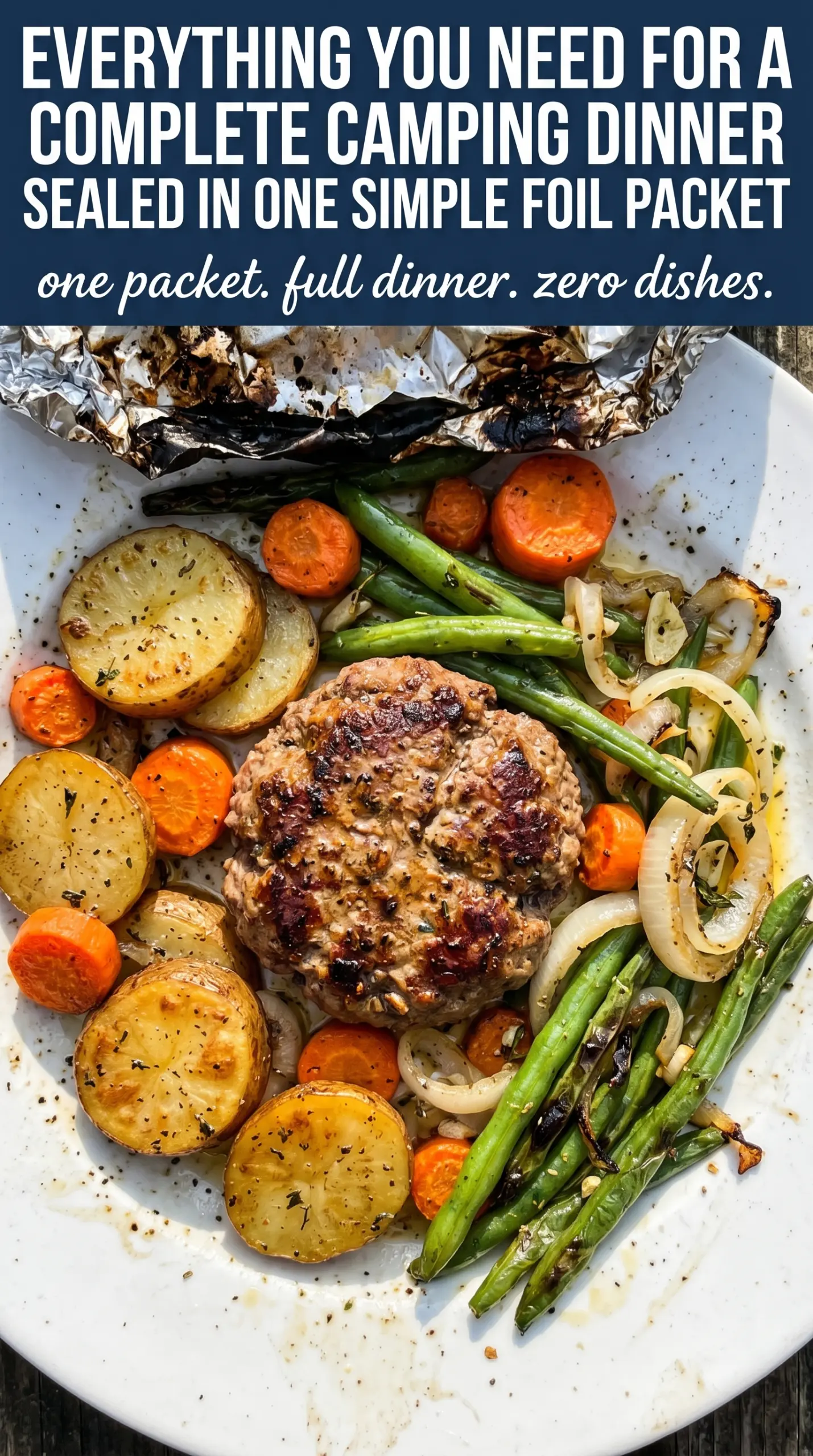
- 1 pound ground beef or stew meat — Use ground beef if you want the easiest, most reliable packet. If you use stew meat, keep the pieces small so they tenderize in the same window as the vegetables.
- Potatoes, carrots, onion, and green beans — These make the packet feel like a full meal, but the potatoes and carrots do the real structural work. Green beans go in last in the layering because they cook faster and help keep the packet from becoming all starch.
- Garlic powder — It spreads evenly across the packet better than fresh garlic in this setup and won’t burn as easily. Fresh garlic can go bitter when it sits against hot foil for 30 minutes.
- Butter — One tablespoon per packet is enough to coat the vegetables and keep the meat juicy. If you want a richer finish, use salted butter and reduce the added salt a little.
How to Seal the Packet So Nothing Leaks Into the Fire
Shaping the Meat First
If you’re using ground beef, form it into flat patties instead of loose crumbles. Patties hold together better in the foil and give you cleaner slices when you open the packet. With stew meat, spread the pieces out in a single layer so the heat can reach every side. A tight pile of meat steams unevenly and leaves some pieces tough while others are done.
Stacking for Even Cooking
Lay the potatoes down first, then carrots, onions, and green beans, with the meat on top. That order lets the juices drip through the vegetables as the packet cooks. Sprinkle the seasoning over the top before sealing so it gets pulled downward as the butter melts. If the vegetables are piled too high in the center, the packet won’t close tightly and steam will escape instead of staying inside.
Sealing and Cooking Over Heat
Fold the foil into a tight packet with enough room for steam to circulate, then crimp the edges well. Place it on a campfire grate over medium heat and flip it halfway through the cooking time so the bottom doesn’t scorch. If your fire runs hot, move the packets to the cooler edge of the grate. The goal is steady steam and gentle browning, not a charred bottom and raw potatoes.
Opening Without Losing the Best Part
Let the packets rest for 5 minutes before opening them. That short pause keeps the juices from rushing out the second you cut the foil. Open the packet away from your face because the steam comes out fast, and it’s hot enough to burn. The vegetables should be tender, the meat cooked through, and the buttered broth in the bottom of the packet should look glossy, not watery.
Three Ways to Adapt Hobo Foil Packets Without Losing What Makes Them Good
Make It Dairy-Free
Swap the butter for olive oil or dairy-free butter, but add a little extra salt because butter brings both fat and seasoning. You’ll lose some of the rich finish in the pan juices, but the packet still cooks up tender and savory.
Use Sausage Instead of Beef
Smoked sausage or sliced kielbasa gives you a saltier, more seasoned packet and cuts the cooking time a little because the meat is already cooked. It’s the easiest way to add a campfire-style smoky edge without changing the method.
Make It Vegetarian
Swap the meat for thick slices of zucchini, mushrooms, or plant-based sausage and add an extra pinch of salt plus a drizzle of oil. You’ll get a lighter packet with less built-in richness, so the butter or oil matters more for keeping the vegetables from tasting flat.
Storage and Reheating
- Refrigerator: Store leftovers in an airtight container for up to 3 days. The potatoes soften a little more after chilling, but the flavor holds up well.
- Freezer: Freeze only if you need to. The potatoes can turn grainy after thawing, so the texture won’t be as good as fresh.
- Reheating: Warm leftovers in a skillet over medium-low heat with a splash of water or butter, or reheat covered in the oven at 325°F until hot. The biggest mistake is blasting them in the microwave uncovered, which dries out the meat and makes the vegetables tough around the edges.
Questions I Get Asked About This Recipe
Hobo Foil Packets
Ingredients
Equipment
Method
- If using ground beef, form the meat into 4 patties; if using stew meat, divide it into 4 equal portions.
- Lay out 4 sheets of heavy-duty aluminum foil and layer potatoes, carrots, onions, and drained green beans on each sheet.
- Place the meat on top of the vegetables in each packet.
- Season each packet with salt, pepper, and garlic powder, then top with 1 tbsp butter.
- Fold the foil up and over the contents, sealing tightly so steam cannot escape.
- Place packets on the campfire grate over medium heat for 25-30 minutes, flipping halfway so both sides steam evenly.
- After 25-30 minutes, remove packets when the contents are piping hot and visibly steaming through the foil seams.
- Let packets rest for 5 minutes before carefully opening so the juices settle and reduce splatter.
- Serve the packets directly from the foil or transfer contents to plates, ensuring vegetables are tender.