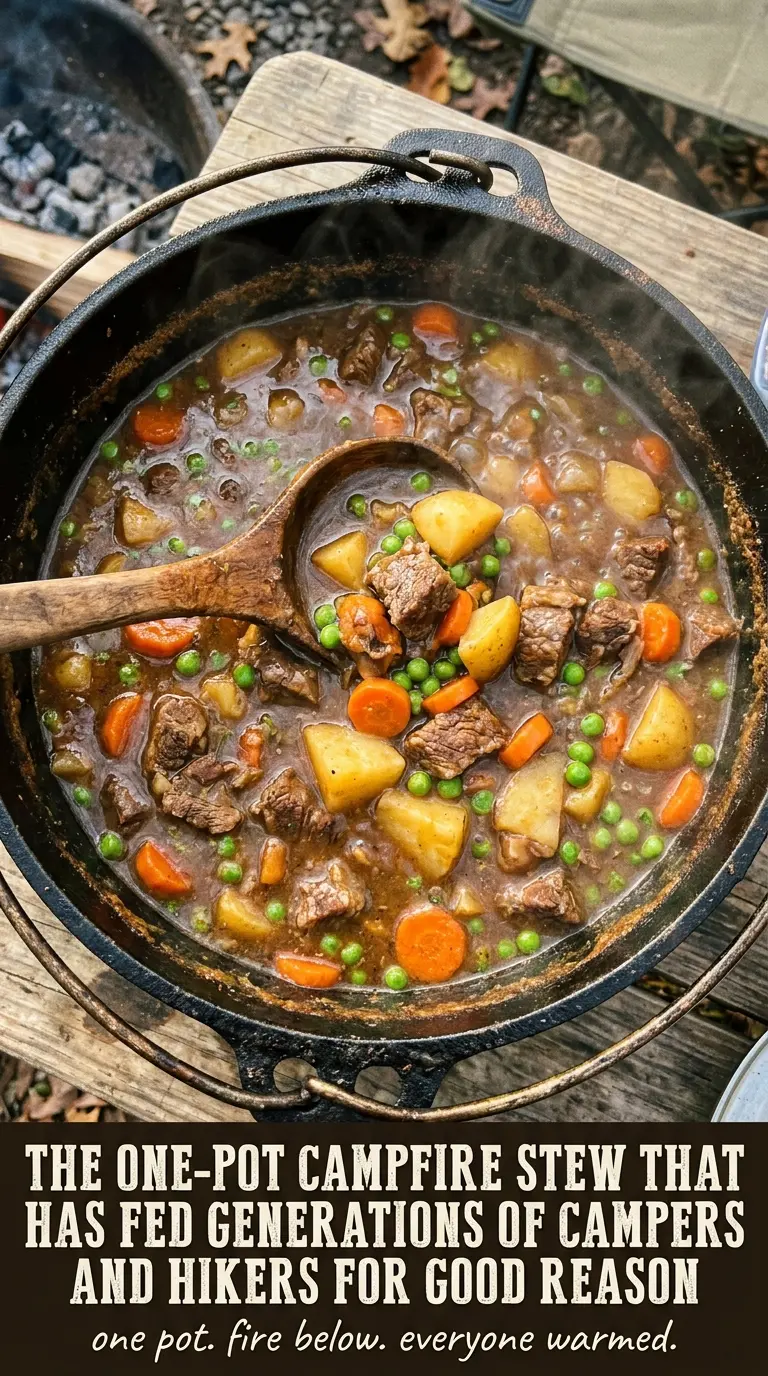
Hobo stew is the kind of campfire meal that earns its keep fast: smoky, hearty, and filling enough to feed a hungry crowd with one pot and a ladle. The broth turns rich from the meat and tomatoes, the potatoes soften without falling apart, and the vegetables keep enough shape to feel like dinner instead of mush.
What makes this version work is the order. Browning the meat first builds the base, and adding the potatoes and carrots before the softer vegetables keeps everything in sync by the time the stew is done. The broth stays brothy instead of turning muddy because the canned vegetables go in late enough to keep their color and texture.
Below you’ll find the small details that matter most, including how to keep the stew from going watery over a campfire and what to swap if you’re using ground beef instead of stew meat. Those little choices make the difference between a pot of mixed ingredients and a bowl that tastes like it cooked with intention.
I used ground beef and let it simmer the full 40 minutes, and the potatoes were tender without turning to paste. The broth had a nice smoky depth from the paprika and the vegetables still held their shape.
Save this hobo stew for your next campfire dinner or Dutch oven night when you want one pot of smoky meat, tender potatoes, and vegetables that hold their bite.
The Trick to Keeping Hobo Stew Thick Instead of Watery
Hobo stew can go thin fast if you dump everything in at once and walk away. The potatoes release starch as they cook, but the canned vegetables and broth can still leave you with a soupier result than you wanted if the heat is too high or the pot stays uncovered for too long. A steady simmer does the work here. A hard boil just shakes the pot apart and pushes moisture out without giving the vegetables time to soften evenly.
Browning the meat first matters more than people think. That browned fond on the bottom of the Dutch oven dissolves into the broth and gives the stew its deeper, meatier taste. If you’re using ground beef, cook it until the fat starts to render and the crumbles pick up color before adding the vegetables. If you’re using stew meat, let the pieces sear well on the first side before stirring, or you’ll miss the flavor that makes the whole pot taste finished.
- Stew meat or ground beef — Stew meat gives you bigger, more rustic bites and a stronger beefy base if you have the time for a longer simmer. Ground beef is the faster, easier route and still tastes great as long as you brown it well and drain off excess grease if the pot looks heavy.
- Potatoes — These are the structure of the stew. Cut them into even cubes so they cook at the same rate; small, uneven chunks turn some pieces mushy while others stay firm.
- Canned tomatoes and broth — The tomatoes add acidity and body, while the broth keeps the stew loose enough to simmer without sticking. Use beef broth if you want the deepest flavor. Water works in a pinch, but the stew tastes flatter unless you add extra seasoning.
- Frozen? No — canned vegetables — The corn and green beans bring convenience and texture. Canned is fine here because they go in near the beginning and only need to heat through. Fresh vegetables are fine too, but they may need a little extra time depending on size.
What Each Ingredient Is Actually Doing in Hobo Stew
- Meat (cooked through, not raw) — The meat should be cooked or partially cooked before the foil packet seals. Raw meat won’t cook through properly.
- Potatoes (cut small, uniform size) — Small pieces cook through quickly. Uniform size means everything cooks at the same rate.
- Vegetables (sturdy ones that hold up to cooking) — Carrots, onions, and potatoes last longer than delicate vegetables like spinach.
- Liquid (broth or sauce, not excess water) — The stew needs some liquid to braise in, but too much makes it watery. Use about 1 cup per packet.
- Thickener (cornstarch or flour, if needed) — If the stew looks too thin, a light dusting of cornstarch mixed in thickens it as it cooks.
- Seasoning (bold, distributed throughout) — The stew should taste well-seasoned. Distribute seasonings evenly between layers so every bite is flavored.
- Foil packet (sealed well so steam doesn’t escape) — The seal traps the steam that cooks everything. A loose seal lets steam out and things don’t cook through.
- Fire temperature (medium coals, not high heat) — Steady, medium heat cooks the stew evenly. High heat can burn the bottom before the top cooks.
Building the Pot in the Right Order
Brown the Meat First
Set the Dutch oven over a steady bed of campfire coals or medium heat and let the meat sear before you add anything else. You want browned bits on the bottom, not gray steam. If the pot is crowded, work in batches so the meat can color instead of simmering in its own liquid. That color is where the depth starts.
Stack the Hearty Vegetables Next
Add the potatoes, carrots, and onion after the meat is browned, then pour in the broth and tomatoes. These are the vegetables that need the longest time, and they do best when they sit closer to the heat for the full simmer. If your potato cubes are too large, the outside will soften before the middle catches up, so keep them bite-size and even.
Season and Simmer Covered
Stir in the garlic powder, paprika, salt, and pepper, then bring the pot to a boil before lowering it to a gentle simmer. Cover the Dutch oven partway so the stew cooks through without losing too much liquid. If the fire is too hot and the lid rattles aggressively, pull the pot off the hottest coals. A quiet simmer gives you tender vegetables and a broth that stays balanced.
Add the Canned Vegetables Late Enough to Hold Shape
Stir in the corn and green beans early enough for them to heat through, but not so early that they turn dull and soft. They only need the last part of the simmer. If you add them at the start, they can break down and cloud the broth. Their job is to stay distinct in the bowl.
Use Ground Beef for a Faster Campfire Pot
Ground beef cuts the cooking time and makes this a good one-pot dinner when you don’t want to babysit the fire. Brown it until the edges are deeply colored, then continue with the recipe as written. You lose a little chew and rustic texture compared with stew meat, but you gain speed and easier serving.
Make It Dairy-Free Without Changing the Dish
This stew is naturally dairy-free as written, which makes it an easy option for a mixed crowd. Keep the broth beef-based and skip any butter at the finish. The result stays clean, brothy, and hearty without sacrificing texture.
Swap In Fresh Vegetables When You Have Them
Fresh green beans or corn work fine, but they may need a little more time than canned vegetables to soften. Cut them into even pieces and check the potatoes first, since they should still be the timing guide for the pot. Fresh vegetables give a cleaner, brighter finish, while canned vegetables deliver a more classic pantry-style stew.
Stretch It for a Bigger Crowd
This stew scales up well as long as the pot isn’t overloaded past the point where it can simmer properly. Add a splash more broth if the vegetables start to sit above the liquid, and give it a few extra minutes for the center of the pot to come back to temperature. The flavor stays sturdy, and the texture holds up better than many heavier stews.
Storage and Reheating
- Refrigerator: Store for up to 4 days. The potatoes soften a little more as it sits, but the flavor gets even better.
- Freezer: It freezes well for up to 3 months, though the potatoes may turn a bit softer after thawing. Cool it fully before freezing in airtight containers.
- Reheating: Warm gently on the stovetop over medium-low heat, stirring often and adding a splash of broth if needed. Don’t boil it hard or the potatoes can break down and the broth can turn greasy.
Questions I Get Asked About This Recipe
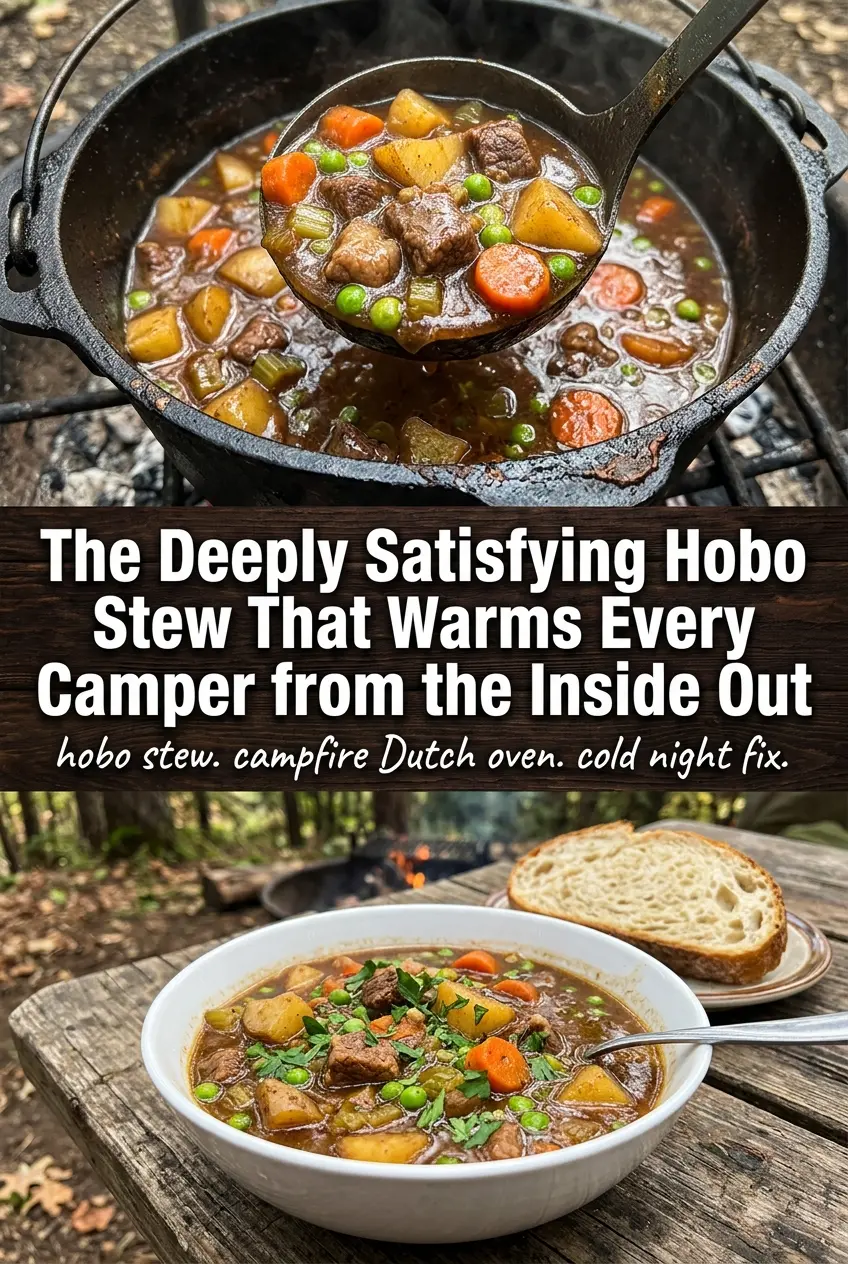
Hobo Stew
Ingredients
Equipment
Method
- Heat a Dutch oven over campfire and brown the stew meat or ground beef until browned, stirring occasionally. Keep the pot bubbling lightly so the meat develops color.
- Add potatoes, carrots, onion, corn, green beans, diced tomatoes, and beef broth to the Dutch oven and stir to combine. Scrape up any browned bits so the liquid starts off flavorful.
- Season the stew with garlic powder, paprika, salt and pepper, then stir again until evenly distributed. Increase heat until the stew reaches a rolling boil.
- Reduce heat to maintain a gentle simmer, cover the Dutch oven, and cook 35-40 minutes until vegetables are tender. Look for steady bubbling around the edges and soft, easily pierced potatoes.
- Ladle the hobo stew into bowls while hot. Serve with the bubbling pot held close to the campfire so it stays warm at the table.