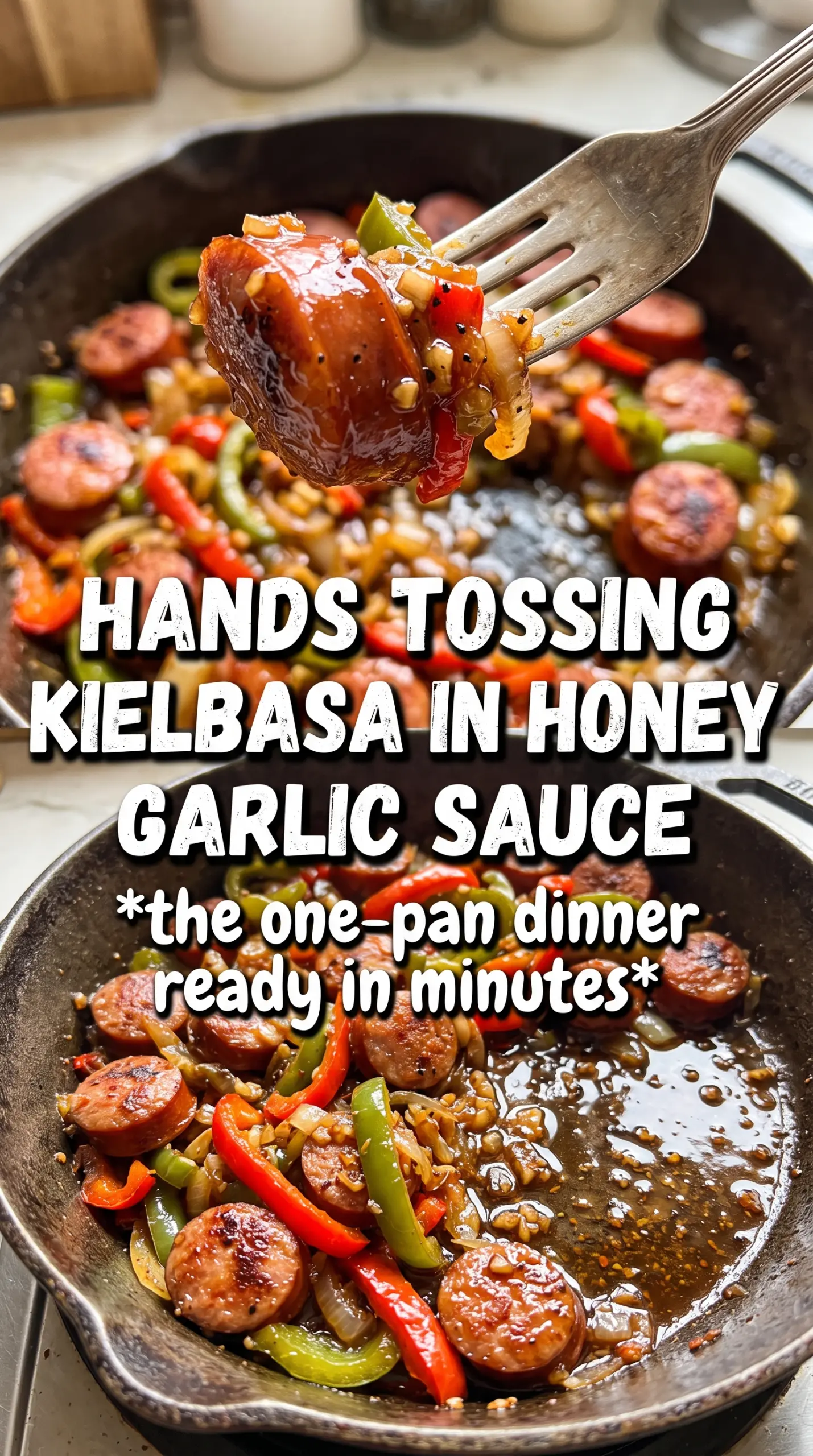
Honey garlic kielbasa with veggies lands on the table with the kind of sticky-edged, savory-sweet finish that keeps people picking at the pan before dinner is even served. The sausage gets bronzed and a little crisp at the edges, the broccoli catches caramelized bits of sauce, and the peppers and zucchini soften just enough to soak up all that garlicky glaze without turning limp.
What makes this version work is the balance in the sauce and the way everything roasts together on one sheet pan. Honey gives you shine and caramelization, Dijon adds enough sharpness to keep the sweetness in check, and soy sauce brings the salty backbone that makes kielbasa taste even more like itself. Cutting the vegetables into sturdy, similar-size pieces matters here. If the zucchini is too thin, it collapses before the sausage has a chance to brown.
Below, you’ll find the small details that keep the vegetables from steaming and the glaze from burning, plus a few easy swaps if you want to change up the vegetables or make the dish gluten-free.
The sauce turned sticky and caramelized in all the right spots, and the kielbasa got those browned edges without drying out. I added the sesame seeds at the end like you said, and it tasted like takeout from a sheet pan.
Save this honey garlic kielbasa with veggies for a one-pan dinner with caramelized sausage and glossy roasted vegetables.
The Trick to Keeping the Veggies Roasty Instead of Soft
The biggest mistake with a sheet pan dinner like this is crowding the pan. When the sausage and vegetables sit on top of each other, they steam, and that honey garlic glaze never gets the chance to cling and caramelize. A single layer gives the broccoli and peppers enough direct heat to brown at the edges while the kielbasa renders a little fat and picks up color.
The other thing that matters is the size of the cut. Broccoli florets should be bite-sized but not tiny, and the zucchini should be cut thick enough to hold up through the full roast. Red onion wedges add sweetness as they soften, but if they’re sliced too thin, they disappear before the pan is done.
- Kielbasa — Pre-cooked kielbasa is the right choice here because it browns fast and gives you that smoky, savory base without needing extra time. Slice it into rounds so the sauce can coat every edge.
- Broccoli florets — Broccoli holds its shape better than softer vegetables and gives the pan some crisp, roasty texture. If you use frozen broccoli, thaw and dry it first or the pan will end up watery.
- Bell peppers — Red and green peppers bring sweetness, color, and enough structure to roast well beside the sausage. Any color works, but thicker-fleshed peppers hold up best.
- Zucchini — Zucchini adds softness, but it needs to be cut into thicker half-moons so it doesn’t collapse. If yours are extra large and seedy, remove the center before slicing.
- Dijon mustard — Dijon keeps the honey from tasting flat. You won’t taste mustard in a loud way, but you will notice the sauce has more backbone.
What Each Ingredient Is Actually Doing in This Recipe
- Primary ingredient (the star) — Quality matters most. Choose the best you can find.
- Cooking medium (oil, butter, or broth) — This carries flavors and prevents dryness.
- Seasonings (salt, pepper, spices, herbs) — Layer flavors so nothing overpowers. Build depth gradually.
- Aromatics (garlic, onion, herbs) — Cook with fat to bloom flavors. Become the foundation.
- Supporting ingredients — Complement the main ingredient without overpowering it.
- Sauce or liquid (if applicable) — Brings flavors together. Balance richness with acid.
- Acid (lemon, vinegar, wine, or other) — Brightens and prevents flat-tasting results.
- Final finish (garnish, glaze, or sauce) — Prevents one-dimensional taste and adds visual appeal.
How to Roast the Sauce So It Clings Instead of Burning
Whisking the glaze first
Mix the honey, garlic, soy sauce, Dijon, olive oil, and red pepper flakes before anything hits the pan. That keeps the garlic distributed and prevents one spot from getting a blast of raw garlic while another gets no seasoning at all. The sauce should look loose and glossy, not thick like a glaze yet. It tightens in the oven as the honey heats and the liquid reduces.
Tossing everything evenly
Coat the kielbasa and vegetables thoroughly so the broccoli and peppers carry a light sheen. If the pan looks dry in places, those spots will roast pale and bland. Use a large bowl if you have one; it’s much easier to get an even coat than trying to mix everything directly on the sheet pan. Don’t dump the sauce only over the top and hope it spreads on its own.
Roasting until the edges darken
Spread the mixture out and roast at 400F until the kielbasa is golden and the vegetables have browned spots. Toss halfway through so the honey doesn’t pool and scorch in one corner of the pan. If your oven runs hot, start checking at 18 minutes; the line between caramelized and burnt is short when honey is involved. The finished pan should smell sweet, garlicky, and a little smoky.
Make It Spicier
Add an extra 1/4 teaspoon red pepper flakes or a drizzle of hot honey at the end. That keeps the heat bright instead of muddy, and it plays well with the smoky kielbasa.
Make It Gluten-Free
Use a gluten-free kielbasa and tamari instead of regular soy sauce. The flavor stays savory and balanced, but you avoid the wheat that’s often hiding in standard soy sauce and some sausage brands.
Swap the Vegetables by Season
Swap in broccoli, cauliflower, carrots, or green beans if that’s what you have. Keep the pieces on the sturdier side so they roast in the same window as the kielbasa; soft vegetables like mushrooms or tomatoes will release more liquid and loosen the glaze.
Storage and Reheating
- Refrigerator: Store in an airtight container for up to 4 days. The vegetables soften a bit after chilling, but the flavor gets even more concentrated.
- Freezer: It freezes well, though the zucchini will soften more after thawing. Freeze in portions for up to 2 months and thaw overnight in the fridge.
- Reheating: Reheat on a sheet pan at 375F until hot, or use a skillet over medium heat. The common mistake is microwaving it too long, which turns the vegetables soggy and makes the glaze separate.
Questions I Get Asked About This Recipe
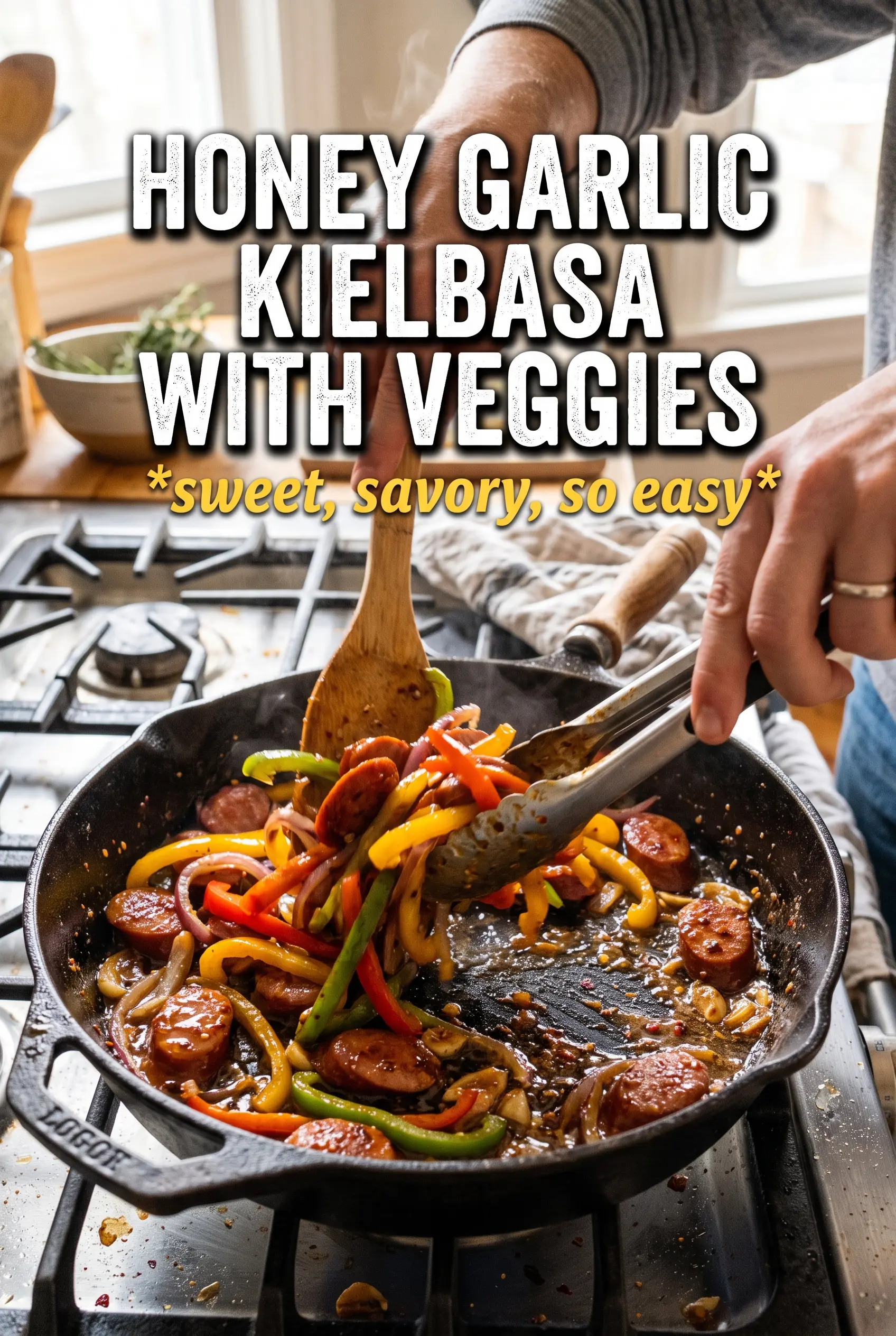
Honey Garlic Kielbasa With Veggies
Ingredients
Equipment
Method
- Preheat oven to 400F and line a large baking sheet.
- Whisk honey, garlic, soy sauce, Dijon mustard, olive oil, and red pepper flakes until smooth.
- Toss kielbasa, broccoli florets, red bell pepper, green bell pepper, zucchini, and red onion with the honey garlic sauce until evenly coated.
- Spread everything on the baking sheet in a single layer.
- Roast 20-25 minutes at 400F, tossing halfway, until vegetables are caramelized and the kielbasa is golden.
- Scatter sesame seeds and green onions over the hot sheet-pan mixture.
- Serve immediately while the glaze looks glossy.