Dense, buttery pound cake gets a bright lift here from fresh key lime juice and zest, and that shift changes everything. The crumb stays tight and velvety, but the citrus cuts through the richness so each slice tastes clean instead of heavy. A good key lime pound cake should feel substantial on the fork and still leave a little sparkle on the finish.
What makes this version work is the balance of fat, sugar, and acid. Butter and sugar are beaten until pale and fluffy, which gives the cake its lift before the flour ever goes in, while sour cream keeps the crumb tender without making it loose. The key lime juice and zest go in at the end so the citrus stays bright and doesn’t get buried by the butter.
Below, you’ll find the small details that matter most here: how to keep a pound cake from turning dry, why the glaze should wait for a fully cooled cake, and the one pan-prep step that keeps the whole Bundt from sticking.
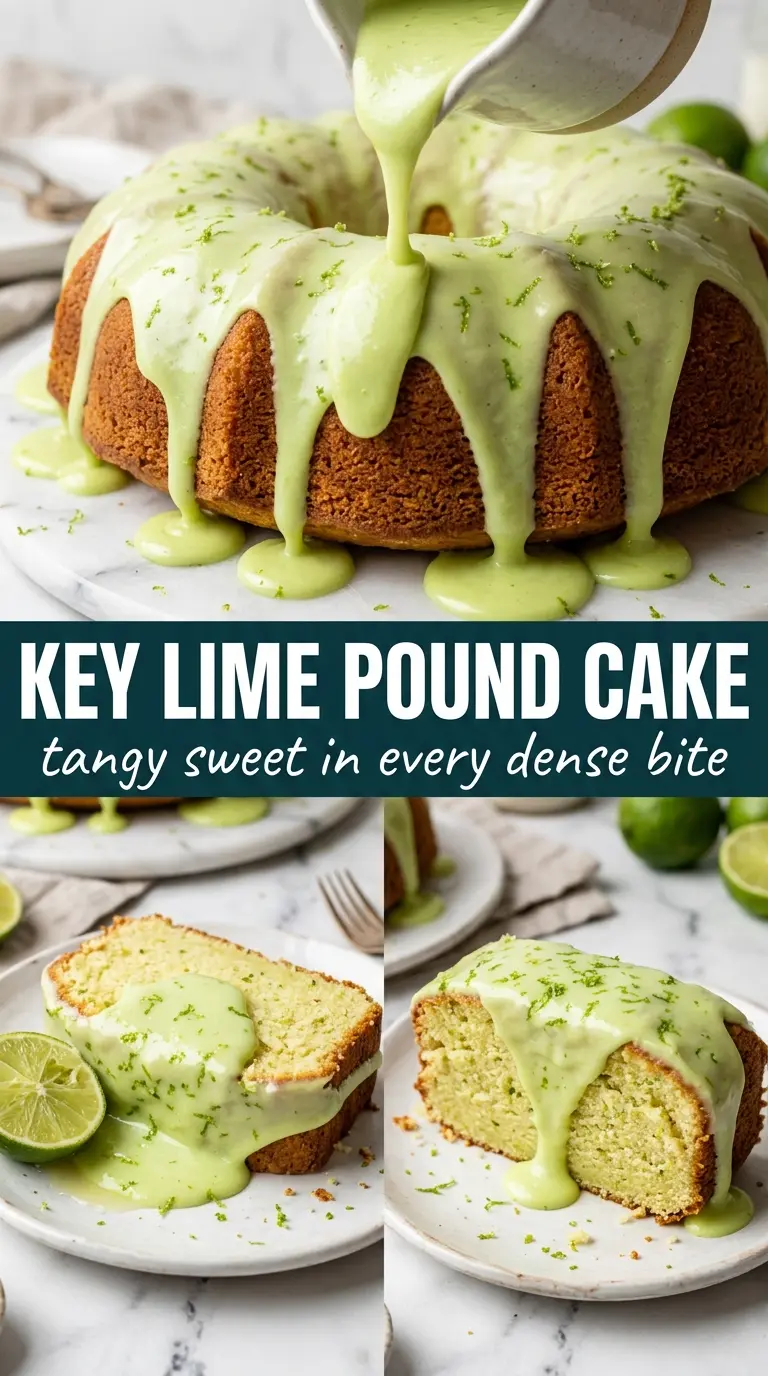
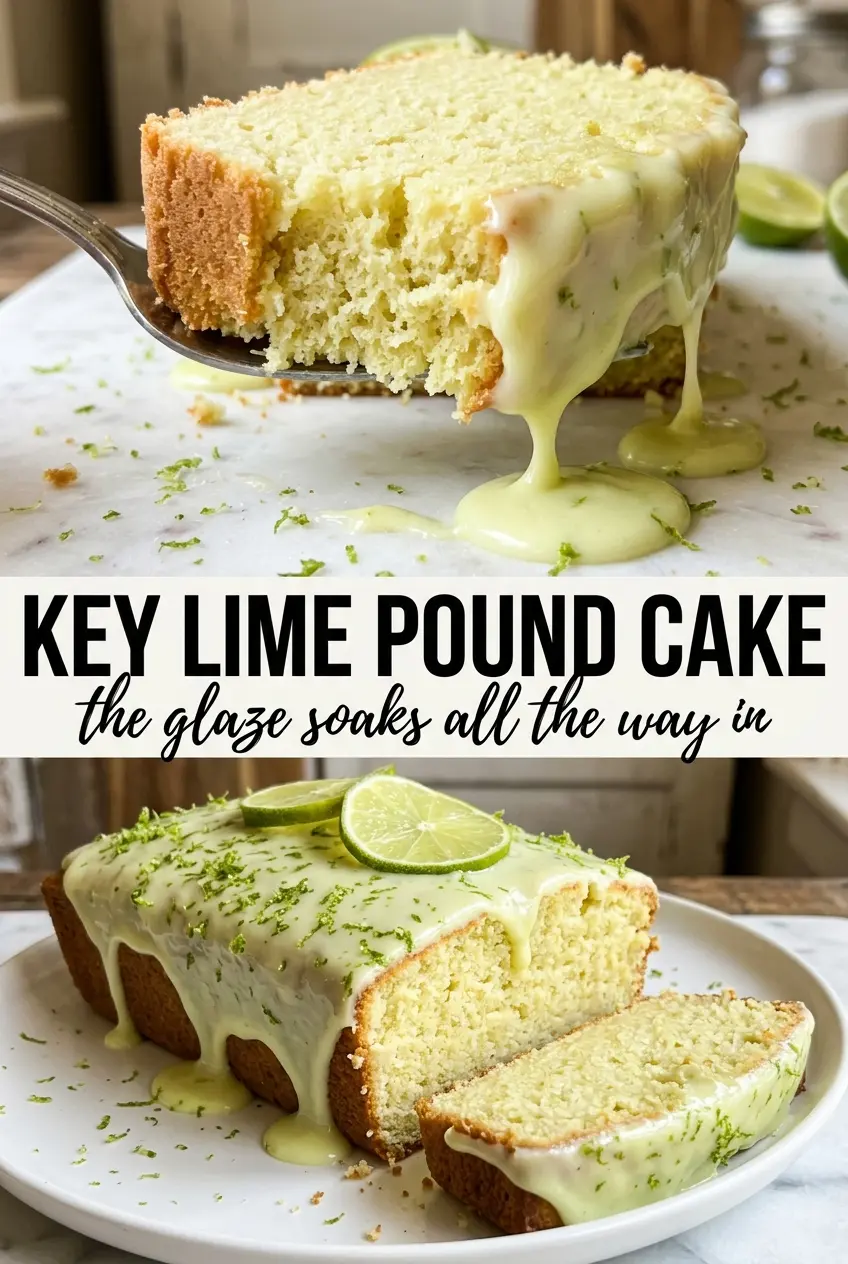
The crumb was tight and buttery, and the key lime glaze soaked into the ridges instead of sliding off. I baked it for 66 minutes and it came out perfectly moist with that bright lime flavor in every bite.
Save this key lime pound cake for the days when you want a dense Bundt cake with a bright citrus crumb and tangy glaze that settles into every slice.
The Step That Keeps a Bundt Pound Cake from Grabbing the Pan
Most Bundt failures happen before the batter even goes in. Pound cake is heavy, and this batter gets extra thick from the butter, eggs, and sour cream, so every ridge of the pan needs a thorough coating of grease and flour. If you miss a corner, the cake will tear there when you turn it out, no matter how well it baked.
The other thing that helps is patience with the cooling time. Letting the cake sit in the pan for 15 minutes gives the structure time to set, but waiting too long can make the sugar in the crust stick. That short window is the sweet spot: firm enough to release, still warm enough to come out cleanly.
What the Butter, Sour Cream, and Key Limes Are Each Doing Here
- Butter — Use real unsalted butter and let it soften all the way. It traps air when beaten with the sugar, which is where the cake’s lift comes from. Margarine won’t give the same flavor or structure.
- Sour cream — This is what keeps the crumb plush and moist without making the cake loose or gummy. Full-fat sour cream works best. Plain Greek yogurt can stand in, but the cake will taste a little tangier and bake up slightly less rich.
- Fresh key lime juice — Bottled juice won’t have the same fragrance or clean tartness. If you can’t find key limes, regular lime juice works, but use the zest generously so the citrus flavor still tastes lively.
- Key lime zest — The zest carries the scent that makes this cake smell like lime before the first slice is even cut. Grate only the green part; the white pith turns bitter fast.
- Eggs — Room-temperature eggs blend into the batter more smoothly, which helps the emulsion hold. Cold eggs can make the batter look curdled for a minute, and that usually leads to a heavier cake.
The Mixing Order That Keeps the Crumb Tight and Tender
Build the Butter Base
Beat the butter and sugar until the mixture looks pale, fluffy, and a little increased in volume, about 5 minutes. That step matters because pound cake depends on the air you build here; if you stop too early, the cake bakes up dense in a heavy, flat way instead of a fine, even crumb. Add the eggs one at a time and let each one disappear before the next goes in so the batter stays smooth instead of looking slick and broken.
Alternate the Dry Ingredients and Sour Cream
Mix the flour, baking soda, and salt together first, then add the dry ingredients and sour cream in alternating additions. This keeps the batter from tightening up too fast, which is how you end up with a rough crumb. Stop mixing as soon as the flour streaks disappear; overworking the batter after the flour goes in builds toughness instead of structure.
Finish with Lime and Vanilla
Stir in the key lime juice, zest, and vanilla at the end, and mix only until everything is evenly blended. The batter may look a little looser at this point, and that’s normal. The key lime doesn’t need aggressive mixing — it needs to be distributed evenly so every slice tastes bright and balanced.
Bake Until the Center Springs Back
Pour the batter into the prepared Bundt pan and bake until a toothpick comes out clean and the top feels set, usually 60 to 70 minutes. If the top starts browning too fast, the oven is running hot, and a loose sheet of foil over the pan can keep it from overcoloring before the center is done. Let it cool in the pan for 15 minutes, then turn it out while it still has a little warmth left.
Glaze the Fully Cooled Cake
Whisk the powdered sugar, key lime juice, and zest until smooth and pourable, then drizzle it over the completely cooled cake. If you glaze a warm cake, the icing melts into a thin wash instead of sitting in glossy ribbons. A cooled cake holds the glaze in the ridges, which gives you those nice little pockets of tang in every slice.
Three Ways to Change the Flavor Without Losing the Cake
Make it gluten-free with a 1:1 baking blend
A good cup-for-cup gluten-free flour blend can replace the all-purpose flour here without changing the method. The cake will still slice cleanly, though the crumb may be a touch softer and less springy. Use a blend that includes xanthan gum so the Bundt holds together.
Swap in regular lime when key limes are hard to find
Regular lime juice works fine, but the flavor lands a little sharper and less floral. Keep the zest in the batter and glaze, since that’s what restores the citrus perfume key limes are known for. The cake will still taste bright and fresh, just less tropical.
Turn it into a lemon-lime pound cake
Swap half of the key lime juice and zest for lemon if you want a rounder citrus flavor. Lemon softens the sharp edge of lime and makes the cake taste a little more familiar, but you lose some of that distinct key lime tang. The texture stays the same.
Storage and Reheating
- Refrigerator: Store covered for up to 5 days. The glaze stays set, and the crumb actually tightens a bit after the first day, which makes neat slices easier.
- Freezer: Freeze the unglazed cake tightly wrapped for up to 2 months. Thaw it at room temperature before glazing so the icing doesn’t slide off a cold surface.
- Reheating: Warm individual slices briefly at room temperature or for a few seconds in the microwave. Don’t heat it long enough to melt the glaze completely, or the top will turn sticky and thin.
Questions I Get Asked About This Recipe
Key Lime Pound Cake
Ingredients
Equipment
Method
- Preheat the oven to 325°F, then grease and flour a Bundt pan so the cake releases cleanly. Keep the pan ready for pouring.
- Beat the softened butter and granulated sugar until very light and fluffy, about 5 minutes. Add the eggs one at a time, mixing until each egg is fully incorporated.
- Whisk together the all-purpose flour, baking soda, and salt. Add the flour mixture and sour cream alternately in 3 additions, stirring just until combined.
- Stir in the fresh key lime juice, key lime zest, and vanilla extract until the batter looks smooth and evenly speckled with zest. Pour the batter into the prepared Bundt pan.
- Bake at 325°F for 60-70 minutes, until a toothpick inserted in the center comes out clean. During baking, the cake should be deep golden and spring back lightly.
- Cool the cake in the pan for 15 minutes. Invert onto a rack or plate so the Bundt shape holds.
- Whisk powdered sugar, fresh key lime juice, and key lime zest until smooth and pourable. The glaze should have no lumps.
- Drizzle the glaze over the completely cooled cake so it pools into crevices and drips down the sides. Finish with a final light drizzle across the top.
- Let the glaze set before slicing. Wait until the surface looks slightly firm rather than wet.