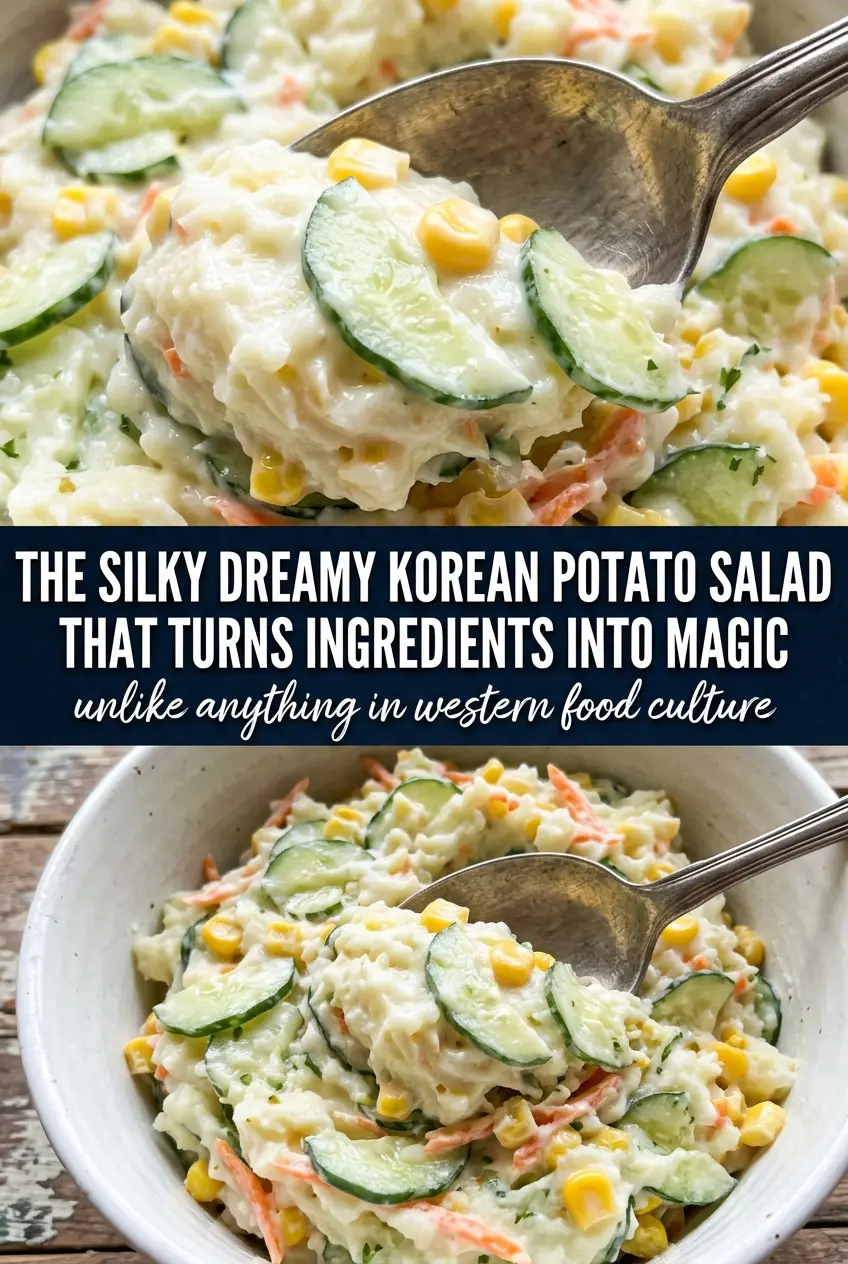
Creamy Korean potato salad lands somewhere between picnic salad and comfort food, with soft mashed potatoes, tiny pops of corn, crisp cucumber, and just enough sweet-tangy dressing to keep every bite moving. The texture is what makes people go back for another spoonful: not gluey, not dry, and not fully smooth either. It should hold its shape on the plate while still feeling light and plush on the tongue.
This version works because the potatoes are only roughly mashed, which gives the dressing something to cling to without turning the bowl heavy. The cucumber gets seeded so it doesn’t water everything down, and the carrots are blanched just long enough to soften the edge without losing their color. The sugar and rice vinegar are there for balance, not to make it taste like dessert.
Below, you’ll find the one texture trick that keeps gamja salad from going pasty, plus a few smart swaps if you need to work around what’s in the fridge.
The potatoes stayed fluffy instead of turning into glue, and the little hit of sweetness made the eggs and cucumber taste fresh. My husband kept sneaking spoonfuls straight from the fridge.
Creamy Korean potato salad with eggs and crisp vegetables is the kind of side dish that disappears fast at the table.
The Texture Trap That Ruins Gamja Salad
The biggest mistake with Korean potato salad is overworking the potatoes. If you mash them all the way smooth, the salad turns heavy and pasty once the dressing goes in. Rough mashing leaves some small chunks and some creamy potato base, which gives the finished salad that soft, scoopable texture you want.
The other place this goes sideways is moisture. Cucumber and potatoes both hold water, and if either goes into the bowl wet, the dressing loosens as it chills. Seed the cucumber, drain the potatoes well, and let the blanched carrots cool off before mixing so the salad stays thick after refrigeration.
- Russet potatoes — Their starch makes the salad creamy without needing extra thickeners. Waxy potatoes stay too firm here and don’t mash into the same plush base.
- Rice vinegar — This gives the dressing a clean, gentle tang that fits the salad’s sweet-salty balance. Apple cider vinegar works in a pinch, but it tastes sharper.
- Mayonnaise — Use a mayo you actually like eating straight from the jar. This is the backbone of the dressing, so quality matters more than it does in a heavily seasoned dish.
- Cucumber — Seed it before dicing, or the salad can turn watery after chilling. If you need a swap, use chopped celery for crunch, though you’ll lose some of the clean fresh bite.
What Each Ingredient Is Actually Doing in Gamja Salad

- Potatoes (waxy, cut into matchsticks) — Matchstick pieces cook quickly and stay firm. Chunky pieces become mushy before the outside browns.
- Apple (matchstick cut, same size as potatoes) — The apple provides crispness and brightness. Cutting into matchsticks ensures even texture throughout.
- Mayonnaise (moderate amount) — Too much mayo makes the salad heavy. Just enough creates creaminess without overwhelming the apple crispness.
- Sugar (small amount, not much) — A touch of sugar balances the acid. Too much makes the salad taste like dessert.
- Vinegar or lemon juice (the brightness) — The acid is essential to prevent the salad from tasting flat and heavy. It also prevents the apple from browning.
- Salt (seasoning throughout) — The salad should taste balanced. Season each layer so flavor is even.
- Proper assembly order (dress right before serving) — Dress the salad just before eating. Letting it sit makes the apple wilt and the potatoes absorb too much dressing.
- Texture contrast (keep it crisp) — The magic of gamja salad is the contrast between creamy mayo and crisp apples and potatoes. Serve immediately to keep it that way.
Building the Salad So It Stays Creamy, Not Soupy
Cooking the Potatoes Until They Collapse Easily
Boil the potatoes until a knife slips through with no resistance at all. Under-cooked potatoes won’t mash into the soft, cloudlike base this salad needs. Drain them well right away so the residual steam doesn’t keep adding moisture to the bowl. Let them sit just long enough to stop steaming hard, then mash while they’re still warm.
Preparing the Vegetables for a Clean Bite
Blanch the carrots for only a couple of minutes so they soften slightly but keep their color and shape. Seed the cucumber before dicing it small; that one step keeps the salad from weeping in the fridge. Corn and chopped eggs go in as-is, but the eggs should be chopped after they’re completely cooled so the whites stay neat instead of ragged.
Mixing the Dressing Without Crushing the Texture
Stir the mayonnaise, sugar, rice vinegar, salt, and pepper together before folding it into the potatoes. That keeps the seasoning even and prevents streaks of plain mayo in the finished salad. Fold gently with a spatula instead of stirring hard. If you beat it aggressively, the potatoes break down too much and the whole bowl goes dense.
Chilling for the Final Korean Salad Texture
Refrigerate the salad for at least two hours before serving. This resting time lets the dressing settle into the potatoes and softens the sharpness of the vinegar. The salad should taste cooler, creamier, and more unified after chilling, not looser. If it seems a little stiff after resting, a small spoonful of mayo stirred in right before serving brings it back.
How to Adapt Korean Potato Salad Without Losing What Makes It Good
Dairy-Free and Gluten-Free as Written
This recipe already works for both dairy-free and gluten-free eaters as written, as long as your mayonnaise and vinegar are certified to fit your needs. The only thing worth checking is the mayo label, since some brands add unexpected ingredients. The texture and flavor stay the same, so no special substitutions are needed.
Less Sweet, More Tangy
Cut the sugar back to 1 tablespoon if you want a sharper, less sweet salad. You’ll get a more savory result that still feels distinctly Korean potato salad, just with a cleaner finish. Don’t remove the sugar completely unless you’re adjusting the vinegar too, or the dressing can taste flat.
Add Ham or Spam for a Heartier Bowl
Dice cooked ham or browned Spam and fold it in after the vegetables. That adds salt and turns the salad into more of a lunch dish, but it also makes the bowl heavier, so keep the cubes small. If you do this, hold back a pinch of salt in the dressing until you taste it at the end.
Storage and Reheating
- Refrigerator: Store in an airtight container for up to 3 days. The potatoes will tighten a little, but the flavor actually settles in nicely after a few hours.
- Freezer: Don’t freeze it. The potatoes turn grainy and the cucumber releases water after thawing, which ruins the creamy texture.
- Reheating: Serve this cold or slightly cool. If it has stiffened in the fridge, let it sit on the counter for 10 to 15 minutes and stir in a spoonful of mayo if needed. Heating it changes the texture in the wrong way.
Answers to the Questions Worth Asking
Korean Potato Salad
Ingredients
Equipment
Method
- Bring a pot of water to a boil and add the peeled, cubed russet potatoes. Boil until very tender, then drain.
- Mash the drained potatoes roughly while warm, stopping before they become completely smooth. Keep some chunks so the salad stays thick and hearty.
- Add the diced carrots to boiling water and blanch for 2 minutes. Drain right away so they stay bright and crisp-tender.
- In a large bowl, combine mashed potatoes, blanched carrots, diced cucumber, corn kernels, and chopped hard-boiled eggs. Fold gently until evenly distributed.
- Stir together mayonnaise, sugar, rice vinegar, salt, and pepper until smooth. Taste and adjust seasoning if needed.
- Pour the dressing over the potato mixture and fold to coat thoroughly. Stop when the salad looks creamy with visible vegetables and egg.
- Cover and refrigerate for at least 2 hours before serving. The texture will firm up and the flavors will blend as it chills.