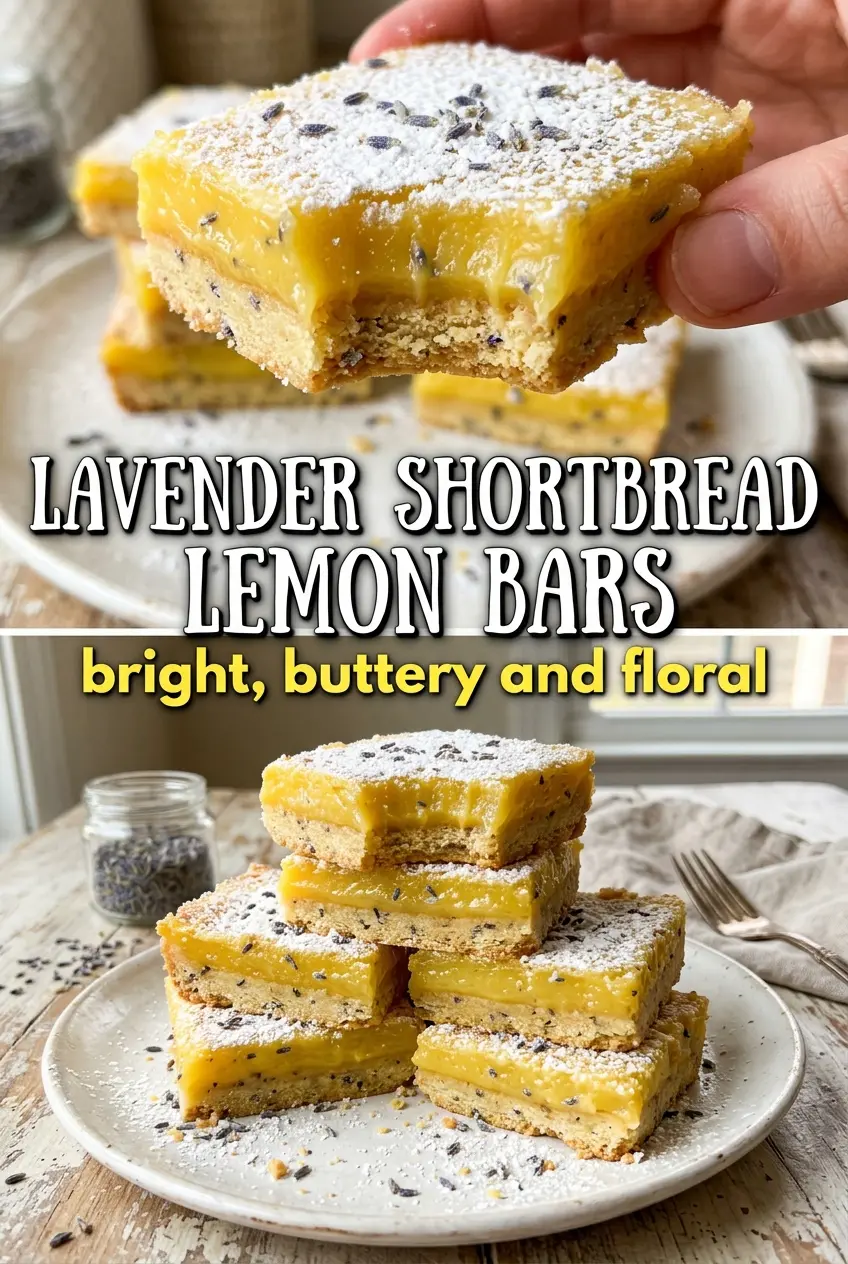
Pale yellow lemon curd sitting on a lavender-scented shortbread crust is the kind of dessert bar that disappears faster than people expect. The filling stays silky and bright, the crust bakes up tender and buttery, and the floral note lands just enough to make the whole pan feel special without tipping into perfume territory. A heavy dusting of powdered sugar on top finishes the bars with that clean, bakery-style look that makes them hard to resist before they’ve even chilled.
What makes this version work is balance. The crust starts in the food processor, which keeps the butter cold and cuts it into the flour fast enough that the shortbread stays crumbly and delicate instead of tough. The filling uses whole eggs plus extra yolks for a smooth, rich set, while a little flour gives the lemon layer enough structure to slice cleanly after chilling. Ground culinary lavender goes into the crust, where it softens as it bakes and spreads evenly through every bite.
Below, you’ll find the small details that matter most here: how fine to grind the lavender, how to tell when the lemon layer is set, and how to keep the bars neat when you cut them.
The shortbread stayed tender and the lemon layer set up with clean edges after chilling. I was nervous about the lavender tasting too strong, but it came through softly and made the bars taste elegant instead of overly sweet.
Like this recipe? Save these lavender shortbread lemon bars for the days when you want a floral dessert bar with a buttery crust and a bright lemon finish.
The Lavender Is in the Crust, Not the Filling, for a Reason
Lavender can take over fast if it’s whisked straight into the lemon layer. The crust is the safer place for it because the butter carries the flavor gently and the baking time mellows the floral edge. Ground fine, it blends into the shortbread instead of leaving little bitter bits behind.
The other thing that matters here is the set. These bars need the filling to look just barely done in the center when they come out of the oven. If you wait for a firm, fully matte top, the bars bake too far and lose that soft lemon curd texture after chilling.
- Dried culinary lavender — Use culinary lavender only, and grind it very finely so it disperses through the crust. If you leave the buds whole, they can feel sharp and overpowering in a bite.
- Powdered sugar in the crust — This gives the shortbread a finer, more tender crumb than granulated sugar would. It also helps the crust press cleanly into the pan without feeling sandy.
- Fresh lemon juice and zest — Bottled juice won’t give you the same bright aroma or clean acidity. The zest matters just as much as the juice here because it pushes the lemon flavor past plain sourness into something more vivid.
- Eggs plus extra yolks — The whole eggs set the bars, and the yolks add richness and a softer texture. That combination keeps the filling smooth instead of rubbery.
- Flour in the filling — It’s the quiet insurance policy. A little flour keeps the custard stable enough to slice without oozing, especially after chilling.
What Each Ingredient Is Actually Doing in This Recipe

- Primary ingredient (the star) — Quality matters most. Choose the best you can find.
- Cooking medium (oil, butter, or broth) — This carries flavors and prevents dryness.
- Seasonings (salt, pepper, spices, herbs) — Layer flavors so nothing overpowers. Build depth gradually.
- Aromatics (garlic, onion, herbs) — Cook with fat to bloom flavors. Become the foundation.
- Supporting ingredients — Complement the main ingredient without overpowering it.
- Sauce or liquid (if applicable) — Brings flavors together. Balance richness with acid.
- Acid (lemon, vinegar, wine, or other) — Brightens and prevents flat-tasting results.
- Final finish (garnish, glaze, or sauce) — Prevents one-dimensional taste and adds visual appeal.
Press the Crust, Bake It, Then Stop Touching It
Mixing the Shortbread Base
Pulse the flour, powdered sugar, salt, lavender, and cold butter just until the mixture looks like damp sand and starts clumping when squeezed. The butter should still be cool, not melted into the dough. If you over-process it, the crust turns dense instead of tender. Press it into the pan firmly and evenly, especially into the corners, so the lemon layer bakes on a level surface.
Knowing When the Crust Is Ready for Filling
Bake the crust until it’s lightly golden at the edges and no longer looks raw in the center, about 18 to 20 minutes. You’re not looking for deep color here; the filling goes over a warm crust, so it will finish baking again. If the crust is pale and underbaked, it can taste doughy under the lemon layer. Let it stay warm, not hot, before you pour on the filling.
Setting the Lemon Layer Just Right
Whisk the eggs, yolks, sugar, lemon juice, zest, and flour until smooth, then pour it over the crust right away. Bake until the center barely jiggles when you tap the pan, not sloshes. If the middle moves like liquid, it needs more time. Pull it when the edges are set and the top looks matte, then cool it completely before chilling so the texture stays smooth instead of separating.
Chilling and Cutting Clean Squares
Refrigerate the pan for at least 2 hours before slicing. That rest is what gives you neat bars instead of soft wedges that stick to the knife. For the cleanest cuts, lift the bars out with the parchment, wipe the knife between cuts, and dust with powdered sugar after they’re fully chilled so the topping doesn’t melt into the surface.
How to Adjust These Bars Without Losing the Balance
Make them gluten-free with a 1:1 baking blend
A good cup-for-cup gluten-free flour blend can stand in for the all-purpose flour in both the crust and filling. The texture gets a little more delicate and crumbly, but the bars still hold together well if you chill them fully before cutting.
Skip the lavender if you want a classic lemon bar
Leave the lavender out of the crust and you’ll get a clean, classic lemon bar with a buttery shortbread base. The rest of the recipe stays the same, and the lemon flavor comes through a little sharper without the floral note.
Use Meyer lemons for a softer, sweeter citrus finish
Meyer lemons make the filling less sharp and a touch more fragrant, which plays nicely with lavender. They’re a little sweeter and less acidic, so the bars taste gentler and more dessert-like.
Storage and Reheating
- Refrigerator: Store in an airtight container for up to 5 days. The crust stays crispest in the first 2 days, and the top may absorb a little powdered sugar over time.
- Freezer: These freeze well. Cut into bars, wrap tightly, and freeze for up to 2 months. Thaw in the refrigerator so the filling doesn’t weep.
- Reheating: These are best served chilled or at cool room temperature, not warmed. Heat softens the custard and can make the crust greasy, so just let frozen bars thaw slowly before serving.
Answers to the Questions Worth Asking
Lavender Shortbread Lemon Bars
Ingredients
Equipment
Method
- Preheat the oven to 350°F and line a 9x13 pan with parchment paper.
- Pulse the all-purpose flour, powdered sugar, salt, dried culinary lavender, and cold butter in a food processor until the mixture just comes together, then press firmly and evenly into the prepared pan.
- Bake for 18-20 minutes until lightly golden.
- Whisk together the large eggs and egg yolks, granulated sugar, fresh lemon juice, lemon zest, and all-purpose flour until smooth.
- Pour the lemon curd mixture over the warm crust.
- Bake for 18-22 minutes until the filling is just set with no jiggle in the center, then cool completely.
- Refrigerate for at least 2 hours until firm.
- Dust generously with powdered sugar, then scatter dried lavender buds and add lemon zest curls over the top.
- Cut into 16 bars and serve.