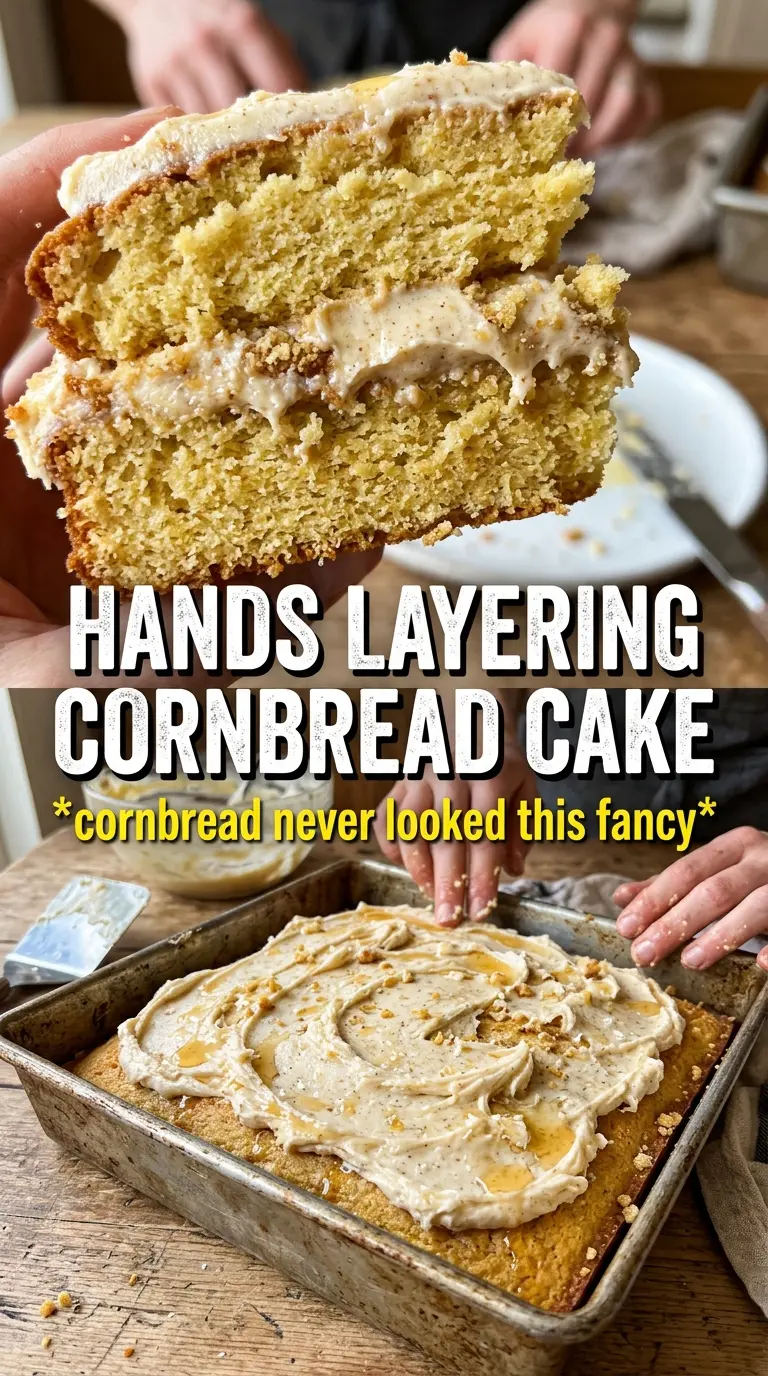
Golden cornbread layers stacked high with honey butter frosting hit that sweet-salty spot in a way plain layer cake never quite does. The crumb stays tender and a little rustic, but it still slices cleanly, and the frosting melts into the cake just enough to make every bite taste rich without getting heavy. Finished with a drizzle of honey and a pinch of flaky salt, it lands somewhere between celebration cake and the best part of a bakery cornbread basket.
What makes this version work is the balance. Cornmeal brings the distinct corn flavor and a little texture, while the blend of milk and buttermilk keeps the layers soft instead of dry and crumbly. Honey goes into both the cake and the frosting, which reinforces the flavor without making the whole thing taste overly sweet. The cake layers bake up sturdy enough to stack, but the frosting is whipped until light, so the final result feels polished instead of dense.
Below, I’ve included the small details that matter most: how to keep the layers from turning gritty, why the frosting needs a full whip, and a few smart ways to adapt the cake if you need a different pan size or a dairy-free version.
The layers baked up evenly and the frosting stayed fluffy instead of sliding off. The honey and flaky salt on top made it taste like sweet cornbread in cake form.
Love the sweet-salty layers and honey butter frosting? Save this layered cornbread cake for the next time you want a showstopper that slices cleanly.
Why These Layers Stay Tender Instead of Crumbly
The biggest mistake with cornbread layer cakes is treating them like a quick skillet bread. A layer cake needs structure, but it also needs enough moisture to stay soft after chilling and stacking. This recipe gets there by using both whole milk and buttermilk, plus melted butter and honey, which keeps the crumb plush without losing that corn-forward bite.
The other detail that matters is the ratio of flour to cornmeal. Too much cornmeal and the cake turns sandy. Too little and it stops tasting like cornbread at all. Here, the flour gives the layers enough backbone to slice, while the cornmeal keeps the texture interesting and the flavor unmistakable.
- Don’t overmix the batter — once the wet and dry ingredients come together, stir just until the flour disappears. Overmixing tightens the crumb and makes the cake tough.
- Use room-temperature eggs and dairy — cold ingredients can make the melted butter seize into tiny bits, which leaves the batter uneven.
- Cool the layers completely — warm cornbread will melt the frosting and slide around when you stack it.
What the Honey, Buttermilk, and Cornmeal Are Each Doing Here
- Yellow cornmeal — This gives the cake its signature texture and color. Fine or medium grind both work; coarse cornmeal will make the cake feel too gritty for a layer dessert.
- Buttermilk — It adds tang and helps the baking soda do its job, which gives the layers a lighter crumb. If you’re out, mix 1/2 cup milk with 1/2 tablespoon lemon juice or vinegar and let it sit for 5 minutes.
- Honey — Honey belongs in both the cake and the frosting because it rounds out the corn flavor. In the cake, it adds moisture; in the frosting, it keeps the sweetness soft and warm instead of sharp.
- Powdered sugar — This is what gives the frosting body. If you add too little, the frosting will be loose and won’t hold up between the layers.
- Flaky sea salt — Don’t skip it. It cuts through the sweetness and makes the honey taste deeper, not just sweeter.
Getting the Layers, Frosting, and Finish to Come Together Cleanly
Mix the Batter Only Until It Comes Together
Whisk the dry ingredients in one bowl and the wet ingredients in another so the baking powder and baking soda distribute evenly before they hit the liquid. When you combine them, switch to a spatula and fold just until you stop seeing dry flour. If the batter looks a little lumpy, that’s fine; smooth batter usually means overmixed batter.
Bake Until the Centers Spring Back
Divide the batter evenly between three greased 8-inch pans and smooth the tops just enough that the layers bake level. The cakes are done when the tops spring back lightly and a toothpick comes out clean or with a few moist crumbs. If the edges pull away from the pan early but the center still looks wet, give them a few more minutes before pulling them.
Whip the Frosting Until It Fluffs Up
Beat the softened butter with honey first, then add the powdered sugar, cream, vanilla, and salt. Keep beating until the frosting looks pale, light, and spreadable. If it seems stiff, add cream a teaspoon at a time; if it looks loose, let it beat another minute or two before changing anything. The extra air is what helps it spread without tearing the cake.
Stack, Frost, and Finish With the Salted Drizzle
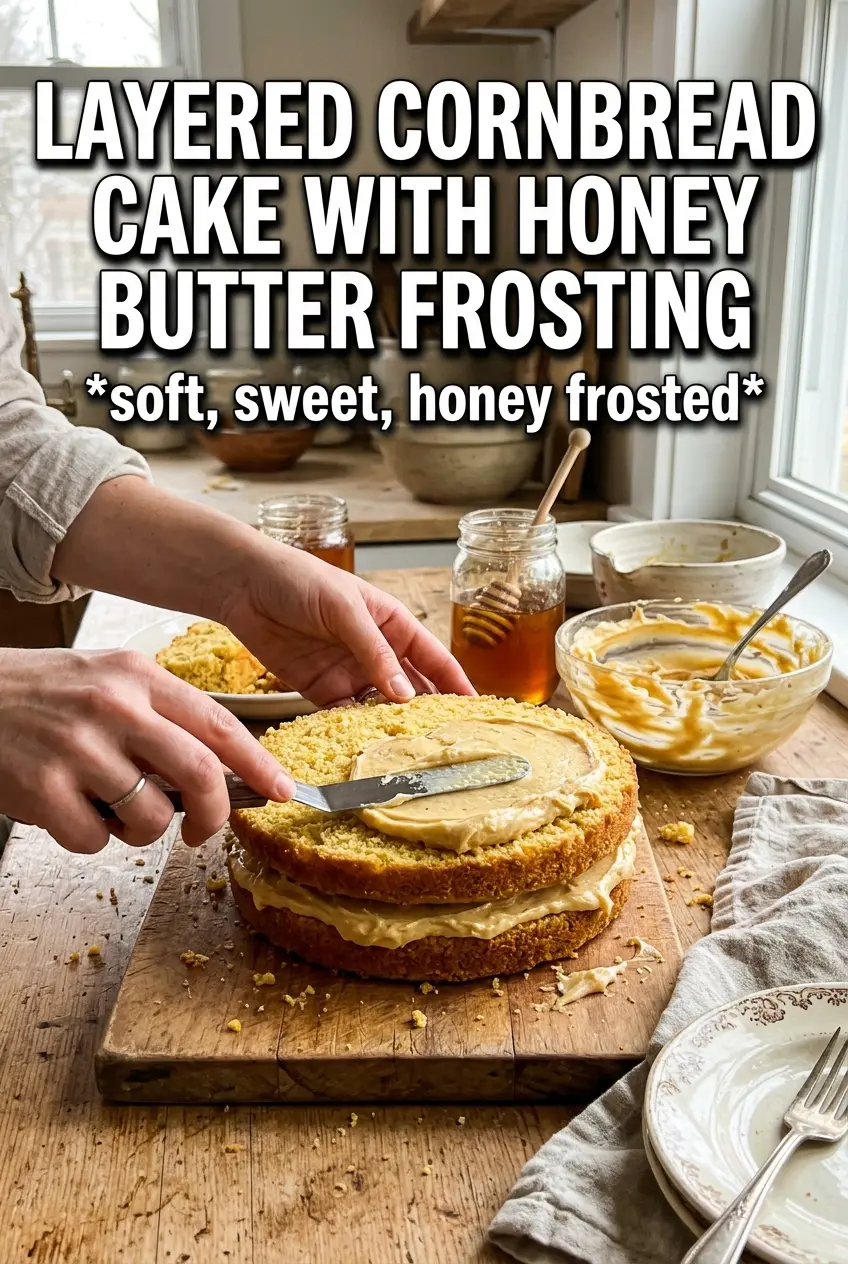
Level the cooled cakes only if they domed noticeably. Then spread frosting between each layer and work a thin layer around the outside before adding the final swirls. Drizzle honey over the top and finish with flaky salt right before serving so the salt stays crisp and the honey catches the light.
How to Adapt This Cake When You Need a Different Finish
Dairy-Free Version
Use a good dairy-free butter in both the cake and frosting, and swap the milk and buttermilk for unsweetened oat milk plus 1/2 tablespoon vinegar. The cake will still be soft and flavorful, though the frosting may need an extra tablespoon of powdered sugar to hold its shape.
Cupcake Version
Bake the batter in lined muffin tins at 350°F, filling each cup about two-thirds full. Start checking around 16 minutes. You’ll lose the dramatic layer effect, but you’ll gain a faster bake and a better option for a party tray.
Less-Sweet Frosting
Cut the powdered sugar back to 3 cups and keep beating until the frosting is fluffy again. The result is less dessert-like and more like honey butter whipped into a filling, which works well if you want the cake to lean more cornbread than frosting.
Storage and Reheating
- Refrigerator: Store covered for up to 4 days. The cake stays moist, but the frosting firms up in the fridge.
- Freezer: Freeze unfrosted layers tightly wrapped for up to 2 months. Thaw in the refrigerator before frosting. Fully frosted cake can be frozen, but the finish is cleaner if you freeze the layers separately.
- Reheating: Let slices sit at room temperature for 20 to 30 minutes before serving. Cold cake tastes denser and the frosting won’t have that soft honey-butter texture.
Answers to the Questions Worth Asking
Layered Cornbread Cake With Honey Butter Frosting
Ingredients
Equipment
Method
- Preheat the oven to 350F and grease three 8-inch round pans (set aside for batter distribution).
- Whisk together the all-purpose flour, yellow cornmeal, granulated sugar, baking powder, baking soda, and salt until evenly combined (dry looks uniform in color).
- In a separate bowl, whisk the eggs, whole milk, buttermilk, melted unsalted butter, honey, and vanilla until smooth (wet mixture should look glossy and consistent).
- Fold the wet ingredients into the dry ingredients just until no dry streaks remain (batter will be thick and cohesive).
- Divide the batter evenly between the three prepared pans and tap once on the counter to level the tops (layers should be evenly filled).
- Bake for 22–25 minutes, until a toothpick inserted in the center comes out clean (tops should be lightly golden and set).
- Cool the layers completely in the pans before frosting (they should be room temperature with firm, sliceable crumb).
- Beat the softened unsalted butter with honey until smooth, then continue beating until very light and fluffy (frosting will look pale and airy).
- Add powdered sugar, heavy cream, vanilla, and salt, then beat until the frosting turns spreadable and holds soft peaks (texture should be thick but smooth).
- Frost generously between all layers using a flat spatula (a visible band of frosting should form between each layer).
- Spread and swirl frosting over the outside of the cake until fully covered and even (swirls should be smooth, not streaky).
- Drizzle honey over the top and sprinkle flaky sea salt (finish should have a glossy honey sheen and scattered salt flecks).