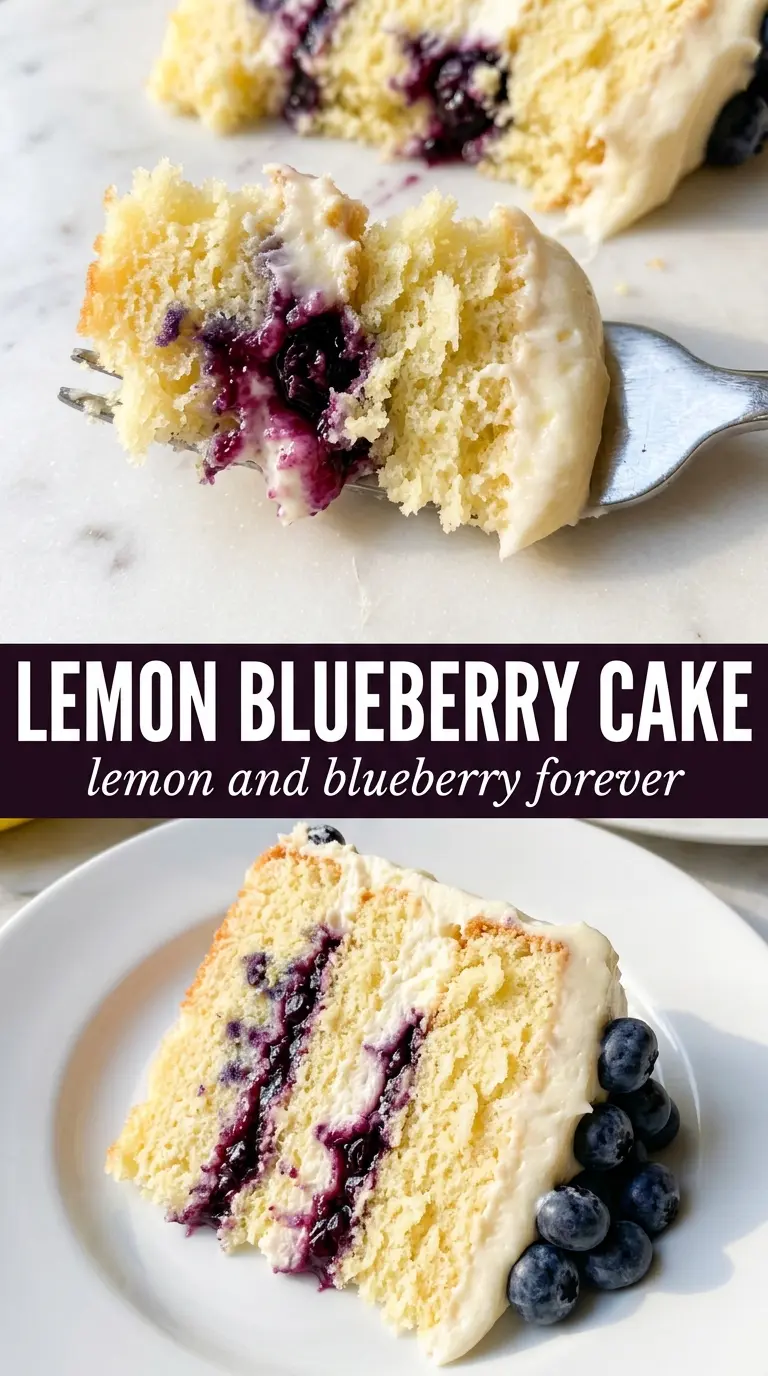
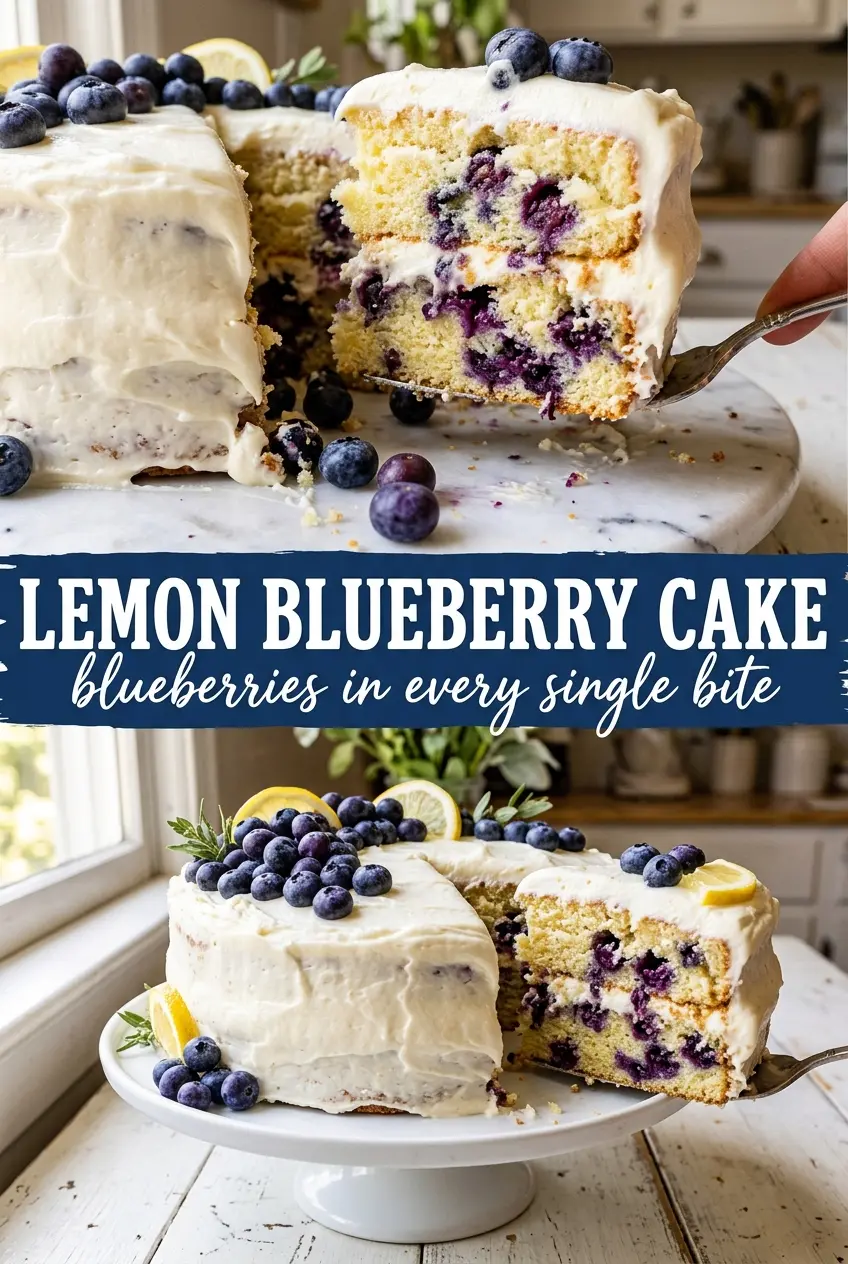
Moist lemon cake with pockets of juicy blueberries is one of those desserts that disappears fast because every slice hits a little differently: bright citrus on the first bite, soft berry bursts in the middle, and a thick layer of tangy cream cheese frosting to pull it all together. The crumb stays tender without turning heavy, and the berries don’t sink when you handle the batter the right way.
This version leans on fresh lemon zest for the strongest flavor, not just juice, because zest carries the fragrant oils that make the cake taste like lemon instead of just tasting sharp. Tossing the blueberries in flour helps them stay suspended through the layers, and using a simple cream cheese frosting keeps the sweetness in check. The result is a cake that feels bakery-level but still looks and tastes like something made by hand.
Below, you’ll find the little details that matter most: how to keep the berries from streaking the batter, why the frosting should be fluffy but not loose, and a few smart swaps if you only have buttermilk or want to bake this as cupcakes instead.
The layers baked up even and the blueberries stayed right where they were supposed to instead of sinking to the bottom. I loved how the lemon glaze cut through the cream cheese frosting without making the cake too sweet.
Save this lemon blueberry cake for the day you want tall layers, juicy berry pockets, and a tangy cream cheese frosting that holds its shape.
The Reason the Berries Stay in the Batter Instead of Dropping to the Bottom
Blueberries sink when the batter is too loose or when they go into the pan bare and slippery. The flour coating gives them just enough grip to stay suspended while the cake sets, and that small step matters more than people think. It doesn’t make the cake gummy or dry; it just gives the berries a better chance of staying evenly scattered through each slice.
The other thing that keeps this cake balanced is the order of mixing. Creaming the butter and sugar first traps air, which helps the layers rise tall enough to hold the fruit. If the batter looks broken after the eggs go in, keep going slowly and it will come back together once the dry ingredients and milk are added.
- Fresh blueberries — Fresh berries hold their shape best and give you those clean bursts of juice in the crumb. Frozen berries can work, but don’t thaw them first or they’ll streak the batter and tint it gray-blue.
- Lemon zest — This is the main source of lemon flavor. The juice adds tang, but the zest gives the cake its perfume, so don’t skip it or replace it with extra juice.
- Butter — Softened butter creams properly and helps the cake bake with a fine, tender crumb. If it’s too cold, the batter won’t whip up enough; if it’s melted, the texture turns dense.
- Buttermilk or whole milk — Buttermilk gives the crumb a little extra tang and tenderness, while whole milk still keeps the batter rich and smooth. If you use buttermilk, don’t overmix once it goes in because the batter thickens faster.
What Each Ingredient Is Actually Doing in This Recipe
- Primary ingredient (the star) — Quality matters most. Choose the best you can find.
- Cooking medium (oil, butter, or broth) — This carries flavors and prevents dryness.
- Seasonings (salt, pepper, spices, herbs) — Layer flavors so nothing overpowers. Build depth gradually.
- Aromatics (garlic, onion, herbs) — Cook with fat to bloom flavors. Become the foundation.
- Supporting ingredients — Complement the main ingredient without overpowering it.
- Sauce or liquid (if applicable) — Brings flavors together. Balance richness with acid.
- Acid (lemon, vinegar, wine, or other) — Brightens and prevents flat-tasting results.
- Final finish (garnish, glaze, or sauce) — Prevents one-dimensional taste and adds visual appeal.
Building the Cake Batter Without Crushing the Blueberries
Creaming the Base
Beat the butter and sugar until the mixture turns pale and fluffy, not just combined. That step creates the structure that keeps the cake light, especially once the berries are folded in. If the butter is still in cold lumps, stop and let it soften more before you keep going.
Adding the Eggs and Citrus
Add the eggs one at a time, then mix in the lemon zest, lemon juice, and vanilla. The batter may look slightly curdled after the juice goes in, and that’s normal. It smooths out once the flour and milk are added, so don’t chase a perfectly silky texture at this point.
Alternating Dry Ingredients and Milk
Add the flour mixture and milk in turns, starting and ending with the dry ingredients. That keeps the batter from getting overworked and helps the cake stay tender. Stop mixing as soon as the flour disappears; if you keep beating it, the crumb can turn tight.
Folding in the Berries
Use a spatula and fold gently just until the blueberries are evenly distributed. A heavy hand will burst them and turn the batter streaky before it even reaches the oven. The flour on the berries helps, but it can’t save a batter that’s been stirred too hard.
Three Ways to Make This Cake Fit the Day You Need It For
Use Buttermilk for a Tangier Crumb
Swap the whole milk for buttermilk if you want a little more tang and a softer crumb. It works especially well with the lemon frosting, but the batter may thicken a touch faster, so fold it together gently and don’t overmix.
Make It Gluten-Free Without Losing Height
A good 1:1 gluten-free flour blend can stand in for the all-purpose flour. The cake will still be tender, but it may need the full bake time and a careful test in the center to avoid pulling it out too early.
Turn It Into Cupcakes
Divide the batter into lined muffin cups and start checking around 18 to 20 minutes. You lose the dramatic layer-cake look, but you gain faster baking and easy serving, which is handy if you need a dessert that travels well.
Storage and Reheating
- Refrigerator: Store covered for up to 4 days. The frosting firms up in the fridge, but the cake stays moist.
- Freezer: Freeze unfrosted layers tightly wrapped for up to 2 months. The frosted cake freezes, but the berries and glaze look best fresh.
- Reheating: Let slices sit at room temperature for 20 to 30 minutes before serving. Microwaving can melt the frosting and make the crumb feel greasy.
Answers to the Questions Worth Asking
Lemon Blueberry Cake
Ingredients
Equipment
Method
- Preheat the oven to 350°F and grease two 9-inch round pans.
- In a bowl, whisk together all-purpose flour, baking powder, and salt.
- Beat the butter and granulated sugar until fluffy.
- Add the eggs, lemon zest, lemon juice, and vanilla extract, then mix until combined.
- Alternately add the flour mixture and the whole milk or buttermilk, mixing just until smooth after each addition.
- Toss fresh blueberries with 1 tablespoon flour, then fold them into the batter.
- Divide batter between the pans and bake for 32-35 minutes, until a toothpick comes out clean.
- Cool the cakes completely in the pans before removing and assembling.
- Beat the cream cheese and butter until smooth.
- Add powdered sugar, lemon juice, and lemon zest, then beat until fluffy.
- Fill and frost the cake with the lemon cream cheese frosting, swirling the top edges for a thick look between layers.
- Pile fresh blueberries on top, drizzling with lemon glaze made from 1 cup powdered sugar plus 2 tablespoons lemon juice.
- Scatter extra lemon zest over the top and serve.