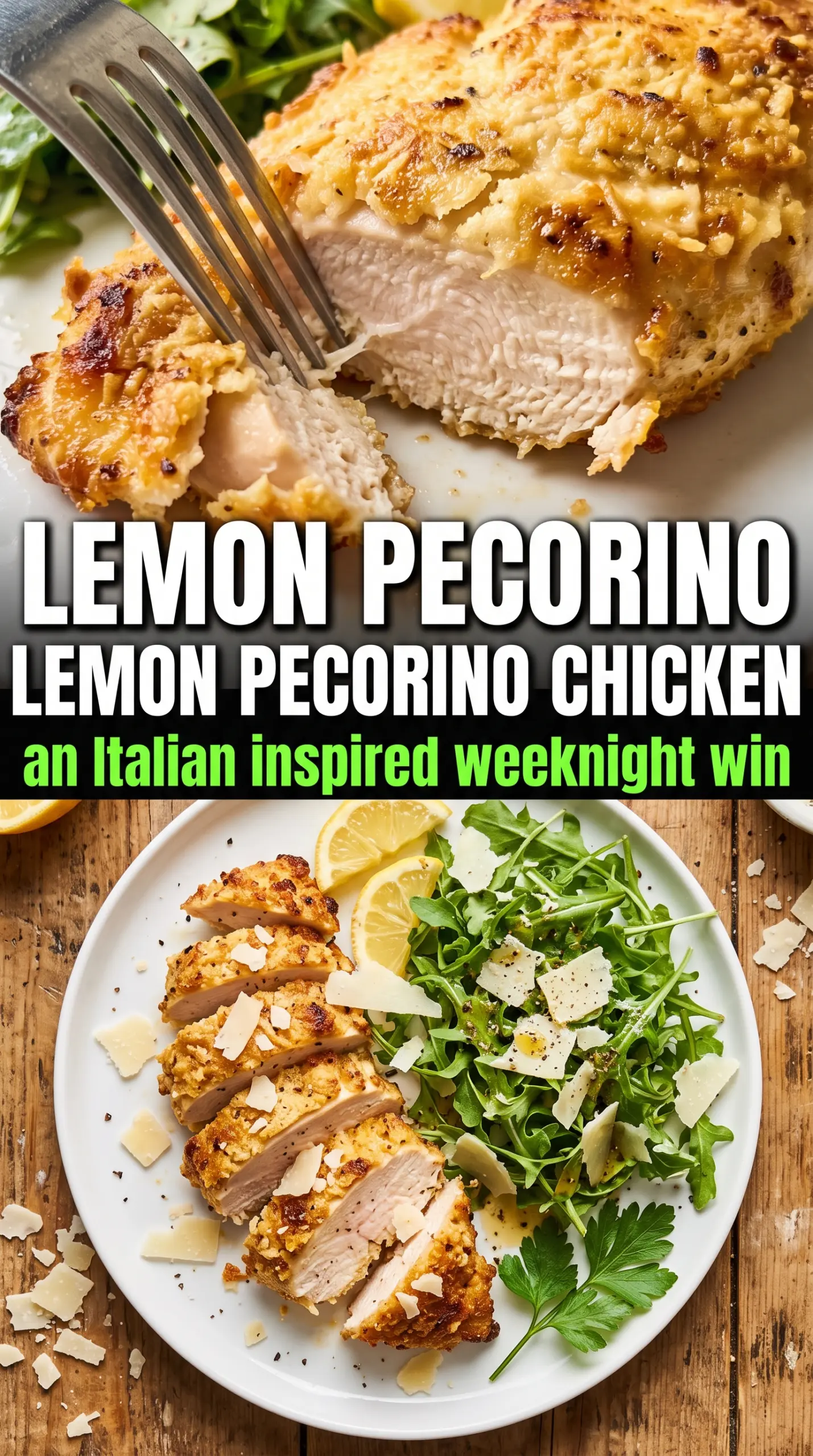
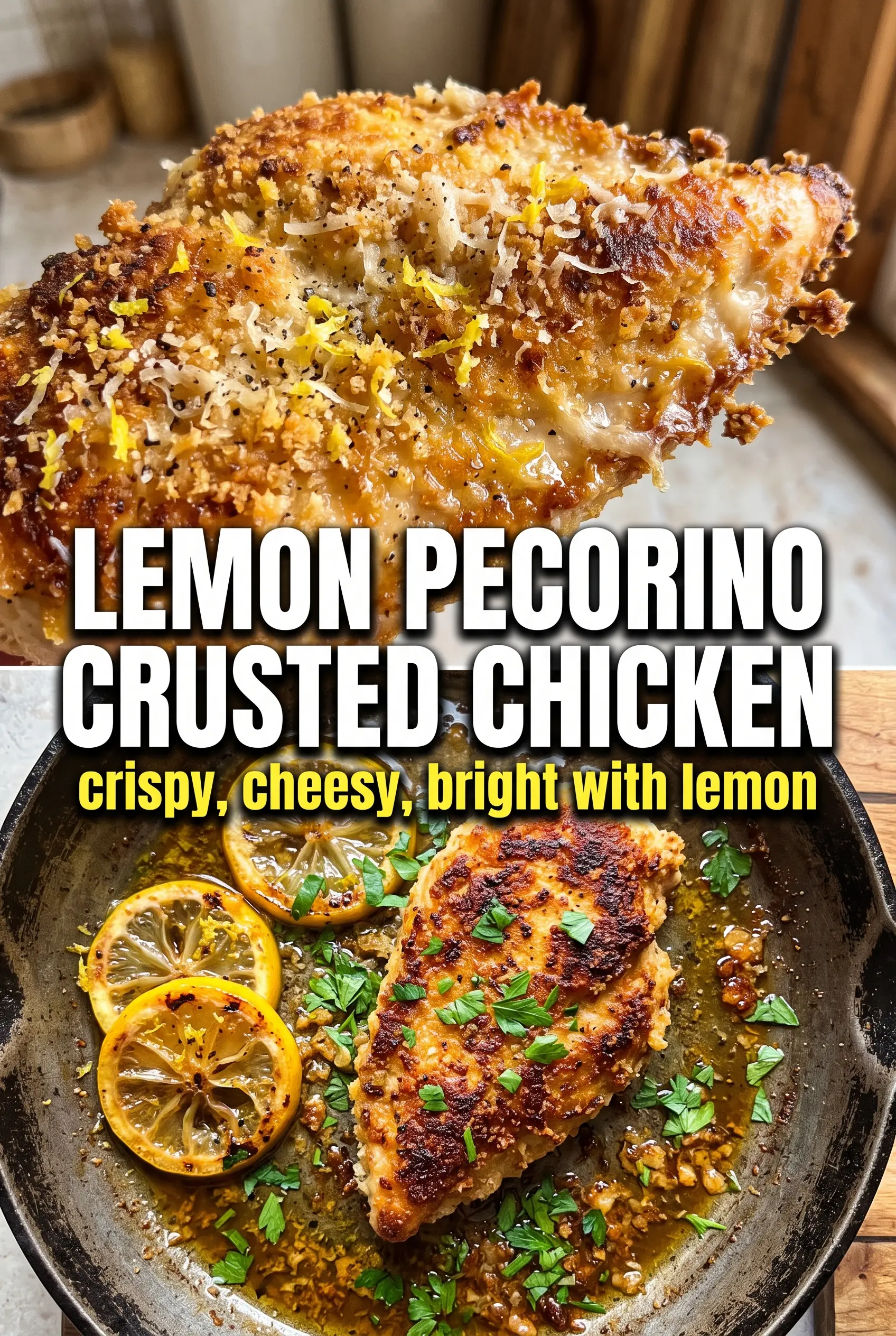
Lemon Pecorino crusted chicken comes out with a crackly, deeply golden top that gives way to juicy chicken underneath, and that contrast is exactly why it earns repeat status. The cheese browns into a savory shell, the lemon zest perfumes every bite, and the panko keeps the crust from turning dense or greasy.
The trick is building the coating in layers that each do a job. Dijon and olive oil help the crust cling without turning soggy, Pecorino Romano brings the sharp, salty backbone, and panko lightens the whole thing so it bakes up crisp instead of pasty. Grating the cheese finely matters here, because a coarse shred won’t melt and fuse the same way.
Below, I’ve included the small details that keep the crust crisp, plus the swaps that still work if you need to adjust the recipe for what’s in the kitchen.
The crust turned out shatter-crisp and stayed on the chicken instead of sliding off. I loved the way the lemon zest came through without making it taste sour.
Love that golden Pecorino crust and bright lemon finish? Save this Lemon Pecorino Crusted Chicken for the nights when you want crisp chicken with almost no cleanup.
The Secret to a Crust That Actually Stays Put
The biggest failure with crusted chicken is a topping that looks great in the pan and ends up scattered on the baking sheet. That happens when the coating is too dry to cling or the chicken goes into the oven before the surface has a chance to grab. Here, the Dijon and olive oil act like glue, and pressing the crust on firmly gives the cheese and panko something to hold onto as it bakes.
Using a wire rack matters more than it sounds. It lets hot air move around the chicken, so the bottom stays from steaming under its own juices. If you skip the rack, the underside softens before the top can finish crisping, and you lose the best part of the dish.
- Pecorino Romano — This is the main flavor, so it’s worth buying a block and grating it finely. Pre-grated cheese is often too dry and won’t melt into the same cohesive crust.
- Panko breadcrumbs — Panko keeps the crust light and crisp. Regular breadcrumbs work in a pinch, but the coating will be denser and less shattery.
- Dijon mustard — This adds tang and helps the crust stick without making the chicken taste mustardy. It’s the part that keeps the coating from sliding off after baking.
- Lemon zest — Fresh zest gives the crust its bright edge. Lemon juice is not a substitute here, because extra liquid softens the topping instead of sharpening it.
What Each Ingredient Is Actually Doing in This Chicken
- Chicken breasts — Pounding them to an even thickness is what keeps the thinner end from drying out before the center is done. If one side is much thicker, the crust can burn before the chicken cooks through.
- Pecorino Romano — Its salty, sharp edge does the heavy lifting here. Parmesan can work, but the result is milder and less punchy.
- Olive oil and Dijon — This combo creates a thin coating that helps the crust adhere and brown. If you use only oil, the topping can slip; if you use only mustard, the surface can taste too sharp.
- Parsley and garlic powder — These round out the sharpness of the cheese and lemon. Fresh garlic isn’t a good swap inside the crust because it can scorch before the chicken is done.
Press, Bake, and Let the Crust Finish Its Work
Season and Coat the Chicken
Pat the chicken dry first, then season it before brushing on the Dijon mixture. A dry surface helps the coating grip instead of sliding, and the seasoning under the crust gives every bite more depth. Brush the mustard mixture over both sides in a thin layer; too much will make the crust pasty instead of crisp.
Build the Pecorino Crust
Mix the Pecorino, panko, lemon zest, parsley, garlic powder, and black pepper until the lemon is evenly distributed. Press the mixture onto the chicken with firm, even pressure so it looks packed on, not sprinkled over. If you just scatter it on top, it won’t fuse into the kind of crust that cracks when you cut into it.
Bake Until Golden, Not Dry
Set the chicken on the prepared rack and bake at 425°F until the crust is deeply golden and the thickest part reaches 165°F. If the top browns too quickly, the oven is probably running hot, so check early and tent loosely if needed. The chicken should feel firm at the edges but still spring back a little in the center.
Rest Briefly Before Serving
Give it about 3 minutes on the pan before serving. That short rest keeps the juices from flooding the crust the second you slice in. Finish with basil and lemon wedges so the dish keeps its bright edge right through the last bite.
How to Adapt This for a Bigger Crowd or a Different Pantry
Make it gluten-free with almond crumbs
Swap the panko for finely ground almond crumbs or gluten-free breadcrumbs. Almond crumbs give a richer, nuttier crust, while gluten-free breadcrumbs behave more like the original and keep the texture lighter.
Use Parmesan if Pecorino is too sharp
Parmesan gives you a similar crust with a milder, less salty finish. Add an extra pinch of salt if needed, because Parmesan doesn’t have the same punch as Pecorino Romano.
Make it dairy-free with a different crust
A dairy-free version needs a different base, because Pecorino is the signature flavor here. Use seasoned panko with extra lemon zest, garlic powder, and a tablespoon of nutritional yeast for a savory edge, though it won’t taste as sharp or cheesy.
Scale it for a sheet pan dinner
Double the recipe and keep the chicken pieces spaced apart on two sheet pans or one large rack-lined pan. Crowding traps steam, and steam is what softens the crust before it has time to set.
Storage and Reheating
- Refrigerator: Store leftovers in an airtight container for up to 3 days. The crust will soften a bit, but it still tastes good.
- Freezer: It freezes, though the crust loses some of its crispness. Freeze the cooked chicken on a tray first, then wrap and store for up to 2 months.
- Reheating: Reheat in a 375°F oven or air fryer until hot through. Skip the microwave if you want any chance of keeping the crust intact, because it turns the topping soft and greasy.
Answers to the Questions Worth Asking
Lemon Pecorino Crusted Chicken
Ingredients
Equipment
Method
- Preheat the oven to 425°F and line a baking sheet with a wire rack.
- Season the chicken breasts with salt, pepper, and garlic powder.
- Mix the Dijon mustard with the olive oil and brush over both sides of each chicken breast.
- Combine the Pecorino Romano cheese, panko breadcrumbs, lemon zest, fresh parsley, garlic powder, and black pepper.
- Press the Pecorino mixture firmly onto the mustard-coated chicken so it fully adheres.
- Place the chicken on the prepared rack.
- Bake for 20-22 minutes at 425°F until the crust is golden and the internal temperature reaches 165°F.
- Rest the chicken for 3 minutes before garnishing with fresh basil and serving with lemon wedges.