Soft lemon sugar cookies earn their keep fast: crackly on the outside, tender in the middle, and bright enough to wake up the whole tray. The sugar coating bakes into a delicate shell, then the lemon glaze adds a sharp, sunny finish that keeps each cookie from tasting flat or one-note.
What makes this version work is the balance. Fresh lemon juice and zest go into the dough for clean citrus flavor, but the cookies still stay plush because the butter and sugar are beaten until the mixture looks pale and airy. The chill time matters, too. It keeps the dough from spreading too fast, which is the difference between thick, pillowy cookies and thin rounds that bake up dry at the edges.
Below you’ll find the trick that keeps the centers soft, the best way to get that crackled sugar top, and a few swaps that still give you a strong lemon finish.
The dough chilled just long enough to roll cleanly, and the cookies baked up thick with those soft middles I always want. The lemon glaze set nicely too, so they were easy to stack for a bake sale.
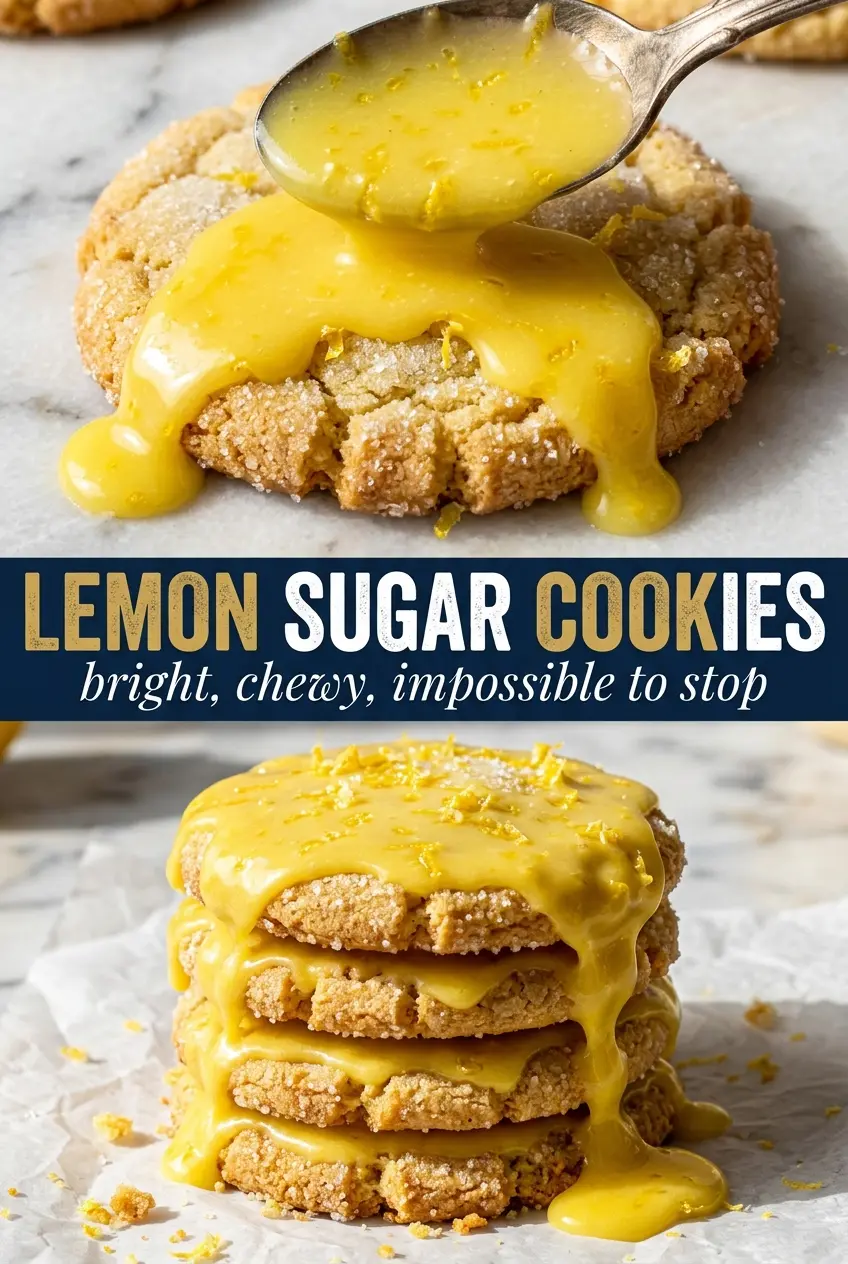
These lemon sugar cookies bake up thick, crackled, and glazed with just the right amount of zing for a bright citrus treat.
The Chill Time Is What Keeps These Cookies Thick
Most lemon sugar cookies spread because the dough goes into the oven too soft. Butter that’s been whipped with sugar traps air, but it also melts fast, and the dough needs a short rest so that structure has a chance to hold. Thirty minutes in the fridge is enough to firm up the dough without dulling the lemon flavor.
The other thing that matters is the bake time. Pull them when the edges are just set and the centers still look slightly underdone. They finish on the tray as they cool, and that’s how you get a soft middle instead of a dry cookie. If you wait for the centers to look fully baked in the oven, you’ve already gone too far.
What Each Ingredient Is Actually Doing In This Cookie

- Butter — Softened butter is what gives these cookies their plush texture and rich base. Use real butter here; a margarine swap won’t whip up the same way and the cookies can bake up flatter.
- Granulated sugar — It sweetens the dough and helps create those crackled tops once the balls are rolled in sugar before baking. That outside sugar layer is part of the texture, so don’t skip it.
- Fresh lemon juice and zest — The zest carries most of the lemon aroma, while the juice adds brightness to both the dough and glaze. Bottled juice tastes dull here; fresh lemon makes the whole cookie taste alive.
- Eggs — They bind the dough and keep the centers tender. Add them one at a time if the mixture looks split after the first egg; it usually comes back together once the flour goes in.
- Powdered sugar for the glaze — Powdered sugar gives you a smooth drizzle that sets on the cookie instead of soaking in. If the glaze feels too thick, add lemon juice a teaspoon at a time until it ribbons off the spoon.
Building the Dough, Baking the Centers Soft, and Finishing with Glaze
Whipping the Butter and Sugar
Beat the butter and granulated sugar until the mixture looks pale, fluffy, and almost whipped. This step gives the cookies their lift, so don’t rush past it. Once the eggs go in, the dough should look glossy and smooth before the dry ingredients are added. If it looks curdled, keep mixing; the flour will bring it back together.
Bringing the Dough Together
Stir in the flour mixture just until a dough forms and no dry streaks remain. Overmixing after the flour goes in builds toughness, and that’s how lemon cookies lose their soft center. The dough will be thick and slightly sticky, which is exactly what you want before chilling.
Rolling and Sugar-Coating
Scoop the dough into 1.5-inch balls, then roll each one in granulated sugar until coated all over. That sugar shell helps the tops crack as they bake and gives you the little sparkly crust that makes these cookies stand out. Leave enough space on the pan for spread; crowded dough balls steam instead of baking into round cookies.
Baking to the Right Set
Bake until the edges look set and the centers still appear soft and puffy. The cookies should look slightly underdone when you take them out. If they’re fully browned in the oven, they’ll be dry by the time they cool. Let them rest on the baking sheet first so they can finish setting without overbaking.
Drizzling the Lemon Glaze
Whisk the powdered sugar, lemon juice, and zest until smooth, then drizzle over fully cooled cookies. Warm cookies will melt the glaze and turn it runny, so patience matters here. Let the glaze set for about 15 minutes before stacking or packing the cookies away.
How to Tweak These Cookies Without Losing the Lemon
Make Them Dairy-Free
Use a plant-based butter that comes in stick form, not a tub spread. The texture will be a little less rich, but the cookies still bake up soft and hold their shape well if the dough is chilled.
Lean Into Extra Lemon
Add another teaspoon of zest to the dough if you want a brighter citrus finish without thinning the batter. I wouldn’t add much more juice to the cookie dough itself, since too much liquid can make the cookies spread.
Turn Them Into Lemon Sandwich Cookies
Skip the glaze and spread a thin layer of lemon buttercream or cream cheese frosting between two cooled cookies. That makes the cookies sweeter and a little richer, but you lose the crackled glazed top that gives these their classic look.
Storage and Reheating
- Refrigerator: Store in an airtight container for up to 5 days. The glaze stays set, but the cookies soften slightly as they sit.
- Freezer: Freeze baked cookies without glaze for up to 2 months. Thaw at room temperature, then glaze after they’ve fully defrosted for the best finish.
- Reheating: These don’t need reheating, but if you want that just-baked feel, warm unglazed cookies for 5 to 8 seconds in the microwave. Don’t heat glazed cookies for long or the topping will melt and slide.
Questions I Get Asked About This Recipe
Lemon Sugar Cookies
Ingredients
Equipment
Method
- Beat butter and granulated sugar until very fluffy, with the mixture turning lighter in color and texture. Beat in 2 large eggs, 2 tablespoons fresh lemon juice, 1 tablespoon lemon zest, and 1 teaspoon vanilla extract until smooth.
- Stir in all-purpose flour, baking soda, baking powder, and salt until a dough forms, with no dry flour streaks visible.
- Refrigerate the dough for 30 minutes until firm. The dough should feel cold and scoopable rather than sticky.
- Roll dough into 1.5-inch balls, then roll each ball in extra sugar for rolling to coat the surface. Place the coated balls on parchment-lined sheet pans, leaving space between them.
- Bake at 375°F for 10-12 minutes until the edges are just set but the centers look underdone. Look for lightly golden crackled tops while the middle still appears soft.
- Cool the cookies completely before glazing. Do not glaze warm cookies or the glaze will run and soak in.
- Whisk powdered sugar, 3 tablespoons fresh lemon juice, and 1 tablespoon lemon zest until smooth. The glaze should be pourable and glossy with no lumps.
- Drizzle the lemon glaze over the cooled cookies, letting vivid yellow streak down the sides. Ensure each cookie gets a visible layer and drips for that vivid edge finish.
- Let the glaze set for 15 minutes before serving. The drizzle should look set and slightly matte on top while staying bright.