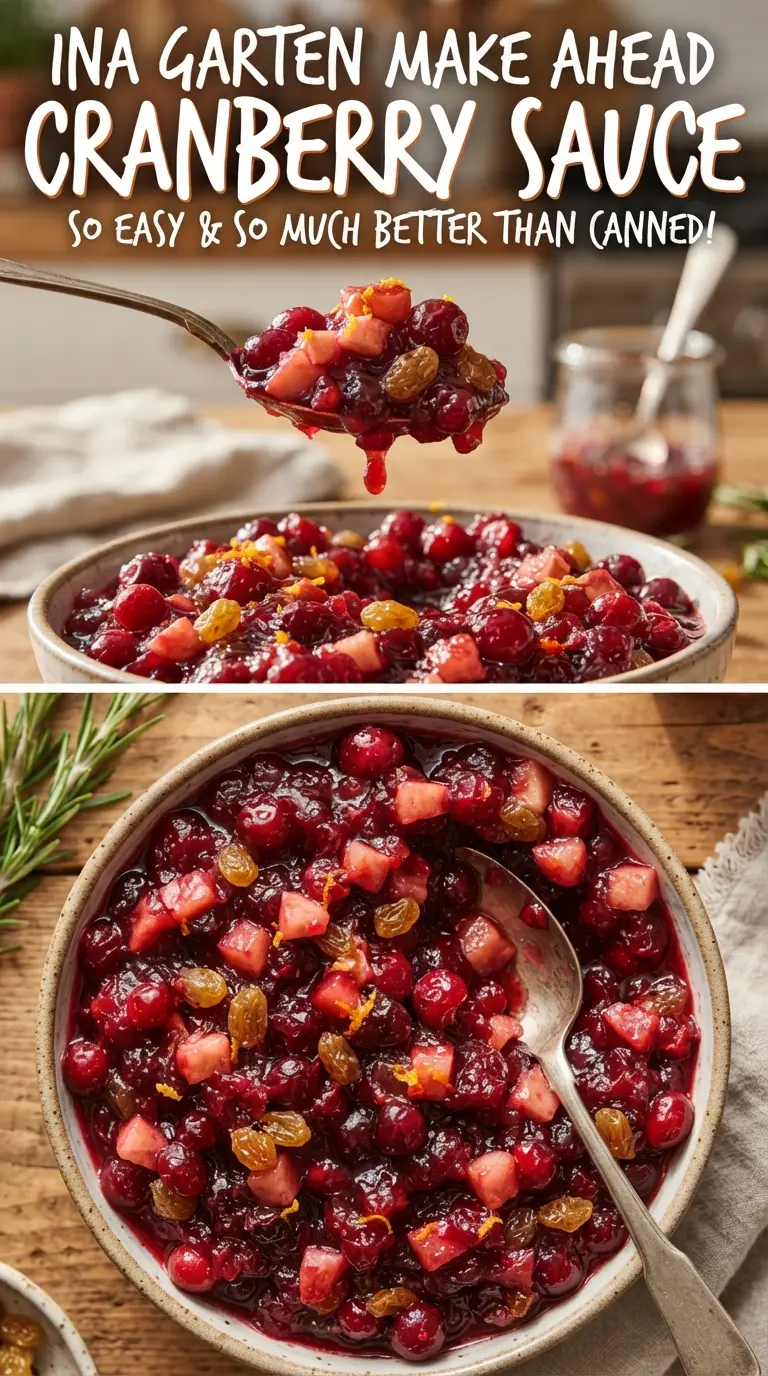
Chunky cranberry sauce earns its place on the table when it lands with bright citrus, a little sweetness, and enough texture to cut through rich holiday food. This version keeps the berries intact just enough to give you pops of tart fruit, while the diced apple softens into the sauce and the raisins and nuts add a little chew and crunch. It tastes like something that belongs beside roast turkey, but it’s just as good spooned over leftover sandwiches the next day.
The trick is letting the cranberries burst before the fruit goes in, then simmering long enough for the apple to soften without turning the whole pot to jam. Orange and lemon do different jobs here: orange brings round sweetness and fragrance, while lemon sharpens the finish so the sauce doesn’t taste flat. The nuts and raisins go in off the heat so they keep their texture instead of dissolving into the sauce.
If you’ve only ever had canned cranberry sauce, this one will probably be the dish that changes your mind. It’s make-ahead friendly, it serves a crowd, and it holds beautifully in the fridge for days.
The sauce thickened as it cooled and the apple stayed tender instead of turning mushy. I made it two days ahead and the citrus flavor got even better after sitting overnight.
Save this chunky cranberry sauce with apple, orange, and toasted nuts for the make-ahead holiday side that gets better after a day in the fridge.
The Part That Makes This Cranberry Sauce Taste Fresh for Days
The biggest mistake with cranberry sauce is cooking it until every berry gives up completely. That leaves you with a smooth puree that tastes flat once it cools. This version keeps some whole berries and adds apple for body, which gives the sauce a softer, fruitier texture that still feels bright after refrigeration.
The other thing that matters is balance. Cranberries need enough sugar to lose their bite, but they also need acid and citrus oils so the sweetness doesn’t take over. The lemon and orange are doing that work here. If your sauce tastes one-note, it usually means it needs more acid, not more sugar.
- Fresh cranberries — Fresh berries hold their shape better than dried or frozen-thawed ones, which means you get the right mix of whole fruit and thickened sauce. Frozen cranberries will work in a pinch, but don’t thaw them first; add them straight to the pot and expect a little extra cooking time.
- Granny Smith apple — This gives the sauce body without turning it muddy-sweet. A firmer tart apple is the best choice here; a softer apple can disappear into the pot and make the sauce taste heavier.
- Orange and lemon — Use the zest and juice from both. The zest carries the fragrance, and the juice keeps the sauce lively. Bottled juice won’t give you the same finish, especially in a recipe this simple.
- Golden raisins and nuts — Add these after cooking so they stay distinct. The raisins plump a little from the hot sauce, and the toasted nuts give the final texture contrast that makes each spoonful more interesting.
What Each Ingredient Is Actually Doing in This Recipe
- Primary ingredient (the star) — Quality matters most. Choose the best you can find.
- Cooking medium (oil, butter, or broth) — This carries flavors and prevents dryness.
- Seasonings (salt, pepper, spices, herbs) — Layer flavors so nothing overpowers. Build depth gradually.
- Aromatics (garlic, onion, herbs) — Cook with fat to bloom flavors. Become the foundation.
- Supporting ingredients — Complement the main ingredient without overpowering it.
- Sauce or liquid (if applicable) — Brings flavors together. Balance richness with acid.
- Acid (lemon, vinegar, wine, or other) — Brightens and prevents flat-tasting results.
- Final finish (garnish, glaze, or sauce) — Prevents one-dimensional taste and adds visual appeal.
Building the Sauce Before It Turns Jammy
Start with the cranberries, sugar, and water in a saucepan and bring everything to a boil before lowering the heat. You want the berries to pop and the liquid to turn glossy, not evaporate into a dry syrup. If the pot is too hot once the berries burst, the bottom can scorch before the sauce has time to thicken properly.
Letting the First Burst Happen
Once the cranberries begin to split, the mixture will look loose and a little chaotic. That’s exactly what you want. Stir occasionally and keep the simmer gentle so the sugar fully dissolves and the skins soften without breaking down into complete mush.
Adding the Apple and Citrus
Stir in the apple, orange zest, orange juice, lemon zest, and lemon juice, then simmer until the apple is tender and the sauce looks slightly thickened. It should still be spoonable at this stage because it tightens up as it cools. If the pot looks too dry before the apple softens, lower the heat and give it a few extra minutes rather than rushing it.
Finishing for Texture
Take the pan off the heat before adding the raisins and nuts. That keeps the nuts crisp and lets the raisins soften just enough without turning rubbery. Once it cools, the sauce should be chunky, glossy, and loose enough to settle in the bowl without running like syrup.
What to Change When You Need a Different Kind of Cranberry Sauce
Dairy-Free and Naturally Gluten-Free as Written
This recipe already fits both diets without any changes. The only thing to watch is the nuts if you’re serving someone with an allergy, since the sauce still works beautifully without them.
Skipping the Nuts
Leave out the walnuts or pecans and the sauce will still be bright and chunky, just a little softer in texture. If you want some crunch without nuts, stir in a handful of toasted pumpkin seeds after the sauce cools.
Using Frozen Cranberries
Frozen cranberries can replace fresh ones one-for-one. Add them straight from the freezer and simmer a few minutes longer, since they’ll release liquid as they heat. Don’t thaw them first or they’ll go mushy before the sauce thickens.
Reducing the Sugar
You can cut the sugar a bit if you like a sharper sauce, but don’t slash it too far or the cranberries will taste harsh instead of balanced. The sugar here isn’t just for sweetness; it softens the tart fruit and helps the sauce set with a smoother finish.
Storage and Reheating
- Refrigerator: Store in a covered container for up to 1 week. It thickens as it chills, so don’t panic if it looks loose right off the stove.
- Freezer: This freezes well for up to 2 months. Cool it completely first, then pack it in a freezer-safe container with a little room at the top for expansion.
- Reheating: Serve it chilled or let it sit at room temperature for about 30 minutes. If you warm it, do it gently on low heat; high heat makes the fruit break down and the nuts lose their texture.
Answers to the Questions Worth Asking
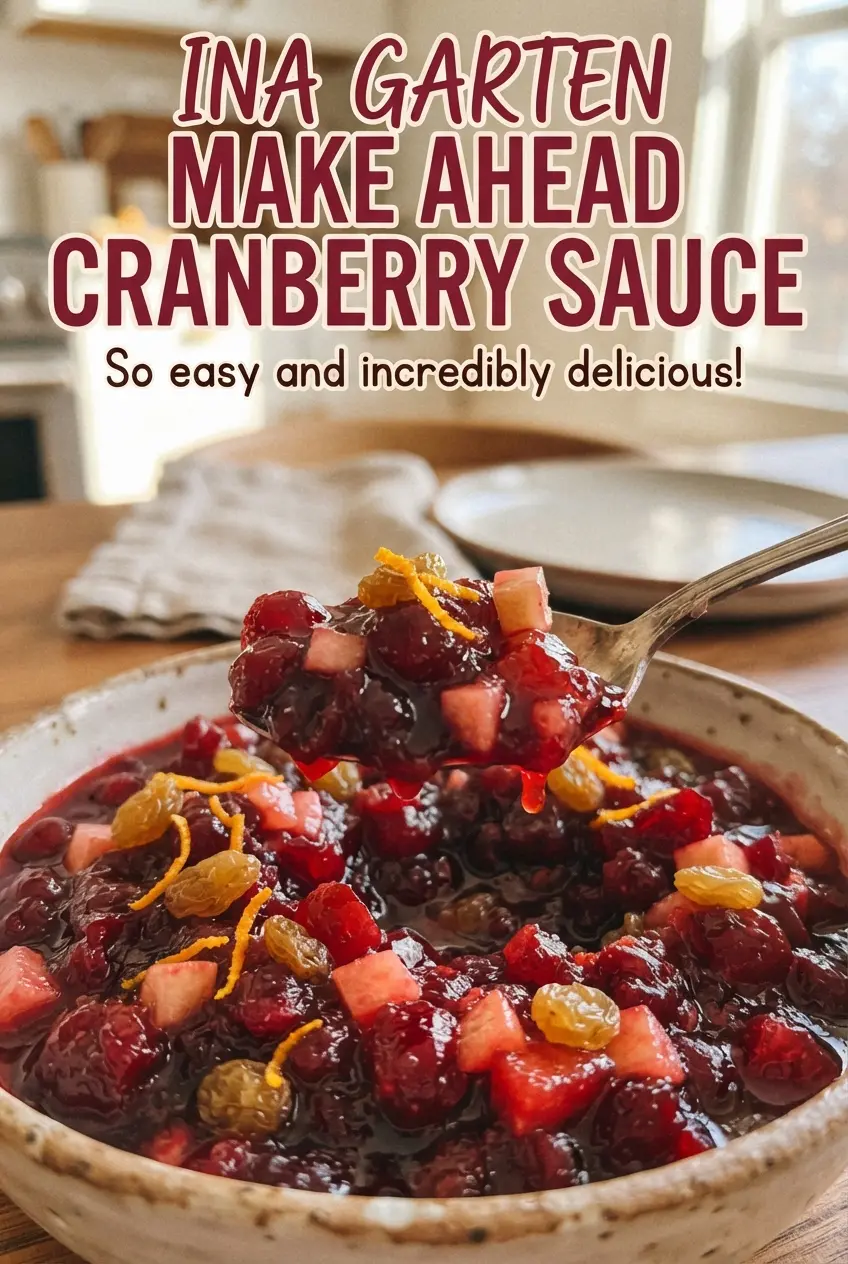
Make-Ahead Cranberry Sauce with Apple, Raisins, and Toasted Nuts
Ingredients
Equipment
Method
- Bring fresh cranberries, sugar, and water to a boil in a saucepan. Reduce to a simmer and cook 5 minutes, until the skins pop and the mixture looks thickened with active bubbling.
- Add Granny Smith apple, orange zest, orange juice, lemon zest, and lemon juice to the saucepan. Simmer 15 minutes, stirring occasionally, until the apple is tender and the cranberry mixture has a chunky, spoonable consistency.
- Remove the saucepan from heat and stir in golden raisins and toasted walnuts or pecans. Mix until the raisins and nuts are evenly distributed throughout.
- Cool completely, then cover and refrigerate up to 1 week. The sauce should thicken as it chills, making it easy to scoop and serve.
- Serve the cranberry sauce chilled or at room temperature. Spoon it into an elegant bowl so the chunks and glossy fruit look visible.