Sticky maple glaze, soft spiraled dough, and smoky bacon in every bite make these maple bacon cinnamon rolls the kind of breakfast people hover over before they’ve even cooled. The rolls bake up tall and tender with caramelized edges, then get finished while still warm so the glaze sinks into the swirls instead of sitting on top like frosting. The result is sweet, salty, and rich without tipping into cloying.
What makes this version work is the balance. The dough stays soft because it’s enriched with milk, butter, and eggs, while the filling uses brown sugar and cinnamon for that classic gooey center. Bacon shows up twice here: cooked and crumbled inside the rolls for smoky depth, then candied and scattered on top for crunch and a sharper maple finish. That extra step is worth it because it keeps the topping crisp instead of chewy.
Below you’ll find the exact timing that keeps the dough easy to roll, plus the one place people usually go wrong when they add the glaze too soon.
The dough rose beautifully and the maple glaze soaked into the swirls without making them soggy. I added the candied bacon on top right before serving and everyone kept asking how I got the bacon to stay crisp.
Save these maple bacon cinnamon rolls for a brunch bake that delivers soft swirls, maple glaze, and crisp candied bacon in every bite.
The One Place Maple Bacon Cinnamon Rolls Go Wrong
Most cinnamon rolls fail at the filling stage, not the bake. If the butter is too soft or the dough is rolled too loosely, the sugar melts out before the spirals set, and you end up with a sticky pan of filling instead of distinct ribbons. These rolls need a tight roll and a filling that stays spreadable, not runny, so the layers hold when they puff in the oven.
The other mistake is overbaking by waiting for the center to look fully dry. Cinnamon rolls keep cooking in the hot dish after they come out, and bacon in the filling adds extra richness that can trick your eye into thinking they need more time. Pull them when the tops are deeply golden and the center rolls no longer look doughy.
- Warm milk wakes up the yeast fast. If it’s hot enough to hurt your finger, it’s too hot and can kill the yeast.
- Brown sugar melts into a caramel-like layer that white sugar can’t match. It also helps anchor the cinnamon inside the swirl.
- Bacon needs to be cooked first, then crumbled. Raw bacon releases too much fat during baking and makes the rolls greasy.
- Maple syrup belongs in the glaze and the candied topping. That double use gives the rolls a real maple finish instead of just sweetness.
What Each Ingredient Is Actually Doing in the Dough, Filling, and Glaze
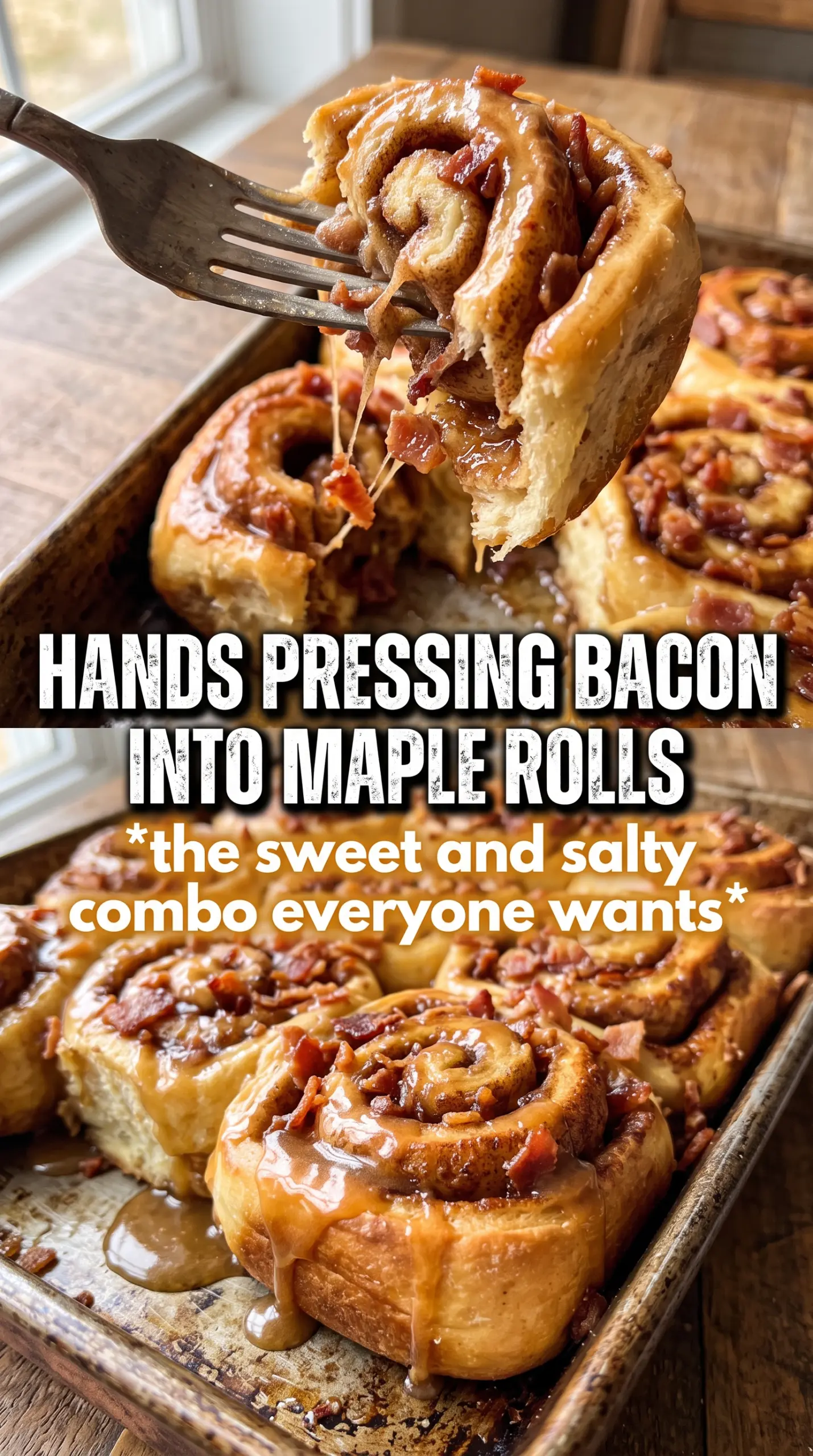
- Warm milk gives the yeast a friendly starting point and keeps the dough tender. Whole milk works best, but 2% will still do the job.
- Butter and eggs make the dough rich enough to bake up soft instead of bready. Melted butter is fine here because the dough gets kneaded, so there’s no need for it to be creamed.
- All-purpose flour gives the right balance of strength and softness. Bread flour will make the rolls a little chewier, which can work if you like more structure.
- Softened butter for the filling should spread easily without tearing the dough. If it’s melted, it leaks out; if it’s cold, it clumps and leaves bare spots.
- Pure maple syrup matters in the glaze. Pancake syrup tastes flatter and more artificial, and you’ll notice it immediately against the bacon.
Rolling, Rising, and Baking the Swirls So They Stay Soft
Building the Dough
Start by blooming the yeast in warm milk, then mix in the sugar, melted butter, eggs, and vanilla before adding the flour and salt. The dough should pull together into a soft, slightly tacky ball after kneading; if it’s stiff, the rolls will bake up dry. After 8 minutes of kneading, the dough should feel smooth and elastic, not shaggy or sticky enough to cling heavily to your hands.
Shaping the Rectangle
Roll the dough into a 12×18 rectangle on a lightly floured surface. Try to keep the corners even so the spirals bake at the same rate, and brush or spread the filling all the way to the edges. A loose roll leads to gaps in the center, while a tight roll keeps the filling tucked into the layers where it belongs.
Filling and Cutting
Spread the softened butter first, then scatter the brown sugar, cinnamon, and crumbled bacon over the surface. Press the filling in lightly with your hands so it sticks, then roll from the long side into a tight log. Use a sharp knife or unflavored dental floss to cut 12 even rolls; a sawing motion squashes the spiral, which is how the filling squeezes out.
The Final Bake and Finish
Arrange the rolls in a greased 9×13 dish and let them rise until puffy, then bake at 375°F until golden and set in the center. While they bake, glaze the extra bacon with maple syrup so it turns crisp and candied instead of chewy. Drizzle the glaze over the warm rolls, then scatter the bacon on top so it stays crunchy against the soft icing.
How to Adapt These Rolls Without Losing the Maple-Bacon Balance
Use turkey bacon for a lighter roll
Turkey bacon works, but it won’t render the same smoky fat or crisp as deeply as pork bacon. Cook it fully before crumbling, and expect a leaner finish with less richness in the filling and topping.
Make them dairy-free
Swap the milk for an unsweetened dairy-free milk and use a plant-based butter. The dough will still rise and bake up soft, though the flavor will be a little less rich and the glaze may need a touch more maple syrup to taste balanced.
Skip the candied bacon topping for a cleaner finish
If you want less crunch on top, leave off the extra candied bacon and just use the crumbled bacon in the filling. The rolls will still taste like maple bacon, but the top will be smoother and easier to serve for a crowd.
Storage and Reheating
- Refrigerator: Store covered for up to 4 days. The glaze will soak in a bit more by day two, which makes the rolls even softer.
- Freezer: Freeze baked rolls without the candied bacon topping for up to 2 months. Wrap them tightly and thaw before reheating so the center warms through evenly.
- Reheating: Warm individual rolls in the microwave in short bursts or cover the pan with foil and heat in a low oven. Don’t blast them uncovered in a hot oven or the dough dries out before the center is warm.
Questions I Get Asked About This Recipe
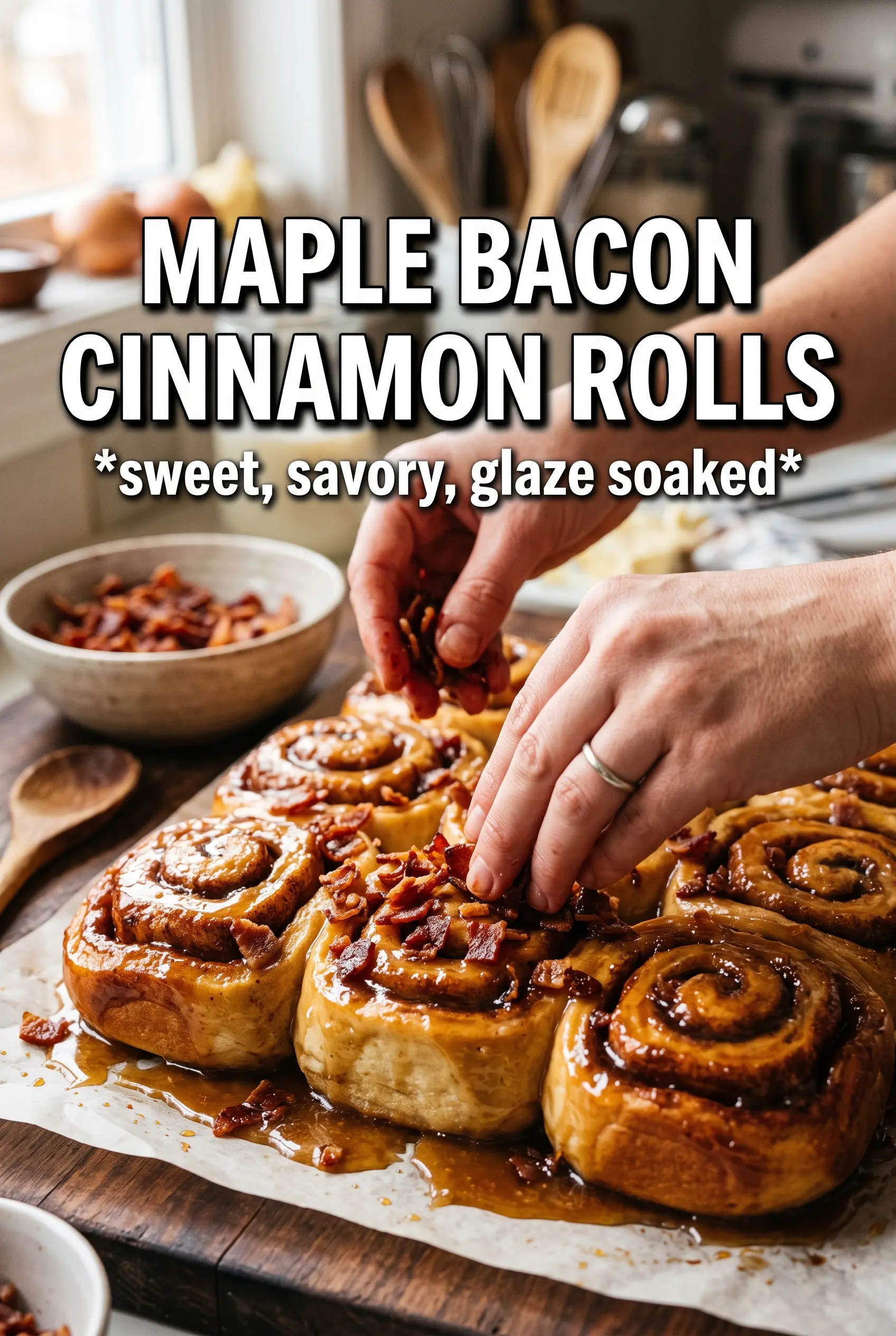
Maple Bacon Cinnamon Rolls
Ingredients
Equipment
Method
- Activate yeast by warming the milk, then whisk in sugar, melted butter, eggs, and vanilla until smooth, with small bubbles starting to appear. Knead in flour and salt for 8 minutes until the dough looks elastic and cohesive, with a slightly tacky feel.
- Rise the dough for 1 hour, covered, until doubled in size and noticeably puffy, then roll it into a 12x18 rectangle.
- Spread the softened butter over the dough, then sprinkle with brown sugar, cinnamon, and the crumbled cooked bacon to create an even sticky layer.
- Roll tightly from the long edge into a log, then cut into 12 rolls and arrange them in a greased 9x13 dish.
- Rise the rolls for 45 minutes, covered, until they look swollen and touch each other in the dish with a light, airy spring.
- Bake the rolls at 375F for 22-25 minutes until deep golden on top and set in the center, with the edges beginning to caramelize.
- Bake the candied bacon strips at 375F for 15 minutes, then allow them to cool just enough to crumble, with a lacquered, crisp surface. Glaze with 2 tablespoons maple syrup during baking so the bacon turns shiny before crumbling.
- Beat the maple glaze ingredients together until smooth and pourable, forming a glossy ribbon when lifted.
- Drizzle the glaze over the warm rolls and scatter the crumbled candied bacon on top so it sticks to the sticky surface.