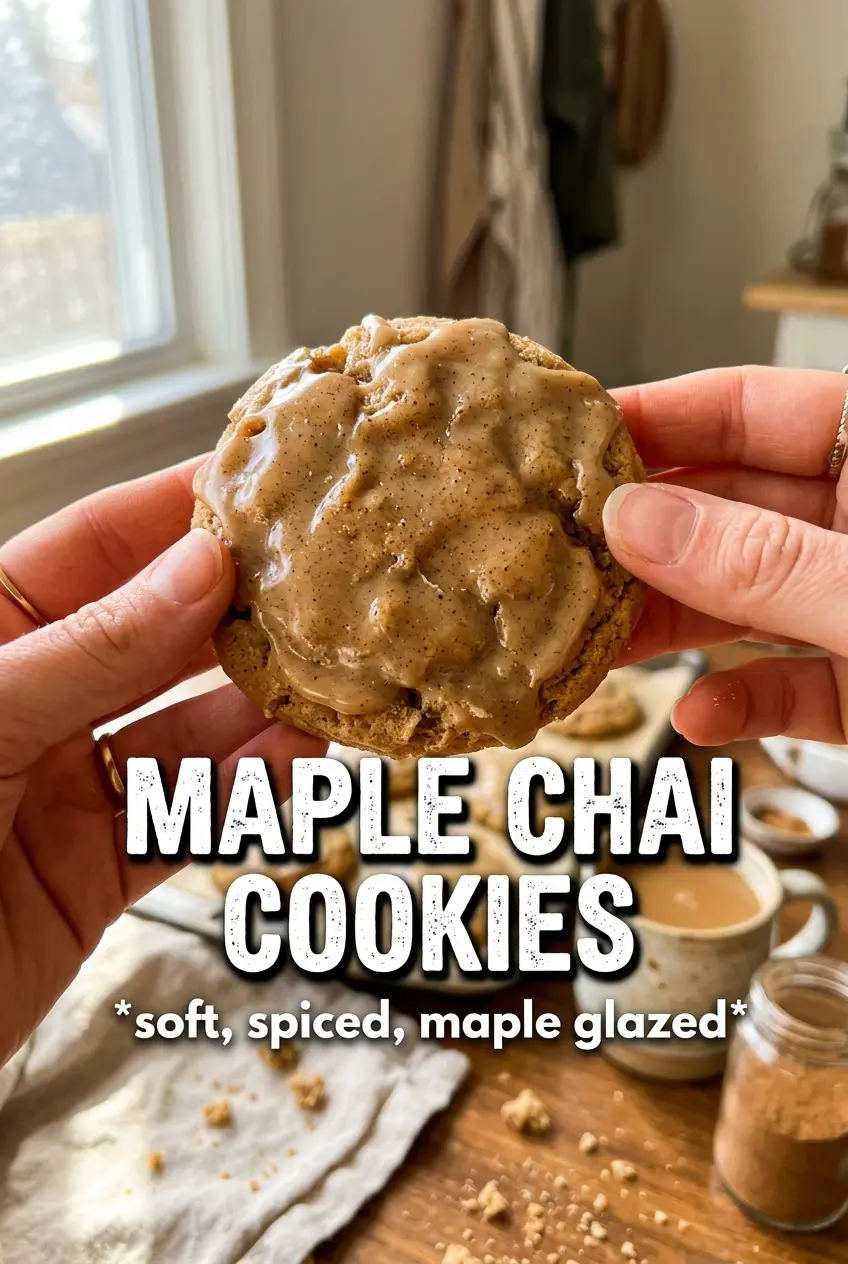
Maple chai cookies bake up with crisp edges, soft centers, and that warm-spiced finish that makes people reach for a second one before the first tray has cooled. The maple syrup gives these cookies a round, earthy sweetness that plays beautifully with cinnamon, cardamom, ginger, cloves, and that little bit of black pepper that keeps the flavor from tasting flat.
What makes this version work is the balance. The butter and brown sugar give the cookies structure and chew, while the maple syrup adds moisture without making the dough greasy. Rolling the dough in chai spice sugar before baking builds a fragrant crust, and the maple glaze on top adds just enough sweetness to echo the cookie without burying the spice.
Below you’ll find the small details that matter here: how to keep the centers soft, how to get the glaze thick enough to drizzle, and a few smart swaps if you want to adjust the spice level or make the recipe fit what you’ve got on hand.
The cookies baked up with those crackly edges and a soft middle, and the maple glaze set enough that I could stack them after about an hour. The cardamom came through without taking over, which was exactly what I wanted.
Love the warm spice and maple glaze on these cookies? Save this Maple Chai Cookies recipe for the next time you want a soft, crackly cookie with a cozy chai finish.
The Trick to Keeping Maple Cookies Soft Instead of Spreading Too Thin
Maple syrup adds flavor, but it also brings extra moisture, which is why these cookies need a little structure from the dry ingredients and the right bake time. If the dough feels soft, that is normal. What you don’t want is warm, greasy dough going straight onto the tray, because that is how you get cookies that puff up and then collapse into thin puddles.
The spice blend matters here too. Cinnamon and cardamom lead the flavor, but ginger, cloves, allspice, and black pepper keep the cookie tasting like chai instead of just sweet dough with cinnamon in it. The black pepper won’t make the cookies taste peppery; it quietly sharpens the spices and keeps the maple from turning one-note.
- Maple syrup — Use pure maple syrup, not pancake syrup. The real stuff gives a deeper, cleaner flavor and blends into the dough without tasting artificial.
- Brown sugar — This adds chew and helps the cookies stay soft in the middle. Light or dark brown sugar both work; dark brown sugar gives a slightly deeper molasses note.
- Cardamom — Fresh cardamom is worth it here. If yours has been sitting in the cabinet for years, the flavor fades fast and the cookies will taste flatter.
- Butter — Softened butter should yield to a finger press without looking shiny or greasy. If it is too warm, the cookies spread before the structure sets.
What Each Ingredient Is Actually Doing in This Recipe
- Primary ingredient (the star) — Quality matters most. Choose the best you can find.
- Cooking medium (oil, butter, or broth) — This carries flavors and prevents dryness.
- Seasonings (salt, pepper, spices, herbs) — Layer flavors so nothing overpowers. Build depth gradually.
- Aromatics (garlic, onion, herbs) — Cook with fat to bloom flavors. Become the foundation.
- Supporting ingredients — Complement the main ingredient without overpowering it.
- Sauce or liquid (if applicable) — Brings flavors together. Balance richness with acid.
- Acid (lemon, vinegar, wine, or other) — Brightens and prevents flat-tasting results.
- Final finish (garnish, glaze, or sauce) — Prevents one-dimensional taste and adds visual appeal.
Building the Dough and Glaze Without Losing the Spice
Whisk the dry ingredients first
Combine the flour, baking soda, salt, and all the spices until the color looks even and the spice flecks are distributed throughout. This keeps you from getting a pocket of cloves or pepper in one cookie and a bland bite in the next. If you rush this part, the cookies can bake with uneven spice and a slightly raw flour streak in the center.
Cream the butter and sugars until the mix looks airy
Beat the butter with both sugars until the mixture turns lighter in color and looks fluffy around the edges of the bowl. That step gives the cookies their lift and helps dissolve the sugar enough that the finished texture stays tender instead of gritty. Add the maple syrup, eggs, and vanilla after that, and expect the dough to look looser before the flour goes in. That is exactly what should happen.
Roll, bake, and stop at the set edge
Scoop the dough into 1 1/2-tablespoon portions, then roll each one in the chai spice sugar for that extra crackly finish. Bake just until the edges are set and the centers still look a little soft and underdone; they finish on the hot pan. If you wait for the tops to look fully firm in the oven, the cookies will end up dry once they cool.
Drizzle after the cookies are completely cool
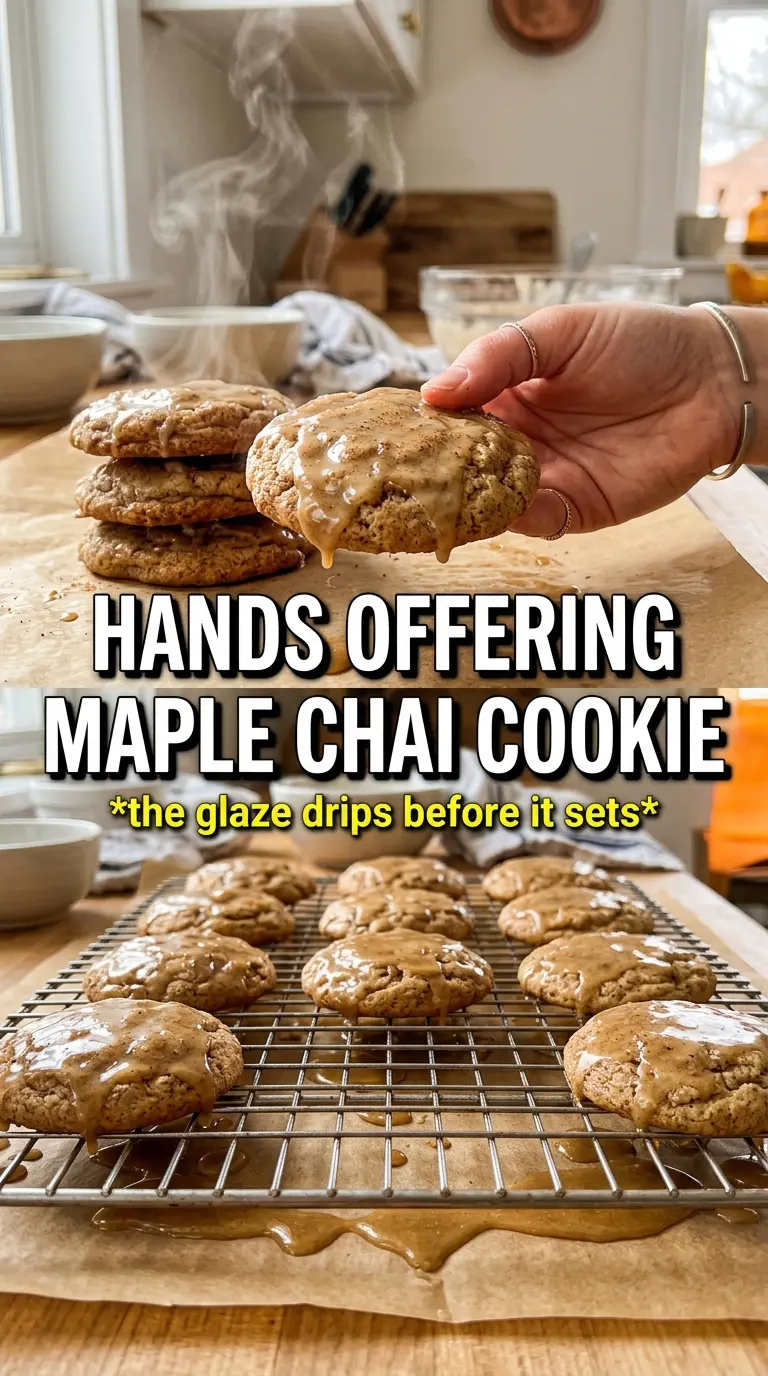
Whisk the powdered sugar, maple syrup, and milk until the glaze falls from the spoon in a slow ribbon. If it is too thick, add milk a few drops at a time; if it runs off the cookie, it needs more powdered sugar. Let the cookies cool all the way before glazing, or the glaze will melt into the surface instead of sitting on top in neat drizzles.
How to Adjust These Cookies for Different Kitchens and Different Spice Tastes
Dairy-Free Version
Use a plant-based butter that bakes well in place of the unsalted butter, then keep the rest of the recipe the same. The texture stays close, though the flavor loses a little of the buttery richness that helps these cookies taste rounded. For the glaze, swap the milk for an unsweetened non-dairy milk.
Gluten-Free Swap
A good 1:1 gluten-free baking blend can work here, but use one that includes xanthan gum or a similar binder. The cookies may spread a little less and feel slightly more delicate, so let them cool fully on the pan before moving them. If the dough seems dry, add a teaspoon of maple syrup rather than extra liquid.
Dial the Spice Up or Down
If you want a stronger chai note, bump the cardamom slightly and keep the black pepper in place. If you want a gentler cookie, cut the cloves in half first rather than reducing the cinnamon, since cinnamon carries the familiar cookie flavor while cloves can take over fast. The spice sugar on the outside will still give you a bold first bite.
Storage and Reheating
- Refrigerator: Store in an airtight container for up to 5 days. The cookies stay soft, though the glaze may soften slightly over time.
- Freezer: Freeze the baked cookies without glaze for up to 2 months. Layer with parchment so the spice sugar coating doesn’t rub off, then glaze after thawing.
- Reheating: Warm unglazed cookies at room temperature or in a low oven for a few minutes. If you glaze them first, the topping will melt and lose its clean drizzle.