Flaky white fish, sweet roasted tomatoes, briny olives, and a bright hit of lemon make this Mediterranean baked fish feel like a lot more work than it is. The fish cooks right on top of the vegetables, so every fillet picks up the garlicky, salty juices bubbling underneath. What comes out of the oven is tender in the middle, lightly seasoned on the surface, and surrounded by a sauce that tastes like it had time to simmer for much longer than 20 minutes.
Roasting the tomatoes, olives, capers, and peppers for a few minutes before the fish goes in does two important things: it starts the sauce and it concentrates the flavor. That first blast of heat softens the tomatoes just enough for them to burst later, while the white wine or broth keeps the pan from drying out. I like cod for a clean, flaky finish, but halibut and sea bass both hold their shape well if you want something meatier.
Below you’ll find the small details that matter here, including how to keep the fish from overcooking and what to swap if you’re cooking from what you already have in the pantry.
The fish came out flaky and moist, and the tomatoes with the olives made their own sauce in the pan. I loved that the capers stayed punchy instead of getting lost.
Save this Mediterranean baked fish for the nights when you want flaky white fish, briny olives, and a built-in pan sauce without extra steps.
The Pan Sauce Starts Before the Fish Goes In
The mistake with baked fish is usually impatience. If everything goes into the oven at the same time, the vegetables stay a little raw and the fish often sits there drying out while the pan catches up. Starting the tomatoes, olives, capers, peppers, garlic, and wine first gives you a hot, seasoned base that the fish can finish in, not just sit on top of.
You want the tomatoes to slump and the garlic to soften, but not brown hard. If the garlic starts getting dark in the first roast, the oven is too hot or the slices are too thin. Keep them visible in the oil and juices, then nestle the fish into that bubbling mixture so it cooks gently and picks up flavor from the bottom of the dish.
What Each Ingredient Is Actually Doing In This Dish
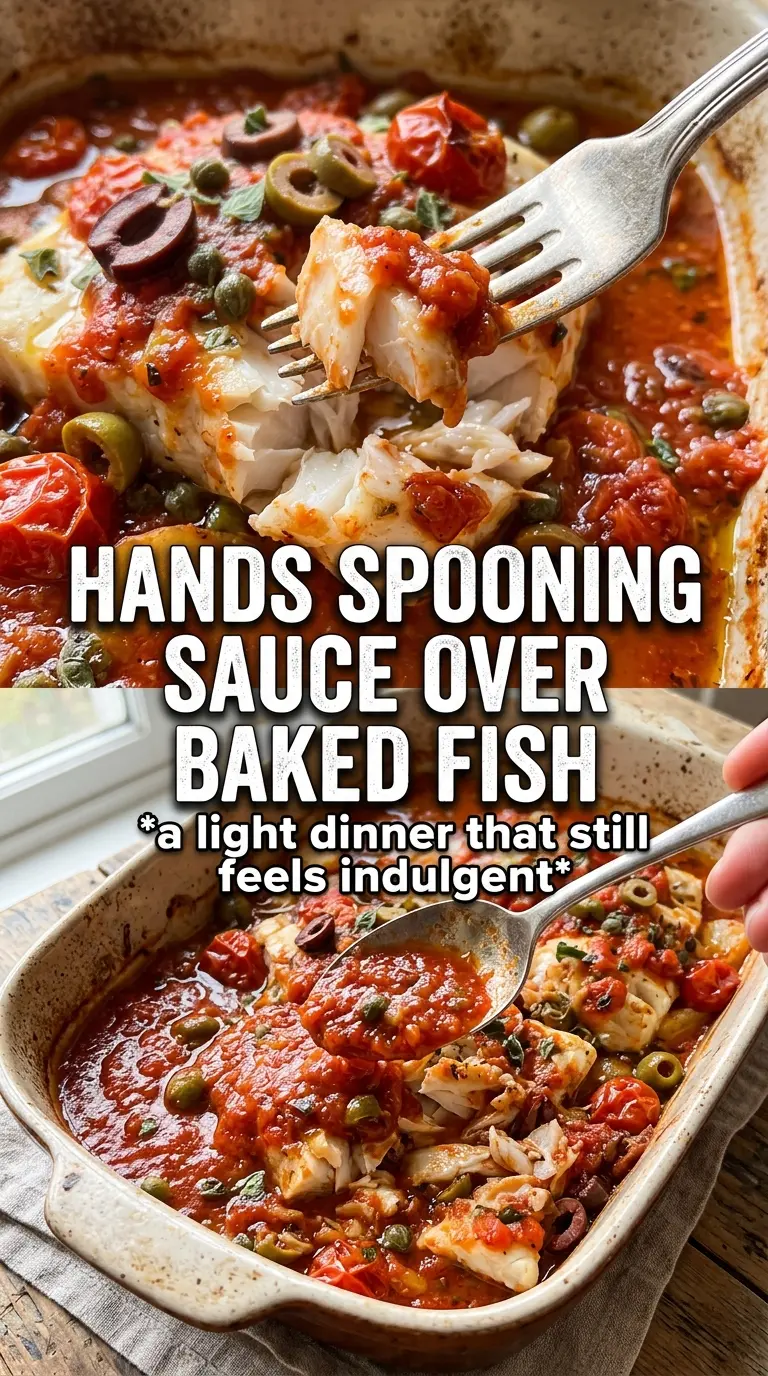
- White fish fillets — Cod gives you the softest, flakiest result, while halibut and sea bass stay a little firmer and are easier to serve in neat pieces. Use fillets that are similar in thickness so they finish at the same time; a thin tail end will overcook before the thick part is done.
- Cherry tomatoes — These are your sauce. They burst in the oven and release just enough juice to mingle with the wine, oil, and capers. Larger tomatoes can work, but cut them small enough that they soften quickly instead of staying chunky and underdone.
- Kalamata olives and capers — This is where the briny, salty backbone comes from. Don’t substitute regular canned black olives if you want the same depth; they’re milder and the dish tastes flatter. If you need to cut the salt back, rinse the capers briefly and use a little less olive juice from the jarred peppers.
- Jarred roasted red peppers — They add sweetness and a soft, silky texture that balances the acidity from the tomatoes and wine. Jarred peppers are perfect here; roasting them from scratch isn’t necessary because they’re not the main event, just a flavor booster.
- Dry white wine or broth — The liquid keeps the dish from drying out and gives the vegetable juices a little more body. Wine adds a cleaner, sharper finish, while broth makes the sauce rounder and slightly less bright. Use whichever you already have.
- Olive oil, oregano, and red pepper flakes — Olive oil carries the flavors and helps the tomatoes roast instead of steam. Oregano brings the Mediterranean note that ties everything together, and the red pepper flakes give a tiny bit of heat without taking over.
Getting the Fish Tender Without Letting the Vegetables Overcook
Build the base first
Mix the tomatoes, olives, capers, peppers, garlic, wine, olive oil, oregano, and red pepper flakes directly in the baking dish so the flavor starts in one place. Spread everything into an even layer so the heat reaches the tomatoes and garlic instead of trapping them under a mound. After 10 minutes in the oven, the tomatoes should look shiny, softening, and a little collapsed around the edges.
Nestle, don’t bury
Season the fish with salt and pepper, then tuck the fillets into the hot vegetable mixture. The top of each fillet should sit partly exposed so the oven heat can finish it evenly. If you bury the fish under the vegetables, it steams instead of baking and you lose that clean flaky texture.
Stop at the first flaky sign
Bake just until the fish flakes with a fork and the center turns opaque. For average 6-ounce fillets, that usually takes 12 to 15 minutes, but thickness matters more than the clock. Pull the dish as soon as the thickest part gives way easily; if you wait until the fish looks dry on the surface, it’s already gone a little too far.
Make It With Salmon Instead
Salmon works if you want a richer, more forgiving fish. It needs about the same oven time, but the final texture will be fattier and less delicate. The tomatoes and capers stand up nicely to it, so the dish still tastes balanced.
Dairy-Free and Naturally Gluten-Free
This recipe is already dairy-free and gluten-free as written, which is part of why it works so well for a quick dinner. Just serve it with rice, potatoes, or crusty bread if you want something to catch the pan juices. The sauce stays bright and full-bodied without any cream or flour.
Use Broth Instead of Wine
Broth makes the dish a little softer and less sharp, which is helpful if you’re cooking for kids or skipping alcohol. The flavor won’t have the same lift that wine gives, so add an extra squeeze of lemon at the end to brighten the sauce back up.
Storage and Reheating
- Refrigerator: Store leftovers in a covered container for up to 2 days. The fish will firm up a little, but the sauce keeps it from drying out completely.
- Freezer: I don’t recommend freezing this one. Cooked white fish turns soft and watery after thawing, and the tomatoes lose their texture.
- Reheating: Warm gently in a 300F oven, covered loosely with foil, just until heated through. High heat will tighten the fish and make it break apart before the center is warm.
Answers to the Questions Worth Asking
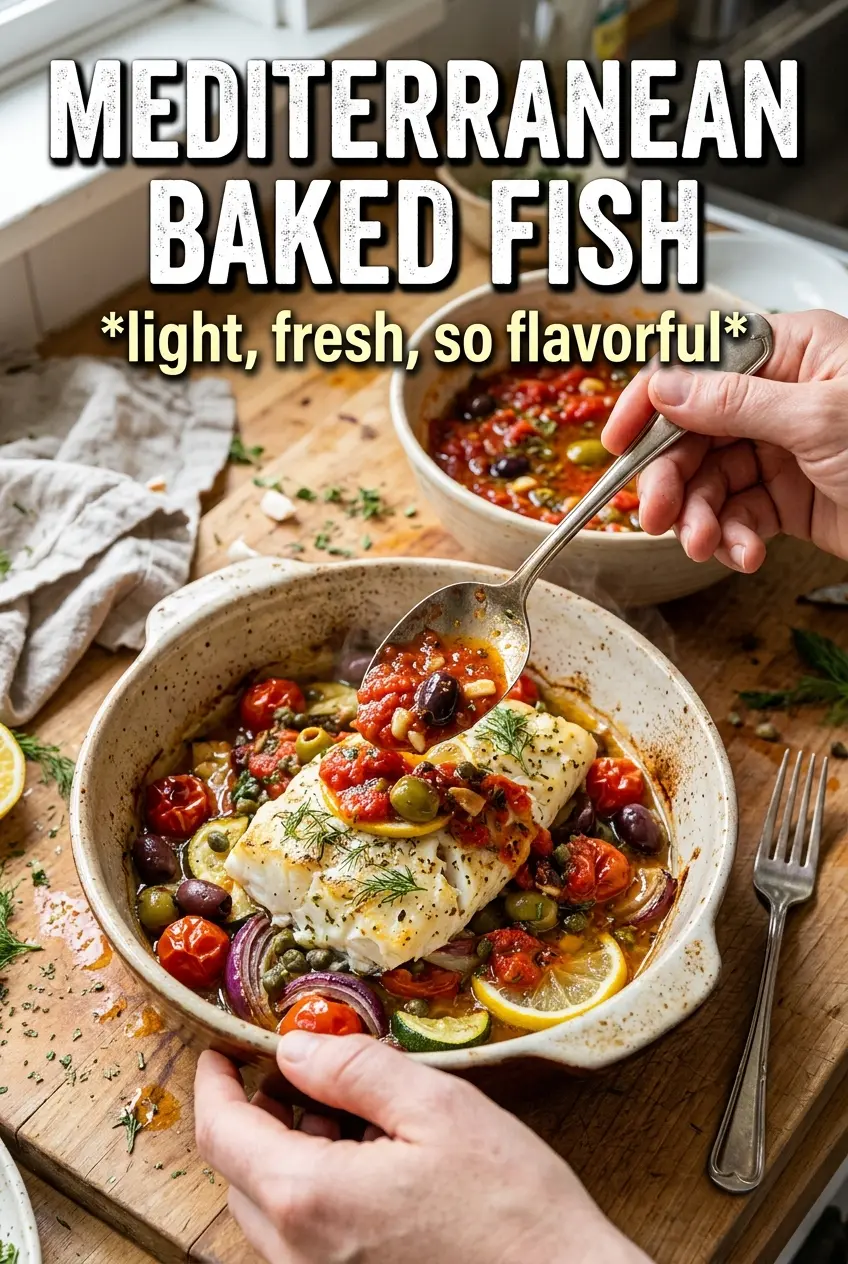
Mediterranean Baked Fish
Ingredients
Equipment
Method
- Preheat oven to 400°F, then grease a 9x13 baking dish. This helps prevent sticking when you add the fish.
- Combine cherry tomatoes, Kalamata olives, capers, roasted red peppers, garlic, white wine (or broth), olive oil, oregano, and red pepper flakes in the baking dish. Toss until the vegetables look evenly coated with oil and seasoning.
- Roast the vegetable mixture for 10 minutes at 400°F. Look for bubbling and slightly softened tomatoes around the edges.
- Season the fish fillets with salt and pepper, then nestle them into the vegetable mixture. Make sure each fillet sits snugly so it steams in the juices.
- Bake for 12-15 minutes more at 400°F until the fish flakes easily with a fork. The center should turn opaque and separate in moist layers.
- Garnish with fresh parsley and serve with lemon wedges. Squeeze lemon over the top just before eating for bright flavor.