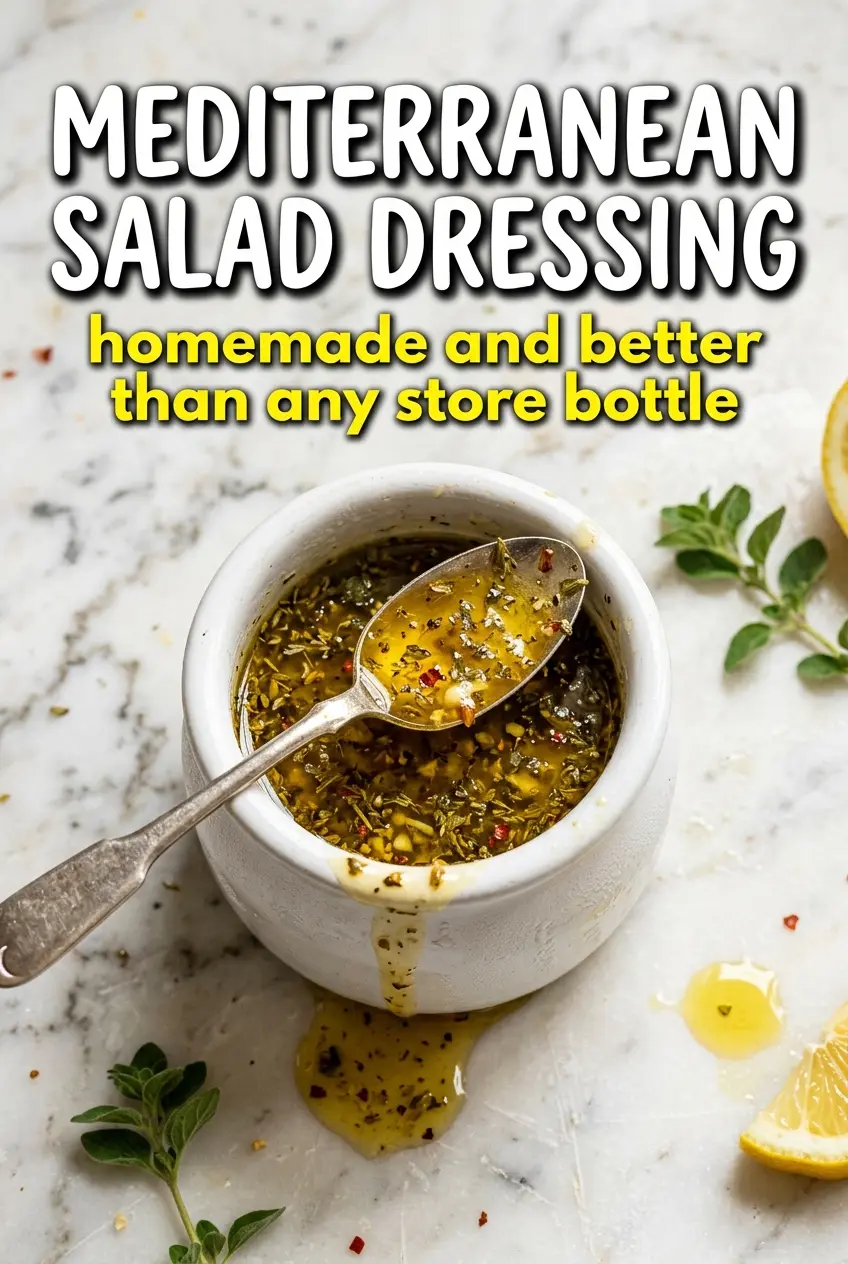
Golden, herb-flecked Mediterranean salad dressing turns a plain bowl of greens into something you want to keep eating past the last bite. The olive oil goes creamy with the vinegar and Dijon, then the chopped basil, parsley, oregano, olives, and capers give each spoonful a salty, briny lift that tastes bright without being sharp.
The difference here is balance and texture. Dijon does the quiet work of holding the dressing together, while the garlic and minced olives are small enough to spread through the vinaigrette instead of sinking to the bottom. Fresh herbs matter here because dried herbs won’t give you the same clean, grassy finish, and the olive oil needs to be added slowly so the dressing emulsifies instead of separating into an oily layer.
You’ll find the simple whisking method below, plus the one trick that keeps the vinaigrette creamy in the fridge instead of turning thin and broken. There’s also a few ways to adjust it depending on what herbs or salty add-ins you have on hand.
The dressing came together thick and glossy, and the chopped olives and capers stayed suspended instead of sinking to the bottom. I used it on cucumbers and tomatoes, and it tasted even better after sitting for 20 minutes.
Save this Mediterranean salad dressing for crisp greens, grain bowls, and tomato salads that need a briny herb kick.
The Emulsion Is What Keeps This Dressing from Feeling Thin
Most vinaigrettes taste fine in the bowl and disappointing on the salad because the oil and vinegar separate before they hit the greens. This dressing avoids that by starting with Dijon and garlic, then streaming in the olive oil slowly while whisking hard enough to pull the liquid together into a pale, glossy emulsion.
If you rush the oil, the dressing can break and look greasy instead of creamy. The fix is simple: keep whisking and add the oil in a thin stream, especially at the beginning when the mixture is most likely to split. The herbs, olives, and capers go in after the base is stable so they stay evenly distributed instead of getting in the way of the emulsion.
What Each Ingredient Is Actually Doing In This Dressing
- Red wine vinegar — This gives the dressing its bright edge and sharpens the herbs and olives. If you swap in lemon juice, the dressing turns a little fresher and softer, but you lose that classic vinegar bite that works so well with Mediterranean flavors.
- Dijon mustard — Dijon isn’t just there for taste. It helps the oil and vinegar stay together, which is why this dressing feels fuller on the tongue than a bare-bones vinaigrette.
- Minced garlic — Fresh garlic gives the dressing its backbone. Mince it finely so it blends into the emulsion; big chunks can read harsh and leave you with pockets of raw garlic.
- Extra virgin olive oil — Use a good one here, because the oil is the body of the dressing. A peppery, fruity olive oil gives the finish its richness, and there isn’t a substitute that brings the same flavor.
- Fresh basil, parsley, and oregano — These herbs make the dressing taste alive. Fresh matters because dried herbs won’t soften into the vinaigrette the same way, and they can leave it dusty instead of bright.
- Kalamata olives and capers — These are the salty, briny notes that make the dressing stand out. Chop them small so every spoonful gets the flavor without overwhelming a bite of salad.
Whisking It Together So the Flavor Stays Balanced
Start With the Sharp Base
Whisk the vinegar, Dijon, and garlic together first until the mixture looks smooth and slightly thickened. That first whisk matters because it dissolves the mustard into the acid before the oil shows up, which gives you a better emulsion from the start. If the garlic clings in little clumps, keep whisking for a few more seconds; it should look evenly dispersed before you move on.
Stream in the Olive Oil
Add the olive oil slowly while whisking in a steady, energetic motion. At first, the dressing may look loose, then it should turn glossy and slightly opaque as the emulsion forms. If it starts to separate, stop pouring oil for a moment and whisk the base until it comes back together, then continue more slowly.
Fold in the Herbs and Briny Bits
Stir in the basil, parsley, oregano, olives, and capers once the dressing is stable. Adding them too early can make the whisking awkward and can keep the oil from fully emulsifying. Taste after this stage, because the olives and capers bring their own salt and the dressing may need less seasoning than you expect.
Season and Let It Sit Briefly
Add the salt and black pepper last, then taste again. A short rest of 5 to 10 minutes helps the garlic soften and lets the herbs perfume the whole dressing. If the flavor feels too sharp, it usually just needs a little more olive oil or a pinch more salt to round the edges.
How to Adapt This Dressing Without Losing What Makes It Work
Make It Dairy-Free and Naturally Gluten-Free
This dressing already fits both of those diets as written, which is part of why it’s such a useful staple. Just double-check your mustard if you’re serving someone very sensitive to gluten, since a few brands add unexpected thickeners or flavorings. The texture and taste don’t need any compromise here.
Swap the Herb Mix Based on What You Have
If you’re out of basil, use more parsley and a little extra oregano. Parsley keeps the dressing fresh and oregano gives it that Mediterranean backbone, while basil adds sweetness and aroma. The dressing still works without basil, but the flavor lands a little greener and less rounded.
Use Lemon for a Brighter Finish
Replace half of the vinegar with fresh lemon juice if you want a sharper, sunnier dressing. Lemon makes the herbs pop, but it also softens the deep tang you get from red wine vinegar, so the result tastes lighter and less rustic. I’d keep the garlic a little lower if you go this direction so the dressing doesn’t turn too aggressive.
Make It More Salty and Bold for Grain Bowls
For grain bowls or roasted vegetables, add an extra teaspoon of capers or a few more minced olives. Those ingredients make the dressing more savory and help it stand up to heavier foods. The tradeoff is that it will taste punchier on tender lettuce, so reserve the bolder version for sturdier salads.
Storage and Reheating
- Refrigerator: Store in a glass jar for up to 1 week. The olive oil may thicken or solidify a little, which is normal.
- Freezer: I don’t recommend freezing this dressing. The emulsion and fresh herbs lose their texture once thawed, and the vinaigrette can turn grainy.
- Reheating: There’s no reheating needed. Let it sit at room temperature for 10 to 15 minutes, then shake or whisk hard before serving so the oil and vinegar come back together.
Questions I Get Asked About This Recipe
Mediterranean Salad Dressing
Ingredients
Method
- Combine red wine vinegar, Dijon mustard, and minced garlic in a bowl. Whisk vigorously for about 30 seconds until the mixture looks smooth.
- Slowly drizzle in extra virgin olive oil while whisking constantly to form an emulsion. Continue whisking for 1 minute, watching for a thicker, golden look.
- Stir in basil, parsley, oregano, kalamata olives, and capers. Mix until evenly distributed, with visible herb flecks throughout.
- Season with salt and black pepper. Taste and adjust flavors as needed for a balanced tang and savoriness.
- Transfer the dressing to a glass jar and refrigerate. Store for up to one week, then shake well before serving.