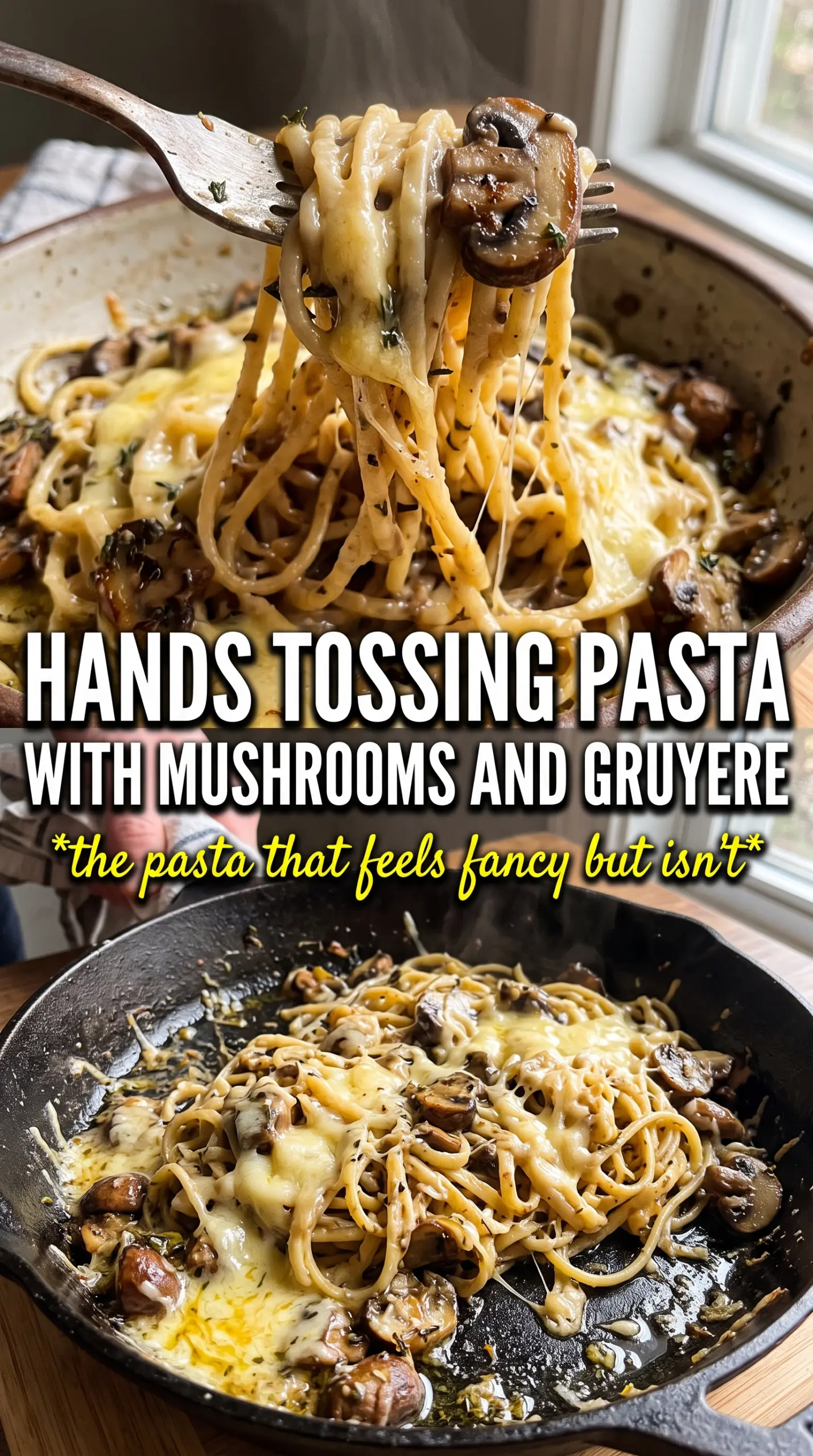
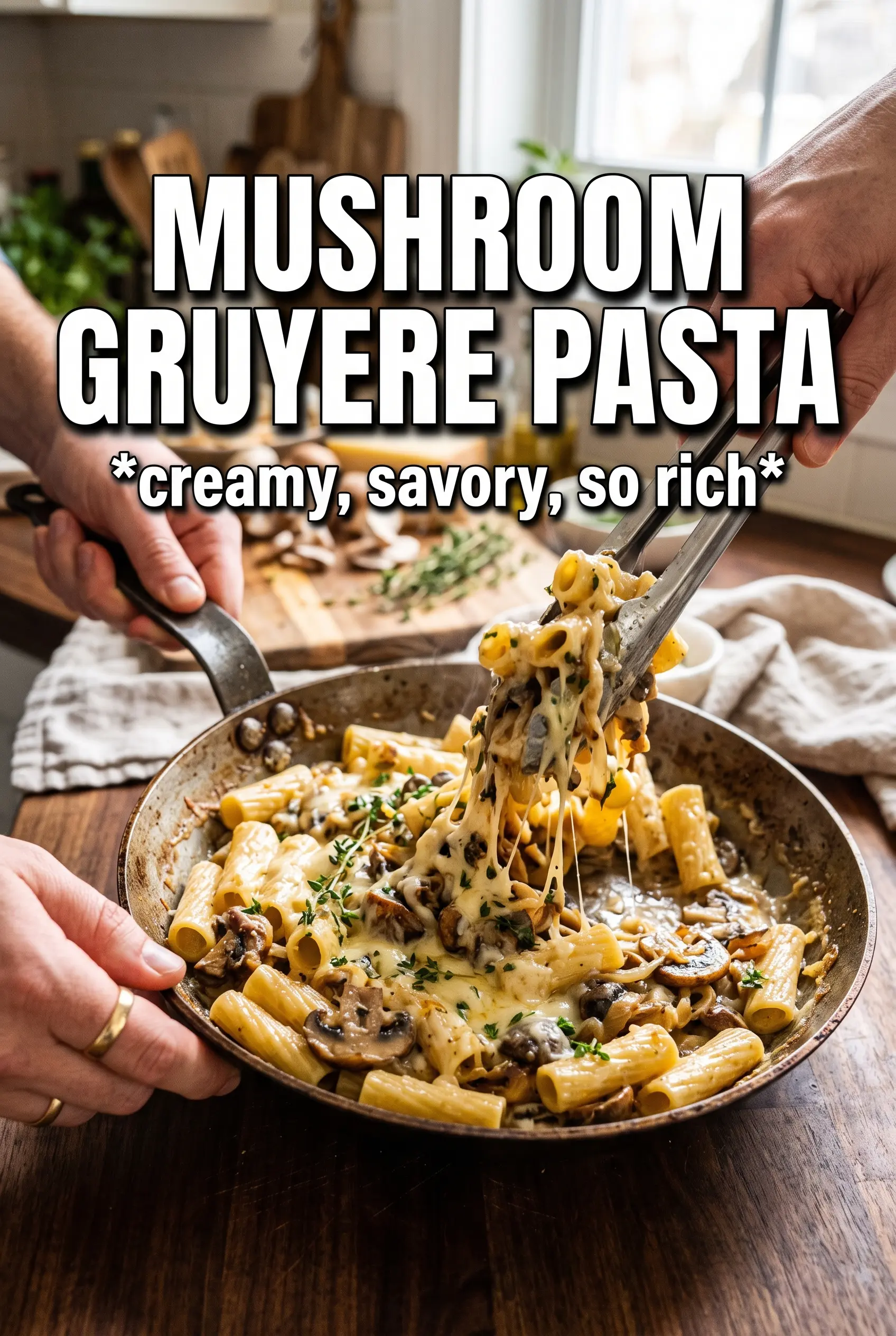
Silky mushrooms, nutty Gruyere, and a glossy cream sauce make this pasta feel a little more dressed up than a typical weeknight bowl, but it still lands on the table fast enough for a regular dinner. The mushrooms cook until their edges turn deeply browned, which gives the sauce a savory backbone instead of a flat, one-note creaminess. Once the cheese melts in, the whole thing clings to the pasta in that ideal way where every bite tastes coated, not heavy.
The part that matters most is the heat management. The mushrooms need space and high heat so they can brown instead of steam, and the wine has to cook down before the cream goes in, or the sauce can taste sharp and thin. Gruyere melts beautifully, but it behaves best when you add it off the hottest part of the burner so it turns smooth instead of stringy.
Below, you’ll find the small details that make this pasta dependable: how to get the mushrooms properly golden, what to do if the sauce tightens too much, and a few smart swaps for different needs.
The mushrooms got that deep golden edge and the sauce stayed silky all the way through. I added a splash more pasta water at the end and it coated the rigatoni perfectly.
Save this Mushroom Gruyere Pasta for the nights when you want a creamy mushroom sauce that actually coats the pasta instead of pooling at the bottom of the bowl.
The Part Most Mushroom Pastas Get Wrong
The biggest mistake in mushroom pasta is rushing the mushrooms before they’ve had time to lose their water. If the pan is crowded or the heat is too low, they turn pale and soft, and that moisture ends up thinning the sauce instead of building flavor. You want a hard sizzle when they hit the pan and long enough contact with the heat that the undersides go brown before you stir.
Once the mushrooms have that deep color, the rest of the dish moves quickly. The shallot and garlic only need a short cook, just enough to take the raw edge off without burning, and the thyme goes in with them so it perfumes the butter. From there, the wine loosens all the browned bits stuck to the skillet, which is where a lot of the savory flavor lives.
- Mushrooms — Mixed varieties give you better texture and a deeper, earthier sauce. Cremini bring the body, shiitake add intensity, and oyster mushrooms stay pleasantly tender. If you use only cremini, the dish still works, but it tastes a little less layered.
- Gruyere — This is the cheese that makes the sauce taste nutty and rich without becoming cloying. It melts into a smooth sauce better than most aged cheeses, but shred it yourself if you can; pre-shredded cheese often carries anti-caking starch that can make the sauce grainy.
- Dry white wine — A splash of wine cuts through the cream and wakes up the mushrooms. If you skip it, use a little extra broth plus a teaspoon of lemon juice at the end for brightness, but the flavor won’t be quite as rounded.
- Pasta water — This is what makes the sauce cling. The starch in the water helps the cream and cheese emulsify around the pasta, so add it a splash at a time until the sauce looks glossy and loose enough to coat every ridge.
What Each Ingredient Is Actually Doing in This Recipe
- Primary ingredient (the star) — Quality matters most. Choose the best you can find.
- Cooking medium (oil, butter, or broth) — This carries flavors and prevents dryness.
- Seasonings (salt, pepper, spices, herbs) — Layer flavors so nothing overpowers. Build depth gradually.
- Aromatics (garlic, onion, herbs) — Cook with fat to bloom flavors. Become the foundation.
- Supporting ingredients — Complement the main ingredient without overpowering it.
- Sauce or liquid (if applicable) — Brings flavors together. Balance richness with acid.
- Acid (lemon, vinegar, wine, or other) — Brightens and prevents flat-tasting results.
- Final finish (garnish, glaze, or sauce) — Prevents one-dimensional taste and adds visual appeal.
How to Keep the Sauce Silky From Start to Finish
Brown the mushrooms in batches
Melt the butter in a large skillet, then add the mushrooms in a single layer and leave them alone for 4 to 5 minutes. That stillness is what gives you color; if you stir too soon, they release moisture and steam instead of browning. Once the first side is deeply golden, stir and cook a few minutes more until most of the liquid is gone and the pan smells nutty.
Build the base without burning the aromatics
Add the shallot, garlic, and thyme after the mushrooms are browned. Cook just until the shallot softens and the garlic turns fragrant, about 2 minutes. If the garlic starts to take on color before the wine goes in, the heat is too high and the sauce will taste sharp, so pull the pan off the burner for a moment if needed.
Finish with cheese off the hottest heat
Pour in the wine and let it simmer until it’s mostly reduced, then add the cream and broth and cook until the sauce thickens slightly. Stir in the Gruyere after lowering the heat; high heat is the fastest route to a stringy or greasy sauce. The cheese should melt into a smooth, glossy coating before the pasta goes in, and the pasta water should loosen it only as much as needed.
How to Adapt This Mushroom Gruyere Pasta
Make It Vegetarian
Use vegetable broth instead of chicken broth and the rest of the recipe stays the same. The mushrooms and Gruyere already carry most of the depth, so you won’t lose anything important. Just taste at the end before adding more salt, since vegetable broth can vary a lot.
Make It Gluten-Free
Swap in your favorite gluten-free rigatoni or pasta shape and cook it just to al dente. Gluten-free pasta can soften fast once it hits the sauce, so pull it a touch early and use enough pasta water to keep the sauce flowing instead of thickening into a paste.
Make It Dairy-Free
Replace the butter with olive oil and use a dairy-free cream that holds up to heat, then swap Gruyere for a well-melting vegan cheese. The result will be less nutty and less rich than the original, but you’ll still get a creamy mushroom pasta if you keep the heat low when the cheese goes in.
Use a Different Pasta Shape
Rigatoni gives you little pockets of sauce, but pappardelle makes the dish feel broader and more luxurious. Long noodles need a bit more pasta water to stay slick, while ridged shapes grab more of the mushroom pieces. Either way, finish the pasta in the skillet so it absorbs the sauce instead of sitting beside it.
Storage and Reheating
- Refrigerator: Store leftovers in an airtight container for up to 3 days. The sauce will thicken as it chills, and the pasta will absorb some of the cream.
- Freezer: This dish freezes, but the sauce can separate a little after thawing. If you want the best texture, freeze the sauce and pasta separately or skip freezing and make it fresh.
- Reheating: Warm it gently in a skillet over low heat with a splash of broth or milk to bring the sauce back. Microwaving on high is what usually breaks creamy sauces, so go slow and stir often.
Answers to the Questions Worth Asking
Mushroom Gruyere Pasta
Ingredients
Equipment
Method
- Bring a large pot of salted water to a boil and cook rigatoni or pappardelle until al dente, then reserve 1 cup pasta water.
- Melt unsalted butter in a large cast iron skillet over medium-high heat.
- Add mixed mushrooms and cook over high heat without stirring for 4-5 minutes until deeply golden.
- Stir the mushrooms and cook for 3 more minutes.
- Add shallot, garlic, and fresh thyme, then cook for 2 minutes until fragrant.
- Deglaze with dry white wine, scraping up browned bits from the pan.
- Add heavy cream and chicken or vegetable broth and simmer for 5 minutes.
- Stir in Gruyere until melted, then toss in pasta and add pasta water as needed to make the sauce silky and clingy.
- Season with salt and pepper to taste.
- Top with fresh parsley and serve immediately.