These oatmeal apple pancakes land on the plate with crisp, golden edges, a tender middle, and little pockets of soft apple in every bite. The oats give them a heartier texture than standard pancakes, but they still stay light enough to stack high and soak up maple syrup without going soggy.
What makes this version work is the balance: the oats are pulsed just enough to break them down, but not so much that they disappear into flour, and the buttermilk brings enough tang to react with the baking soda for a taller, fluffier pancake. The grated or finely diced apple matters too. Big chunks can weigh down the batter, but small pieces soften as they cook and sweeten the whole stack.
Below, I’ll walk you through the one step that keeps the texture right, plus a few smart swaps if you need to use what’s already in your kitchen. If you’ve ever had apple pancakes turn dense or gummy, the details here will help a lot.
The batter cooked up fluffy with those little bits of apple softening just enough, and the oat texture made them feel hearty without being heavy. I liked that they held together on the flip and didn’t go soggy under the maple syrup.
Oatmeal apple pancakes with soft centers, crisp edges, and maple syrup pooled over the stack
The Trick to Keeping Oatmeal Pancakes Tender Instead of Dense
The biggest mistake with oatmeal pancakes is grinding the oats too fine or overmixing the batter. If the oats turn into flour, the pancakes lose the pleasant, nubby texture that makes them different from a plain buttermilk stack. And once the wet ingredients go in, you want to stir only until the dry streaks disappear. A few lumps are fine. A smooth batter usually means too much mixing and tougher pancakes.
Resting the batter for 5 minutes matters here because the oats need time to hydrate. That short rest thickens the batter just enough so the pancakes spread gently instead of running all over the pan. If your batter seems too thick after resting, add a splash of buttermilk. If it looks thin, let it sit another minute or two before judging it.
What Each Ingredient Is Doing in These Pancakes
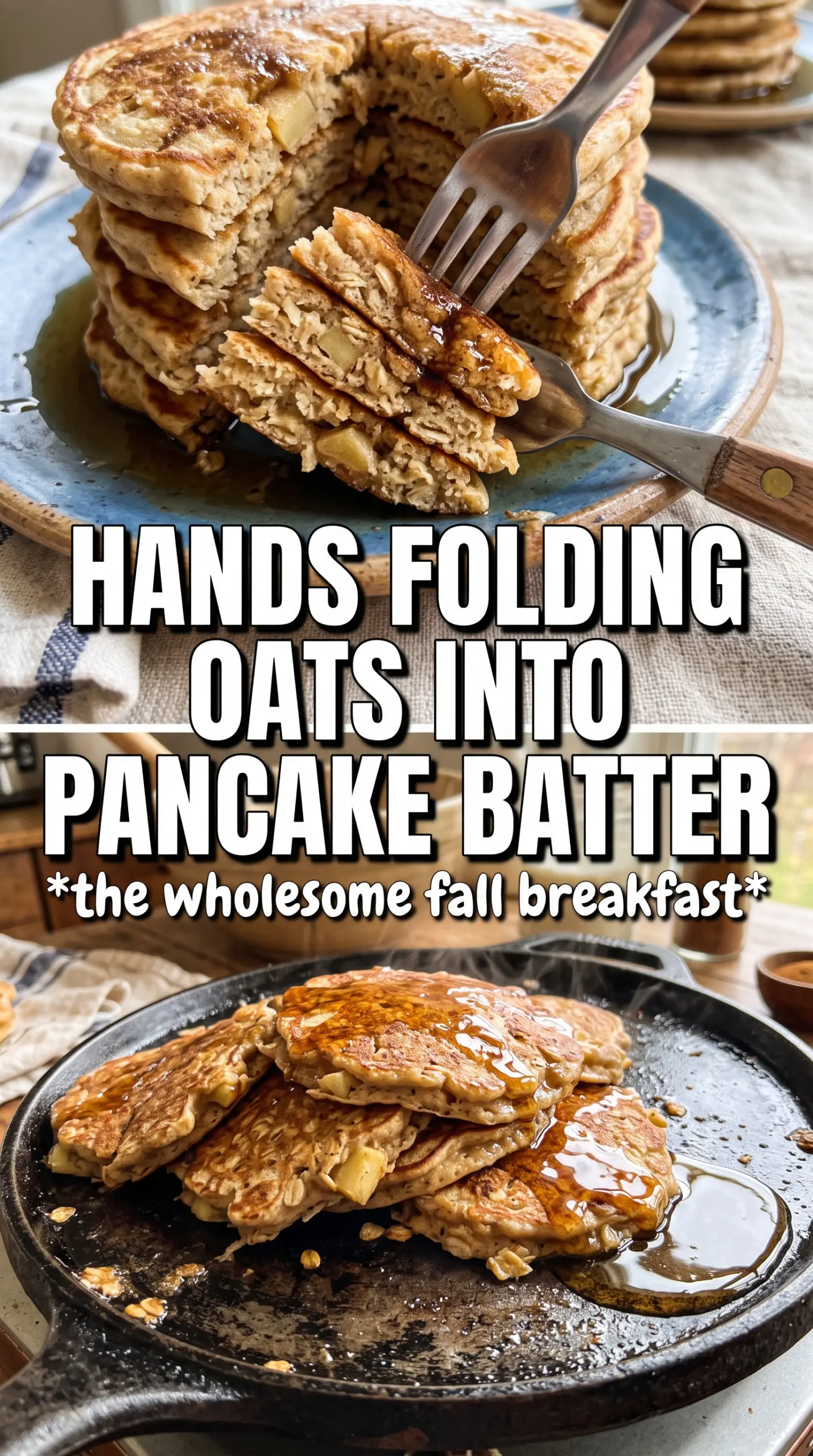
- Rolled oats — These give the pancakes their hearty texture and a little chew. Quick oats can work in a pinch, but they soften more and won’t give quite the same rustic bite. Pulse them just a few times so you keep some texture.
- Buttermilk — This is what gives the pancakes lift and tenderness. If you don’t have it, mix 1-1/2 cups milk with 1 tablespoon lemon juice or vinegar and let it sit 5 minutes, but the flavor will be a little less rich.
- Apple — Finely diced apple gives little tender bites; grated apple melts more into the batter and makes the pancakes feel moister. Use a firm apple like Honeycrisp, Pink Lady, or Granny Smith so the pieces hold shape instead of disappearing.
- Brown sugar and cinnamon — These echo the apple without making the pancakes taste like dessert. The brown sugar adds a hint of caramel flavor, and cinnamon keeps the spices warm instead of sharp.
- Melted butter — Butter adds richness and helps the edges brown. You can swap in neutral oil, but the pancakes will taste a little flatter and lose some of that classic breakfast flavor.
Getting the Pan Hot Enough for a Clean Flip
Heat the skillet over medium, not high. If the pan is too hot, the outside will brown before the center sets, and the apple pieces can scorch while the middle stays loose. A properly heated pan should make the batter sizzle gently as soon as it hits the surface, but it shouldn’t smoke.
Use about 1/3 cup batter per pancake so the centers have enough time to cook through before the edges dry out. Watch for bubbles forming across the top and the edges looking set and matte. That’s the real signal to flip. If you flip too early, the pancakes can smear or collapse. After the turn, the second side usually needs about 2 minutes, just until it’s golden and the center springs back lightly when pressed.
Grind the oats without turning them to dust
Pulse the oats 5 or 6 times, then stop and check the texture. You want coarse crumbs, not a powdery flour. That little bit of structure gives the pancakes their signature bite and keeps the batter from becoming heavy.
Fold, don’t beat, the batter
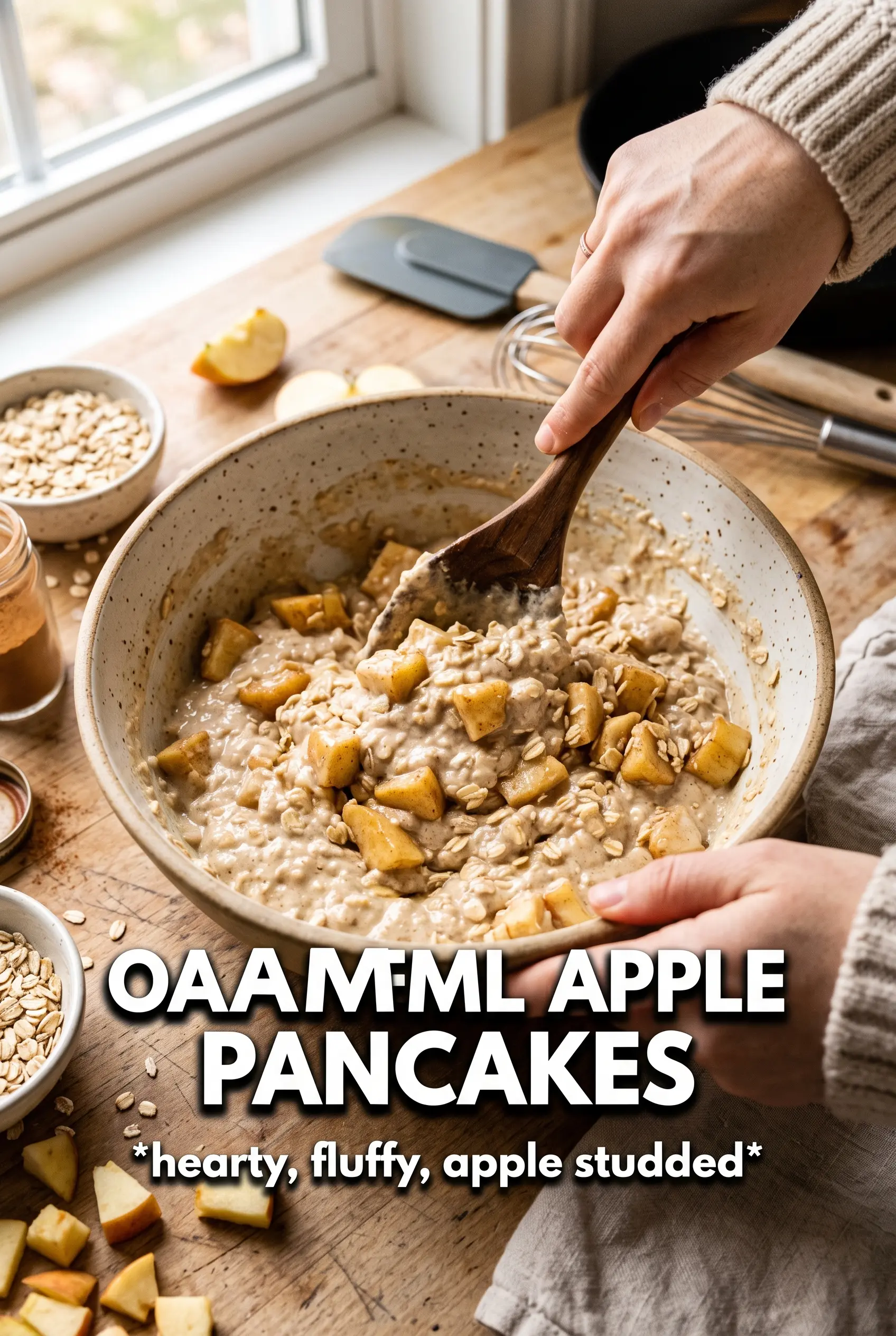
Once the wet ingredients meet the dry, stir only until everything is moistened. Then fold in the apple. If you keep mixing after that, the gluten in the flour tightens up and the pancakes turn rubbery instead of tender.
Cook until the edges set before flipping
Let the first side cook long enough for the top to lose its raw shine and the edges to look firm. The center can still have a few bubbles. That’s fine. Pancakes that are flipped too soon tend to stick, tear, or land dense in the middle.
Make Them Gluten-Free with a One-for-One Flour Blend
Swap the all-purpose flour for a good cup-for-cup gluten-free blend. The oats are already doing part of the heavy lifting, so the texture stays close, but the batter may thicken a little more as it rests. If that happens, thin it with a splash of buttermilk before cooking.
Make Them Dairy-Free Without Losing the Apple Flavor
Use a plant milk mixed with 1 tablespoon lemon juice or vinegar in place of the buttermilk, and swap the melted butter for neutral oil or melted dairy-free butter. You’ll lose a little of the tang and richness, but the apples and cinnamon still carry the flavor well.
Use Grated Apple for a Softer, More Even Pancake
Grated apple disappears more into the batter and gives you a softer, more uniform pancake with moisture throughout. Diced apple gives better little bursts of fruit. Both work; grated apple is the better choice if you want a smoother texture.
Storage and Reheating
- Refrigerator: Store leftovers for up to 3 days. They’ll soften a bit, but the flavor holds up well.
- Freezer: These freeze nicely. Cool completely, layer with parchment, and freeze in a zip-top bag for up to 2 months.
- Reheating: Warm in a toaster oven or skillet over low heat until heated through. The microwave works, but it softens the edges and can make the pancakes rubbery.
Questions I Get Asked About This Recipe
Oatmeal Apple Pancakes
Ingredients
Equipment
Method
- Pulse rolled oats in a food processor 5-6 times until coarsely ground, then stop before it becomes fine flour.
- Combine ground oats with all-purpose flour, brown sugar, baking powder, baking soda, cinnamon, nutmeg, and salt.
- Whisk buttermilk, eggs, melted butter, and vanilla extract until smooth.
- Fold the buttermilk mixture into the dry ingredients until just combined, keeping the batter slightly thick.
- Fold in the peeled diced or grated apple, then rest the batter for 5 minutes to hydrate the oats.
- Heat a griddle or skillet over medium heat and grease lightly so the first pancake releases easily.
- Pour 1/3 cup batter per pancake and cook until bubbles form and the edges look set, about 3 minutes.
- Flip and cook for 2 more minutes until golden, using a quick, confident turn to keep the shape.
- Serve the pancakes with maple syrup and extra apple slices, then finish with a dusting of powdered sugar.