Oatmeal Cream Pie Cake tastes like the lunchbox treat grew up, got taller, and learned how to hold a proper layer of filling. The cake stays soft and warmly spiced, with enough oat texture to feel homey instead of plain, and the marshmallow cream filling gives you that familiar sweet, fluffy center in every slice. It’s the kind of dessert that gets a quiet pause at the table, then people start reaching for a second piece before the first one is gone.
What makes this version work is the balance. The oats are blended fine so they bring body without turning the crumb heavy, and the buttermilk keeps the cake tender while the brown sugar deepens the flavor. The filling is built from butter, marshmallow fluff, and powdered sugar, which means it spreads cleanly between the layers instead of sliding out when you cut the cake. That’s the difference between a cake that looks nostalgic and one that slices like it was meant to be served.
Below, I’ll walk through the one part that matters most: keeping the layers cool before assembly so the filling stays thick and the frosting stays smooth. I’ve also included the swaps I trust when you want to lean more spiced, more cookie-like, or a little lighter on the sweetness.
The filling stayed thick and fluffy, and the oat layers baked up so soft that the cake sliced cleanly without squishing. My husband asked if I could make it again for Sunday dinner before we’d even finished dessert.
Save this Oatmeal Cream Pie Cake for the thick marshmallow filling and soft spiced layers that slice cleanly every time.
The Reason the Filling Stays Put Instead of Slipping Out
This cake depends on contrast, but the filling has to be stable enough to hold that contrast in place. Marshmallow fluff gives the center that stretchy, creamy sweetness, while the butter and powdered sugar give it structure. If the butter is too warm, the filling goes loose; if it’s too cold, it turns lumpy and tears the cake when you spread it. The sweet spot is a filling that looks billowy and thick enough to hold ridges from the spatula.
Blending the oats into a fine meal matters here too. Whole oats can work in cookies, but in a layer cake they can make the crumb feel coarse and uneven. Finely ground oats give you that oatmeal flavor without making each bite crumbly. The buttermilk also does quiet work in the background, tenderizing the cake and keeping the brown sugar from tasting flat.
- The oat flour effect comes from blending rolled oats until they’re powdery with just a little texture left. That keeps the cake soft and prevents a sandy crumb.
- Buttermilk brings tenderness and a gentle tang. Milk can work in a pinch, but the cake won’t be as plush.
- Marshmallow fluff is what gives the filling the pie-shop texture. Mini marshmallows won’t give you the same smooth spread.
- Brown sugar does more than sweeten. It keeps the cake moist and gives it the old-fashioned oatmeal cookie flavor you want here.
What Each Ingredient Is Doing in the Cake and Filling
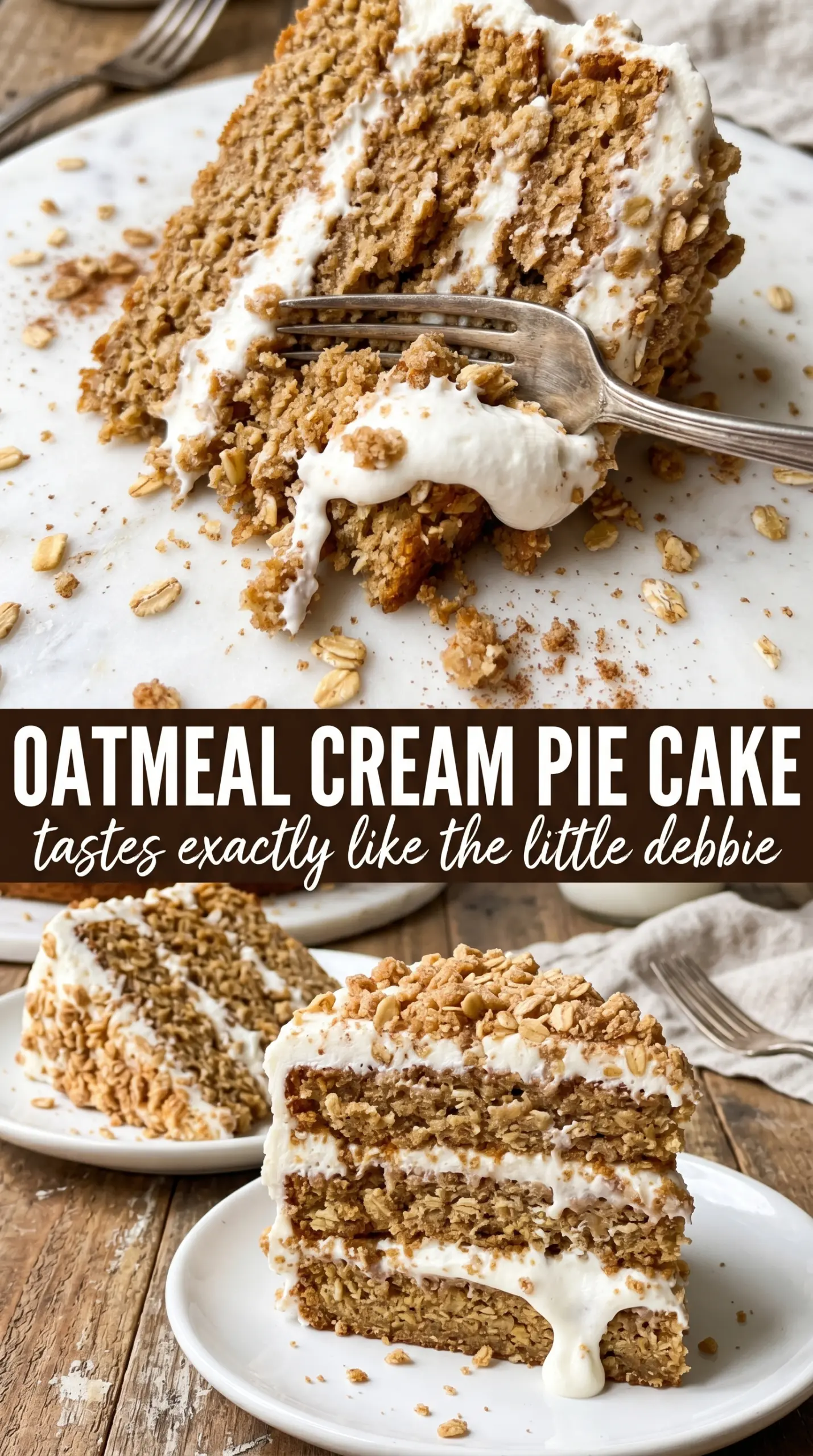
- Rolled oats — Blend them fine. That gives the cake its oatmeal flavor without a rough texture. Quick oats also work, but the flavor is a little less distinct.
- Brown sugar — Use packed brown sugar for moisture and that soft molasses note. Light brown sugar keeps it classic; dark brown sugar makes the cake deeper and a little more caramel-like.
- Buttermilk — This is what keeps the layers tender and helps the soda and baking powder lift the cake evenly. If you don’t have it, add 1 tablespoon lemon juice or vinegar to a measuring cup and fill the rest with milk.
- Marshmallow fluff — This is the heart of the filling. It gives you the recognizable cream-pie center without needing extra stabilizers.
- Heavy cream — Just a couple tablespoons loosens the filling enough to spread cleanly. Add it slowly so the filling stays thick instead of turning slack.
- Oatmeal cream pie cookies — They’re garnish, but they matter. The crumbs add a chewy, cookie-like finish that makes the cake read as what it is at first glance.
Building the Layers Without Crushing the Cake
Mix the dry ingredients first
Whisk the flour, ground oats, brown sugar, cinnamon, baking soda, baking powder, and salt until the mixture looks even and the brown sugar is broken up. That keeps the cinnamon from clumping and helps the leaveners distribute evenly, which matters more than it sounds in a layer cake. If you see dry pockets after adding the wet ingredients, stop and scrape the bowl before you go any further. Overmixing after the flour goes in can make the layers tight instead of soft.
Bring the batter together just until smooth
Whisk the eggs, buttermilk, oil, and vanilla in a separate bowl, then add them to the dry mixture and stir until the batter is uniform. It should look thick but pourable, with no streaks of flour. A few tiny oat flecks are fine; a heavy hand here is not. If you beat it hard for a long time, the cake can bake up dense instead of tender.
Watch for the set center, not just the timer
Divide the batter evenly between the pans and bake until the tops spring back lightly and a toothpick comes out clean, usually 28 to 32 minutes. Pull the pans when the center is set but before the edges get dark, because overbaking steals the soft crumb that makes this cake work. Let the layers cool in the pans for a few minutes, then turn them out and cool completely on a rack. Warm cake will melt the filling on contact, and that’s when the layers start sliding.
Beat the filling until it looks like frosting, not paste
Start with softened butter and beat it until it looks pale and fluffy. Add the powdered sugar first so the structure builds, then the marshmallow fluff, vanilla, and heavy cream. The finished filling should hold soft peaks and spread without tugging at the cake. If it looks stiff, add cream a teaspoon at a time. If it looks loose, beat in a little more powdered sugar.
Assemble with a generous hand
Set the first layer on your stand and pile the filling on in the center, then spread it nearly to the edge. The pressure from the top layer will push it outward, so you don’t need to smear it all the way to the rim. Add the second layer gently and frost the outside with the remaining filling, then finish with cookie crumbs and powdered sugar. Pressing down hard at this stage is the fastest way to squish the cream out of the middle.
How to Adjust This Cake for a Different Crowd
Make it more like the original cookie
Add 1/2 teaspoon nutmeg and a pinch more cinnamon to the batter, then keep the filling as written. The extra spice pushes the cake closer to the classic oatmeal cream pie flavor without making it taste like a spice cake.
Dairy-free version
Use a rich plant-based butter and swap the buttermilk for unsweetened non-dairy milk mixed with 1 tablespoon lemon juice. The cake stays tender, though the filling will be a little softer and less rich than the original because marshmallow fluff and dairy butter help it hold shape.
Gluten-free adaptation
Use a 1:1 gluten-free flour blend and certified gluten-free oats. The texture will be a touch more delicate, so let the layers cool fully before moving them. That extra patience keeps them from breaking when you assemble the cake.
Storage and Reheating
- Refrigerator: Store covered for up to 4 days. The filling firms up a bit in the fridge, but the cake stays moist.
- Freezer: Freeze individual slices tightly wrapped, then sealed in a freezer bag for up to 2 months. The cream filling is best after thawing in the refrigerator, not at room temperature, which can make it weep.
- Reheating: This cake doesn’t need reheating. If you want the filling softer, let a slice sit at room temperature for 20 to 30 minutes before serving.
Questions I Get Asked About This Recipe
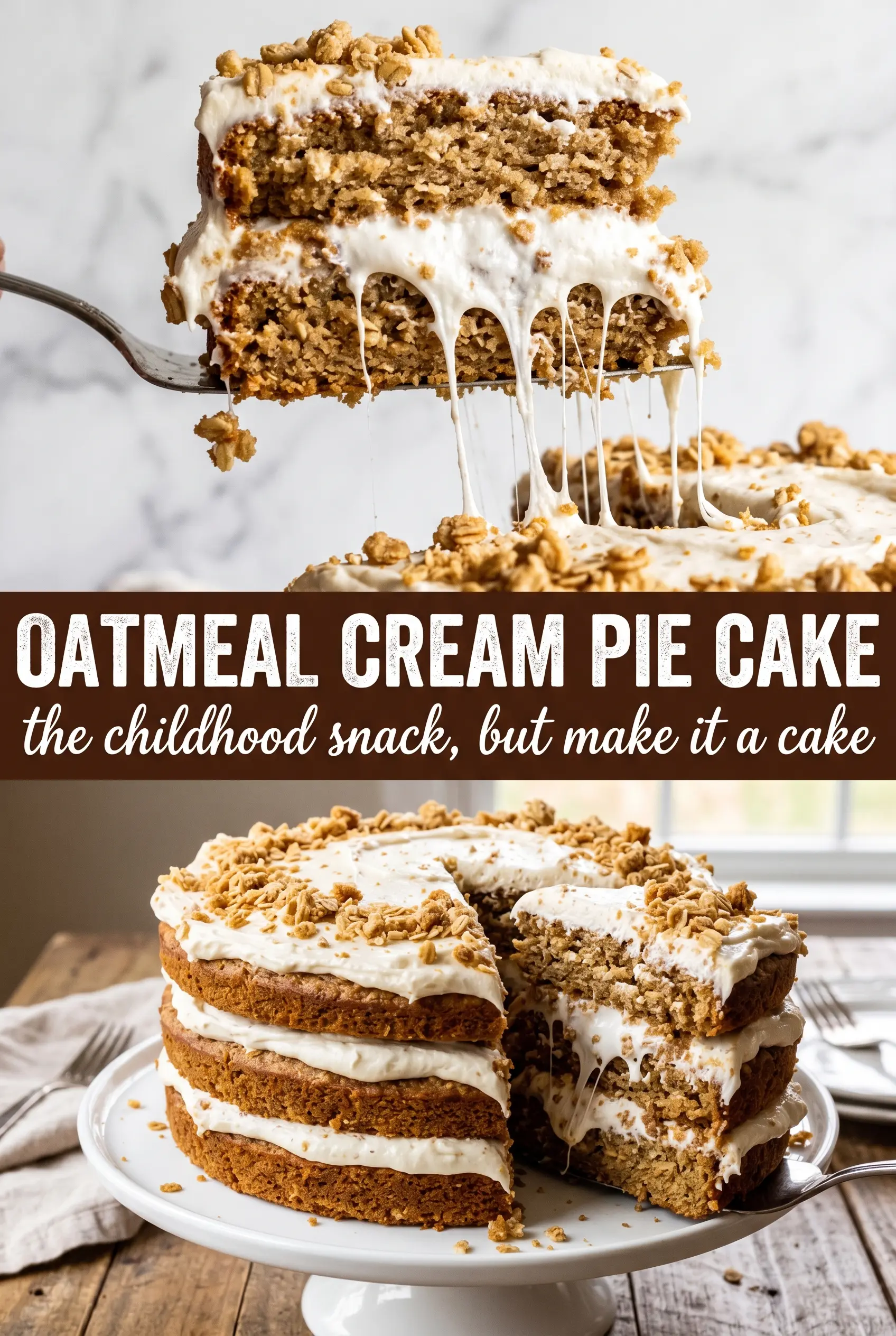
Oatmeal Cream Pie Cake
Ingredients
Equipment
Method
- Preheat oven to 350°F and grease two 9-inch round pans. Set pans aside so the batter goes in right away.
- Whisk together all-purpose flour, blended fine rolled oats, brown sugar, cinnamon, baking soda, baking powder, and salt in a bowl. Mix until the dry ingredients are evenly combined.
- Whisk together large eggs, buttermilk, vegetable oil, and vanilla extract in a bowl. Whisk until the wet mixture looks uniform.
- Combine the wet mixture into the dry mixture and mix until smooth. Stop mixing once no dry streaks remain.
- Divide batter between the two greased pans and bake for 28-32 minutes at 350°F, until a toothpick comes out clean. Look for domed tops and light browning at the edges.
- Cool completely before assembling the cake layers. This prevents the marshmallow cream filling from melting and sliding.
- Beat softened butter until fluffy. Continue beating until the texture looks lighter and smoother.
- Add powdered sugar, marshmallow fluff, vanilla extract, and heavy cream. Beat until the filling is smooth and spreadable.
- Place one cake layer on a stand and spread the cream filling generously over the top. Leave a small border near the edge so it doesn’t overflow too aggressively.
- Place the second cake layer on top and frost the outside with the remaining cream. Use a flat edge to smooth for an even coat.
- Crumble oatmeal cream pie cookies over the top for garnish. Press lightly so the crumbs adhere to the frosting.
- Dust with powdered sugar and serve. Cut slices and show the cream filling nestled between the moist oatmeal layers.