Old-fashioned potato salad earns its place on the table because it hits that balance of creamy, tangy, and just a little bit crunchy without turning heavy or muddy. The potatoes hold their shape, the dressing clings instead of sliding off, and every bite gets a little pop from celery, onion, and sweet pickle relish.
The trick is starting with russet potatoes that are cooked until just tender, not falling apart. They soften enough to absorb the dressing, but if you overcook them, you end up with a gluey bowl instead of distinct cubes. The dressing also matters here: mayonnaise gives the body, mustard sharpens it, vinegar keeps it from tasting flat, and a touch of sugar smooths out the relish.
Below, I’ll walk through the small details that keep the salad creamy instead of watery, plus a few swaps and storage notes that help this classic hold up well for picnics, cookouts, and make-ahead meals.
The potatoes held their shape after chilling, and the dressing was creamy without getting runny. I loved the sweet pickle relish with the mustard — it tasted like the potato salad I grew up with.
Save this old-fashioned potato salad for picnics, cookouts, and the kind of make-ahead side dish that tastes even better after chilling.
The Reason Potato Salad Turns Gluey Instead of Creamy
The biggest failure in potato salad starts before the dressing goes in. Russet potatoes are starchy, which is exactly why they taste right here, but that same starch turns pasty if you boil them too hard or stir them while they’re still hot enough to break down. You want the cubes tender all the way through with edges that still hold, then you want them cooled enough that they absorb dressing instead of melting into it.
Chilling also changes the texture in your favor. The salad tightens up as it rests, and the flavors settle together instead of tasting separate and sharp. If it seems a little loose right after mixing, that’s normal; the dressing thickens as it sits in the fridge.
What Each Ingredient Is Actually Doing In This Salad
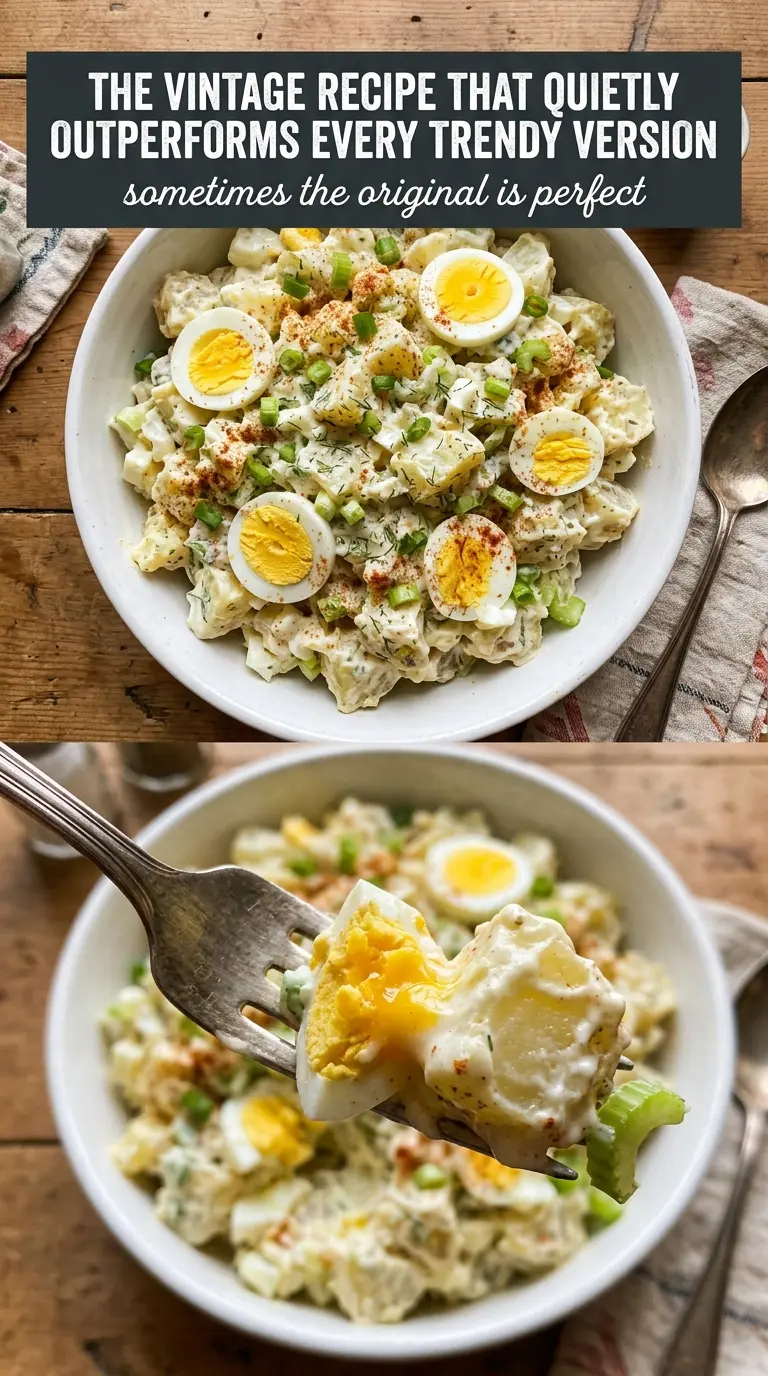
- Russet potatoes — These give you a fluffy interior that soaks up the dressing without tasting waxy. Yukon Golds will hold their shape a little better, but they won’t give you the same classic soft bite. If you swap them in, expect a firmer salad.
- Mayonnaise — This is the body of the dressing, and it needs to be full-fat if you want the salad to stay creamy after chilling. Light mayo tends to taste thin and can break down faster. Sour cream can replace part of it, but the result will be tangier and less stable.
- Yellow mustard and apple cider vinegar — These keep the dressing from tasting flat. Mustard brings the familiar old-fashioned bite, and vinegar brightens everything after the potatoes absorb the mayo. If you skip the vinegar, the salad tastes heavier and less finished.
- Sweet pickle relish — This adds sweetness, tang, and little bits of texture all in one spoonful. Drain it well if it looks watery, or the dressing can loosen too much. If you don’t like relish, finely chopped dill pickles work, but the salad will lose that classic sweet-and-savory balance.
- Eggs, celery, and onion — The eggs make the salad richer, celery adds crunch, and onion gives it sharpness. Dice the onion finely so it blends into the dressing instead of taking over in big bites. If raw onion tastes too aggressive to you, rinse the diced onion under cold water and pat it dry before mixing.
Building The Salad So It Stays Creamy After Chilling
Cooking The Potatoes Just To Tender
Put the cubed potatoes in cold water, bring them up gently, and cook until a fork slides in with little resistance but the cubes still look intact. If the water boils hard from the start, the outside will break down before the center is ready. Drain them well and let steam escape before mixing, because trapped water is one of the main reasons potato salad turns thin.
Mixing The Dressing Before It Hits The Bowl
Stir the mayonnaise, mustard, vinegar, sugar, salt, and pepper together in a separate bowl first. That gives you an even dressing, so you don’t end up with pockets of mustard or sugar stuck to the potatoes. If the dressing tastes a touch bold on its own, that’s correct — the potatoes dull the seasoning once they absorb it.
Folding, Not Mashing
Add the dressing to the potato mixture and fold with a spatula, not a spoon you’d use to stir soup. The goal is to coat every piece while keeping the cubes identifiable. If you stir too hard, the potatoes start to smear and the salad goes dense instead of creamy.
Letting The Chill Time Do Its Work
Refrigerate the salad for at least 2 hours before serving, and longer if you can. The flavor improves as the potatoes absorb the dressing, and the texture gets thicker and more cohesive. Right before serving, taste again and add a little salt or pepper if the cold has muted it.
How To Adjust This For Different Tables And Diets
Dairy-Free Version That Still Tastes Classic
This recipe is already naturally dairy-free if you use mayonnaise made without dairy ingredients, which most standard brands are. Stick with a full-fat mayo so the dressing keeps the same creamy texture. The salad will taste the same in spirit, just a little cleaner and lighter on the finish.
Swap In Yukon Golds For A Firmer Bite
Yukon Gold potatoes hold together better than russets, which helps if you want neat cubes and less breakup after stirring. The tradeoff is a slightly less fluffy texture and a richer, buttery flavor. Use the same cooking time, but start checking early because Yukon Golds can go from tender to soft fast.
Make It Lighter Without Losing The Creaminess
Replace up to half the mayonnaise with plain Greek yogurt if you want a tangier, less rich salad. The texture will be a little looser and the flavor sharper, so keep the relish and mustard balanced. I wouldn’t replace all the mayo, because the dressing loses that classic old-fashioned body.
Storage and Reheating
- Refrigerator: Store covered for up to 4 days. The potatoes soften a little more each day, but the flavor stays good.
- Freezer: Don’t freeze this one. Mayonnaise-based potato salad separates and turns grainy after thawing.
- Reheating: Serve it cold or let it sit at room temperature for 15 to 20 minutes. Reheating will break the dressing and make the texture greasy.
Answers To The Questions Worth Asking
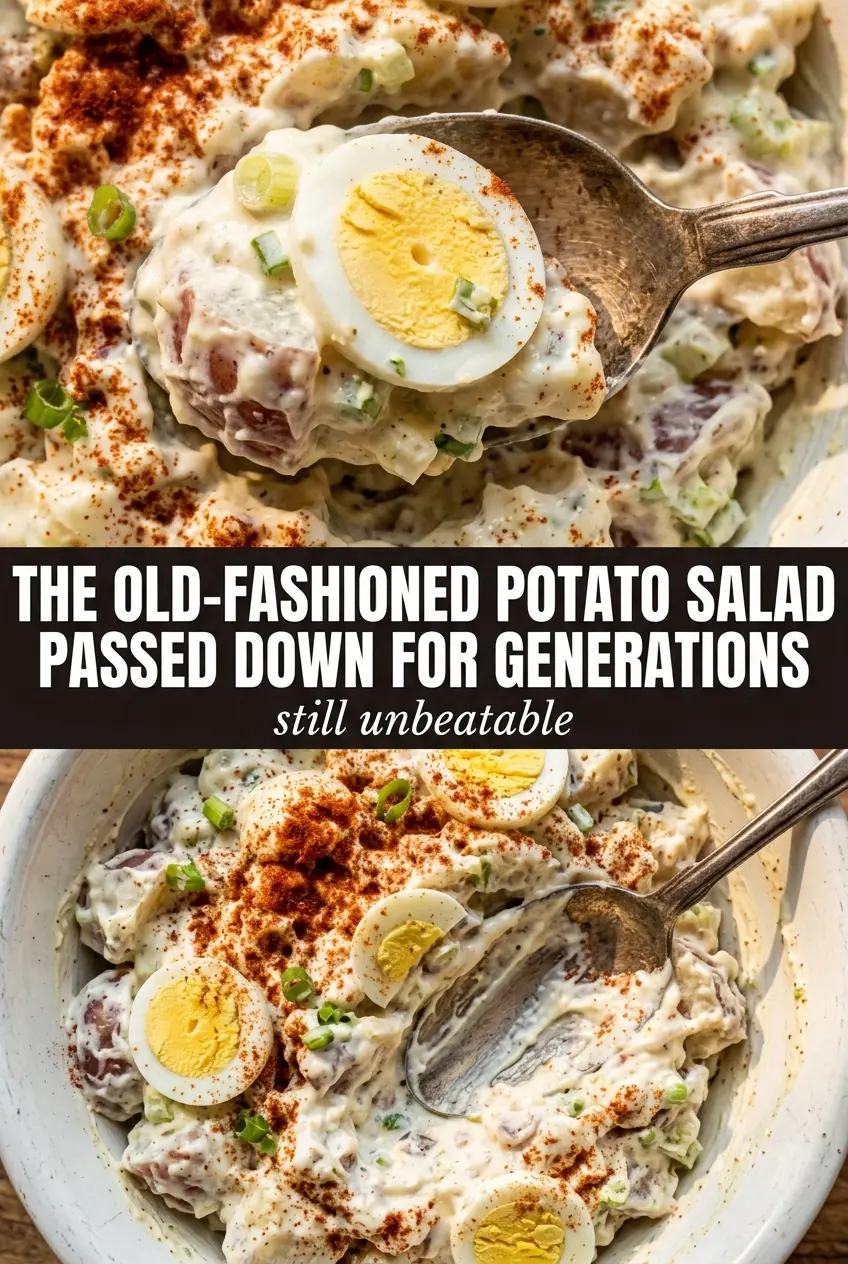
Old-Fashioned Potato Salad
Ingredients
Equipment
Method
- Boil the potato cubes in a Dutch oven until tender, about 15 minutes; the edges should yield when pierced. Drain and let them cool until no longer hot.
- Add the cooled potatoes, chopped hard-boiled eggs, diced celery, finely diced onion, and sweet pickle relish to a large bowl, leaving visible cubes and egg pieces.
- Mix mayonnaise, yellow mustard, apple cider vinegar, sugar, salt, and pepper until smooth and evenly colored, with no mustard streaks.
- Pour the dressing over the potato mixture and fold gently until the potatoes look creamy and coated without mashing.
- Refrigerate the potato salad for at least 2 hours so it thickens and flavors meld, then stir once just before serving.
- Garnish with paprika for a light dusting of color, then serve cold.