Creamy, cozy, and packed with little pockets of tender gnocchi, this Olive Garden Chicken Gnocchi Soup lands right in that sweet spot between comforting and satisfying. The broth turns velvety without feeling heavy, the vegetables keep it from tasting flat, and the spinach melts in just enough to give each spoonful a fresh finish. It’s the kind of bowl that tastes like it simmered all afternoon, even though it comes together in under an hour.
The trick is building the base with a quick flour-butter roux before the cream goes in. That gives the soup body without relying on extra dairy to do all the work, and it helps the broth stay smooth instead of thin and separated. Gnocchi goes in near the end so it stays pillowy, not bloated, and the spinach is stirred in last so it keeps its color and doesn’t disappear into the pot.
Below, I’ve included the little details that matter most: how to keep the soup from turning gluey, what to swap if you need a lighter version, and the reheating move that keeps the gnocchi from getting gummy.
The broth thickened up beautifully and the gnocchi stayed pillowy instead of falling apart. My husband went back for a second bowl before I even sat down.
Save this Olive Garden Chicken Gnocchi Soup for the nights when you want a creamy bowl with pillowy gnocchi and almost no fuss.
The Secret to Keeping the Gnocchi Tender, Not Mushy
The most common mistake with gnocchi soup is letting the dumplings sit in a hard boil for too long. Gnocchi cook fast, and once they’ve floated, they’re done. If you keep them on the heat much longer, they start to swell and turn soft in a way that makes the whole soup feel past its best.
This version avoids that by treating the gnocchi like a finish, not a base. The broth gets its body from the roux and dairy, so the gnocchi only needs enough time to heat through and turn fluffy. That’s why the soup stays spoonable and rich without becoming thick in a gluey, starchy way.
- Roux — Butter and flour cook together first, which gives the soup a stable, silky body. Skipping this step leaves you with a thinner broth that depends too much on cream.
- Gnocchi — Mini potato gnocchi work best because they cook quickly and hold their shape. Fresh or shelf-stable both work here.
- Spinach — Add it at the end so it stays bright and tender. If it goes in too early, it breaks down and muddies the broth.
What Each Ingredient Is Actually Doing in This Recipe

- Primary ingredient (the star) — Quality matters most. Choose the best you can find.
- Cooking medium (oil, butter, or broth) — This carries flavors and prevents dryness.
- Seasonings (salt, pepper, spices, herbs) — Layer flavors so nothing overpowers. Build depth gradually.
- Aromatics (garlic, onion, herbs) — Cook with fat to bloom flavors. Become the foundation.
- Supporting ingredients — Complement the main ingredient without overpowering it.
- Sauce or liquid (if applicable) — Brings flavors together. Balance richness with acid.
- Acid (lemon, vinegar, wine, or other) — Brightens and prevents flat-tasting results.
- Final finish (garnish, glaze, or sauce) — Prevents one-dimensional taste and adds visual appeal.
What Each Ingredient Is Actually Doing in This Soup
- Shredded chicken — Use cooked chicken that’s already tender, like rotisserie or leftover roasted chicken. Since it only warms through, dry chicken will stay dry.
- Celery, carrots, and onion — This is the flavor base. Dice them small so they soften fast and disappear into the spoonful instead of feeling chunky.
- Garlic, thyme, and rosemary — These give the soup its savory backbone. Fresh herbs aren’t required, but if you use them, add a little more because dried herbs are more concentrated.
- Heavy cream and whole milk — The combination keeps the soup rich without making it overly dense. Using all cream can make the texture heavy; using all milk can leave it thin.
- Chicken broth — A good broth matters here because it’s the main source of salt and depth. If yours is low-sodium, expect to season more aggressively at the end.
Building the Soup in the Right Order
Softening the Vegetables
Start by cooking the onion, carrots, and celery in butter until the onion looks translucent and the carrots begin to soften around the edges. You’re not trying to brown them hard; you want them sweet, fragrant, and relaxed enough to melt into the soup later. If the pot looks dry before the vegetables soften, lower the heat and let them sweat a little longer instead of rushing ahead.
Cooking Out the Flour
Once the garlic, thyme, and rosemary go in, stir in the flour and let it cook for about a minute. That short cook time takes away the raw flour taste and helps the soup thicken smoothly once the broth is added. If you dump in the liquid too quickly, the flour can clump, so whisk in the broth gradually and keep the mixture moving.
Finishing with Cream, Chicken, and Gnocchi
After the broth has simmered and thickened slightly, add the cream, milk, chicken, and gnocchi together. Keep the heat at a gentle simmer, not a boil, so the dairy stays smooth and the gnocchi cook evenly. The soup is ready when the gnocchi float and feel tender when you cut one open with a spoon.
Wilting the Spinach at the End
Stir in the spinach only after the gnocchi are done. It takes just a couple of minutes to wilt, and that short finish keeps the leaves green and fresh tasting. If you add it too early, it sinks into the broth and loses its texture completely.
How to Adapt This Soup When You Need a Different Finish
Dairy-Free Version
Use unsweetened full-fat coconut milk or a plain dairy-free cooking cream in place of the cream and milk. The soup will taste a little less like the restaurant version and a little more rounded and savory, but the roux still gives it a creamy body.
Gluten-Free Adjustment
Use gluten-free gnocchi and swap the flour for a 1:1 gluten-free flour blend. The texture stays close to the original, but the soup may need an extra minute of simmering to thicken fully.
Lighter, Less Rich Soup
Replace half the heavy cream with more broth and use 2% milk instead of whole milk. You’ll lose some richness, but the soup still tastes balanced and comforting without feeling heavy.
What to Do If You Want More Veggies
Add mushrooms, chopped baby kale, or extra carrots with the first round of vegetables. Keep the additions small and evenly cut so the soup still eats like a creamy gnocchi bowl instead of a vegetable stew.
Storage and Reheating
- Refrigerator: Store in an airtight container for up to 3 days. The gnocchi will keep absorbing liquid, so the soup thickens as it sits.
- Freezer: This soup doesn’t freeze well once the dairy and gnocchi are in it. If you need to freeze ahead, freeze the base before adding cream and gnocchi, then finish it fresh later.
- Reheating: Warm gently on the stove over low heat, stirring often and adding a splash of broth if needed. High heat can split the dairy and make the gnocchi too soft.
Questions I Get Asked About This Recipe
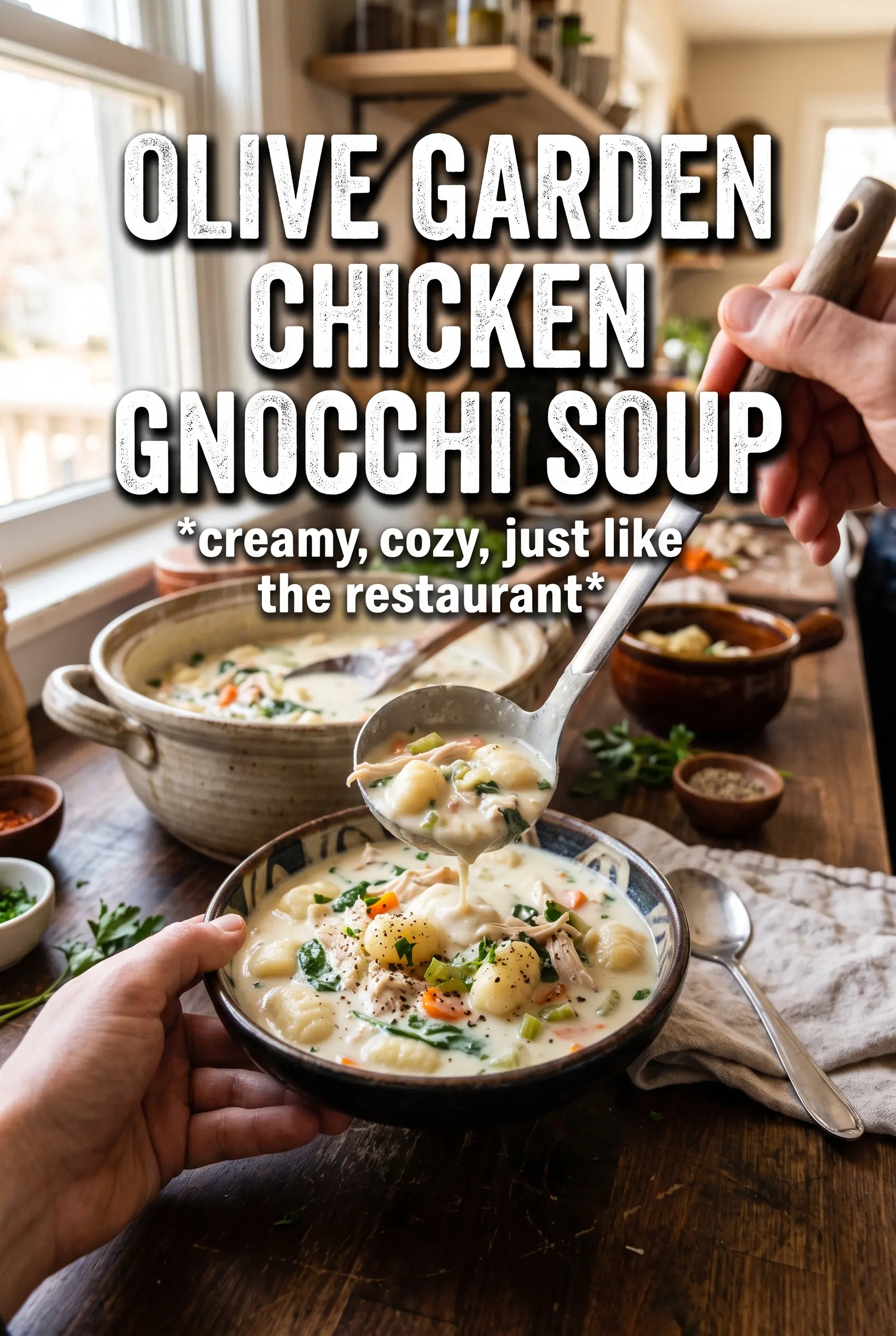
Olive Garden Chicken Gnocchi Soup
Ingredients
Equipment
Method
- Melt the butter in a large pot over medium heat, then sauté the onion, carrots, and celery for 5 minutes until softened.
- Add the garlic, thyme, and rosemary and cook for 30 seconds, then whisk in the flour and cook for 1 minute to remove the raw flour taste.
- Gradually whisk in the chicken broth, then simmer for 5 minutes until slightly thickened.
- Stir in the heavy cream and whole milk, then add the shredded chicken and mini potato gnocchi.
- Simmer for 5-7 minutes until the gnocchi float and the soup looks creamy and cohesive.
- Add the spinach and cook for 2-3 minutes, stirring until the spinach is wilted and bright green.
- Season with salt and pepper to taste and serve hot.