Briny, creamy, and bright, olive potato salad has the kind of balance that keeps people going back for another spoonful. The potatoes stay tender without turning mushy, the olives bring a salty bite, and the feta softens everything with just enough richness to make the whole bowl feel finished. It tastes clean and substantial at the same time, which is exactly why it works so well as a side dish.
The trick here is not overcooking the potatoes and not overdressing them while they’re hot. Red potatoes hold their shape better than starchy varieties, and the lemon-vinegar dressing needs a little time to soak in after the salad chills. That resting time matters. It lets the potatoes absorb the dressing instead of sitting under a slick of oil.
Below, you’ll find the small details that keep the salad from turning heavy, plus a few easy ways to adjust it depending on what you have on hand. The Mediterranean-style flavor is flexible, but the texture only stays right if you handle the potatoes gently.
The potatoes held their shape after chilling, and the lemon dressing soaked in instead of pooling at the bottom. I made it for a cookout and there wasn’t a spoonful left.
Save this olive potato salad for cookouts and make-ahead lunches when you want something briny, creamy, and bright with feta and lemon.
The Reason This Salad Stays Bright Instead of Heavy
The difference between a potato salad that tastes lively and one that turns dull is mostly timing. If the potatoes are drenched in dressing while they’re piping hot, they drink up too much fat and lose the clean lemony edge that makes this version work. Let them cool just enough to stop steaming, then dress and chill. That’s when the potatoes take on flavor without going soft.
The other thing that matters is restraint with the feta and olives. Both are salty, so the dressing should taste a little sharp before it hits the potatoes. Once the salad chills, that sharpness settles down and the whole bowl tastes balanced instead of briny on the surface and flat underneath.
What Each Ingredient Is Actually Doing in the Bowl
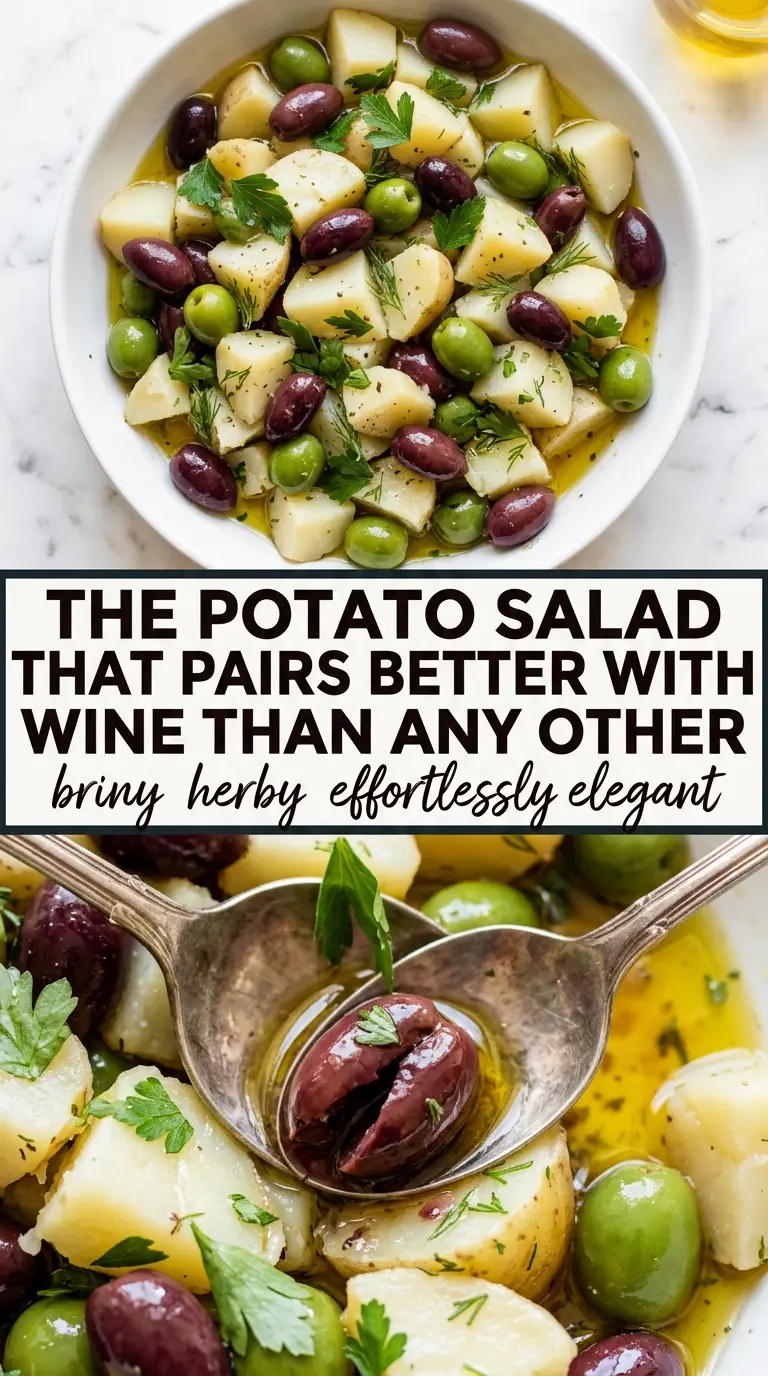
- Red potatoes — These hold their shape after boiling and keep the salad from turning gluey. Waxy potatoes are the right choice here; russets break down too easily and make the bowl soft instead of structured. Cube them evenly so they cook at the same rate.
- Mixed olives — Kalamata olives bring depth, while green olives add a sharper, cleaner saltiness. Using both gives the salad more range. If you only have one kind, the salad still works, but it won’t taste as layered.
- Feta cheese — Feta adds creaminess without turning the salad into mayonnaise-based territory. A block you crumble yourself usually tastes better and holds a nicer texture than pre-crumbled feta, which can be dry. If you need a dairy-free version, leave it out and add a handful of chopped artichoke hearts for a similar savory bite.
- Red onion — Thin slices give a little crunch and a peppery edge. If raw onion is too sharp for you, soak the slices in cold water for 10 minutes and drain well before mixing them in.
- Lemon juice and red wine vinegar — This is the backbone of the dressing. Lemon brings freshness, vinegar gives it staying power, and together they keep the salad from tasting oily after chilling. Fresh lemon matters here; bottled juice tastes flatter and can mute the olives.
- Parsley — Stir it in at the end so it stays bright and doesn’t wilt into the warm potatoes. It wakes up the whole salad.
How to Keep the Potatoes Tender and the Dressing Sharp
Boiling the Potatoes Evenly
Start the potatoes in cold salted water and bring them up together so the centers cook at the same pace as the outsides. Once they’re tender, drain them well and let the steam escape for a few minutes. If they sit in a wet colander, they’ll dilute the dressing and the salad will taste washed out. You want them cooked through, not collapsing at the edges.
Mixing Without Crushing the Salad
Combine the potatoes, olives, feta, and onion in a large bowl while the potatoes are still just warm, then drizzle the dressing over and fold gently. A spatula or wide spoon works better than a whisking motion because it keeps the potatoes from breaking apart. If the bowl starts looking mashed at the bottom, stop and switch to a lighter hand. The goal is coated pieces, not potato paste.
Letting the Chill Time Do Its Job
Cover the bowl and refrigerate it for at least 2 hours before serving. That resting time lets the potatoes absorb the lemon and oregano, and it gives the feta and olives a chance to season the whole dish. If you serve it right away, the dressing tastes separate and a little sharp. After chilling, it comes together into something much more cohesive.
How to Adapt This for a Different Table
Dairy-Free Version Without Losing the Savory Bite
Leave out the feta and add extra olives plus a spoonful of finely chopped capers if you want more salt and complexity. The salad becomes sharper and more olive-forward, which works well with grilled fish or chicken. It won’t have the creamy pockets that feta gives, but it still eats like a finished Mediterranean potato salad.
Swap the Herbs for What’s in the Fridge
Parsley is the cleanest choice, but dill or fresh mint can work if that’s what you have. Dill makes the salad taste a little more classic picnic-style, while mint pushes it in a brighter Greek direction. Use a light hand with either one so they don’t overpower the olives.
Make It Ahead for a Crowd
This salad holds up well for parties, potlucks, and lunches because there’s no mayo to separate. If you’re making it a day ahead, save a handful of parsley and a small splash of lemon juice for the end so it tastes fresh again after chilling. The potatoes may absorb some dressing overnight, so a quick toss before serving helps wake it back up.
Use Baby Potatoes for a More Textured Salad
If you want a chunkier look, halve baby red or yellow potatoes instead of cubing larger ones. You’ll get more surface area for the dressing to cling to, and the salad feels a little more rustic. Just keep an eye on the cooking time because small potatoes can go from tender to waterlogged fast.
Storage and Reheating
- Refrigerator: Keeps for 3 to 4 days in a covered container. The potatoes will absorb more dressing as it sits, so the flavor gets a little deeper by day two.
- Freezer: I don’t recommend freezing this salad. The potatoes turn grainy and the feta loses its texture once thawed.
- Reheating: Serve it cold or let it sit at room temperature for 15 to 20 minutes before serving. Don’t microwave it; that softens the potatoes unevenly and makes the feta greasy.
Answers to the Questions Worth Asking

Olive Potato Salad
Ingredients
Equipment
Method
- Bring a large pot of water to a boil in a Dutch oven over high heat. Add the cubed red potatoes and boil until tender, 10–15 minutes, until a knife slides in easily.
- Drain the potatoes in the Dutch oven and let them cool completely for 10–15 minutes so the dressing won’t get oily.
- Combine the cooled potatoes, mixed olives, feta cheese, and red onion in a bowl. Toss gently until the ingredients are evenly distributed.
- Whisk olive oil, lemon juice, red wine vinegar, dried oregano, salt, and pepper until smooth and combined, about 30 seconds.
- Pour the dressing over the potato mixture and toss gently until everything is coated, 1–2 minutes.
- Fold in the fresh parsley. Refrigerate the salad for 2 hours before serving so the flavors meld.