Orange amaretto cranberry sauce has that glossy, jewel-toned look that makes a holiday table feel finished, but what keeps me making it is the balance. The cranberries bring sharp brightness, the orange smooths the edges, and the amaretto leaves a soft almond note that lingers after each bite. It’s the kind of side dish that tastes familiar for one second, then a little more interesting than the version everyone expects.
The key is cooking the cranberries just until they burst and the sauce turns thick and shiny. If you push it too far, the sauce loses that fresh pop and starts tasting dull. The amaretto goes in off the heat, which keeps its flavor from disappearing, and the orange zest gets stirred in at the end so it stays fragrant instead of cooking away.
Below, I’ve included the small details that matter most: when to stop simmering, why the almonds go on at the end, and a few easy ways to adapt it if you want a different finish.
The sauce thickened up beautifully and the amaretto didn’t overpower the cranberries at all. I served it after chilling overnight, and the orange zest made it taste fresh instead of too sweet.
Save this orange amaretto cranberry sauce for a glossy, citrus-bright side that finishes any roast with a little almond warmth.
The Difference Between Glossy Cranberries and a Sauce That Turns Jammy
Fresh cranberries need a short, lively simmer. That’s the line between a sauce that tastes bright and one that eats like thick jam. You want most of the berries to burst, but not all of them to collapse into a paste right away, because a little texture keeps the sauce from feeling heavy.
The other place people go wrong is the finish. Amaretto and orange zest belong at the end, after the pan comes off the heat. Boiling either one strips out the best part of their flavor, and the sauce loses that lifted, aromatic edge that makes this version stand out.
- Cranberries — Fresh cranberries give you the clean tartness and natural pectin that makes the sauce thicken as it cooks. Frozen cranberries also work; use them straight from the freezer and expect the simmer to take a minute longer.
- Orange juice — This adds sweetness and keeps the sauce from tasting one-note. Fresh-squeezed juice gives the brightest flavor, but carton juice is fine here because it’s being reduced with sugar.
- Amaretto — This is the signature move. It adds almond depth and a soft warmth that extracts can’t match, so pour it in off the heat to keep the flavor clear and present.
- Orange zest — Zest is what makes the orange flavor smell fresh instead of cooked. Use a fine grater and avoid the white pith, which turns bitter fast.
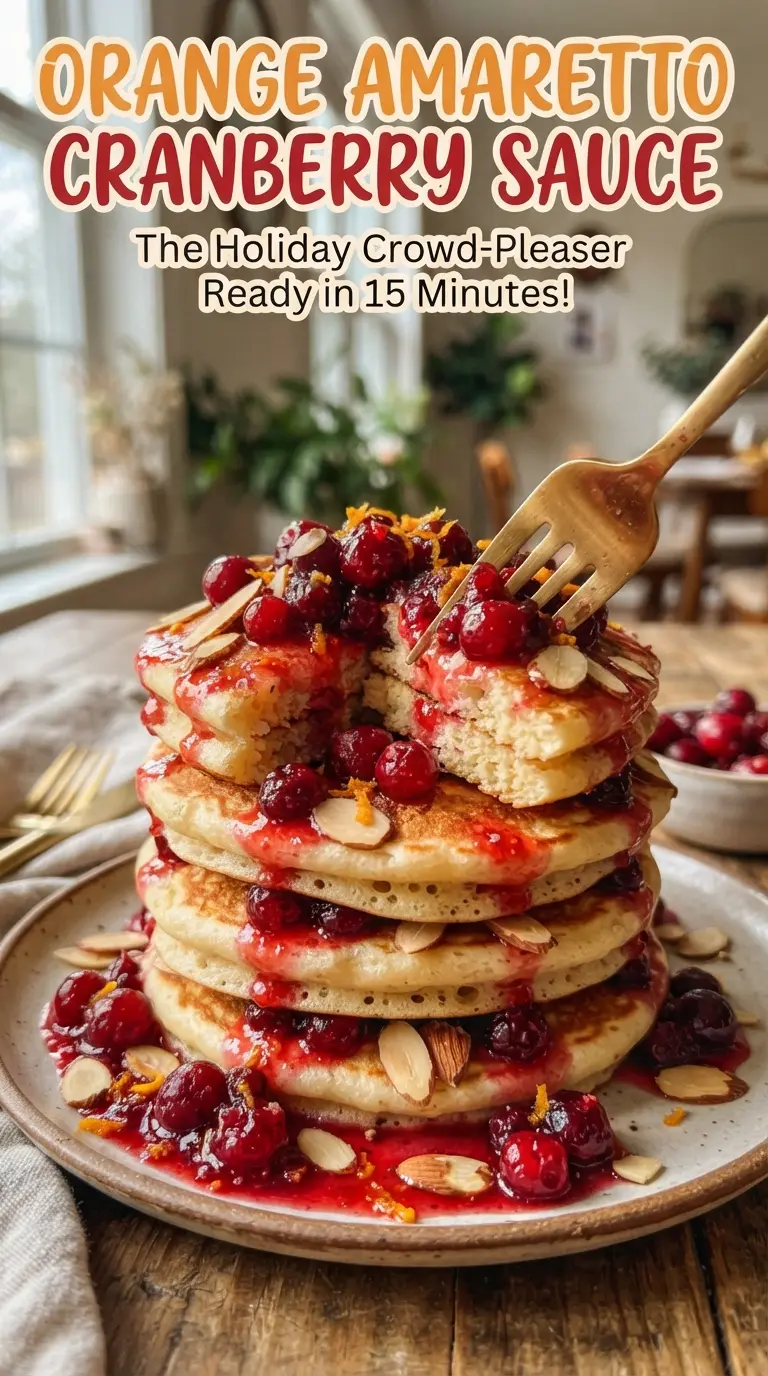
- Toasted sliced almonds — These are for the finish, not the pot. They stay crisp if you add them right before serving, and they echo the amaretto in a way that makes the whole dish feel intentional.
What Each Ingredient Is Actually Doing in This Recipe
- Primary ingredient (the star) — Quality matters most. Choose the best you can find.
- Cooking medium (oil, butter, or broth) — This carries flavors and prevents dryness.
- Seasonings (salt, pepper, spices, herbs) — Layer flavors so nothing overpowers. Build depth gradually.
- Aromatics (garlic, onion, herbs) — Cook with fat to bloom flavors. Become the foundation.
- Supporting ingredients — Complement the main ingredient without overpowering it.
- Sauce or liquid (if applicable) — Brings flavors together. Balance richness with acid.
- Acid (lemon, vinegar, wine, or other) — Brightens and prevents flat-tasting results.
- Final finish (garnish, glaze, or sauce) — Prevents one-dimensional taste and adds visual appeal.
Building the Sauce So It Stays Bright, Not Overcooked
Start with the syrup base
Bring the sugar, orange juice, water, and salt to a full boil before the cranberries go in. You want the sugar fully dissolved and the liquid hot enough to get the berries moving right away. If you start too low, the cranberries sit in warm liquid and soften unevenly before the sauce begins to thicken.
Cook until the berries burst
Once the cranberries are in, keep the simmer steady and watch for the pop of the skins splitting. The sauce usually thickens in 10 to 12 minutes, but the real cue is texture: the liquid should look glossy and lightly syrupy, with enough whole berries left to keep some shape. If you cook until every berry is broken down, the sauce tightens up too far as it cools.
Finish off the heat
Take the pan off the burner before adding the amaretto and orange zest. Stir them in while the sauce is still hot, then let it cool in the pan for a few minutes before transferring it to a bowl. It will look thinner than the finished sauce at this point, and that’s normal; cranberry sauce sets as it cools, especially after chilling.
Make it without the amaretto
If you want a non-alcoholic version, swap the amaretto for an equal amount of orange juice and add 1/4 teaspoon almond extract. Almond extract is strong, so go light; too much makes the sauce taste perfumey instead of nutty.
Make it less sweet
Cut the sugar back to 1/2 cup if you like a sharper cranberry sauce. The texture will still set, but it will read tarter and a little looser after chilling, which works well next to rich roast meats.
Make it gluten-free and vegan-friendly
This sauce is naturally gluten-free and vegan as written, so there’s nothing to replace. The only thing to watch is the amaretto label if you’re cooking for someone with a strict sensitivity, since brands can vary.
Storage and Reheating
- Refrigerator: Keep covered for up to 1 week. It thickens as it chills, so don’t judge the final texture while it’s still warm.
- Freezer: It freezes well for up to 2 months. Freeze it in a sealed container with a little headspace, then thaw overnight in the fridge.
- Reheating: Serve it cold or let it come to room temperature. If you want it warm, use low heat on the stovetop and stir gently; high heat can make it break down into a loose, overcooked puree.
Questions I Get Asked About This Recipe
Orange Amaretto Cranberry Sauce
Ingredients
Equipment
Method
- Bring sugar, orange juice, water, and salt to a boil in a saucepan. Look for bubbling throughout the liquid before adding the cranberries.
- Add fresh cranberries and simmer for 10-12 minutes, stirring occasionally. Watch the berries burst and the sauce thicken enough to lightly coat the back of a spoon.
- Remove the pan from the heat and stir in amaretto and orange zest. The sauce will look glossy and slightly looser while warm.
- Cool the sauce to room temperature, then cover and chill until set before serving. Aim for a thick, spoonable texture after chilling.
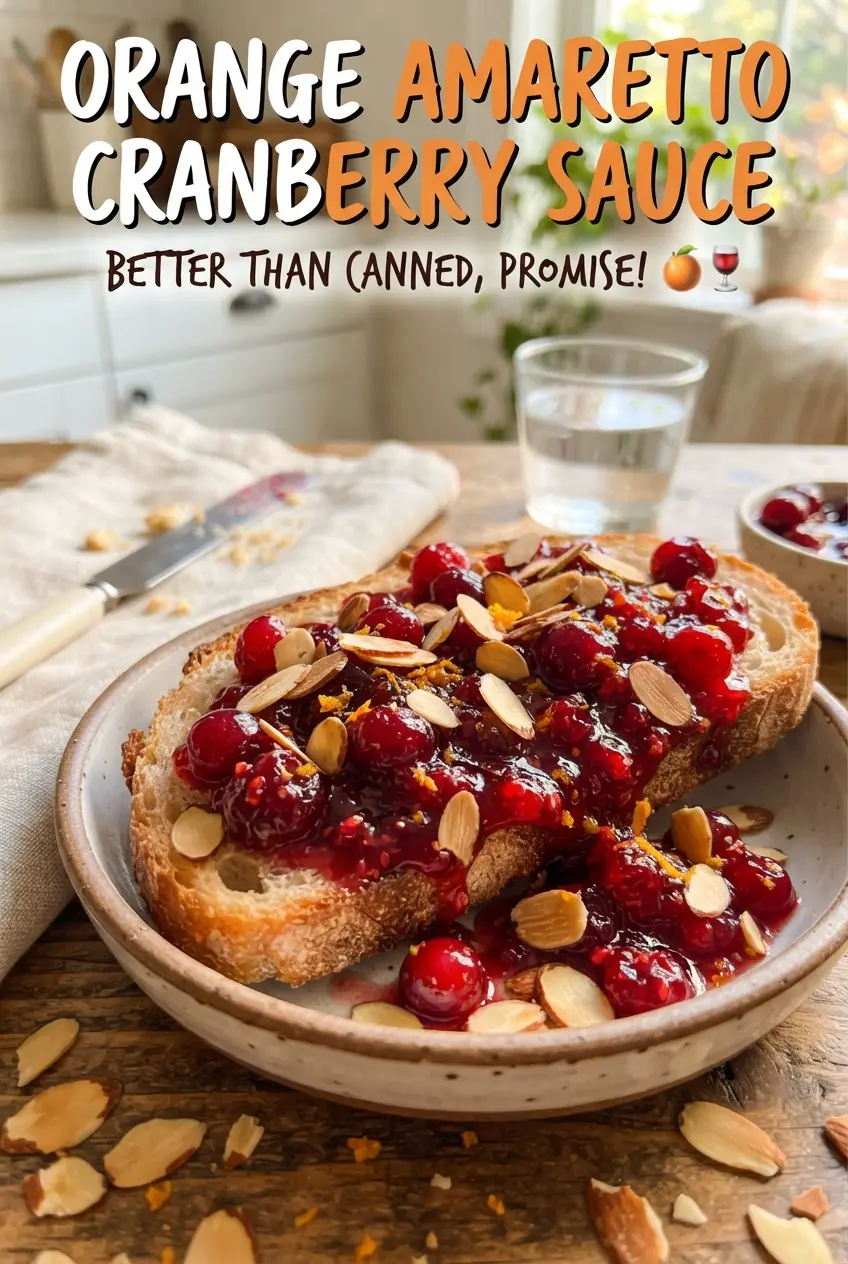
- Spoon the chilled cranberry sauce into a serving bowl. Top with toasted sliced almonds just before serving for crunch.