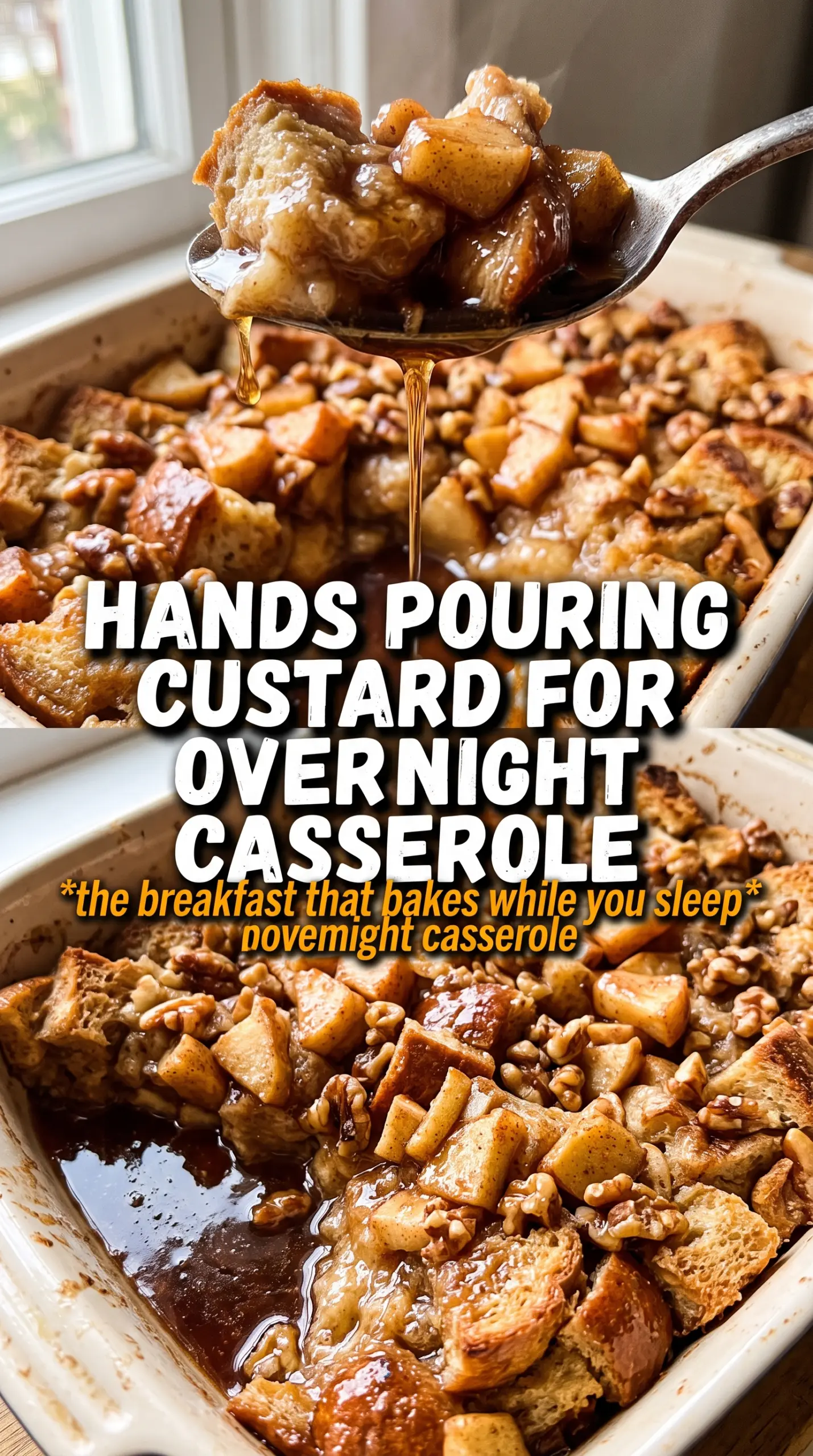
Overnight cinnamon apple baked French toast casserole bakes up with a custardy center, bronzed edges, and a crisp streusel top that cracks lightly under the fork. The apples soften just enough to turn jammy around the edges while still holding their shape, and the maple-cinnamon custard soaks into the bread without turning the whole dish soggy. It slices cleanly, feeds a crowd, and tastes like you spent the morning hovering over the oven when all the real work happened the night before.
The trick is using sturdy bread like brioche or challah and giving the custard time to seep all the way through. The overnight chill matters because it lets the cubes absorb the liquid evenly, which means you get a set center instead of dry bread on top and wet custard underneath. A little maple syrup in the base deepens the sweetness without making it cloying, and the streusel adds the contrast this kind of casserole needs.
Below you’ll find the small details that keep the texture right, the ingredient swaps that still work, and the one reheating method that keeps the top from going soft.
The bread soaked up the custard overnight and baked into the softest middle with a crisp top. The apples stayed tender instead of mushy, and the streusel actually browned instead of disappearing.
Save this overnight cinnamon apple baked French toast casserole for brunch mornings when you want a golden streusel top and soft custardy center without standing over the stove.
The Overnight Soak Is What Keeps the Center Custardy
Most breakfast casseroles fail for one of two reasons: the bread never absorbs enough custard, or it absorbs too much on the bottom and turns gluey. Overnight chilling solves both when the bread is sturdy enough to hold its shape. Brioche and challah work because they’re rich and structured, so they drink in the egg mixture without collapsing into mush.
The other mistake is baking it straight from the fridge. Cold casserole takes longer for the center to set, which means the top overbrowns before the middle catches up. Let it sit on the counter for 30 minutes before baking, and you’ll get a more even rise and a cleaner slice.
- Sturdy bread — Brioche or challah gives you a soft, rich crumb that still holds up after an overnight soak. Sandwich bread turns too delicate here.
- Apples — Diced apples tucked between the cubes soften into little pockets of fruit. A firmer baking apple keeps some shape; overly soft apples can disappear.
- Egg custard — The eggs set the casserole into slices instead of a bread pudding texture. The milk and cream balance richness with enough liquid to soak every cube.
- Streusel — This is the contrast. Without it, the top bakes up soft instead of giving you that crisp, cinnamon-sugar finish.
What Each Ingredient Is Doing in the Dish
- Brioche or challah — Both breads are rich enough to taste like a treat and sturdy enough to stay in cubes after soaking. Day-old bread is ideal because it drinks up the custard without getting fragile.
- Apples — Peel them if you want a softer, more seamless texture. Keep the dice small so they tuck between the bread and cook through without leaving hard chunks.
- Whole milk and heavy cream — This combination makes the custard silky and full-bodied. You can swap in all whole milk, but the casserole will be a little less lush and the top a little less browned.
- Maple syrup and brown sugar — Maple gives the base warmth and a deeper sweetness than plain sugar alone. The brown sugar reinforces that caramel note and helps the streusel bake into a crisp crust.
- Cinnamon, nutmeg, and vanilla — Cinnamon carries the whole dish, nutmeg adds depth, and vanilla rounds out the custard. Nutmeg should stay in the background; too much makes the casserole taste heavy.
- Cold butter for the streusel — Cold butter is what makes the topping crumbly instead of paste-like. Cut it in until the pieces are small and sandy with a few larger bits left for crunch.
Building the Casserole So It Bakes Through and Browns on Top
Set Up the Pan First
Grease the baking dish well, then spread the bread cubes and diced apples in an even layer. The goal is to keep the apples distributed so every square gets fruit, not a pile of apples in one corner. If the bread is packed too tightly, the custard can’t move through the layers and the center will bake up dense.
Whisk the Custard Until It Looks Smooth
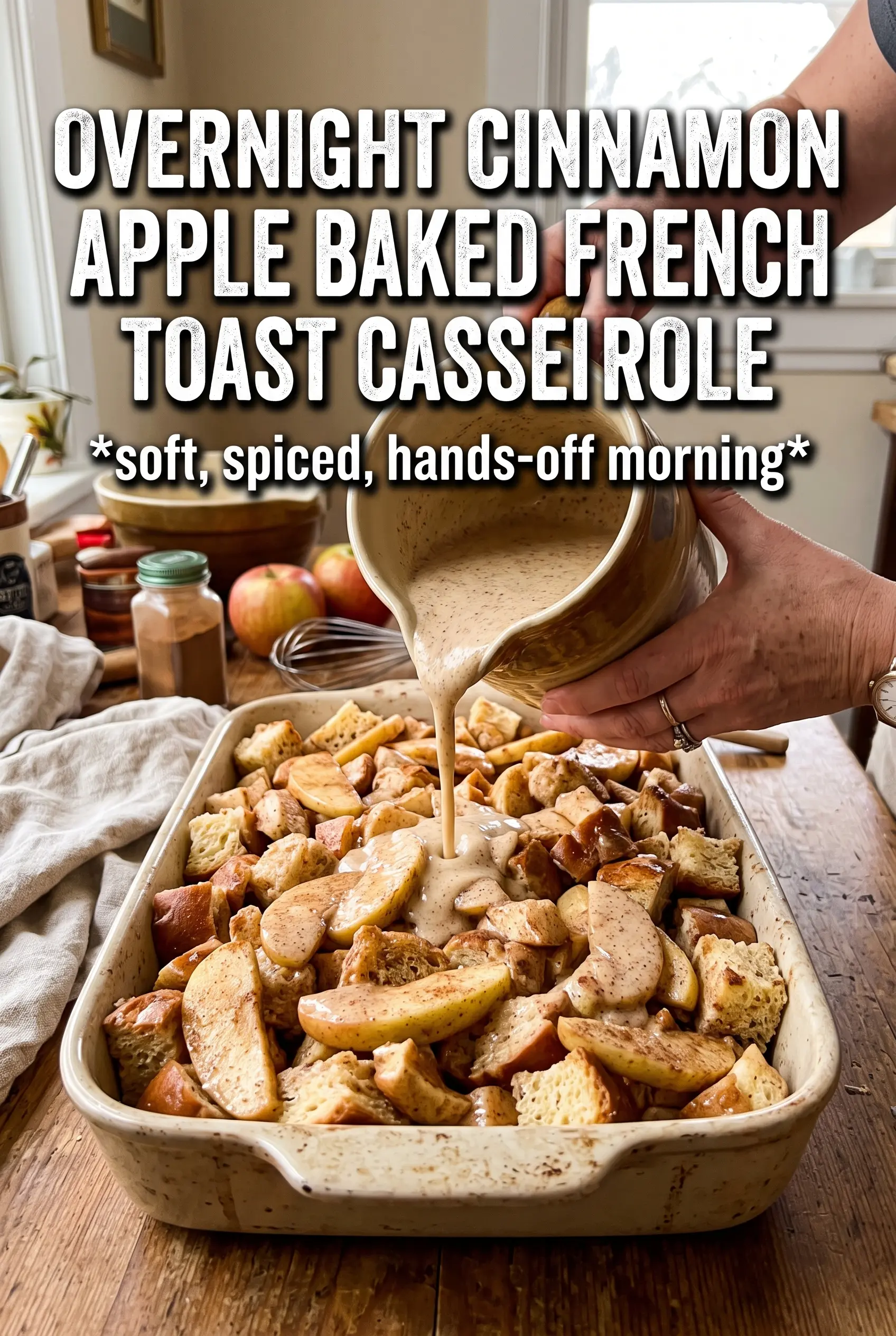
Whisk the eggs, milk, cream, maple syrup, brown sugar, cinnamon, nutmeg, vanilla, and salt until the sugar is mostly dissolved and the mixture looks uniform. Pour it over the bread slowly, moving around the dish so the liquid reaches the edges. Press the bread down gently with a spatula or your hands; you want it soaked, not crushed.
Let the Overnight Rest Do Its Job
Cover the dish tightly and refrigerate overnight. That rest gives the bread time to absorb the custard all the way through, and it also helps the flavor settle in. If you skip this step, the bottom can turn wet while the top stays dry, which is exactly the texture problem this recipe avoids.
Finish with the Streusel and Bake Until Puffed
Cut the butter into the flour, brown sugar, and cinnamon until crumbly, then scatter it evenly over the chilled casserole. Bake until the top is deep golden, the casserole is puffed around the edges, and the center no longer sloshes when you nudge the pan. If the top is browning too fast, lay a loose sheet of foil over it for the last stretch so the middle can finish without burning the streusel.
Three Ways to Adjust It Without Losing the Texture
Dairy-Free Version That Still Bakes Up Creamy
Use unsweetened full-fat oat milk in place of the whole milk and cream, then add 2 tablespoons melted coconut oil to mimic some of the richness. The casserole will be a little less custardy and a touch lighter, but the texture still holds if you keep the bread-to-liquid ratio the same.
Gluten-Free Swap for the Bread
Use a sturdy gluten-free brioche-style loaf if you can find one, or a dense gluten-free sandwich bread cut into cubes and dried out for a few hours first. Softer gluten-free breads can break down fast, so the extra drying time keeps the casserole from turning pasty.
Make It a Little Less Sweet
Cut the maple syrup in the custard to 1/4 cup and keep the streusel as written. You’ll still get plenty of cinnamon and apple flavor, but the finished casserole will taste more breakfast-forward and less dessert-like.
Storage and Reheating
- Refrigerator: Store leftovers covered for up to 4 days. The streusel softens a little, but the custard stays tender.
- Freezer: Freeze baked slices tightly wrapped for up to 2 months. Thaw in the fridge overnight before reheating so the center doesn’t dry out.
- Reheating: Warm in a 325F oven, covered loosely with foil, until heated through. The microwave works in a pinch, but it softens the topping and can make the apples a little watery.
Answers to the Questions Worth Asking
Overnight Cinnamon Apple Baked French Toast Casserole
Ingredients
Equipment
Method
- Grease a 9x13 baking dish, then arrange the bread cubes and diced apples in an even layer.
- Whisk the eggs, whole milk, heavy cream, maple syrup, brown sugar, cinnamon, nutmeg, vanilla extract, and salt until smooth.
- Pour the custard over the bread and apples, ensuring everything is moistened.
- Press the bread down gently so it absorbs the custard, cover tightly, and refrigerate overnight.
- Combine the flour, brown sugar, and cinnamon for the streusel in a bowl.
- Cut the cold butter into the dry mixture until crumbly and the biggest bits are no larger than small peas.
- Remove the casserole from the refrigerator 30 minutes before baking, and preheat the oven to 350F.
- Scatter the streusel evenly over the top of the casserole.
- Bake at 350F for 50-55 minutes, until the top is golden and puffed.
- Serve hot with warm maple syrup drizzled over and powdered sugar dusted on top.