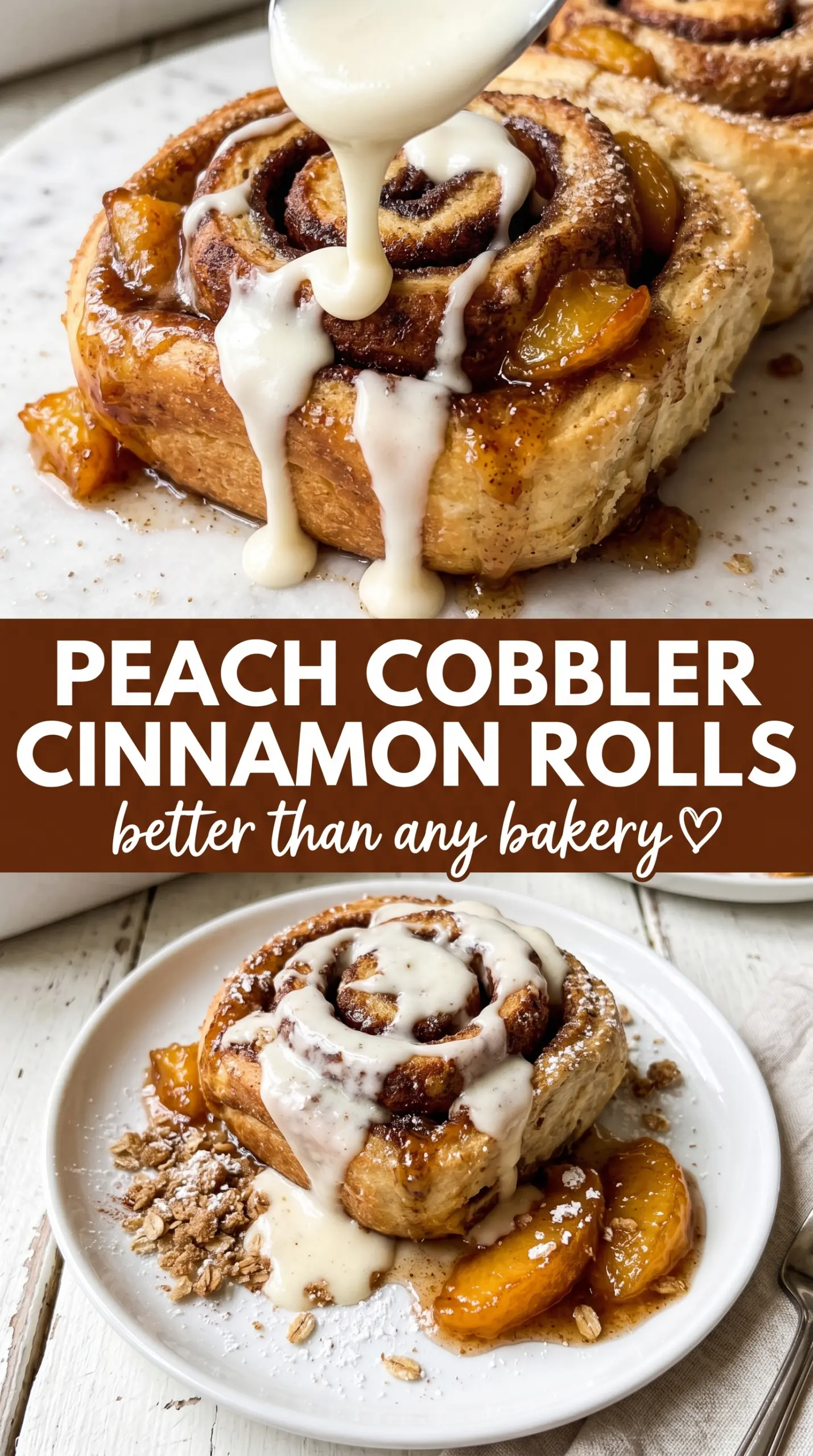
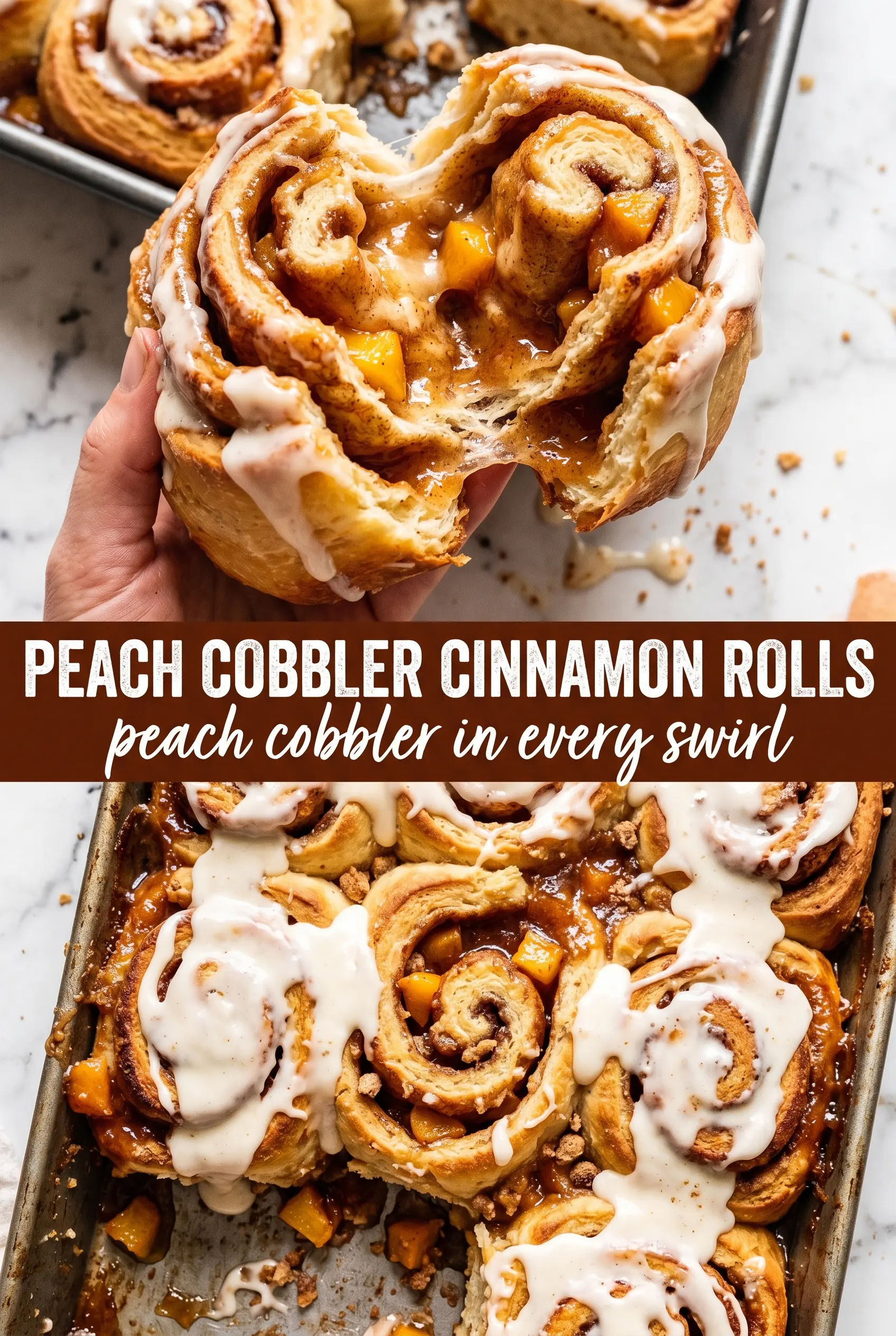
Peach Cobbler Cinnamon Rolls bake up soft and tall with buttery spirals, jammy peach pockets, and a glaze that melts into every ridge of the roll. The peach filling keeps the center tender and fruity without turning the whole pan soggy, so each bite still tastes like a proper cinnamon roll instead of a sticky mess.
What makes this version work is the balance: enough brown sugar and cinnamon to give you that cobbler feel, but not so much juice that the rolls collapse. The peaches are diced small so they soften fast in the oven, and the dough gets a full rise before baking, which keeps the crumb light enough to pull apart instead of chewing through a dense spiral.
Below, I’ll walk through the spots that matter most — how to keep the filling from leaking out, how to cut the rolls cleanly, and what to do if your peaches are extra juicy. Those small details make the difference between good rolls and a pan worth remembering.
The peaches stayed tucked into the spirals and the glaze melted into every layer. I was worried the rolls would get wet in the middle, but they baked up fluffy and the pan disappeared before breakfast was over.
Love the jammy peach filling and thick vanilla glaze? Save these peach cobbler cinnamon rolls for the next brunch when you want something warm, fluffy, and worth pulling apart at the table.
Why the Filling Stays Put Instead of Leaking Out
The biggest failure point in fruit rolls is excess moisture. Peaches are juicy by nature, and if the pieces are too large or the dough is rolled loosely, that juice finds the seam before the rolls even hit the oven. Small dice, a tight roll, and a pan close enough together that the rolls support each other keep the filling where it belongs.
The other thing that matters is the butter layer under the sugar. It helps the cinnamon mixture cling to the dough and gives the peaches something to nest in, instead of letting them slide around on bare dough. If your peaches are extra ripe, blot them briefly with a paper towel after dicing. You want fragrant, soft fruit — not a puddle in the bowl.
What Each Ingredient Is Actually Doing in These Rolls
- Active dry yeast — This gives the dough its lift and that soft, airy cinnamon-roll crumb. The milk needs to be warm, not hot, or the yeast can stall before the dough ever rises.
- Butter — You use it in the dough, the filling, and the glaze, and each job is different. In the dough it adds tenderness, in the filling it helps the sugar melt into a paste, and in the glaze it rounds out the sharpness of the cream cheese.
- Brown sugar — This is what makes the filling taste like peach cobbler instead of plain peach sweet rolls. Packed brown sugar melts into the fruit and gives the spirals a sticky, caramel edge.
- Peaches — Fresh ripe peaches are the move here because they soften into little jammy pockets without turning to mush. If peaches aren’t in season, thawed frozen peaches can work, but drain them well first or the filling gets loose.
- Cream cheese — It makes the glaze thick enough to pool between the rolls instead of running right off. Use it softened so it beats smooth without lumps.
Building the Spiral Without Crushing the Fruit
Making the Dough Smooth and Elastic
After the yeast foams in the warm milk, mix in the rest of the wet ingredients and flour until the dough starts to pull away from the bowl. Knead until it feels smooth and stretchy, not sticky and rough. If it tears easily, it needs a few more minutes of kneading; if it clings hard to your hands, dust in flour a spoonful at a time instead of dumping in a bunch at once. The dough should feel soft and a little tacky, not dry.
Spreading the Filling Evenly
Roll the dough into a clean rectangle, then spread the softened butter all the way to the edges. Sprinkle the brown sugar and cinnamon over the butter first so the peaches have a sticky base to sit on, then scatter the diced fruit evenly. Don’t pile the peaches in the center, or that section will burst open while the outer rolls bake normally.
Cutting, Rising, and Baking Cleanly
Roll from the long side so you get more swirls in each piece, then cut the log into 12 even rolls with a sharp knife or unflavored dental floss. Once they’re in the pan, leave space only if the recipe says so; these do best snug together, which helps them rise upward instead of outward. Bake until the tops are golden and the centers spring back lightly when touched. If the middle looks pale and loose, give it a few more minutes — underbaked dough will taste gummy even with a perfect glaze.
Glazing While the Rolls Are Still Warm
Beat the cream cheese glaze until it’s completely smooth, then drizzle it over the rolls after a short cool-down. Warm rolls absorb some of the glaze, which is what gives you that cobbler-like melt between the layers. If the rolls are piping hot, the glaze will disappear too fast; if they’re fully cool, it sits on top instead of sinking into the spirals.
Three Ways to Make These Rolls Fit What You Have
Frozen peaches when fresh ones aren’t at their peak
Thaw the peaches first, then drain them well and pat them dry before adding them to the filling. Frozen peaches won’t have quite the same bright snap as fresh, but they still give you that soft, jammy center if you keep the extra liquid out of the pan.
Dairy-free rolls that still rise well
Use unsweetened non-dairy milk, plant-based butter, and a dairy-free cream cheese for the glaze. The rolls will still bake up soft, though the glaze will be a touch less tangy and a little looser than the original.
Extra cobbler-style spice
Add a pinch of nutmeg or cardamom to the brown sugar filling if you want a warmer bakery style finish. It pushes the rolls farther toward classic peach cobbler without changing the texture at all.
Make-ahead overnight assembly
Shape the rolls, place them in the pan, cover tightly, and refrigerate overnight after the second rise starts. In the morning, let them sit at room temperature while the oven heats so they finish puffing before baking.
Storage and Reheating
- Refrigerator: Store covered for up to 4 days. The rolls will firm up a little as they chill, but the glaze keeps the centers moist.
- Freezer: Freeze the baked rolls without glaze for up to 2 months. Wrap them well and thaw overnight in the fridge before reheating.
- Reheating: Warm individual rolls in the microwave for 20 to 30 seconds, or cover the pan with foil and heat in a 300°F oven until warmed through. Don’t blast them on high heat or the edges dry out before the center softens.
Answers to the Questions Worth Asking
Peach Cobbler Cinnamon Rolls
Ingredients
Equipment
Method
- In a warm bowl, activate the yeast in warm milk with a pinch of sugar for 5 minutes until foamy, then mix in the remaining sugar, melted butter, eggs, and vanilla while it looks glossy and combined.
- Stir in the all-purpose flour and salt until a shaggy dough forms, then knead for 6-8 minutes until smooth and elastic with a satin surface.
- Place the dough in a lightly greased spot and let rise for 1 hour until doubled in size, puffed with visible air bubbles when you press lightly.
- Roll the dough into a 12x18-inch rectangle, then spread the softened butter over the surface so it looks evenly coated.
- Sprinkle the brown sugar and cinnamon over the butter, then scatter the diced peaches evenly so you see peach pieces throughout.
- Roll tightly from the long side and cut into 12 rolls, then place them in a greased 9x13 pan with cut sides up for even pull-apart layers.
- Let the rolls rise for 30 minutes until puffed, showing a noticeable lift above the pan rim.
- Bake at 375°F for 25-30 minutes until deep golden, with the edges set and lightly browned.
- Cool the rolls for 10 minutes so the glaze won’t run off completely, then beat the cream cheese, powdered sugar, heavy cream, and vanilla until smooth.
- Drizzle the glaze over warm rolls so it pools between every swirl, then serve warm for the best pull-apart texture.