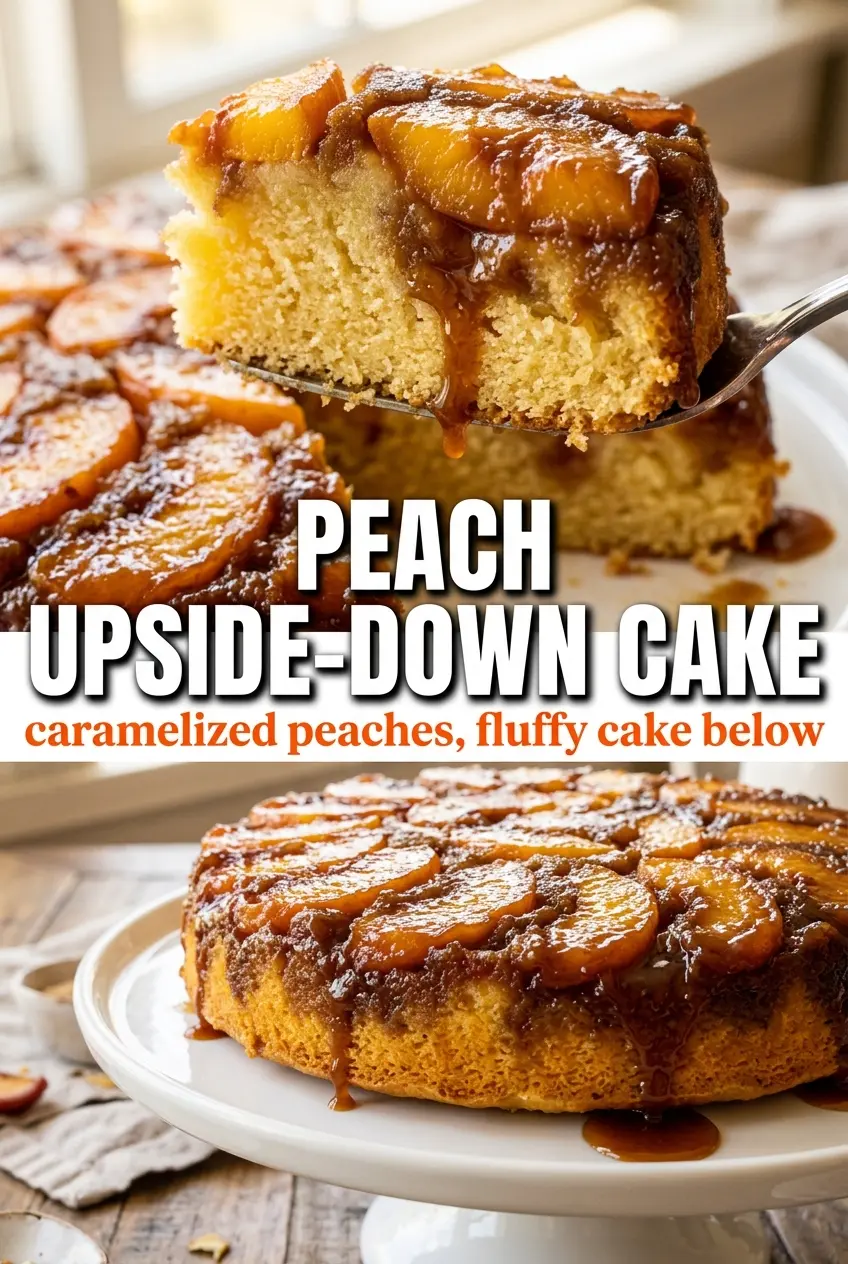
Peach upside-down cake turns a pan of ripe fruit and brown sugar into a dessert that looks far more complicated than it is. The peaches sink into a glossy caramel layer as the cake bakes, then flip out in one dramatic move with the fruit right on top, glistening and tender. What you get is a soft vanilla-butter crumb underneath and sticky, amber peaches above — the kind of cake that disappears while it’s still warm.
This version keeps the topping simple so the peaches stay front and center. Melting the butter in the pan first gives the brown sugar a head start on caramelizing, which keeps the topping saucy instead of grainy. A little cinnamon in both the fruit layer and the batter ties everything together without making the cake taste spiced. The batter itself is plain in the best way: rich enough to stay moist, sturdy enough to hold the fruit, and light enough to slice cleanly once it cools.
If you’ve ever had an upside-down cake stick to the pan or come out with a soggy middle, the timing here matters. You’ll find the exact rest period to use before flipping, plus a few notes on choosing peaches and swapping in sour cream for an even tighter crumb.
The peach layer flipped out cleanly after 10 minutes, and the brown sugar stayed glossy instead of turning sticky. I used sour cream in the batter and the crumb came out super moist without being heavy.
Golden peach slices, glossy brown sugar caramel, and a soft vanilla crumb make this upside-down cake a keeper for warm-from-the-oven dessert nights.
The Flip That Keeps the Peaches Glossy Instead of Stuck
The biggest mistake with an upside-down cake is rushing the unmold. Flip too soon and the caramel is still loose, so the peaches slide around. Wait too long and the sugar cools hard in the pan. Ten minutes is the sweet spot here: the cake sets just enough to hold together, but the topping is still warm and fluid enough to release cleanly.
The other thing that matters is how you layer the peaches. Overlapping concentric circles create coverage across the whole surface, which keeps the top from looking patchy once it comes out of the pan. If you leave gaps, the cake still tastes fine, but you lose that dramatic finish that makes an upside-down cake worth baking in the first place.
- Butter in the pan first — melting it in the oven coats the surface evenly and starts the caramel base without requiring a separate saucepan.
- Packed brown sugar — this is what gives you the glossy topping. Light or dark brown sugar both work; dark brown sugar gives a deeper molasses note.
- Peaches that yield slightly to pressure — underripe peaches stay firm and can taste dull after baking. Overripe ones break down too much and can turn mushy.
- Cinnamon in two places — a small amount in the topping and batter keeps the peach flavor warm and rounded without taking over.
What Each Ingredient Is Actually Doing in This Cake

The butter in the topping does more than add richness. It melts into the brown sugar and helps form that syrupy layer that coats the peaches as the cake bakes. If you use margarine here, the topping won’t taste the same and it can separate more easily.
For the cake, the choice between whole milk and sour cream changes the texture. Whole milk gives you a classic tender crumb, while sour cream makes the cake a little tighter and moister with a subtle tang that works well against the caramel. If you use sour cream, stir it just until combined; overmixing at that point can make the cake dense.
Fresh peaches matter most when they’re in season, but if you only have firm peaches, let them sit on the counter a day or two before baking. Frozen peach slices can work in a pinch, but thaw and drain them well first or the topping gets watery and the caramel thins out.
Building the Cake So the Top Becomes the Bottom Cleanly
Melting the Butter and Starting the Caramel
Put the butter directly in the cake pan or skillet and let the oven do the work. Swirl it so the whole bottom is coated, then scatter the brown sugar and cinnamon over the melted butter in an even layer. If the sugar clumps in one spot, it can bake into a hard patch instead of turning into a smooth glaze.
Arranging the Peaches
Lay the peach slices in overlapping circles from the outside in. You want full coverage, but not a pile of fruit; too much overlap makes the top heavy and can push moisture into the cake. A neat pattern also helps the finished cake release in one piece because the fruit layer sits evenly across the pan.
Mixing the Batter Without Toughening It
Cream the butter and sugar until pale and fluffy, then add the eggs one at a time with the vanilla. Once the flour mixture goes in, alternate it with the milk or sour cream and stop mixing as soon as the batter looks smooth. If you beat it hard at the end, the cake gets tighter and loses that soft crumb that balances the sticky topping.
Flipping at the Right Moment
Bake until the edges pull away from the pan and a toothpick comes out clean from the center, then let the cake rest exactly 10 minutes. Run a thin knife around the edge if any cake looks stuck, place a plate over the pan, and invert in one confident motion. If you wait much longer than 10 minutes, the caramel starts to set and the peaches can cling to the pan.
How to Adapt This for Different Kitchens and Different Peaches
Dairy-Free Peach Upside-Down Cake
Use a good dairy-free butter substitute in both the pan and the batter, and swap the milk for an unsweetened plant milk with some body, like oat milk. The cake will still bake up tender, but the topping won’t taste quite as rich or caramel-like as it does with real butter.
Sour Cream for a Denser, Moister Crumb
Replace the milk with full-fat sour cream if you want a tighter, more bakery-style crumb. The cake slices cleaner and stays moist longer, but it loses a little of the lighter, almost fluffy texture you get with milk.
Using Frozen Peaches When Fresh Aren’t Great
Thaw the peach slices completely and drain off as much liquid as you can before arranging them in the pan. Frozen fruit gives you decent flavor, but if it goes in wet, the brown sugar layer can thin out and the bottom of the cake may bake up soft instead of caramelized.
Storage and Reheating
- Refrigerator: Store covered for up to 3 days. The topping firms up in the fridge, but the cake stays moist.
- Freezer: Freeze slices tightly wrapped for up to 2 months. The peach layer softens after thawing, but it still tastes good.
- Reheating: Warm slices in a 300°F oven for 10 to 12 minutes. The microwave works in a pinch, but it softens the caramel too quickly and can make the fruit soggy.
Answers to the Questions Worth Asking
Peach Upside-Down Cake
Ingredients
Equipment
Method
- Preheat the oven to 350°F. Melt the butter in a 9-inch round cake pan or cast iron skillet in the oven, then swirl to coat the bottom.
- Sprinkle the brown sugar and cinnamon evenly over the melted butter in the pan. Arrange the peach slices in overlapping concentric circles over the brown sugar layer, then set aside.
- Beat the softened butter and granulated sugar until fluffy. Add the eggs and vanilla, then continue beating until smooth.
- Mix the flour mixture (all-purpose flour, baking powder, salt, and cinnamon) and the whole milk or sour cream into the wet ingredients alternately, until just combined. Keep the batter thick and pourable so it settles over the peaches.
- Pour the batter gently over the peach arrangement and smooth the top. Bake for 38–42 minutes at 350°F, until a toothpick comes out clean and the cake pulls away from the sides.
- Cool in the pan for exactly 10 minutes to set the caramel. Invert the cake onto a plate and serve warm.