Golden pastry wrapped around a tender baked apple has a way of disappearing fast, especially when the bottom of the dish catches that cinnamon-sugar syrup and turns glossy around the edges. Pennsylvania Dutch apple dumplings hit a sweet spot between pie and old-fashioned baked apples: crisp on the outside, soft in the middle, and rich enough to feel special without being fussy.
What makes this version work is the balance. The pastry is sturdy enough to hold a whole apple without splitting, but it still bakes up tender if you keep the shortening cold and stop adding water as soon as the dough holds together. The syrup looks simple, but it matters because it keeps the apples moist while pulling a little flavor out of the crust as everything bakes together.
Below, you’ll find the exact cues I watch for so the pastry seals cleanly and the apples finish at the same time as the crust. I’ve also included a few swaps and storage notes, because this is the kind of dessert people often want to make ahead.
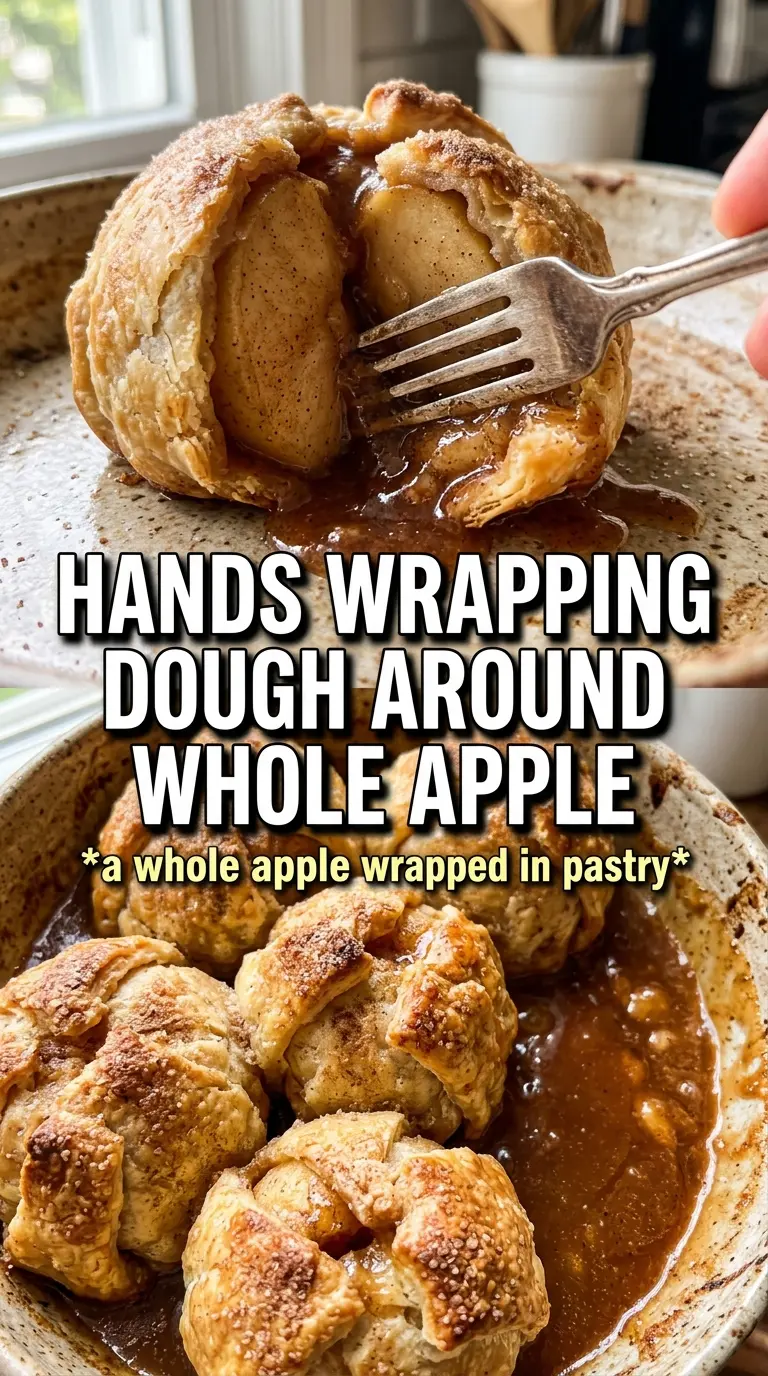
The syrup bubbled up around the dumplings and the pastry stayed crisp on top instead of getting soggy. I used small Honeycrisp apples and they baked through perfectly in the time listed.
Save these Pennsylvania Dutch Apple Dumplings for the kind of dessert that bakes into a buttery crust and cinnamon syrup in one pan.
The Part That Keeps the Pastry from Splitting Open
The biggest failure point with apple dumplings is dough that gets too warm before it goes into the oven. Once that shortening softens, the pastry starts tearing when you stretch it around the apple, and the seams open in the bake. Cold fat gives you a dough that rolls out cleanly but still bakes up tender instead of dense.
The other mistake is overworking the dough after the water goes in. Stop as soon as it holds together when pressed. If it looks a little rough, that’s fine; rough dough often bakes better here because it doesn’t get tough around the fruit.
- Keep the shortening cold — That’s what creates the flaky layers. If the fat melts before baking, the pastry loses structure and bakes up more like a biscuit crust than a proper dumpling wrap.
- Use small apples — Big apples take too long to soften, and the pastry can overbrown before the center is tender. Small apples cook through at the same pace as the crust.
- Seal the seams firmly — Pinch the pastry where it overlaps and set the seam side down in the dish. That simple move helps the dumpling hold its shape once the syrup starts bubbling.
What Each Ingredient Is Actually Doing in the Dish
- All-purpose flour — This gives the pastry enough strength to wrap around a whole apple without turning heavy. A pastry flour will be softer, but it won’t hold as neatly around the fruit.
- Shortening or butter — Shortening gives the most reliable flaky crust and is easier to work with if you’re new to pastry. Butter adds better flavor, but it softens faster, so chill everything well if you use it.
- Small whole apples — Tart, firm apples hold their shape best. If you use a softer apple, it can collapse before the crust finishes.
- Brown sugar and cinnamon — This mixture goes straight into the core cavity, where it melts into the apple from the inside out. Granulated sugar won’t give you the same molasses depth.
- The syrup — It’s not just there for sweetness. It keeps the baking dish from drying out and creates the spoonable sauce that makes the dumplings feel finished.
Building the Dumplings So the Apples Finish Before the Crust Burns
Making the Pastry
Mix the flour and salt, then cut in the cold shortening or butter until the mixture looks crumbly with pea-sized bits of fat still visible. Add the ice water a tablespoon at a time and stop the moment the dough starts to come together. If you add too much water, the pastry can turn elastic and shrink in the oven. Divide it right away so each piece stays manageable and doesn’t sit around warming up while you work.
Wrapping the Apples
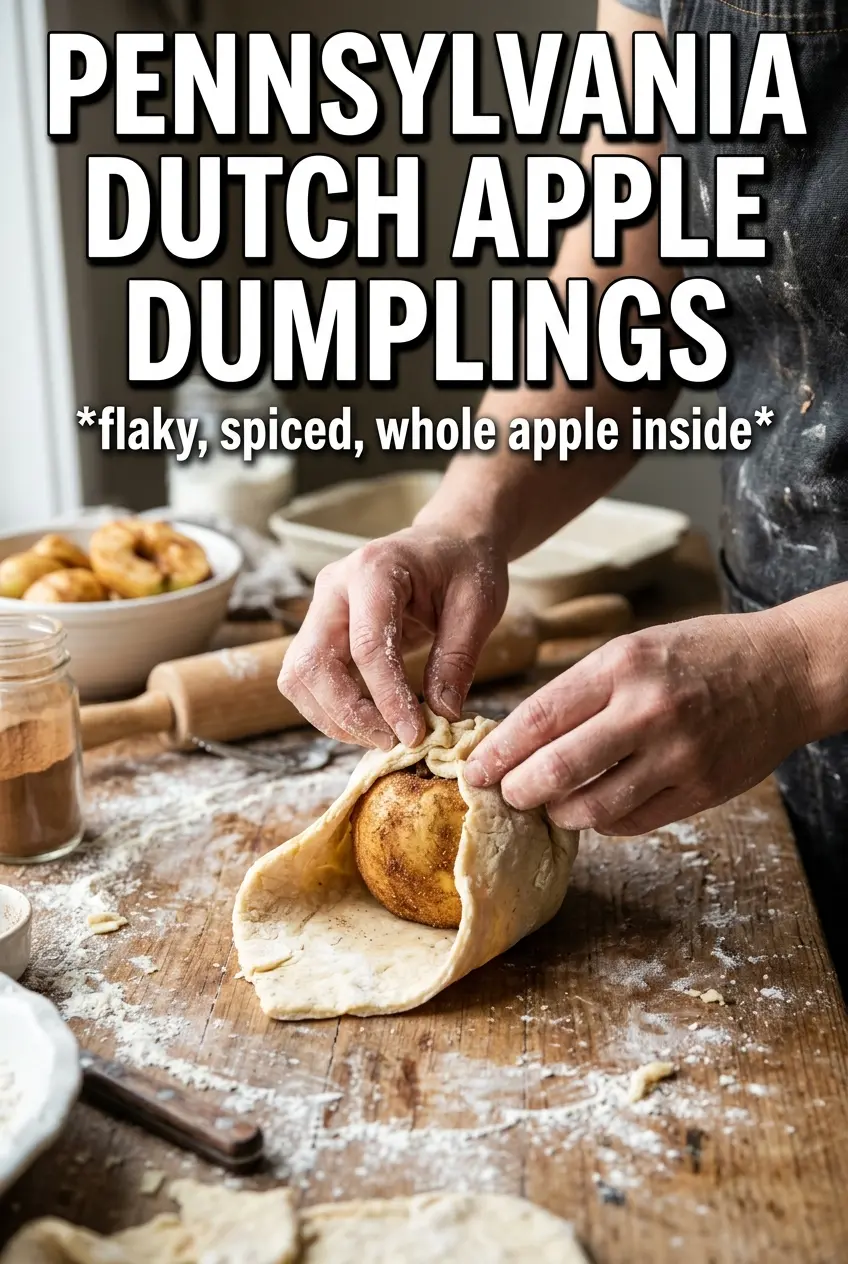
Roll each portion into a circle wide enough to cover one apple without stretching it thin. The dough should meet over the top with a little overlap, but if you have to tug hard to make it happen, roll it slightly larger instead of forcing it. Fill the cored center with brown sugar, cinnamon, and butter, then wrap and pinch firmly. Any open seam will leak syrup and let the apple dry out before it finishes baking.
Pouring in the Syrup
Bring the syrup ingredients to a boil in the saucepan so the sugar fully dissolves and the mixture looks smooth rather than grainy. Pour it around the dumplings, not over the tops, so you don’t wash the pastry seam loose before baking. The liquid should come partway up the sides of the dumplings. If you pour too much, the pastry steams instead of baking, and the top won’t turn properly golden.
Watching for the Finish
Bake until the pastry is deeply golden and the apples yield easily when pierced through the side with a paring knife. If the tops are browning too quickly, tent loosely with foil for the last part of baking. The syrup will thicken a little as it cools, so don’t wait for it to look heavy in the oven. It should still be fluid and bubbling when you pull the pan out.
Three Ways to Make These Dumplings Fit Your Kitchen
Butter for the shortening
Use all butter if that’s what you have. The pastry will taste richer and brown a little faster, but it’s a bit less forgiving, so keep the dough cold and work quickly. You may need the full amount of ice water, but add it slowly.
Gluten-free pastry
A good 1:1 gluten-free flour blend can work here, but the dough may be a little more fragile when you wrap the apples. Chill the dough before rolling, and don’t roll it paper-thin. The result is still satisfying, though the texture will be more tender and less flaky.
Using a different apple
Firm apples like Granny Smith, Honeycrisp, or Jonagold work best because they keep their shape. If you use a sweeter apple, the dumplings will taste softer and less tangy, so the cinnamon becomes the louder note in the dish.
Storage and Reheating
- Refrigerator: Store covered for up to 4 days. The pastry softens as it sits, but the flavor stays excellent.
- Freezer: Freeze baked dumplings individually after cooling. Wrap well and thaw in the fridge before reheating; the pastry won’t stay as crisp as fresh, but they still freeze well.
- Reheating: Warm in a 325F oven until heated through. The oven brings back more of the pastry texture than the microwave, which tends to make the crust soggy and the syrup overly loose.
Answers to the Questions Worth Asking
Pennsylvania Dutch Apple Dumplings
Ingredients
Equipment
Method
- Preheat oven to 375F, then grease a 9x13 baking dish so the dumplings release easily.
- Combine all-purpose flour and salt, then cut in cold shortening or butter until the mixture is crumbly.
- Add ice water a little at a time until the dough comes together, then divide it into 6 portions.
- Roll each portion of pastry into a circle large enough to wrap one apple.
- Place 1 peeled and cored small apple on each pastry circle, then fill the core cavity with 1 tablespoon brown sugar, 1/2 teaspoon cinnamon, and a pat of unsalted butter.
- Wrap the pastry around each apple, pinching edges to seal, and place each dumpling in the prepared baking dish.
- In a saucepan, combine water, granulated sugar, brown sugar, unsalted butter, and cinnamon, then bring to a boil.
- Pour the hot syrup around the dumplings, then bake at 375F for 40-45 minutes until the pastry is golden and the apples are tender.