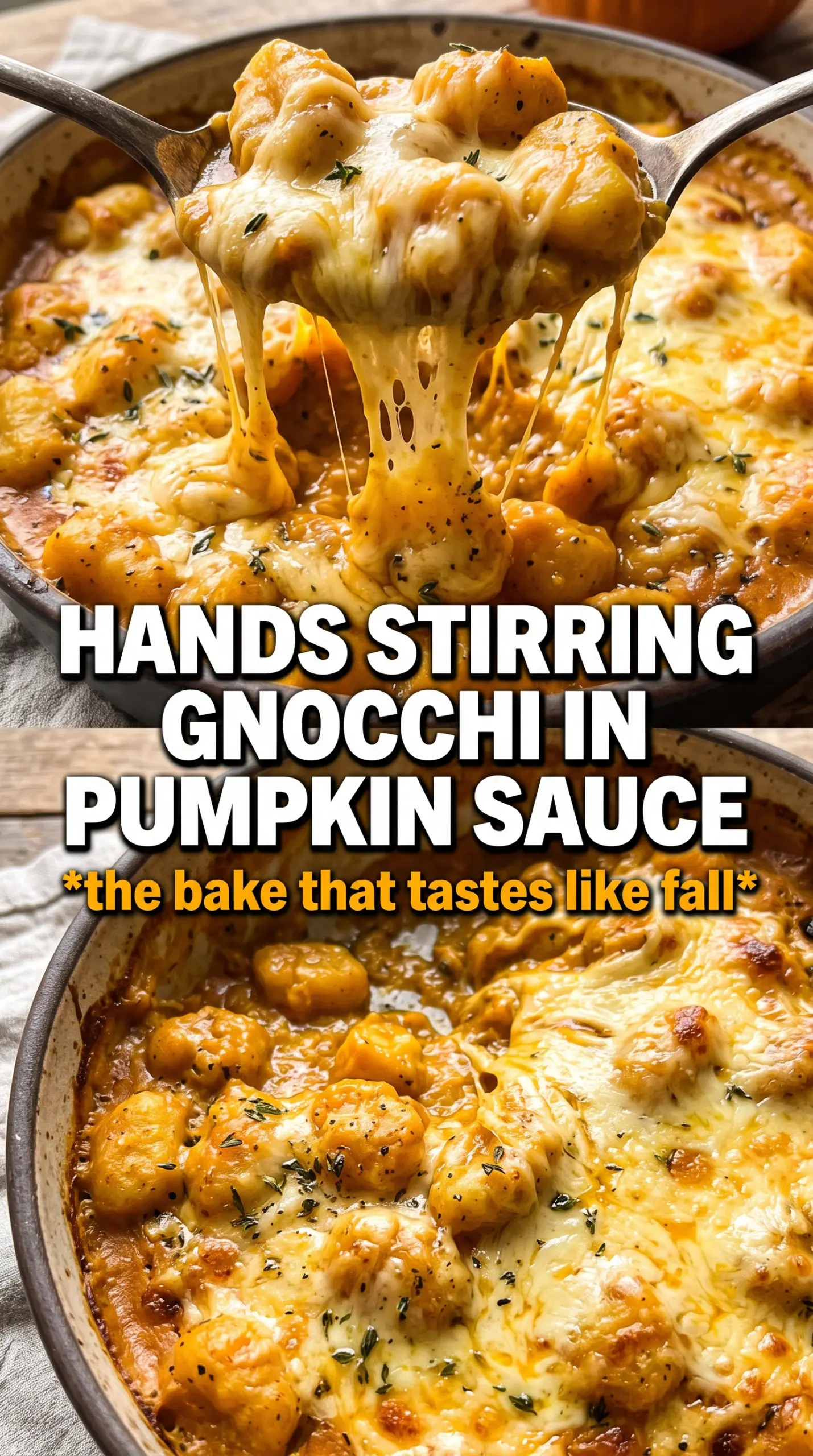
Pillowy gnocchi baked in a creamy pumpkin-sage sauce is the kind of dinner that disappears fast because it lands in that sweet spot between cozy and substantial. The top turns deeply golden and a little crisp in places, while the sauce underneath stays rich and spoonable around every bite. With crumbled Italian sausage folded through, it eats like a full meal, not a side dish pretending to be dinner.
What makes this version work is that the sauce is built on the stove just long enough to thicken slightly before it goes into the oven. That keeps the pumpkin from tasting flat and gives the garlic, sage, and nutmeg time to bloom. The gnocchi goes in uncooked, so it finishes right in the sauce and soaks up flavor instead of turning soft and waterlogged from a separate boil.
You’ll find the exact order matters here, plus a few practical notes on cheese, sausage, and the one mistake that can leave the center too loose. If you’ve ever had a baked gnocchi dish that came out heavy or bland, this one fixes both problems.
The sauce thickened up beautifully in the oven and the gnocchi stayed pillowy instead of mushy. I loved the little kick from the red pepper flakes with the sage.
Save this Pumpkin Gnocchi Bake for a creamy, sausage-filled dinner with a golden mozzarella top and pillowy gnocchi.
The part that keeps the gnocchi from turning heavy
The biggest mistake with baked gnocchi is overcooking it before it ever reaches the oven. Potato gnocchi is tender on its own, so if you boil it first and then bake it in a rich sauce, it can go past soft and start to collapse. Here, the uncooked gnocchi finishes in the pumpkin cream sauce, which keeps the texture fluffy and lets it absorb flavor as it bakes.
The second thing that matters is the sauce consistency before it goes into the dish. It should look loose but not watery after the stovetop simmer, because the oven will thicken it further as the cream reduces and the cheese melts. If it seems too thick in the skillet, add a splash of broth before assembling; if it’s too thin, give it another minute on the heat so the bake doesn’t come out soupy.
- Uncooked potato gnocchi — This is the shortcut that keeps the whole dish light enough to bake well. Shelf-stable gnocchi works fine here, and refrigerated gnocchi is great too.
- Pumpkin puree — Use pure pumpkin, not pumpkin pie filling. Pie filling brings sugar and spices that throw off the balance of the sauce.
- Italian sausage — This gives the dish its backbone. Mild or hot both work; hot sausage adds more contrast against the sweet pumpkin.
- Fresh sage — Fresh sage matters more than dried here because it perfumes the butter and garlic without tasting dusty. If you need to substitute, use half as much dried sage and keep it brief in the pan.
What Each Ingredient Is Actually Doing in This Recipe
- Primary ingredient (the star) — Quality matters most. Choose the best you can find.
- Cooking medium (oil, butter, or broth) — This carries flavors and prevents dryness.
- Seasonings (salt, pepper, spices, herbs) — Layer flavors so nothing overpowers. Build depth gradually.
- Aromatics (garlic, onion, herbs) — Cook with fat to bloom flavors. Become the foundation.
- Supporting ingredients — Complement the main ingredient without overpowering it.
- Sauce or liquid (if applicable) — Brings flavors together. Balance richness with acid.
- Acid (lemon, vinegar, wine, or other) — Brightens and prevents flat-tasting results.
- Final finish (garnish, glaze, or sauce) — Prevents one-dimensional taste and adds visual appeal.
Building the sauce before it meets the oven
Brown the sausage first
Cook the sausage until it’s deeply browned and no pink remains, breaking it into small crumbles as it cooks. You want some crisp edges on the meat, because those browned bits carry a lot of flavor into the finished bake. Drain off the excess fat, but leave the skillet ready for the sauce; those browned bits stuck to the pan are worth keeping.
Wake up the garlic and sage in butter
Melt the butter in the same skillet and add the garlic and chopped sage. Stir for just 1 to 2 minutes, until the garlic smells fragrant and the sage looks glossy, not dark. If the garlic browns hard, it turns bitter and that shows up in the sauce, so keep the heat moderate and move quickly to the next step.
Simmer the pumpkin cream just enough
Stir in the pumpkin puree, cream, broth, nutmeg, and red pepper flakes, then let everything simmer for 3 to 4 minutes. The sauce should look smooth and slightly thicker than when you started, but not paste-like. Taste it now and season with salt and pepper; once the cheese goes on top, it becomes harder to judge the seasoning.
Let the oven finish the gnocchi
Toss the uncooked gnocchi directly into the baking dish with the sausage and sauce, then scatter the mozzarella and parmesan over the top. Bake until the cheese is golden and the sauce is bubbling around the edges, which tells you the gnocchi has cooked through. If the top browns before the center is hot, lay a loose piece of foil over the dish for the last stretch of baking.
How to adapt this bake for a different table
Make it dairy-free
Swap the heavy cream for full-fat coconut milk or an unsweetened dairy-free cooking cream, and use a good melting dairy-free cheese on top. The sauce will be a little less rich and a touch less tangy than the original, but it still bakes into a creamy casserole with the same pumpkin-sage backbone.
Make it vegetarian
Leave out the sausage and add sautéed mushrooms, spinach, or browned mushrooms plus chopped walnuts for more body. You lose the savory richness from the sausage, so season a little more aggressively and consider an extra pinch of sage or parmesan to keep the dish from tasting flat.
Use gluten-free gnocchi
Many potato gnocchi are already gluten-free, but check the package before buying. The bake time stays the same, though some gluten-free brands soften a little faster, so start checking for bubbling sauce and a tender center a few minutes early.
Make it spicier or milder
Hot Italian sausage and the red pepper flakes already give the dish a little edge, but you can push it further with an extra pinch of flakes. For a milder version, use sweet sausage and cut the pepper flakes in half; the pumpkin and sage will stand out more clearly without the heat in the background.
Storage and Reheating
- Refrigerator: Store leftovers in an airtight container for up to 4 days. The sauce thickens as it chills, and the gnocchi softens a bit, but the flavor holds up well.
- Freezer: It freezes, though the texture is not quite as silky after thawing. Freeze portions tightly wrapped for up to 2 months and thaw in the refrigerator before reheating.
- Reheating: Warm covered in a 350F oven until hot in the center, or use the microwave in short bursts with a splash of broth or cream. The common mistake is blasting it until the cheese turns tough and the sauce dries out.
Questions I Get Asked About This Recipe

Pumpkin Gnocchi Bake
Ingredients
Equipment
Method
- Preheat oven to 400F and grease a 9x13 baking dish so the gnocchi won’t stick.
- Brown the Italian sausage in a large skillet, then drain excess fat and set the sausage aside.
- Melt butter in the skillet, then sauté the garlic and sage for 1-2 minutes until fragrant and lightly softened.
- Add pumpkin puree, heavy cream, chicken broth, nutmeg, and red pepper flakes and stir until smooth.
- Simmer the sauce for 3-4 minutes, then season with salt and pepper to taste.
- Toss the uncooked potato gnocchi in the sauce directly in the greased 9x13 baking dish, then mix in the browned sausage.
- Scatter shredded mozzarella and grated parmesan over the top so the surface bakes into a browned crust.
- Bake for 30-35 minutes at 400F until the gnocchi are cooked through, the sauce is bubbling, and the cheese is golden.