Pumpkin snickerdoodle cookies bake up soft, pillowy, and warmly spiced with the kind of crinkled cinnamon-sugar tops that make people reach for a second one before the first has cooled. The pumpkin shows up as a gentle autumn note, not a cakey shortcut, and the edges set just enough to give each cookie that classic snickerdoodle bite.
What makes this version work is the dried pumpkin puree. Pumpkin brings moisture, and moisture is what turns snickerdoodles from chewy cookies into puffy little cakes if you’re not careful. Blotting the puree first keeps the dough structured, while cream of tartar gives the cookies their tangy snap and the familiar snickerdoodle texture. The spice blend leans warm without becoming heavy, so the cookies taste like pumpkin spice in the best possible way.
Below, you’ll find the small details that matter most here: how dry the pumpkin needs to be, when the dough should go in the fridge, and how to get that crackly sugar coating to cling in a thick, even layer.
The pumpkin stayed soft without turning cakey, and the cinnamon-sugar coating baked into those perfect little crinkles on top. I chilled the dough for half an hour and the cookies held their shape beautifully.
Pumpkin Snickerdoodle Cookies with that soft center and cinnamon-sugar crust are worth pinning for your next cookie tray.
The Reason These Cookies Stay Soft Without Turning Puffy
Snickerdoodles get their signature texture from cream of tartar, but pumpkin changes the game by adding extra moisture. That’s where most pumpkin versions go wrong. If the puree goes in wet, the cookies spread less, bake up thicker, and can cross over into muffin territory before the centers are set. Blotting the pumpkin until it looks almost dull and paste-like keeps the dough on the cookie side of the line.
The other detail that matters is the short bake. These cookies should come out when the edges are set and the centers still look slightly underdone. They finish on the pan, which is how you keep them soft instead of dry. If they look fully baked in the oven, they’re already overbaked.
- Blotted pumpkin puree — This gives you pumpkin flavor without the extra water that softens the dough too much.
- Cream of tartar — It brings the classic snickerdoodle tang and helps create that tender, crackly texture.
- Butter beaten with sugar — You want the mixture light and fluffy so the cookies bake up with lift instead of density.
- Short chill, if needed — Thirty minutes in the fridge firms soft dough just enough to roll it cleanly in the sugar coating.
What Each Spice Is Actually Doing Here
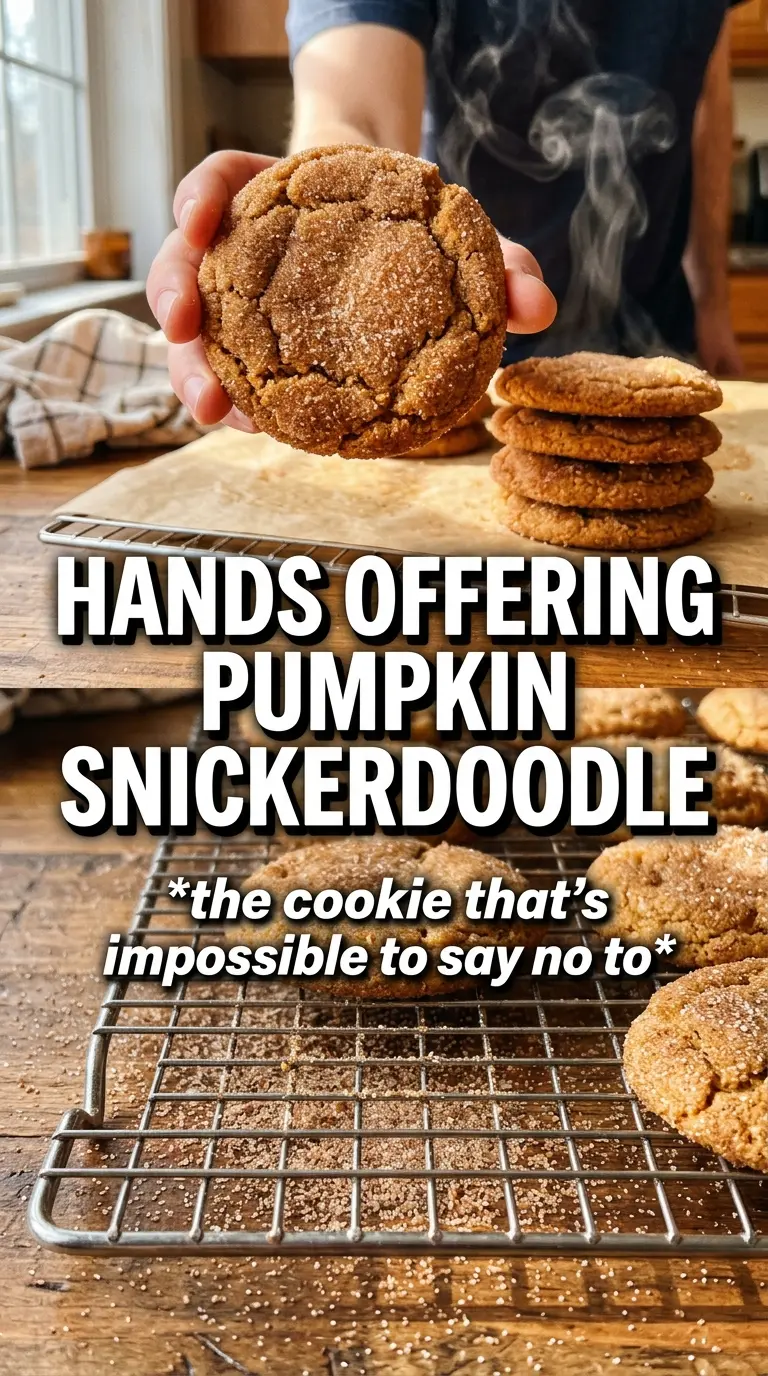
- Cinnamon — This is the dominant spice in the dough and the coating. It gives the cookies their familiar snickerdoodle profile and helps the surface caramelize slightly.
- Nutmeg, ginger, and allspice — These don’t need to shout. They round out the pumpkin and keep the flavor from tasting flat or one-note.
- Vanilla — It softens the edges of the spice and makes the butter taste richer.
- Granulated sugar for rolling — The coating needs regular sugar, not brown sugar, because it stays drier and bakes into that classic sparkly crust.
The Part Where the Dough Becomes Cookies
Blotting the Pumpkin Dry
Lay the pumpkin puree on paper towels and press it gently, then repeat with fresh towels until the moisture is pulled out. The puree should look thick and spreadable, not glossy and wet. If you skip this, the dough will feel loose and the cookies won’t hold that clean, rounded shape. This is the step that keeps the pumpkin from overwhelming the snickerdoodle structure.
Building the Dough
Beat the butter and sugar until the mixture looks pale and fluffy, then add the egg, vanilla, and dried pumpkin. The dough can look a little curdled at this stage; that’s normal because pumpkin isn’t as smooth as cream. Add the dry ingredients just until the flour disappears. If you keep mixing, the cookies turn tougher and the spice coating won’t be enough to hide it.
Rolling for the Crinkle
Mix the rolling sugar and spices in a shallow bowl, then scoop the dough into 1 1/2 tablespoon portions. Roll each ball generously so the outside is fully coated. That thick layer helps the tops crack as they bake and gives you the signature cinnamon-sugar shell. If the dough is too soft to roll cleanly, chill it for 30 minutes first.
Baking Until the Edges Set
Bake at 375°F for 10 to 12 minutes, just until the edges look set and the tops are crinkled. Don’t wait for deep browning across the whole cookie; these finish soft and tender, and the carryover heat does the rest. Let them sit on the pan for 5 minutes before moving them. That brief rest is what keeps them from falling apart while they’re still fragile.
How to Make These Cookies Fit the Way You Bake
Make them thicker and softer
Chill the dough for a full 45 minutes and keep the scoops slightly taller instead of round. You’ll get a puffier cookie with a softer center and a more obvious crinkle on top. The tradeoff is less spread, so they’ll feel more cake-like.
Make them gluten-free
Use a 1:1 gluten-free flour blend that includes xanthan gum. The texture will be a little more delicate, but the flavor and coating hold up well because the dough is naturally rich from butter and sugar.
Skip the dairy
Use a plant-based butter that behaves like stick butter rather than a soft tub spread. The cookies will still roll and bake properly, but the flavor will be a little less rich and the edges may brown a touch faster.
Storage and Reheating
- Refrigerator: Store in an airtight container for up to 5 days. The sugar coating softens a little by day two, but the cookies stay tender.
- Freezer: Freeze baked cookies for up to 2 months, or freeze scooped dough balls and roll them in sugar right before baking. Baked cookies thaw quickly at room temperature.
- Reheating: Warm a cookie for 5 to 8 seconds in the microwave if you want the center soft again. Don’t overheat them or the sugar coating turns sticky and the texture tightens up.
Questions I Get Asked About This Recipe
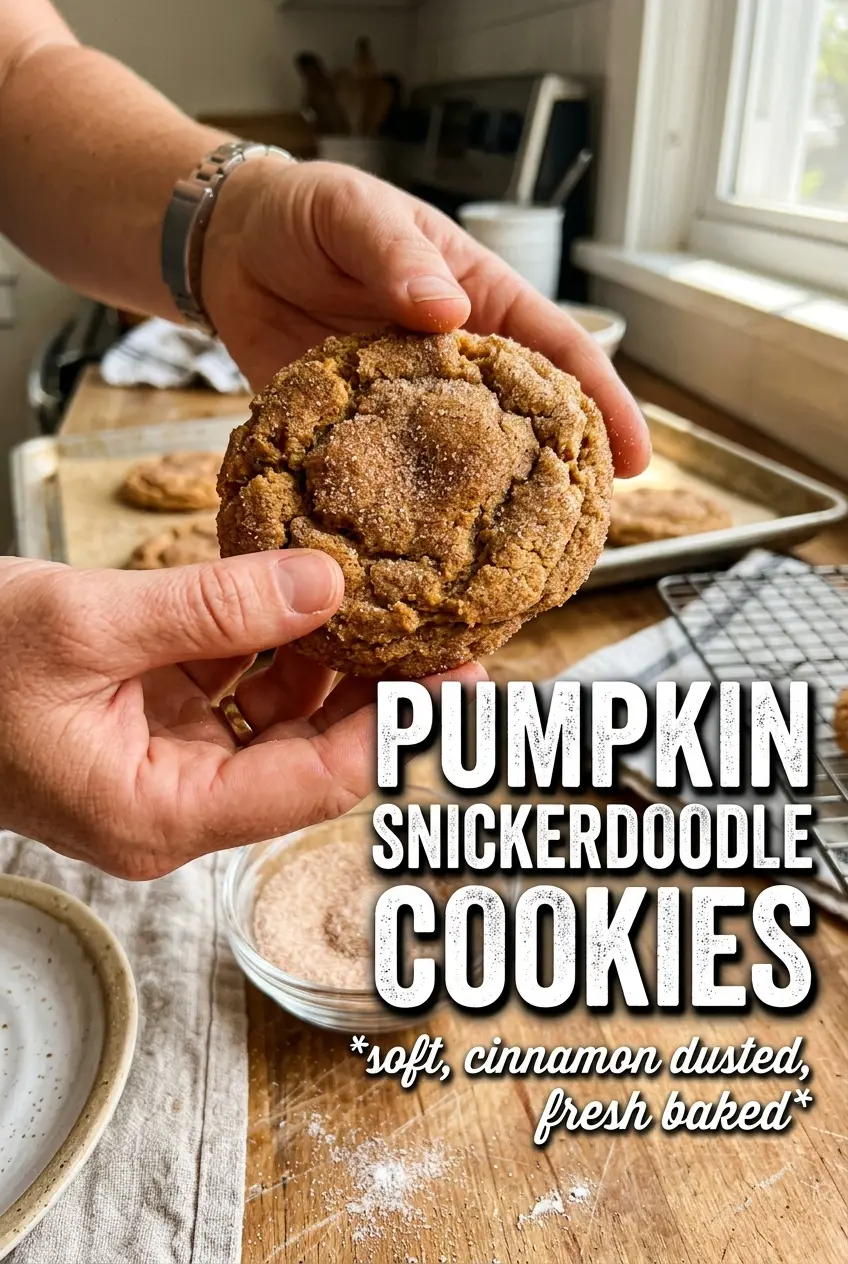
Pumpkin Snickerdoodle Cookies
Ingredients
Equipment
Method
- Preheat the oven to 375°F and line baking sheets with parchment.
- Blot the pumpkin puree between paper towels several times to remove as much moisture as possible for crisp edges.
- Whisk together the all-purpose flour, cream of tartar, baking soda, cinnamon, nutmeg, ginger, allspice, and salt.
- Beat the softened unsalted butter and granulated sugar until very light and fluffy.
- Add the egg, vanilla extract, and blotted pumpkin puree, then beat until combined.
- Fold in the flour mixture until just combined, keeping the dough slightly sticky.
- Refrigerate the dough for 30 minutes if it is very soft.
- Mix the rolling sugar and spices (sugar, cinnamon, and pumpkin pie spice) in a shallow bowl.
- Scoop into 1-1/2 tablespoon balls, then roll generously in the cinnamon spice sugar.
- Bake for 10 to 12 minutes, until the edges are set and the tops are crinkled.
- Cool on the pan for 5 minutes so the cookies firm as they cool.