Ranch roasted carrots come out tender in the center, browned at the edges, and coated in that familiar herby seasoning that makes the whole tray disappear fast. The carrots pick up enough roast to taste rich and caramelized, while the ranch keeps every bite savory and punchy instead of plain.
The trick is simple: cut the carrots into even sticks so they roast at the same pace, then spread them out well on the pan. If they’re crowded, they steam and go soft without picking up those dark edges that make this dish worth making. A little Parmesan added at the end brings salt and a touch of nuttiness, and fresh dill or parsley keeps the flavor bright.
Below, you’ll find the few details that matter most for getting carrots that are deeply roasted instead of soggy, plus a couple of easy ways to adjust the seasoning depending on what you’ve got on hand.
The carrots got those caramelized edges I never seem to get when I crowd the pan, and the Parmesan at the end made them taste almost snackable.
Save these ranch roasted carrots for the side dish that turns a plain carrot bag into something people actually ask for again.
The Reason These Carrots Roast Instead of Steam
The difference between roasted carrots and limp carrots comes down to surface area and spacing. Sticks that are all roughly the same size cook evenly, and a hot oven at 425F pushes moisture out fast enough for the edges to brown before the centers turn mushy.
The ranch seasoning works here because it clings to the oil-coated carrots and bakes into the surface instead of sliding off. If you add too much seasoning or too little oil, the coating turns patchy and dusty instead of savory and even. Parchment helps with cleanup, but the real win is giving the carrots enough room to actually roast.
- Carrots — Cut them into sticks about the same thickness so the skinny ones don’t burn before the thick ones soften. If some pieces are much larger, split them lengthwise.
- Olive oil — This carries the seasoning and helps the edges caramelize. A neutral oil works too, but olive oil gives the carrots a little more richness.
- Ranch seasoning — This is the backbone of the flavor, and it’s hard to replace exactly. If you only have homemade seasoning, use it, but keep an eye on salt since packet blends can run different from brand to brand.
- Parmesan — Add it after roasting so it melts slightly from the heat but still stays a little dry and savory on top. If you add it too early, it can scorch.
- Fresh dill or parsley — This keeps the finish from tasting heavy. Parsley is the safer all-purpose choice; dill leans more boldly into the ranch flavor.
What Each Ingredient Is Actually Doing in the Pan
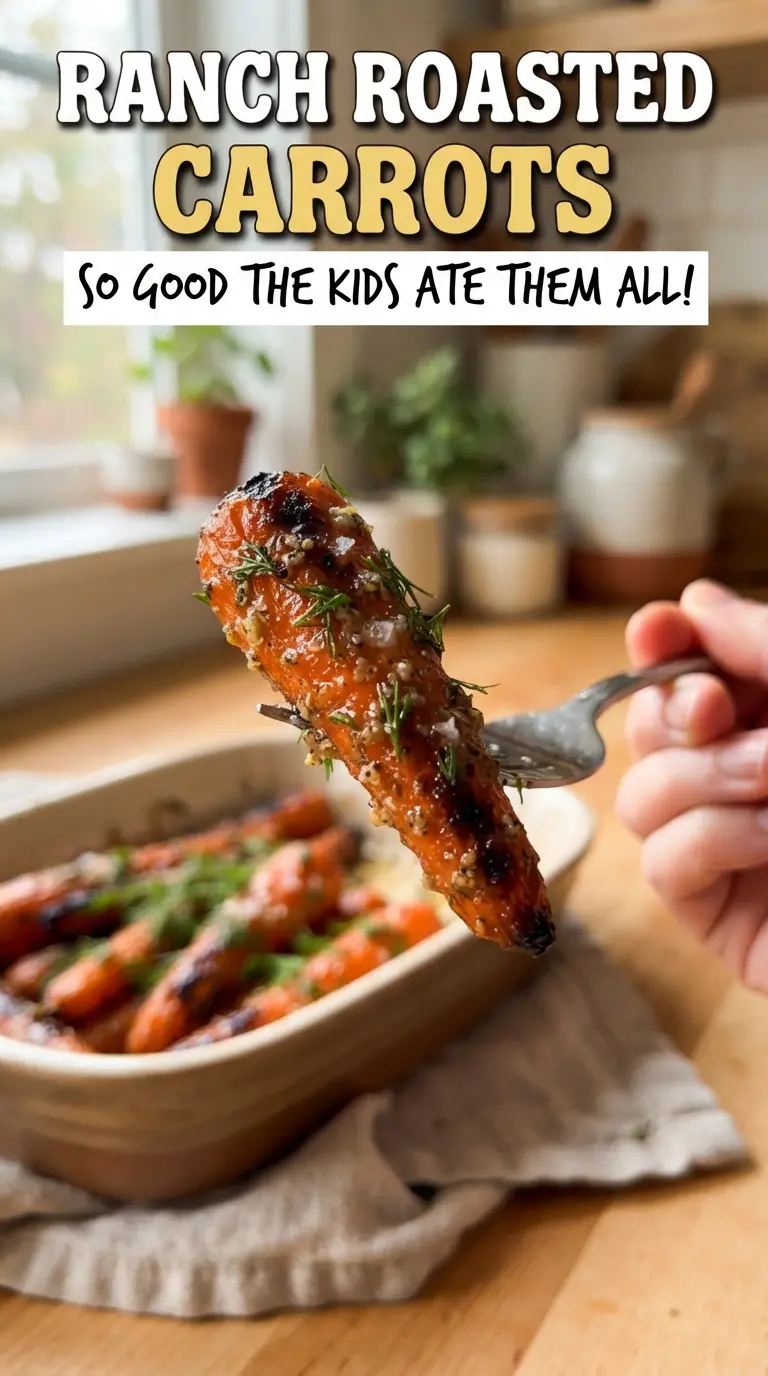
The olive oil does more than prevent sticking. It helps the seasoning coat the carrots evenly and gives the oven heat something to work with so you get browning instead of dryness.
The ranch packet brings salt, dried herbs, and that familiar tang in one step, which is why this recipe tastes fuller than plain roasted carrots. Parmesan and herbs at the end are the finishing layer, not decoration. They sharpen the flavor and make the carrots taste finished instead of just cooked.
Getting the Seasoning and Heat to Work for You
Coating the Carrots Evenly
Start by tossing the carrots with the oil first, then add the ranch seasoning so it sticks in a thin, even layer. If you dump the packet straight onto dry carrots, you’ll get clumps on some pieces and bare spots on others. Use a bowl with enough room to move everything around, and keep tossing until every piece looks lightly coated and a little glossy.
Roasting for Color, Not Just Softness
Spread the carrots in a single layer on the sheet pan and give them a little breathing room. Overcrowding traps steam, and steam is the enemy of browning. Roast until the edges look browned and some tips are almost sticky-looking, then toss them halfway through so the color develops on more than one side. If they still look pale at 20 minutes, give them a few more minutes instead of pulling them too soon.
Finishing with Parmesan and Herbs
Sprinkle on the Parmesan as soon as the carrots come out of the oven so the heat softens it slightly. Then add the fresh dill or parsley. This order matters because herbs lose their brightness in high heat, and Parmesan can go grainy or brown too far if it’s added before roasting.
Add a little heat
A pinch of cayenne or red pepper flakes works if you want the carrots to lean less creamy-ranch and more savory-spicy. Add it with the seasoning so it disperses evenly instead of landing in hot spots.
Make it dairy-free
Skip the Parmesan and finish with extra herbs plus a tiny squeeze of lemon if you want more lift. The carrots still roast beautifully, and the ranch seasoning carries most of the flavor on its own.
Use baby carrots in a pinch
Baby carrots work, but they release more moisture and brown a little less deeply than cut whole carrots. Dry them well before tossing, and expect a softer texture with less caramelization.
Storage and Reheating
- Refrigerator: Store leftovers in an airtight container for up to 4 days. They soften a little after chilling, but the flavor holds up well.
- Freezer: Freezing isn’t ideal here. The carrots lose some texture after thawing and turn much softer.
- Reheating: Reheat on a sheet pan in a 400F oven for 8 to 10 minutes, or in a skillet over medium heat until warmed through. The microwave works in a pinch, but it tends to make the carrots steamy instead of lightly crisp at the edges.
Answers to the Questions Worth Asking
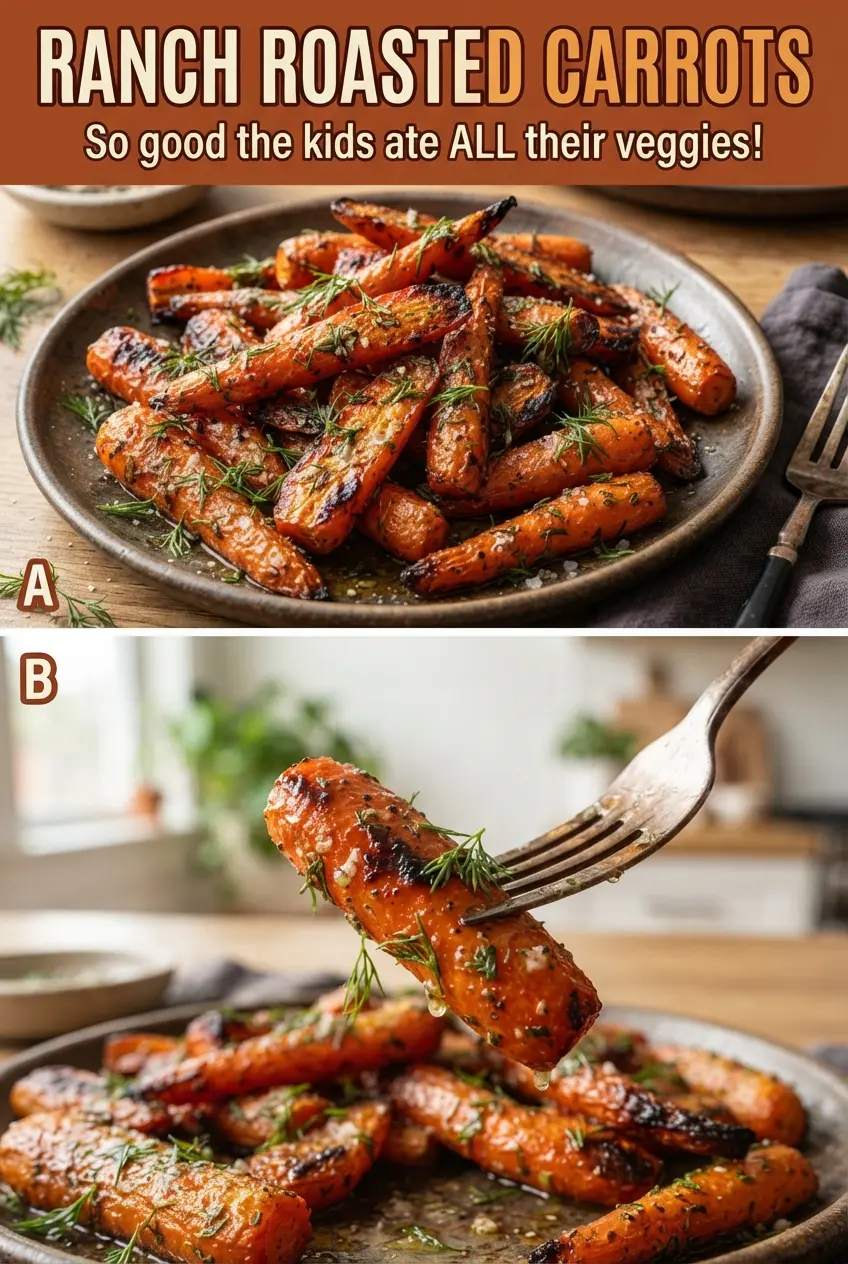
Ranch Roasted Carrots
Ingredients
Equipment
Method
- Preheat the oven to 425°F and line a sheet pan with parchment.
- Toss the carrots with olive oil and ranch seasoning until evenly coated.
- Spread the carrots in a single layer on the lined sheet pan.
- Roast for 20-25 minutes, tossing halfway, until the carrots are tender and browned at the edges.
- Sprinkle with Parmesan and fresh dill or parsley, then serve warm.