Juicy tomatoes, milky mozzarella, and sweet blueberries turn this caprese salad into a platter people stop to look at before they take a bite. The colors do the first job, but the balance is what brings it back to the table: ripe tomato, clean dairy richness, bright basil, and just enough balsamic glaze to tie everything together without muddying the look.
This version works because every ingredient stays in its lane. The tomatoes need to be sliced thick enough to hold their shape, the mozzarella should be dry enough not to flood the plate, and the blueberries add pops of sweetness that keep each bite from tasting one-note. A wreath arrangement makes the whole thing feel special with almost no extra work, and it also helps the platter stay tidy until serving.
Below you’ll find the small details that matter most here, including how to keep the slices neat, when to add the glaze, and a few simple ways to adapt the salad if you’re serving a crowd with different needs.
The blueberries sounded unusual, but they worked with the mozzarella and balsamic in a way that made every bite pop. I also liked that the wreath stayed neat on the platter right up until we served it.
Like this red, white & blue caprese wreath? Save it to Pinterest for an easy no-cook appetizer that looks festive and stays fresh.
The Trick to Keeping the Wreath Bright, Not Watery
The mistake with a salad like this is treating every ingredient the same. Tomatoes and mozzarella both bring moisture, but they release it differently, and if you slice them too thin or let them sit too long, the platter turns slippery fast. Thick slices hold their shape, give you a cleaner pattern, and keep the blueberries from sliding into the dressing.
The other thing that matters is restraint with the glaze. Balsamic glaze is much thicker than vinegar, which is why it works here, but too much will run over the white cheese and stain the whole design. Drizzle lightly at the end so the colors stay crisp and the flavor stays balanced.
What Each Ingredient Is Doing on This Platter
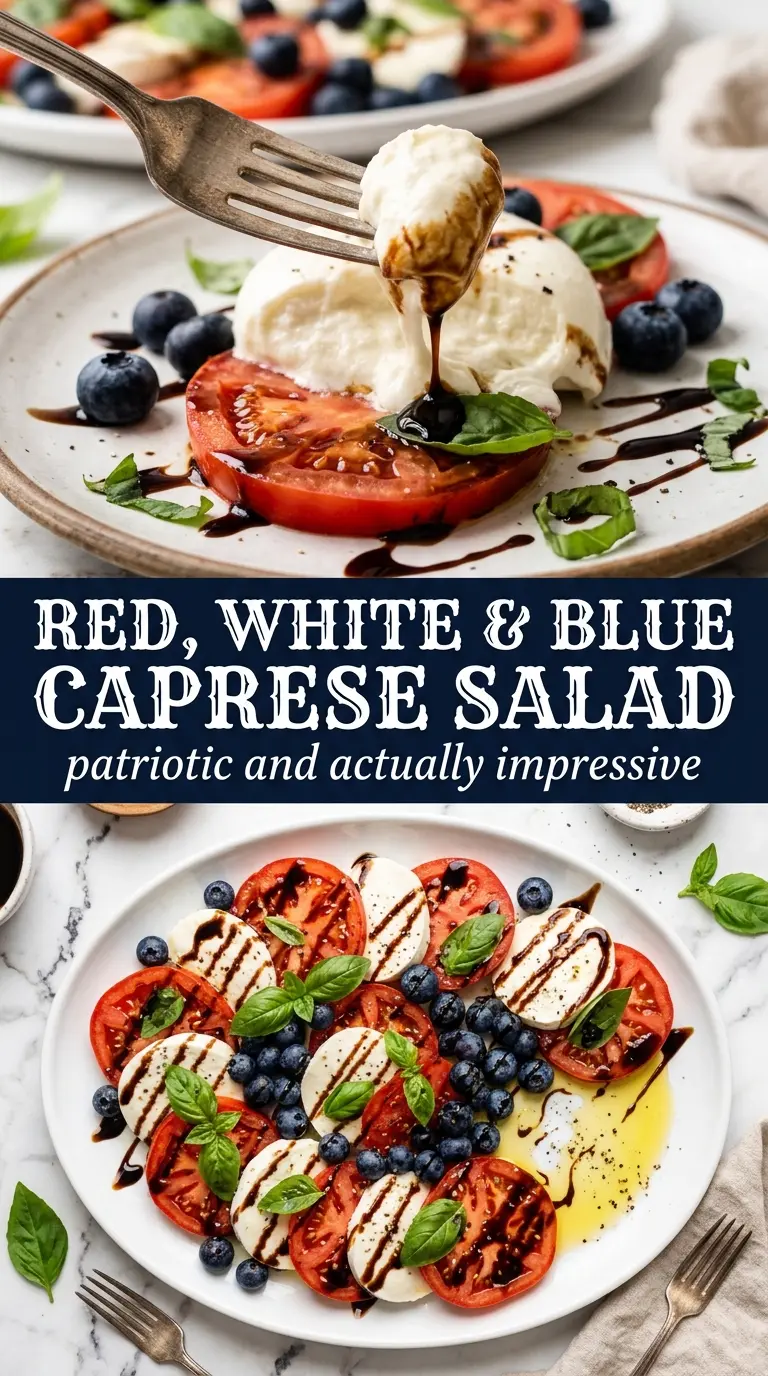
- Heirloom or beefsteak tomatoes — These are the backbone of the salad, so use the ripest tomatoes you can find. Heirlooms bring more flavor and a prettier mix of shades, but beefsteaks work well if they’re firm and deeply red. Slice them 1/4-inch thick so they overlap cleanly without collapsing.
- Fresh mozzarella — Fresh mozzarella gives the salad its soft, milky contrast. The log-style mozzarella sold in water or brine is the right choice here; pre-shredded cheese won’t work and low-moisture mozzarella tastes flat. Pat it dry before slicing so the platter doesn’t pool.
- Blueberries — The blueberries are what make this feel playful and patriotic without turning into a gimmick. Choose firm berries with a matte skin, not wrinkled ones, because they need to hold their shape alongside the slices. You don’t need to cut them.
- Fresh basil — Basil bridges the tomato and mozzarella the same way it does in classic caprese, but it also keeps the blueberries from feeling out of place. Small leaves tuck in more neatly than large torn pieces. If the leaves are huge, tear them once instead of piling them whole.
- Extra virgin olive oil — This rounds out the salad and brings the tomato flavor forward. A good bottle matters here because there’s no cooking to hide behind, but it doesn’t need to be your most expensive oil. Drizzle lightly so the salad stays glossy, not greasy.
- Balsamic glaze — Glaze gives you sweetness, acidity, and visual contrast in one move. Use glaze, not thin vinegar, or it will run across the platter and blur the pattern. If you only have balsamic vinegar, reduce it first until syrupy.
Building the Platter So the Colors Stay Clean
Start With Dry, Even Slices
Slice the tomatoes and mozzarella into even rounds before you start arranging anything. If the slices vary too much, the wreath looks messy and the taller pieces slide out of place. Lay the tomato slices on paper towels for a minute if they’re especially juicy, because excess moisture is what makes the platter smear.
Overlap in a Circle, Not a Pile
Arrange the tomato and mozzarella slices in an overlapping ring on a large platter so each piece props up the next. The overlap is what creates the wreath look and helps the salad feel full without needing a mountain of ingredients. Leave a little space in the center so the blueberries and basil have somewhere to land.
Fill the Gaps With Blueberries and Basil
Drop the blueberries into the spaces between the slices rather than scattering them randomly across the top. That keeps the pattern deliberate and gives the berries a place to settle. Tuck basil leaves in after the blueberries so the green stays visible and doesn’t disappear under the dressing.
Finish With Oil and Glaze at the End
Drizzle the olive oil first so it lightly coats everything, then add the balsamic glaze in a thin stream. If you pour the glaze too early, it can stain the cheese and flatten the colors before the salad even hits the table. Season with flaky salt and cracked black pepper right before serving so the tomatoes stay lively and the basil doesn’t wilt.
How to Adapt This Red, White & Blue Caprese for Different Tables
Dairy-Free Version
Swap the mozzarella for firm vegan mozzarella slices or thick slices of avocado if you’re after a softer, richer bite. The texture changes most here, since you lose the clean milky chew of fresh mozzarella, but the tomatoes, blueberries, and basil still carry the idea well. Keep the seasoning and glaze the same.
More Savory, Less Sweet
If you want the salad to lean more classic caprese, use fewer blueberries and add a little more basil. You’ll still get the patriotic color contrast, but the flavor will move closer to the familiar tomato-mozzarella combo. This is the version I’d serve alongside grilled chicken or burgers.
When You Need to Prep Ahead
Slice the tomatoes and mozzarella up to a few hours ahead and keep them separate in the fridge, then assemble the platter right before serving. Blueberries can be washed and dried earlier in the day, and basil should stay whole until the last minute so it doesn’t darken. Once dressed, this salad is best served immediately.
Gluten-Free and Naturally Crowd-Friendly
This salad is already gluten-free, which makes it an easy add-on for mixed menus. If you’re stretching it for a bigger group, use a wider platter and repeat the pattern in two rings rather than piling ingredients higher. The flatter layout keeps the salad readable and easier to serve.
Storage and Reheating
- Refrigerator: Store leftovers covered for up to 1 day. The tomatoes will soften and release juice, so the salad won’t look as neat the next day.
- Freezer: Don’t freeze it. Fresh mozzarella, tomatoes, and blueberries all break down badly once thawed.
- Reheating: No reheating needed. If you have leftovers, eat them cold and drain off excess liquid before serving so the flavors don’t taste washed out.
Answers to the Questions Worth Asking
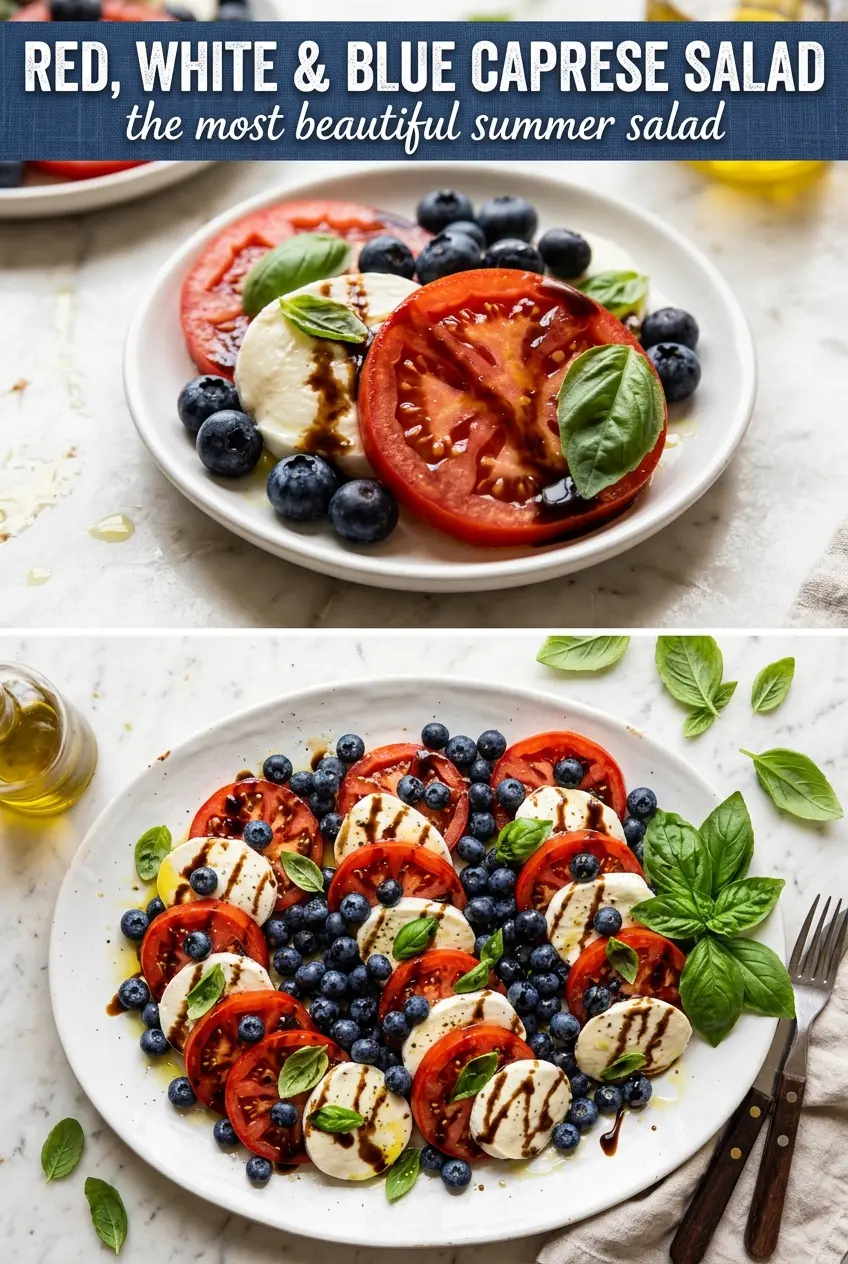
Red, White & Blue Caprese Salad
Ingredients
Method
- Arrange alternating slices of tomato and mozzarella in an overlapping circle or wreath pattern on a large serving platter (about 6 inches across) so the red and white layers form a continuous ring. Place slices so edges slightly overlap for a neat, stacked look.
- Tuck fresh blueberries in between and around the slices to fill gaps and add the blue element around the wreath. Aim for even spacing so blue shows between tomato and mozzarella.
- Scatter fresh basil leaves throughout the wreath, tucking them between layers and on top so you see green highlights. Distribute lightly but visibly for a fresh finish.
- Drizzle extra virgin olive oil and balsamic glaze evenly across the whole platter in thin, sweeping passes. Keep the glaze in a light layer so it doesn’t pool excessively.
- Finish with flaky sea salt and cracked black pepper to taste, then serve immediately for the freshest texture. Add salt and pepper right before serving so the top looks bright and fresh.