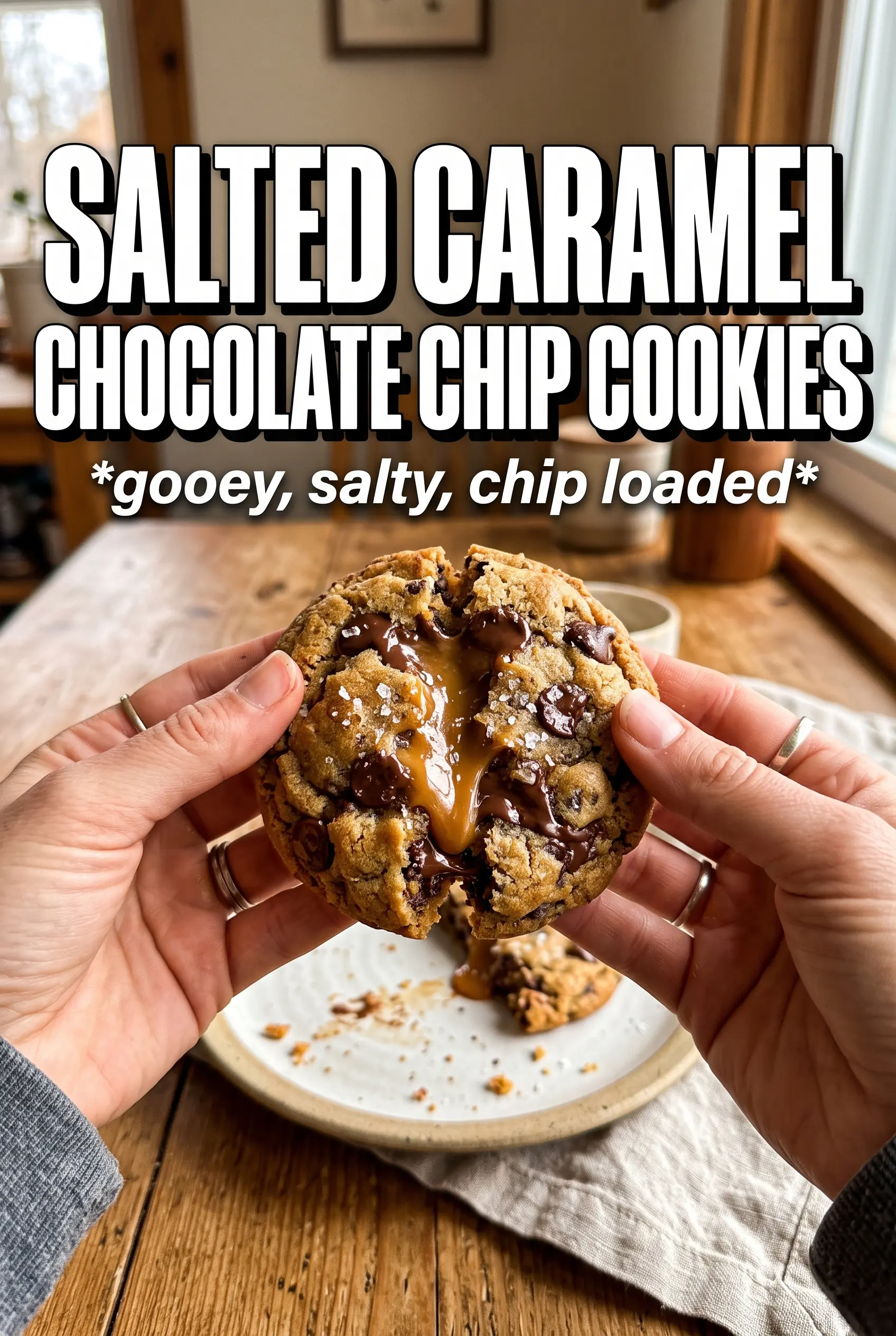
Salted caramel chocolate chip cookies bake up with crisp edges, soft centers, and those little pockets of melted caramel that turn every bite into a sticky, salty-sweet mess in the best way. The dough holds its shape enough to give you thick cookies, but the center stays tender and just underbaked when they come out of the oven, which is exactly what keeps them from drying out once they cool.
The trick is using softened caramel bits or chopped soft caramels, not hard caramels that stay chewy in a bad way. Cornstarch gives the cookies a little extra tenderness, and the flaky sea salt goes on right after baking so it sticks to the melted chocolate and caramel. That finishing salt keeps the sweetness in check and makes the chocolate taste deeper.
Below, I’ve included the small timing details that matter most, plus a few swaps that still keep the cookies thick and chewy instead of flat and greasy.
The caramel stayed gooey instead of disappearing into the dough, and the flaky salt on top made them taste like a bakery cookie. I baked them for 11 minutes and they set up perfectly after cooling.
Save these salted caramel chocolate chip cookies for the night you want thick centers, gooey caramel pockets, and that flaky sea salt finish.
The Secret to Cookies That Stay Thick Instead of Spreading Thin
The difference between a thick, bakery-style cookie and a flat one usually comes down to the butter and the mix-ins. Butter that’s too warm creams fast and then melts too quickly in the oven, which lets the dough spread before the structure sets. Here, you want softened butter that yields to a finger press but doesn’t look glossy or oily.
Cornstarch is doing quiet work in the background. It softens the crumb just enough that the cookies stay tender in the center even with all the chocolate and caramel folded through. The other key move is pulling them from the oven while the centers still look a little underdone; they finish setting on the hot pan instead of overbaking into dry little discs.
- Butter — Softened butter creams with the sugars to build air, which gives the cookies lift. If it looks melted at all, chill the dough before scooping.
- Brown sugar — This keeps the centers chewy and adds that deep caramel note that works with the candy bits.
- Caramel bits or soft caramels — Soft caramel melts into pockets. Hard caramel candies won’t give you the same texture and can turn toothsome instead of gooey.
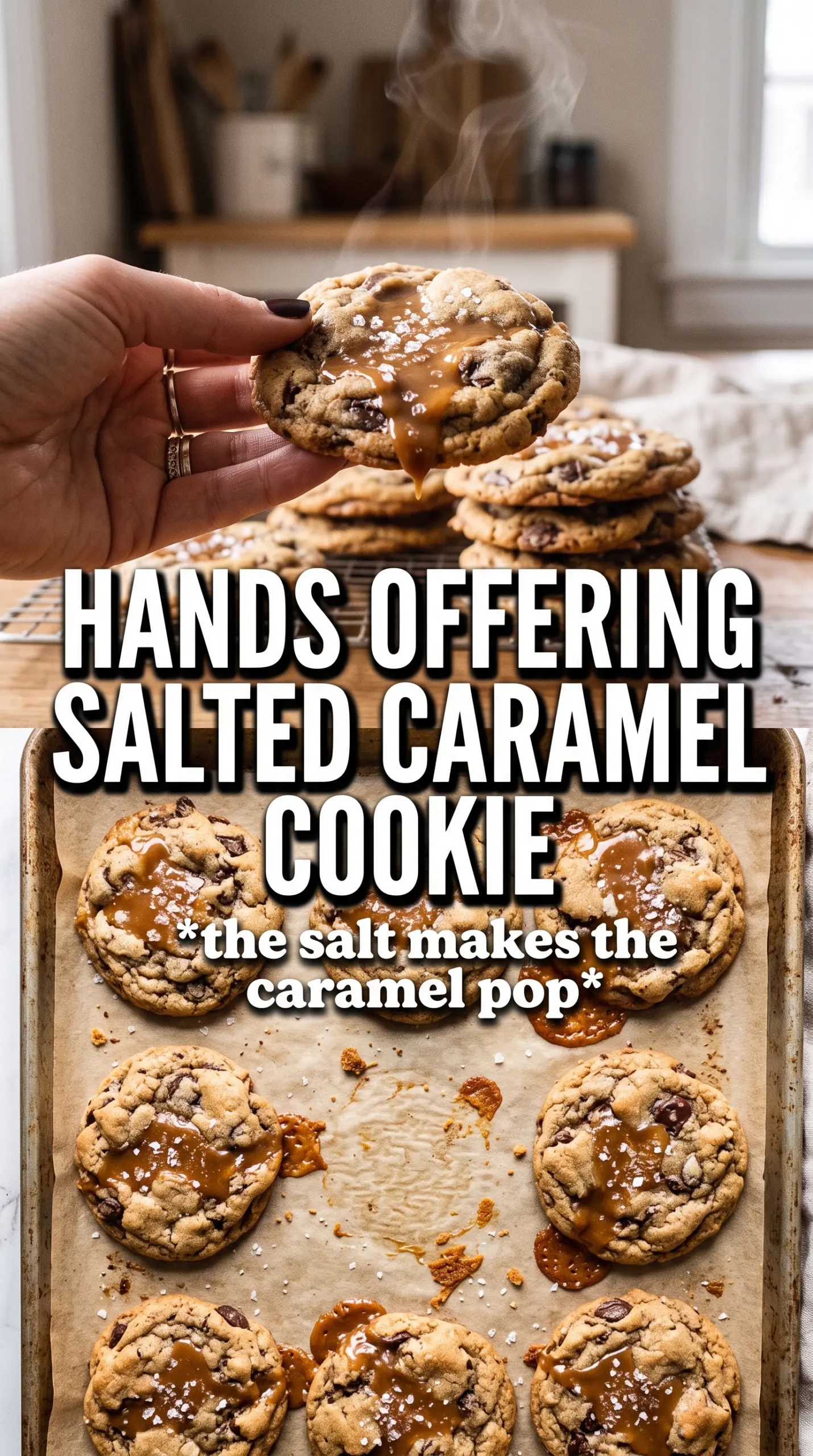
- Flaky sea salt — The final sprinkle matters more than it seems. Fine salt disappears into the dough, but flaky salt sits on top and gives you sharp little hits against the sweetness.
What Each Ingredient Is Actually Doing in These Cookies
- All-purpose flour — Gives the cookies their structure. Measure it lightly; packing in too much flour makes the dough dry and dulls the caramel effect.
- Baking soda — Helps the cookies spread just enough and browns the edges. It also reacts with the brown sugar for a slightly deeper flavor.
- Cornstarch — This is the texture insurance. It keeps the cookies tender without making them cakey.
- Semi-sweet chocolate chips — Semi-sweet works best here because it balances the caramel. Milk chocolate can make the cookies taste too sweet, and dark chocolate can overpower the caramel.
- Eggs and vanilla — Eggs bind the dough and keep the centers soft, while vanilla rounds out the caramel and chocolate instead of letting either one taste flat.
Getting the Dough, Scoop, and Bake Time Just Right
Creaming the Butter Until It Looks Fluffy
Beat the butter with both sugars until the mixture turns noticeably lighter in color and looks fluffy around the edges of the bowl. That step builds the base structure, and if you stop too early, the cookies will bake up denser and flatter. Add the eggs one at a time so the dough stays smooth instead of looking curdled. If the mixture starts to look split, keep beating for another 20 to 30 seconds and it will come together.
Folding in the Chocolate and Caramel
Once the flour mixture is in, fold just until the streaks disappear. Overmixing at this stage develops too much gluten and makes the cookies tougher than they should be. Add the chocolate chips and caramel bits last so they stay evenly distributed instead of sinking into one heavy corner of dough. If the caramel is very sticky, toss it with a spoonful of the flour before adding it in.
Baking Until the Centers Still Look Soft
Scoop the dough into 2-tablespoon rounds and bake just until the edges are golden and the centers still look slightly underdone. That visual cue matters more than the clock, because ovens run hot and thin pans brown faster than heavy ones. Press extra chips or caramel onto the tops right away if you want that bakery look, then finish with flaky salt while the cookies are still hot. Let them sit on the pan for 5 minutes so the centers set without losing their softness.
How to Adjust These Cookies Without Losing the Gooey Center
Dairy-Free Version
Use a good dairy-free butter stick and dairy-free chocolate chips. The cookies will still spread and brown properly, but the caramel flavor gets a little less rich, so the flaky salt matters even more at the end.
Gluten-Free Swap
A 1:1 gluten-free baking flour blend usually works here, as long as it includes xanthan gum. The cookies may spread a touch less and bake up a little more delicate, so let them cool fully on the pan before moving them.
Extra Caramel, Less Spread
If you want more caramel pockets, add a little extra chopped soft caramel but chill the scooped dough for 20 minutes first. That firms the butter and keeps the cookies from flattening under the extra weight.
Storage and Reheating
- Refrigerator: Store in an airtight container for up to 5 days. The caramel will firm up a little, but the cookies stay soft.
- Freezer: Freeze baked cookies for up to 2 months, or freeze scooped dough balls on a tray and move them to a bag once solid. Dough bakes up beautifully from frozen; just add 1 to 2 minutes.
- Reheating: Warm a cookie in the microwave for 8 to 10 seconds or in a 300F oven for a few minutes. Don’t overheat them, or the caramel turns leathery and the chocolate gets greasy.