Slow cooker brown sugar pineapple ham comes out glossy, tender, and fully glazed without hogging the oven or crowding the stove. The ham warms through gently while the brown sugar, honey, and pineapple juice turn into a sticky sauce that settles into every slice. The result is the kind of centerpiece that looks polished on the table but takes almost no hands-on time.
What makes this version work is the balance of sweet, tangy, and warm spice. The reserved pineapple juice keeps the glaze from tasting flat, while Dijon cuts through the sweetness just enough to keep each bite from feeling heavy. Cooking the ham on low gives the glaze time to cling and thicken instead of running off into the bottom of the slow cooker.
Below, I’ll walk through the small details that matter most, including how to keep the ham from drying out and how to get the pineapple rings to stay put.
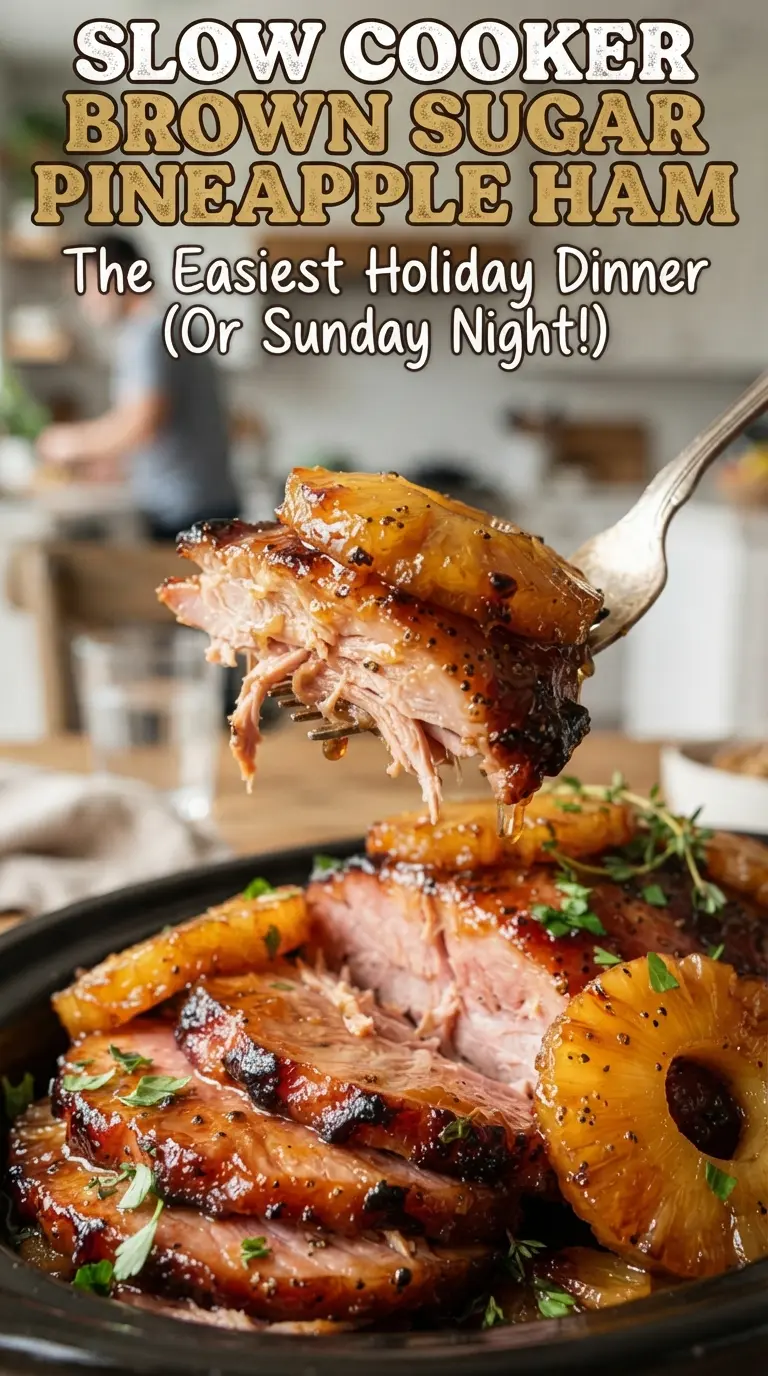
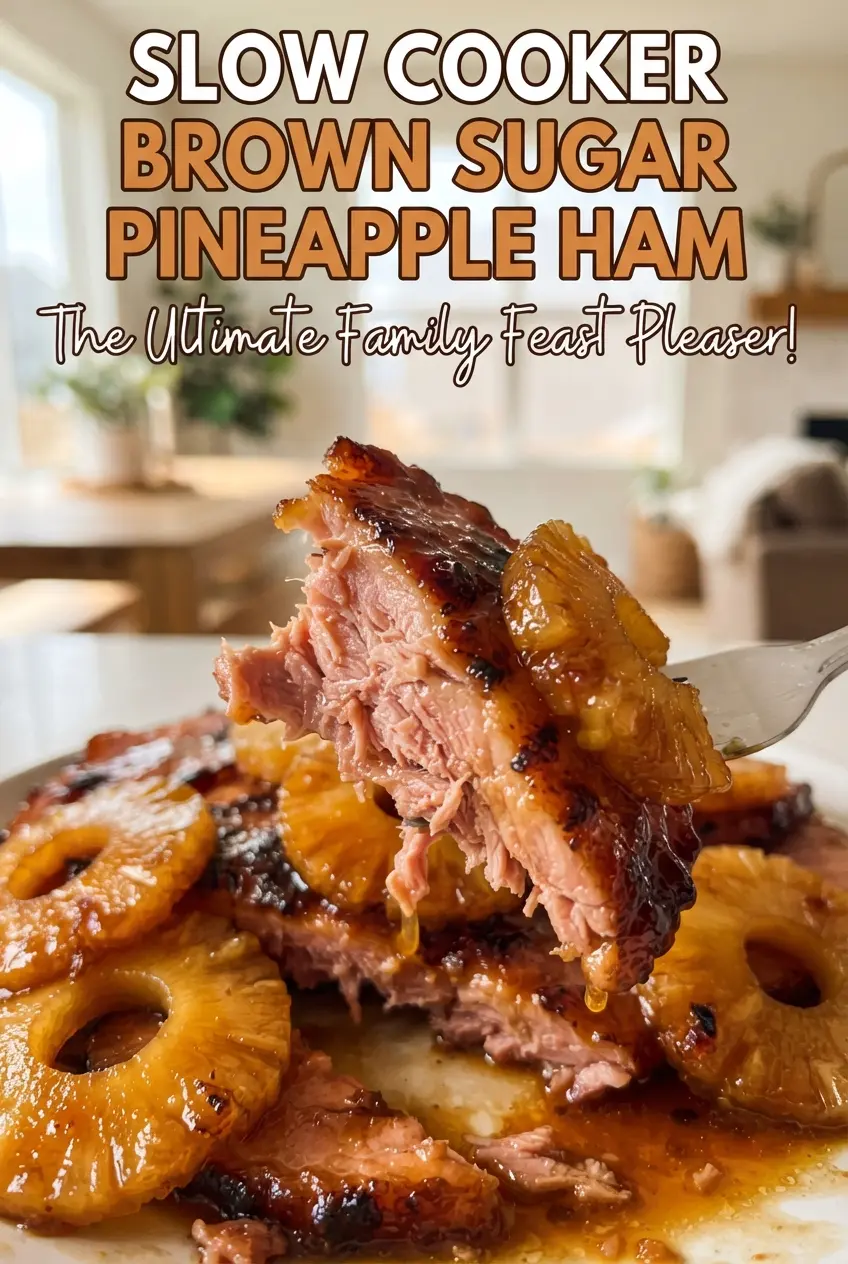
The glaze soaked right into the spiral cuts and the pineapple stayed put the whole time. Mine finished in just over 4 hours and sliced beautifully without falling apart.
Save this slow cooker brown sugar pineapple ham for a hands-off holiday main with a sticky, caramelized glaze.
The Part That Keeps Spiral Ham From Drying Out in the Slow Cooker
The biggest mistake with a spiral-sliced ham is cooking it like it needs to be “done”. It’s already fully cooked, so the goal is warming and glazing, not chasing a high internal temperature. Low heat keeps the slices supple and gives the pineapple-brown sugar mixture time to settle into the cuts instead of evaporating before it can do its job.
Placement matters here, too. Set the ham flat-side down so it stays stable and can absorb the glaze as it warms. If your lid doesn’t close cleanly, trim the ham just enough to fit; a lid that sits properly traps the steam that keeps the meat moist.
- Spiral-sliced ham — The pre-cut slices are what let the glaze get deep into the meat. A boneless ham will work in a pinch, but it won’t pick up the glaze in the same way.
- Pineapple juice — This does more than add sweetness. It gives the glaze enough liquid to coat the ham without burning and adds the tang that keeps the sauce from tasting one-note.
- Dijon mustard — This is the quiet ingredient that keeps the glaze from getting cloying. Yellow mustard works, but Dijon has the sharper edge that balances the sugar better.
- Ground cloves and cinnamon — Use a light hand. They should read as warm background notes, not holiday candle. Too much cloves and the glaze turns medicinal fast.
What Each Ingredient Is Actually Doing in This Recipe
- Primary ingredient (the star) — Quality matters most. Choose the best you can find.
- Cooking medium (oil, butter, or broth) — This carries flavors and prevents dryness.
- Seasonings (salt, pepper, spices, herbs) — Layer flavors so nothing overpowers. Build depth gradually.
- Aromatics (garlic, onion, herbs) — Cook with fat to bloom flavors. Become the foundation.
- Supporting ingredients — Complement the main ingredient without overpowering it.
- Sauce or liquid (if applicable) — Brings flavors together. Balance richness with acid.
- Acid (lemon, vinegar, wine, or other) — Brightens and prevents flat-tasting results.
- Final finish (garnish, glaze, or sauce) — Prevents one-dimensional taste and adds visual appeal.
Building the Glaze So It Clings Instead of Running Off
Whisking the reserved pineapple juice with the brown sugar, honey, Dijon, cloves, and cinnamon before it hits the ham gives you a smoother, more even glaze. Pour half of it over the ham first so it can work between the slices before the pineapple rings go on top. That first layer does the heavy lifting because it gets into the cut edges instead of sitting only on the surface.
The pineapple rings are there for more than decoration. They help protect the top of the ham from drying out and add more juice as they warm. If the rings won’t stay put, toothpicks fix it quickly, and a cherry in the center helps hold them in place while giving the glaze that classic look.
Loading the Ham Into the Slow Cooker
Set the ham flat-side down in the slow cooker and check the lid before you move on. If the lid sits crooked or won’t close, the ham needs a trim before cooking starts. A good seal matters because you want gentle steam, not a gap that lets moisture escape.
Pouring the First Layer of Glaze
Spoon or pour about half the glaze over the ham, then use the back of the spoon to nudge it into the spiral cuts. Don’t dump it all in one spot; that just sends the glaze pooling at the bottom. The goal is to coat the meat, not drown it.
Finishing the Top With Pineapple and Cherries
Arrange the pineapple rings over the top and secure them with toothpicks if needed. Add a maraschino cherry in the center of each ring for the classic finish. Once the lid goes on, leave it alone unless you’re checking near the end of the cook time; every peek lets heat and steam escape.
Knowing When It’s Ready
Cook on LOW for 4 to 5 hours, just until the ham reaches 140°F and is heated through. If you cook much longer, the edges can start to dry out even in a slow cooker. The juices at the bottom should look glossy and slightly syrupy by the end.
Maple Bourbon Ham Glaze
Swap the pineapple juice for a mix of apple juice and a splash of bourbon, then add a little maple syrup in place of part of the brown sugar. You’ll get a deeper, woodsy sweetness with less tang, and the glaze will lean more caramel than tropical.
Dairy-Free and Gluten-Free as Written
This recipe is naturally dairy-free and gluten-free if your Dijon is certified gluten-free. The texture and flavor stay exactly where they should be, so there’s nothing to adjust for either diet.
Smaller Ham for a Crowded Crock
If your ham is smaller than 7 pounds, start checking earlier because it will warm through faster. Keep the glaze amount the same if you still want a thick coating, but expect a little more sauce pooling in the bottom of the cooker.
Using Fresh Pineapple Instead of Canned Rings
Fresh pineapple gives a brighter, less syrupy finish, but you’ll lose some of the built-in juice that helps the glaze thicken. If you use it, keep the reserved canned juice or replace it with orange juice so the sauce still has enough body to cling to the ham.
Storage and Reheating
- Refrigerator: Store leftovers in an airtight container for up to 4 days. The glaze will thicken as it chills, which is exactly what you want.
- Freezer: Freeze sliced ham with a little of the sauce for up to 2 months. Wrap it well so the edges don’t dry out, and thaw it in the refrigerator before reheating.
- Reheating: Warm gently, covered, in the oven at 300°F with a spoonful of the sauce or a splash of pineapple juice. The common mistake is blasting it hot and fast, which toughens the slices and dries out the glaze.
Questions I Get Asked About This Recipe
Slow Cooker Brown Sugar Pineapple Ham
Ingredients
Equipment
Method
- Place ham flat-side down in a large slow cooker; trim it if needed for the lid to close.
- Whisk 1/2 cup reserved pineapple juice, brown sugar, honey, Dijon mustard, ground cloves, and ground cinnamon until smooth.
- Pour half the glaze over the ham, working it between the slices so it coats the cut edges.
- Arrange pineapple rings over the ham and secure with toothpicks, adding a cherry in each center.
- Cover and cook on LOW for 4-5 hours until heated through to 140F.
- Spoon the slow cooker juices over the ham with the remaining glaze, then serve.