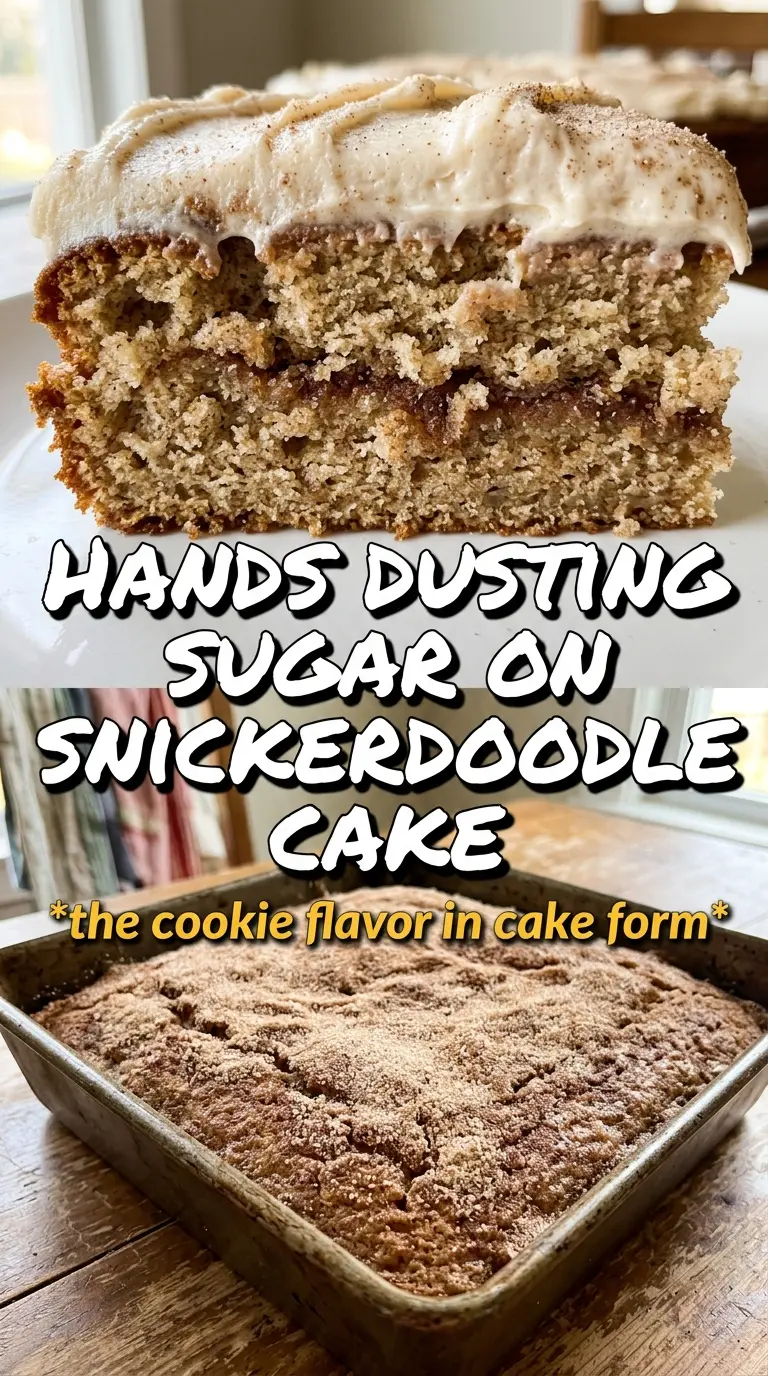
Snickerdoodle cake has the same cozy cinnamon-sugar pull as the cookie, but in a soft, buttery layer cake that slices cleanly and holds its shape. The crumb stays tender from sour cream, the spice lands in the cake itself instead of just the frosting, and the cinnamon sugar on the pans gives the edges a light, crackly finish that makes every bite feel special.
This version keeps the cake from turning dry or dense by using a straightforward creaming method, then alternating the dry ingredients with sour cream so the batter stays smooth and the butter doesn’t seize. Cream of tartar gives the cake that classic snickerdoodle edge without making it taste sharp, and the cinnamon cream cheese frosting ties everything together without burying the cake under too much sweetness.
Below, I’ve included the little details that matter most: how to keep the layers even, why the pan coating changes the finish, and what to do if you want the cake a little lighter or easier to serve ahead.
The cinnamon sugar on the pan gave the edges that little crunchy finish, and the cake stayed unbelievably soft for two days. The frosting was fluffy enough to spread without pulling crumbs everywhere.
Save this snickerdoodle cake for the times you want a soft cinnamon layer cake with tangy cream cheese frosting and a sugar-kissed crust.
The Pan Coating That Keeps This Cake Tasting Like a Snickerdoodle
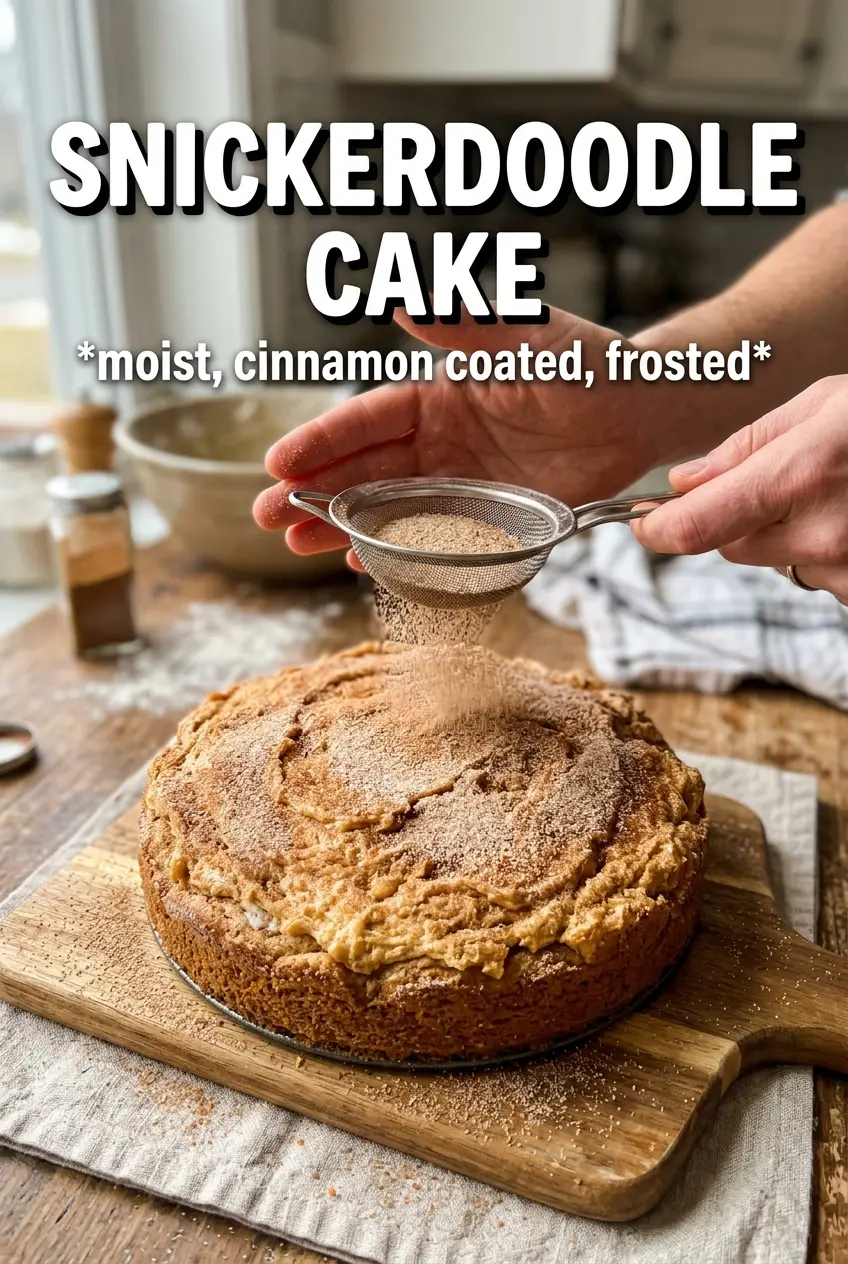
The cinnamon sugar coating does more than stop sticking. It gives the outside of the cake a light, sparkly crust that echoes the cookie version before you even get to the frosting. That little layer matters because this is a soft cake, and without it the edges can taste plain compared with the spiced filling and frosting.
The other piece that matters is the cream of tartar. In a cookie, it brings that signature snickerdoodle tang. In this cake, it doesn’t make the cake sour; it just sharpens the cinnamon and keeps the sweetness from flattening out. If you skip it, the cake still works, but it tastes more like cinnamon cake than true snickerdoodle cake.
What Each Ingredient Is Actually Doing In This Cake
- Butter — This gives the cake its rich base and helps the crumb stay soft without feeling greasy. Use real butter here; the flavor is part of the point.
- Sour cream — This is what keeps the layers plush and moist. Plain yogurt can work in a pinch, but sour cream gives a slightly richer texture and a cleaner tang.
- Cream of tartar — This is the ingredient that pushes the cake toward snickerdoodle territory. There isn’t a perfect substitute if you want the exact flavor, but you can leave it out and still get a good cinnamon cake.
- Cinnamon in both the cake and frosting — That double hit keeps the flavor present from first bite to last. If you only season the frosting, the cake itself tastes unfinished.
- Cream cheese frosting — The tang balances the sweetness and gives the cake enough structure to stack neatly. Make sure the cream cheese and butter are soft before beating, or the frosting can turn lumpy and refuse to fluff up.
Building The Batter So The Layers Stay Light
Creaming The Butter And Sugar
Beat the butter and sugar until the mixture looks pale and fluffy, not just blended. That step traps air, which gives the cake lift before it ever reaches the oven. If the butter is too cold, it won’t cream properly; if it’s melted, the cake will bake up heavier and the layers may sink a little in the center.
Adding Eggs And Vanilla Without Breaking The Batter
Add the eggs one at a time and beat after each addition until the batter looks smooth again. That prevents the mixture from curdling, which can happen if the eggs are cold or if they go in too fast. The vanilla goes in here too, and it should smell warm and fragrant once it’s mixed through.
Alternating The Dry Ingredients And Sour Cream
Stir in the flour mixture in three additions, alternating with the sour cream, and stop as soon as the batter comes together. This keeps the gluten from getting overworked and stops the batter from turning thick and gummy. If it starts to look dense at the end, that’s usually from overmixing, not from the recipe itself.
Baking Until The Center Springs Back
Divide the batter evenly between the pans so the layers bake at the same speed. Pull them from the oven when the tops spring back lightly and a toothpick comes out with a few moist crumbs, not wet batter. Let them cool completely before frosting; if the layers are warm, the frosting will slide and the cake will lean.
How To Adapt This Snickerdoodle Cake For Different Needs
Dairy-Free Version
Use plant-based butter, dairy-free cream cheese, and a thick unsweetened yogurt-style substitute for the sour cream. The cake will still be soft, but the frosting usually needs a little extra powdered sugar to hold its shape.
Gluten-Free Swaps
A 1:1 gluten-free baking flour blend can work here because the cake is already tender and moisture-rich. Let the batter rest for 10 minutes before baking so the flour has time to hydrate, which helps prevent a gritty crumb.
Cupcake Version
Bake the batter in lined cupcake wells and start checking a few minutes early. You’ll get a slightly tighter crumb and more cinnamon-sugar edges, which is a good trade if you want individual portions.
Storage and Reheating
- Refrigerator: Store covered for up to 5 days. The cake stays moist, and the frosting firms up a bit, which actually makes slicing cleaner.
- Freezer: Freeze unfrosted layers tightly wrapped for up to 2 months. Frosting freezes too, but the texture is best if you make it fresh and assemble after thawing.
- Reheating: Bring slices to room temperature before serving. If you want the cake slightly softer, a 10-second microwave hit is enough; too much heat melts the frosting and makes the crumb greasy.
Questions I Get Asked About This Recipe
Snickerdoodle Cake
Ingredients
Equipment
Method
- Preheat oven to 350F and butter three 8-inch pans.
- Coat the buttered pans with a cinnamon sugar mix made from 2 tbsp sugar and 1 tsp cinnamon so the sides show a spiced crust.
- Whisk flour, baking powder, baking soda, cinnamon, cream of tartar, and salt together until evenly combined.
- Beat butter and granulated sugar until fluffy, then add eggs and vanilla and beat until smooth.
- Alternate adding the flour mixture and sour cream, dividing batter between the three prepared pans.
- Bake for 30-35 minutes, until the tops look set and a toothpick comes out clean.
- Cool completely before frosting so the frosting stays thick and creamy.
- Beat cream cheese, butter, powdered sugar, cinnamon, and vanilla until very fluffy.
- Frost between the layers and all over the top, using an even layer so the cinnamon-spiced color shows slightly near the edges.