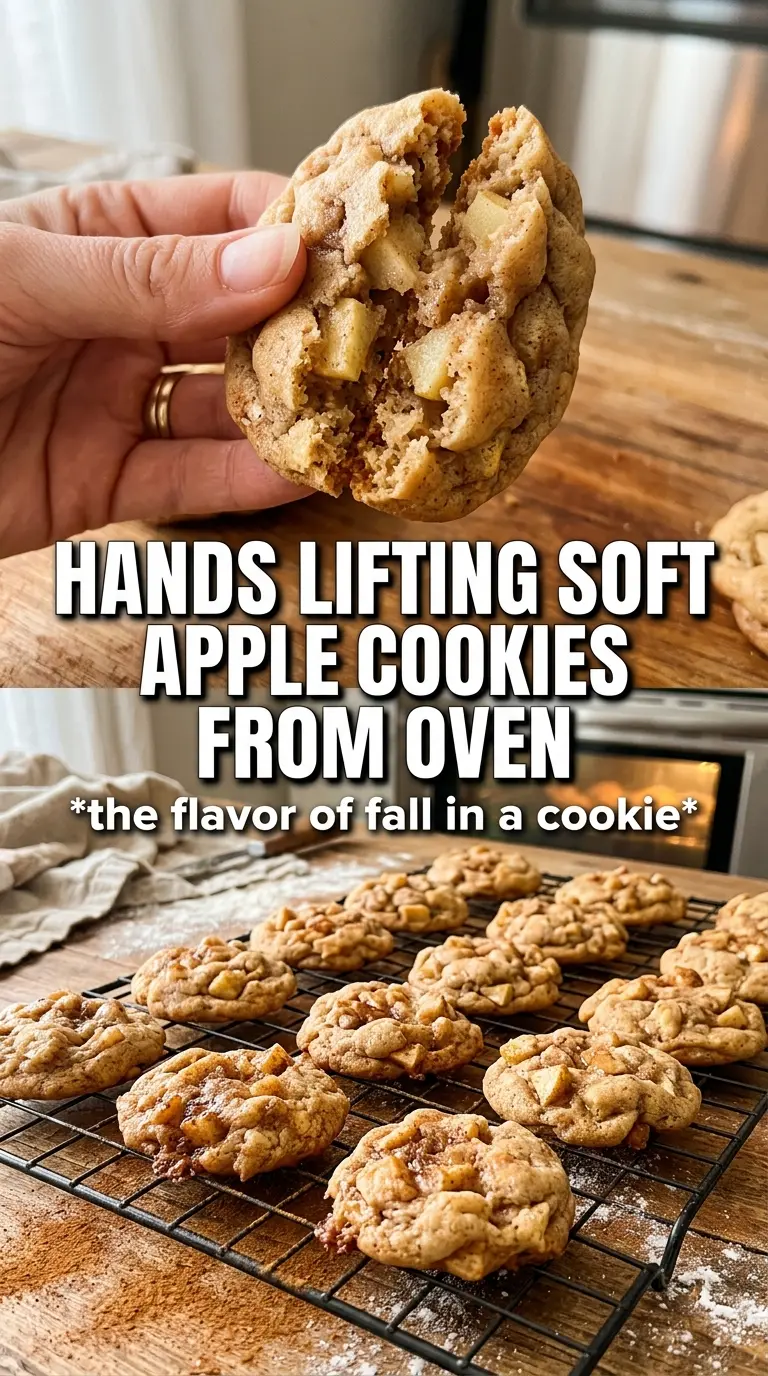
Pillowy, tender soft apple cinnamon cookies have a way of disappearing before they ever make it to a cooling rack. The edges pick up a light cinnamon-sugar finish, the centers stay plush instead of cakey, and the little bits of apple give each bite a fresh, juicy pop that keeps the cookies from tasting one-note.
What makes this version work is the balance between applesauce and finely diced apple. Applesauce brings moisture and softness, while the chopped apple adds texture without turning the dough heavy. Chilling the dough matters here too, since this batter starts out sticky and needs time for the flour to hydrate before it goes into the oven. That rest keeps the cookies from spreading too much and helps the tops bake up gently instead of collapsing.
Below, I’m walking through the few spots that matter most: how to keep the dough manageable, how to know when the cookies are done, and what to change if you want a slightly different texture or need to make them ahead.
The cookies stayed unbelievably soft after cooling, and the cinnamon sugar on the edges gave them just enough crunch. I chilled the dough like you said, and they baked up thick instead of spreading flat.
Like these soft apple cinnamon cookies? Save them to Pinterest for a batch that stays thick, chewy, and packed with apple-cinnamon flavor.
The Chill Time Is What Keeps These Cookies Thick
These cookies start as a soft, sticky dough, and that’s exactly why the hour in the fridge matters. If you scoop and bake right away, the butter and applesauce push the dough outward before the flour has a chance to hold it together, and you end up with thinner cookies that bake up more like quick cake rounds than proper soft cookies.
The dough firms up just enough in the fridge to hold a rounded scoop, but it still bakes tender. That’s the sweet spot. You’re not chilling it to make it hard; you’re chilling it so the cookies spread slowly, keep their height, and finish with edges that are set while the centers stay soft.
- Applesauce — This is the main source of softness and moisture. Unsweetened works best because it lets the sugar and cinnamon stay in charge. If your applesauce is very loose, the dough may need the full chill time, not less.
- Fresh apples — Peel them and dice them small so they melt into the cookie instead of punching through the dough. Bigger chunks release more juice and can make the centers wet.
- Brown sugar — This helps the cookies stay chewy and gives a deeper apple-pie note. All granulated sugar will work in a pinch, but the cookies lose some softness and warmth.
- Cinnamon sugar topping — Don’t skip it. That quick roll before baking is what gives the edges a little sparkle and a stronger spice hit without overloading the dough itself.
What Each Ingredient Is Actually Doing in This Recipe
- Primary ingredient (the star) — Quality matters most. Choose the best you can find.
- Cooking medium (oil, butter, or broth) — This carries flavors and prevents dryness.
- Seasonings (salt, pepper, spices, herbs) — Layer flavors so nothing overpowers. Build depth gradually.
- Aromatics (garlic, onion, herbs) — Cook with fat to bloom flavors. Become the foundation.
- Supporting ingredients — Complement the main ingredient without overpowering it.
- Sauce or liquid (if applicable) — Brings flavors together. Balance richness with acid.
- Acid (lemon, vinegar, wine, or other) — Brightens and prevents flat-tasting results.
- Final finish (garnish, glaze, or sauce) — Prevents one-dimensional taste and adds visual appeal.
What to Watch For From Mixing Bowl to Cooling Pan
Whipping the Butter and Sugars
Beat the softened butter with both sugars until it looks fluffy and a little paler, not greasy or dense. That step traps air, which helps the cookies bake up tender instead of heavy. If the butter is too warm, the mixture will smear against the bowl rather than fluff, and the final dough will be looser than it should be.
Adding the Wet Ingredients
Mix in the eggs, vanilla, and applesauce until the batter looks smooth and glossy. At this stage it will seem softer than a standard cookie dough, and that’s normal. Stop once everything is combined; overmixing here doesn’t help and can make the finished cookies tougher around the edges.
Folding in the Apples Without Turning the Dough Watery
Add the flour mixture first, then fold in the diced apples at the end. That keeps the apples from breaking down too early and watering the dough. The batter will still be sticky, and it should be — if it feels dry and stiff, the cookies will bake up less tender.
Baking Until Just Set
Pull the cookies when the edges look set and the centers still look soft and slightly underbaked. They finish on the pan as they cool, which is the difference between a soft cookie and an overbaked one. If you wait for the tops to look fully done in the oven, you’ll lose that pillowy texture.
Let them cool completely on the baking sheet. Moving them too soon is the fastest way to break them, because these cookies are at their softest right out of the oven and need that extra time to firm up without drying out.
Make Them a Little More Spiced
Add an extra 1/2 teaspoon of cinnamon or a pinch more nutmeg if you want the warm spice to stand out more. The cookies will still stay soft, but the apple becomes a background note instead of the lead flavor.
Gluten-Free Version
A good 1:1 gluten-free flour blend usually works here because the dough already has plenty of moisture. Chill it well, and expect a slightly more delicate cookie that benefits from a full cool on the pan before moving.
Dairy-Free Swap
Use a plant-based butter stick in place of the unsalted butter. Choose one that behaves like real butter, not a tub spread, or the dough can get too soft and the cookies may spread more than you want.
Freezer-Friendly Dough
Scoop the dough first, freeze the portions on a tray, then store them in a bag. Bake from frozen with an extra minute or two in the oven, and the cookies keep their shape better than if you froze a whole bowl of sticky dough.
Storage and Reheating
- Refrigerator: Store in an airtight container for up to 5 days. They stay soft, though the apple pieces make them even more tender on day two.
- Freezer: Baked cookies freeze well for up to 2 months. Layer them with parchment so they don’t stick together, and thaw at room temperature.
- Reheating: Warm a cookie for 8 to 10 seconds in the microwave if you want it soft again. Don’t overheat them or the apples can turn mushy and the texture turns gummy.
Questions I Get Asked About This Recipe

Soft Apple Cinnamon Cookies
Ingredients
Equipment
Method
- Preheat the oven to 350F and line baking sheets with parchment (set aside while you mix). Visually confirm the oven reaches temperature before baking.
- Whisk together all-purpose flour, baking soda, baking powder, cinnamon, nutmeg, and salt in a bowl until evenly combined (no visible streaks).
- Beat butter and both sugars until fluffy, then add eggs, vanilla, and applesauce and mix just until smooth and cohesive.
- Fold the flour mixture into the wet ingredients until you don’t see dry flour. The dough will look thick and textured.
- Fold in the diced apples until they’re distributed throughout the dough with small pieces visible.
- Refrigerate the dough for 1 hour; it will be sticky and that's expected. If it firms up too much, let it stand at room temperature for 5 minutes before scooping.
- Scoop 1-1/2 tablespoon portions of dough, keeping pieces similar in size for even baking. Roll each top in the cinnamon sugar to coat the surface.
- Place the cookies on the prepared baking sheets with space between them so they can spread slightly.
- Bake at 350F for 10-12 minutes, until the edges are just set while the centers remain soft. Look for lightly set rims and a tender, pillowy top.
- Let the cookies cool completely on the pan so the soft texture sets without breaking. They should finish chewy after cooling.