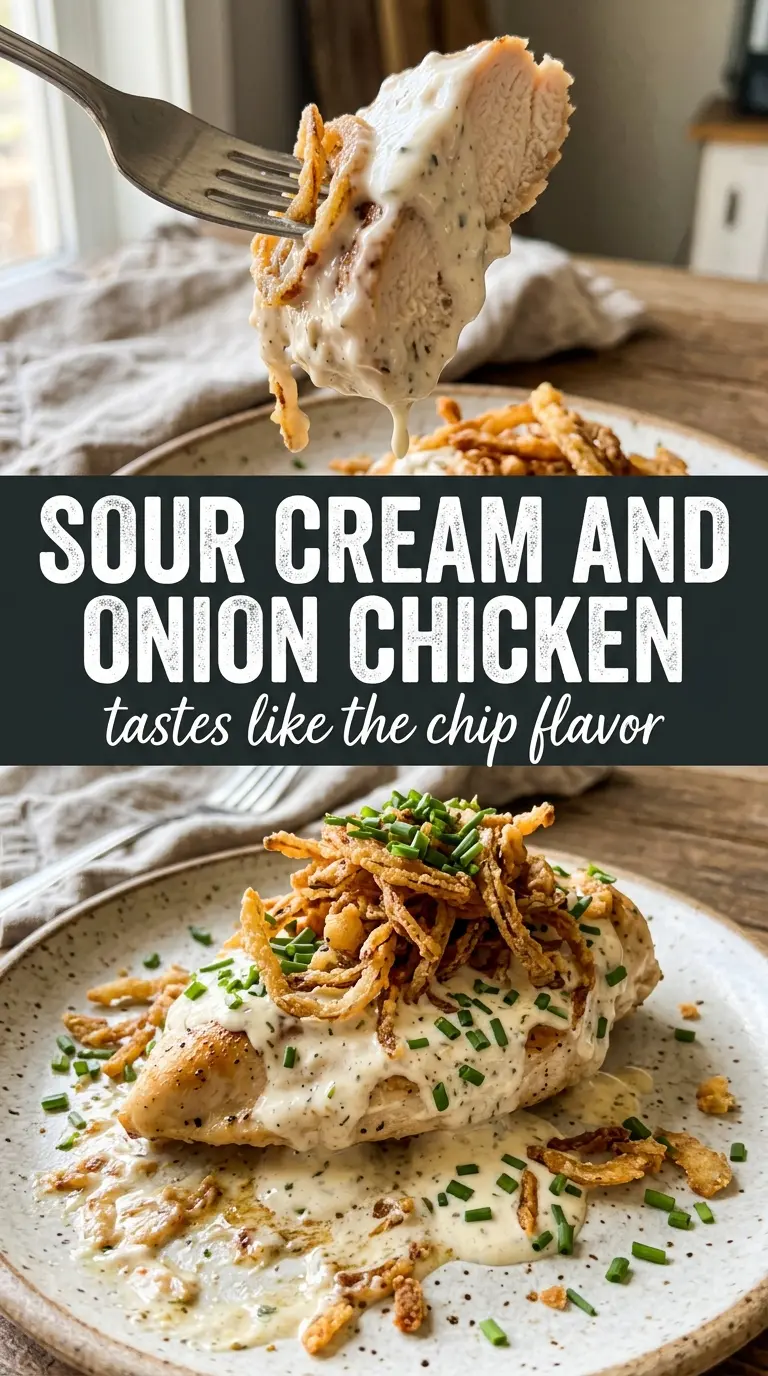
Baked chicken breasts get a lot more interesting when the topping turns into a thick, crackly crust instead of slipping off into the pan. This sour cream and onion chicken has that exact payoff: tangy, creamy underneath, salty and crisp on top, with the chicken staying juicy under all that texture. It’s the kind of dinner that looks like you worked harder than you did, and the oven does most of the heavy lifting.
The key is building two separate layers. The sour cream and onion soup mix make a seasoned paste that clings to the chicken and keeps the meat from drying out, while the crushed fried onions and Parmesan bake into a golden shell. If you mix everything together at once, the topping goes soft before it ever has a chance to crisp. Keeping those textures separate is what gives you the contrast that makes this recipe work.
Below, I’ve included the small details that matter most: how to press the topping on so it stays put, what to look for when the crust is done, and a few swaps that still keep the dinner on track.
The sour cream mixture kept the chicken moist and the onion topping baked up crisp instead of soggy. I used chicken breasts that were all about the same thickness and they were done right at 26 minutes.
Save this sour cream and onion chicken for the nights when you want a creamy baked chicken dinner with a crisp, golden topping.
The Trick to Keeping the Onion Crust Crisp Instead of Soggy
The topping only works if the fried onions stay dry until they hit the oven. The sour cream mixture belongs on the chicken first, not mixed into the crunchy coating, because moisture is what softens those onions before they can brown. Pressing the onion-Parmesan mixture firmly onto the sour cream layer helps it grip the surface and bake into a crust instead of sliding off halfway through cooking.
Chicken breasts can dry out fast, especially if they’re uneven. If one end is much thicker than the other, pound it lightly or slice it open just enough to even it out. That gives you one predictable cooking time and keeps the coating from overbrowning while the center catches up.
- Sour cream — This is the creamy base that keeps the chicken moist and gives the whole dish its tang. Full-fat sour cream gives the best texture, but light sour cream works if that’s what you have, though it bakes a little thinner.
- Onion soup mix — This brings the salt, onion flavor, and seasoning all at once. There isn’t a perfect substitute for the exact savory punch it gives, but a mix of onion powder, garlic powder, salt, and a little dried parsley gets you close.
- Crispy fried onions — These are what create the crackled top. Crush them lightly so they cover the chicken evenly; if you leave them too large, they tend to fall off instead of forming a tight crust.
- Parmesan cheese — Parmesan helps the coating brown and adds a salty edge that keeps the topping from tasting flat. Use the finely grated kind so it binds better; a chunky shred won’t pack onto the chicken as neatly.
What Each Ingredient Is Actually Doing in This Recipe
- Primary ingredient (the star) — Quality matters most. Choose the best you can find.
- Cooking medium (oil, butter, or broth) — This carries flavors and prevents dryness.
- Seasonings (salt, pepper, spices, herbs) — Layer flavors so nothing overpowers. Build depth gradually.
- Aromatics (garlic, onion, herbs) — Cook with fat to bloom flavors. Become the foundation.
- Supporting ingredients — Complement the main ingredient without overpowering it.
- Sauce or liquid (if applicable) — Brings flavors together. Balance richness with acid.
- Acid (lemon, vinegar, wine, or other) — Brightens and prevents flat-tasting results.
- Final finish (garnish, glaze, or sauce) — Prevents one-dimensional taste and adds visual appeal.
Pressing the Coating On So It Bakes Up Golden
Build the Sour Cream Layer First
Stir the sour cream and onion soup mix until the mixture looks smooth and evenly speckled. Spread it over each seasoned chicken breast in a thick coat, all the way to the edges. If the layer is too thin, the topping has nothing to cling to and the chicken can dry out in the oven. A generous coating is what gives you that creamy center under the crust.
Make the Crunch Layer Separate
Mix the crushed fried onions, Parmesan, and garlic powder in another bowl so the crisp bits stay dry. Spoon that mixture over the sour cream layer and press it down gently but firmly with your fingertips. If you just scatter it on top, it’ll bake into a loose topping instead of that puffy, crackly crust. The pressure matters here.
Bake Until the Edges Turn Deep Gold
Slide the dish into a 375°F oven and bake until the topping is browned at the peaks and the chicken reaches 165°F in the thickest part. The crust should look set and dry, not pale or damp, and the sour cream underneath will bubble a little around the edges. If the topping browns early, the chicken is probably still catching up; keep going until the temperature is right. Let the chicken rest for a few minutes before serving so the juices settle back into the meat.
How to Adapt This for Different Dinners and Diets
Use chicken thighs for a juicier result
Boneless skinless thighs stay more forgiving than breasts and handle the creamy topping well. They usually need a few extra minutes in the oven, but they give you a richer, juicier bite and are harder to overcook.
Make it gluten-free with certified ingredients
Use a gluten-free onion soup mix and gluten-free crispy fried onions. The texture stays close to the original, but check the labels carefully because both of those ingredients can hide wheat depending on the brand.
Swap in Greek yogurt for a tangier, lighter coating
Plain full-fat Greek yogurt can replace the sour cream in a pinch. It bakes up a little tighter and tangier, so the topping feels less rich, but it still holds the seasoning well and keeps the chicken moist.
Storage and Reheating
- Refrigerator: Store leftovers in an airtight container for up to 3 days. The topping softens a bit, but the flavor holds.
- Freezer: This freezes better after baking than before. Wrap portions tightly and freeze for up to 2 months; the crust won’t stay as crisp, but the chicken reheats well.
- Reheating: Warm in a 350°F oven until heated through, about 15 to 20 minutes, so the coating has a chance to re-crisp. The microwave will heat the chicken faster, but it turns the topping soft and can make the breast meat rubbery.
Answers to the Questions Worth Asking

Sour Cream and Onion Chicken
Ingredients
Equipment
Method
- Preheat oven to 375°F and grease a baking dish so the chicken releases easily.
- Mix sour cream and onion soup mix until well combined and smooth.
- Combine crushed crispy fried onions, Parmesan, and garlic powder in a separate bowl.
- Season chicken breasts with salt and pepper; coat each breast thickly with the sour cream mixture.
- Press the onion-Parmesan mixture firmly onto the top of each sour cream-coated breast to help it adhere.
- Bake for 25-28 minutes until the topping is golden and internal temperature reaches 165°F, then garnish with extra crispy onions and fresh chives while hot.