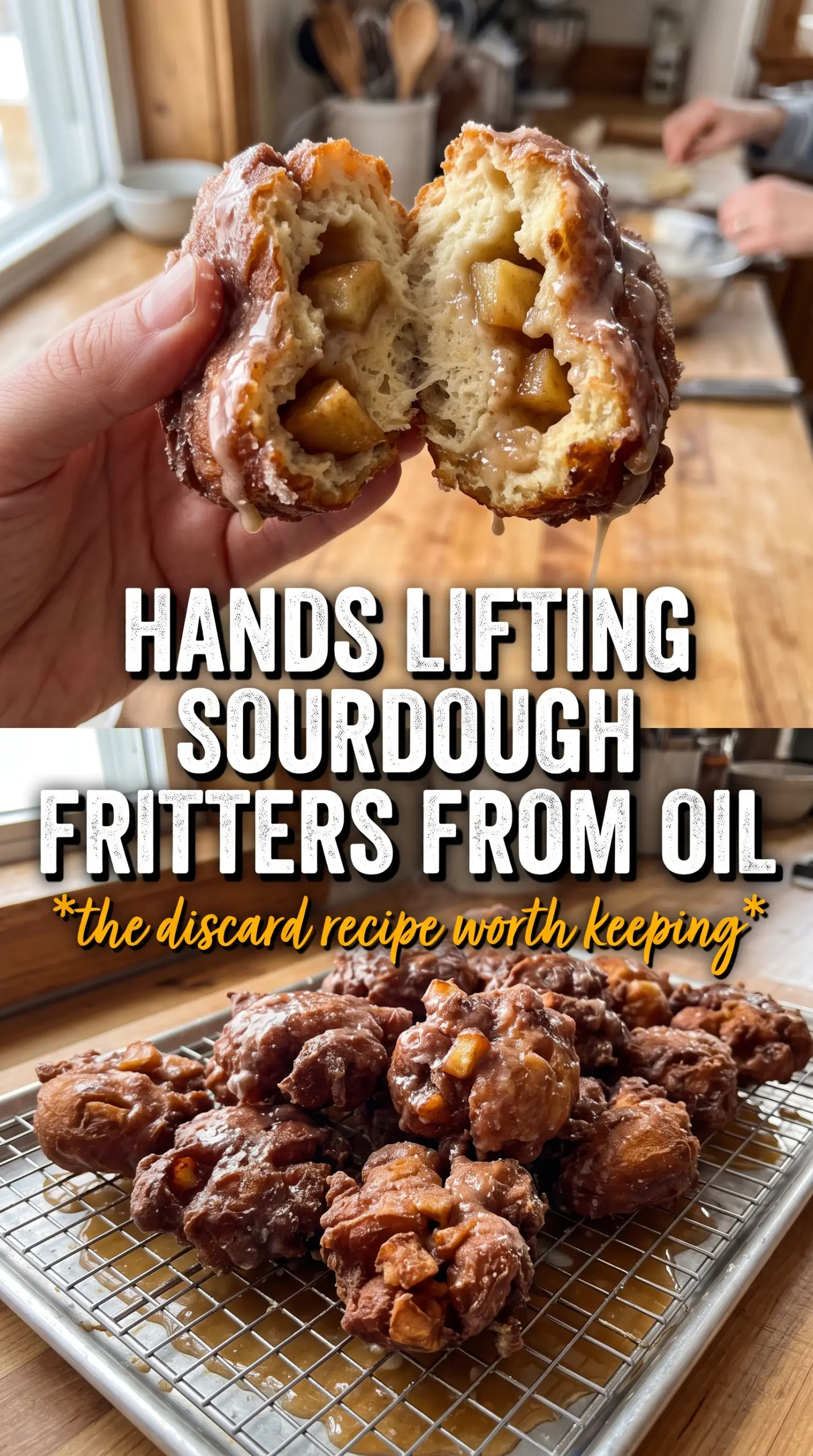
Golden sourdough apple fritters hit the sweet spot between crisp edges and a soft, apple-studded center. The sourdough gives the batter a light tang that keeps the fritters from tasting heavy, and the apples stay juicy enough to pop through every bite. A shower of powdered sugar on top is classic, but a thin cider glaze turns them into the kind of breakfast people hover around the tray for.
This batter works because it stays thick. That matters. Thin fritter batter soaks up oil and turns greasy, while a thicker batter sets fast and traps the diced apples in place instead of letting them sink. The sourdough starter adds flavor and structure, and the baking powder gives the extra lift that makes the fritters puff as they fry. If your starter is discard, that’s fine here — the batter doesn’t need a strong rise from fermentation, just the tang and body.
Below, I’ve included the timing that keeps the centers cooked through without burning the outside, plus the small changes that help if your apples are especially juicy. Once you’ve made them this way, it’s hard to go back to plain apple fritters.
The fritters came out crisp on the outside and fluffy inside, and the apple pieces stayed tucked into the batter instead of falling out in the oil. I used discard from the fridge and they still puffed up beautifully.
Save these sourdough apple fritters for the mornings when you want crisp edges, tender apples, and a fast cinnamon-sugar finish.
The Trick to Fritters That Stay Crisp Instead of Greasy
The biggest mistake with apple fritters is a batter that looks right in the bowl but falls apart in the oil. Once the apples go in, the mixture should be thick enough to hold its shape when dropped by the spoon. If it spreads like pancake batter, it will absorb oil before the outside can set, and you’ll end up with soft, heavy fritters instead of a crisp shell.
Temperature matters just as much as thickness. Oil around 350°F gives you enough heat to brown the surface quickly without scorching the sugar in the batter. If the oil runs too cool, the fritters sit there soaking up grease; if it runs too hot, the outside darkens before the center cooks. Fry a test fritter first and adjust from there — that first one tells you more than the recipe card can.
What Each Ingredient Is Actually Doing in the Batter
- Sourdough starter — This brings tang and body. Active starter gives a slightly lighter fritter, while discard works perfectly if it’s not overly sour. If your starter is very thin, reduce the milk a little so the batter still drops in thick mounds.
- Flour — All-purpose flour gives enough structure to hold the apples without making the fritters bready. If you add too much, the centers turn dense; if you add too little, the batter won’t hold together in the oil.
- Eggs — They bind the batter and help it puff. There isn’t a good direct swap here if you want the same fritter texture, because eggs are doing both the structure and richness work.
- Apples — Dice them finely so they cook through in the short frying time. Firmer apples like Granny Smith or Honeycrisp hold their shape best; softer apples can work, but they need to be cut smaller so they don’t disappear into the batter.
- Cinnamon and nutmeg — These are subtle, not loud. Cinnamon gives the obvious warmth, while nutmeg rounds out the apple flavor and keeps the fritters from tasting flat.
Frying Them Hot Enough to Set Before They Soak
Mix the Batter Just Until It Comes Together
Whisk the sourdough starter, eggs, milk, and sugar until smooth, then stir in the dry ingredients only until the flour disappears. A few small streaks are fine. Overmixing builds too much gluten, which makes the fritters chewy instead of tender. The batter should look thick and a little rough before the apples go in.
Fold in the Apples and Let the Batter Hold Them
Stir the diced apples in gently so they’re evenly distributed. At this point, the batter should be heavy enough that the apples stay suspended instead of sinking to the bottom of the bowl. If the mixture looks loose after the apples go in, add a spoonful of flour rather than more starter. The goal is a mound that can be dropped by the spoon and still keep its shape.
Fry in Small Batches at a Steady 350°F
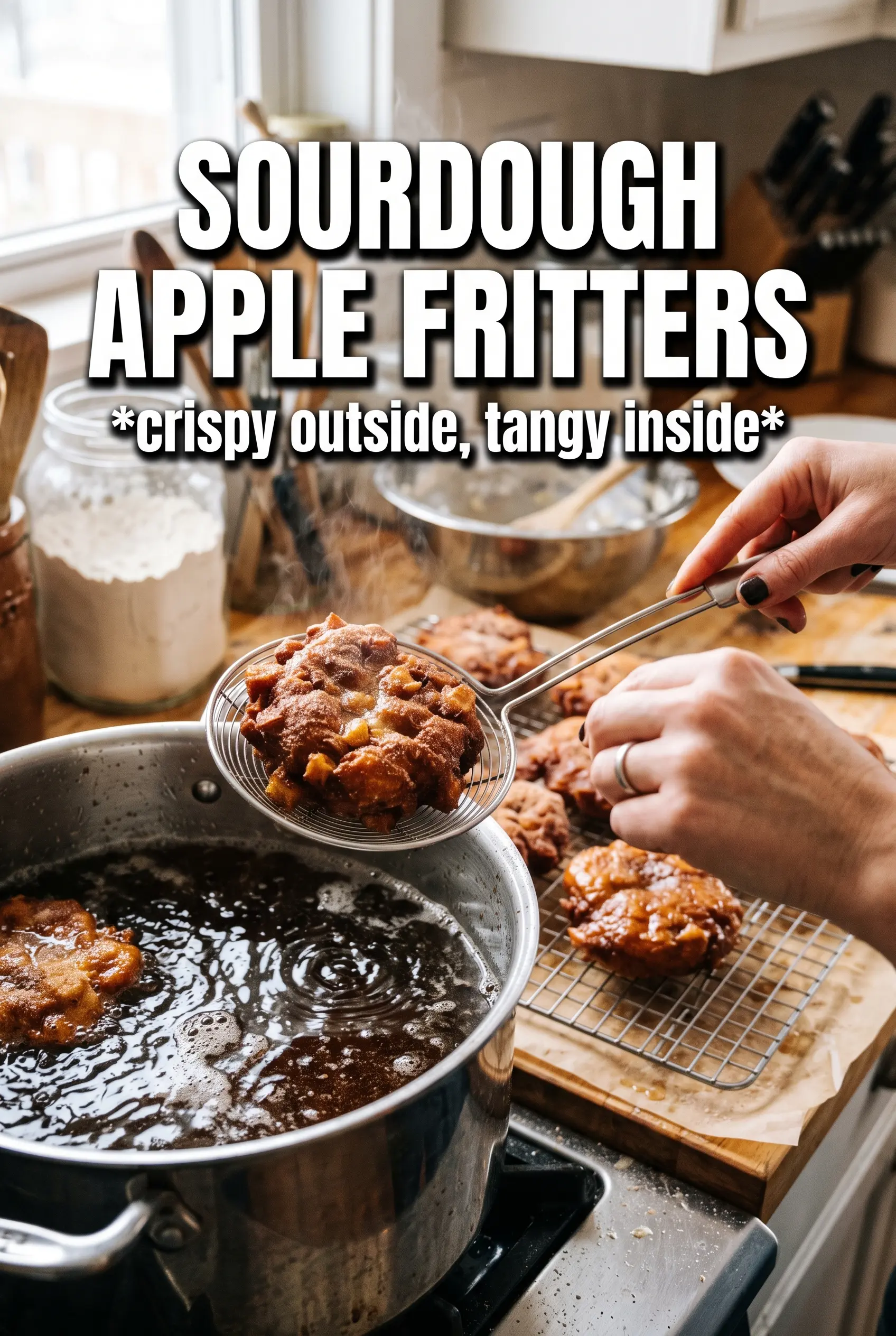
Heat about 2 inches of oil in a heavy pot and keep the temperature close to 350°F. Drop heaping tablespoons of batter into the oil and fry until the first side is deeply golden, about 2 to 3 minutes, then turn and finish the second side. Crowding the pot drops the temperature fast and gives you oily fritters, so work in batches and let the oil recover between rounds. Drain them on paper towels right away, then dust with powdered sugar while they’re still hot so it clings.
Choose Powdered Sugar or a Thin Cider Glaze
Powdered sugar gives you the fastest finish and keeps the crust crisp. A cider glaze makes the fritters sweeter and a little stickier, which is great if you want more of a bakery-style finish. Keep the glaze thin enough to drizzle; if it’s too thick, it sits on top like frosting and hides the fritter’s crisp texture.
How to Adapt These Sourdough Apple Fritters for Different Mornings
Use discard or active starter
Both work here. Active starter gives a slightly lighter fritter, while discard adds more tang and usually makes the batter a touch thicker. If your discard is especially loose, cut back the milk by a tablespoon or two so the batter still drops in mounds.
Make them gluten-free
Use a good 1:1 gluten-free flour blend in place of the all-purpose flour. The fritters will be a little more delicate and slightly less chewy, but the sourdough starter and eggs still give enough structure to hold them together.
Skip the glaze and keep the crust crisp
Powdered sugar is the better choice if you want the fritters to stay crisp longer. A glaze softens the exterior as it sits, which is fine if you’re serving them right away but not ideal if they’ll be on a platter for a while.
Swap the apples for pears
Firm pears can work in place of apples, but they soften faster and bring more juice to the batter. Dice them a little smaller than you would apples, and expect a softer, more delicate fritter with a slightly sweeter finish.
Storage and Reheating
- Refrigerator: Store leftovers in an airtight container for up to 3 days. They’ll lose some of their crispness, but the flavor stays good.
- Freezer: Freeze in a single layer, then move to a freezer bag for up to 2 months. The texture softens a bit after freezing, but they still reheat well.
- Reheating: Warm in a 375°F oven or air fryer until the outside crisps back up. The common mistake is microwaving them, which makes the crust soggy and the apple pieces collapse.
Questions I Get Asked About This Recipe
Sourdough Apple Fritters
Ingredients
Equipment
Method
- Whisk the sourdough starter, eggs, milk, and sugar together until smooth.
- Stir in the flour, cinnamon, nutmeg, salt, and baking powder until just combined.
- Fold in the diced apples, keeping the batter thick.
- Heat vegetable oil to 350F in a heavy pot.
- Drop heaping tablespoons of batter into the hot oil, frying 2-3 minutes per side until deeply golden.
- Work in batches and do not crowd the pot so the oil temperature stays near 350F.
- Drain the fritters on paper towels, then dust with powdered sugar while hot.
- Whisk powdered sugar with cider to make a glaze, then drizzle over the hot fritters.