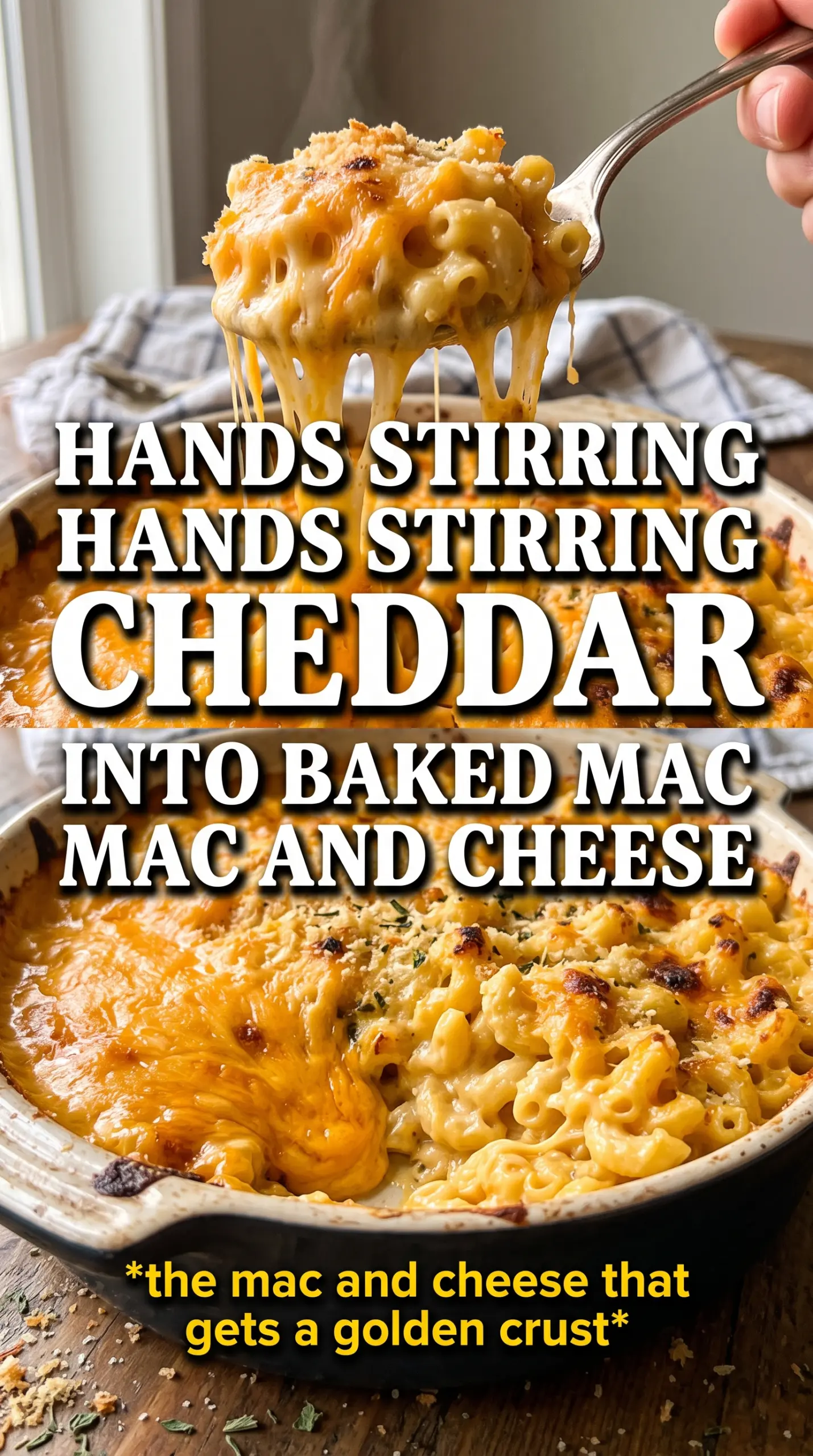
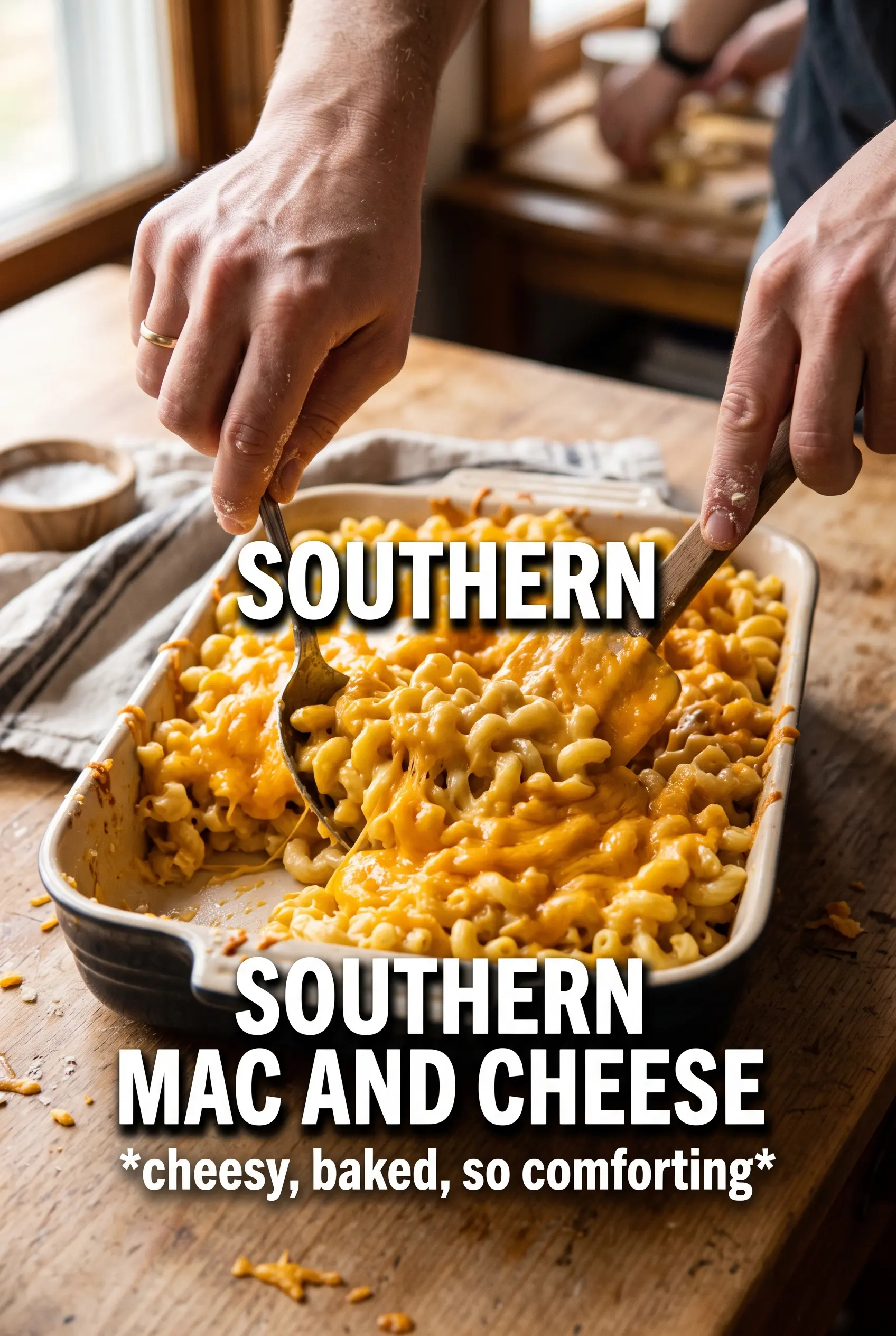
Southern mac and cheese lands on the table with a golden top that gives way to a creamy, custard-style center, and that contrast is exactly why it earns a permanent spot in the rotation. The top gets just enough color to pick up a little crunch at the edges, while the middle stays rich and spoonable instead of sliding into the dry, gluey territory that ruins so many baked versions.
The difference here is the egg-and-milk custard. It sets gently in the oven and binds the pasta without turning the whole dish heavy or grainy. Using evaporated milk adds body and a little sweetness, while the mix of cheddar, Colby Jack, and Gruyere gives you sharpness, melt, and depth in the same bite.
Below, I’m breaking down the one step that keeps the texture right, plus the ingredient choices that matter most if you want that true Southern-style finish. If you’ve ever had mac and cheese turn watery, greasy, or stringy, the notes here will help you avoid all three.
The custard set up perfectly and the top browned without drying out the center. I loved that the Gruyere gave it a little extra depth without taking over.
Save this Southern mac and cheese for the nights when you want that creamy custard center and crisp, golden top in one dish.
The Custard Is the Whole Point, So Don’t Rush It
A baked mac and cheese like this lives or dies by the custard. If the eggs hit heat too fast, they seize and you get a grainy layer instead of a smooth, set interior. The goal is a gentle bake that turns the milk-and-egg mixture into something that holds together when sliced but still looks creamy on the spoon.
The other common mistake is overcooking the pasta before it goes in the oven. You want it just barely tender, because it keeps cooking as the custard sets. If you start with soft pasta, the finished dish turns mushy instead of luscious.
- Don’t boil the macaroni to full softness. Pull it when it still has a little bite so it can finish in the oven without falling apart.
- Whisk the custard until completely smooth. Any streaks of egg are more likely to cook unevenly and leave little bits in the finished dish.
- Let it rest after baking. Ten minutes gives the custard time to settle, which makes serving cleaner and keeps the center from running.
What Each Cheese Is Doing in the Dish
- Sharp cheddar — This gives you the bold, familiar mac and cheese flavor and that deep orange color on top. Buy it block and shred it yourself if you can, because pre-shredded cheese often has coatings that make melting less smooth.
- Colby Jack — This is the mellow, creamy bridge cheese. It softens the sharper edges of the cheddar and helps the filling stay smooth instead of dense.
- Gruyere — A little goes a long way. It adds nutty depth and a richer finish, but you can swap in Swiss if that’s what you have; the flavor will be a touch lighter.
- Evaporated milk — This is what gives the custard body without making it heavy. Regular milk alone works in a pinch, but the finished texture won’t be quite as plush.
- Dijon mustard, smoked paprika, garlic powder, and cayenne — None of these make the dish taste spicy or mustardy. They just push the cheese flavor forward and keep the whole pan from tasting flat.
Building the Layers So the Top Stays Golden and the Center Stays Creamy
Start With the Buttered Dish
Butter a deep 9×13 dish generously before anything else goes in. That helps the edges brown without sticking and gives the bottom a little extra richness. If the dish is too shallow, the custard can bubble up too aggressively and spill over, so use a deep one if you have it.
Mix the Custard Until It Looks Uniform
Whisk the eggs, whole milk, evaporated milk, Dijon, and seasonings until the mixture looks fully blended and pale. You’re not trying to whip air into it; you just want the eggs evenly dispersed so the bake sets smoothly. If the eggs sit in streaks at the bottom of the bowl, they’ll cook unevenly in the oven.
Layer the Pasta and Cheese
Scatter half the macaroni in the dish, then add the first layer of cheeses before the remaining pasta goes on top. That middle layer creates pockets of melted cheese throughout the pan instead of leaving all the richness on the surface. Finish by pouring the custard evenly over everything so it sinks down between the noodles.
Bake Until the Center Barely Gives
The top should turn deep golden with bubbling edges, and the center should look set but still have the slightest jiggle when you tap the pan. If it sloshes, it needs more time. If the top is browning too fast before the center sets, cover it loosely with foil for the last part of the bake.
Make It Spicier Without Throwing Off the Custard
Add a little more cayenne or a pinch of crushed red pepper to the custard. Keep it restrained, because too much heat can distract from the cheese and make the dish taste sharp instead of balanced. The goal is warmth, not burn.
Dairy-Free Version That Still Bakes Properly
Use unsweetened dairy-free milk with a creamy body, plus a good melting dairy-free cheese blend. The texture will be a little less custardy because you lose the eggs-and-dairy richness, but it still bakes into a cohesive casserole if you keep the noodles from overcooking.
Gluten-Free Mac and Cheese
Swap in a sturdy gluten-free elbow macaroni and cook it just to al dente. Some gluten-free pastas soften faster after baking, so check the pan a few minutes early. The custard and cheese combination still works the same way.
Storage and Reheating
- Refrigerator: Store covered for up to 4 days. The custard firms up in the fridge, so the texture is denser when cold.
- Freezer: It freezes well for up to 2 months. Wrap tightly in portions or freeze the whole baked pan, then thaw overnight in the refrigerator before reheating.
- Reheating: Warm covered in a 325F oven with a splash of milk to loosen the custard. The biggest mistake is blasting it in the microwave until the cheese separates and the edges dry out.
Answers to the Questions Worth Asking
Southern Mac And Cheese
Ingredients
Equipment
Method
- Preheat the oven to 350F, and butter a deep 9x13 baking dish.
- Whisk together eggs, whole milk, evaporated milk, Dijon mustard, smoked paprika, garlic powder, cayenne, salt, and pepper until smooth.
- Layer half the cooked macaroni in the buttered baking dish.
- Scatter 2 cups sharp cheddar, all the Colby Jack, and the Gruyere over the macaroni.
- Add the remaining macaroni and spread it into an even layer.
- Pour the egg-milk custard over everything so it seeps through the pasta.
- Dot the top with the butter cubes, then sprinkle with the remaining 2 cups sharp cheddar for a golden crust cue.
- Bake for 40-45 minutes, until the custard is set and the top is golden and bubbling.
- Rest for 10 minutes before serving, so the custard thickens into a creamy sliceable texture.