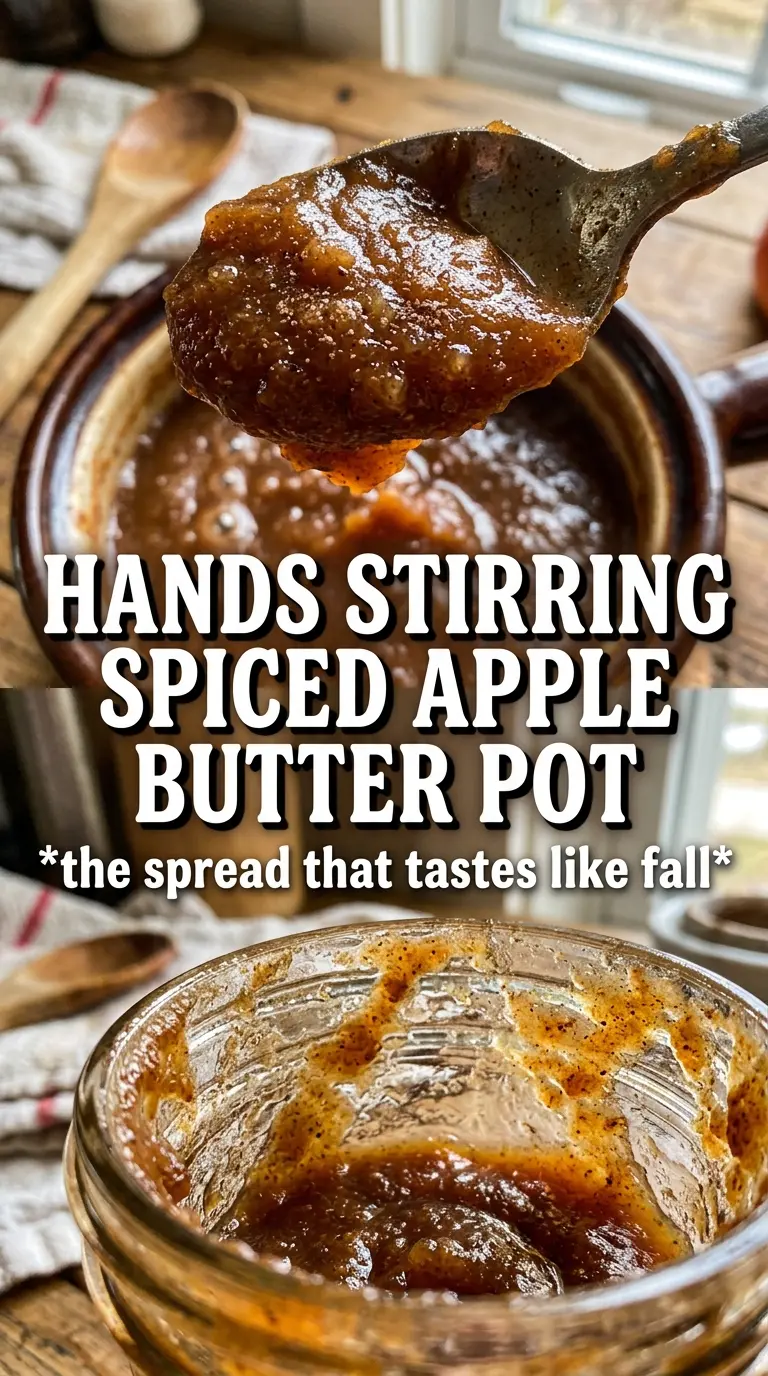
Spiced apple butter turns soft, cooked-down apples into a smooth, dark spread that tastes like concentrated fall in a jar. It’s thick enough to mound on a biscuit, glossy enough to swirl into yogurt, and balanced enough that the spices never overpower the fruit. The long, slow cook is what gives it that deep mahogany color and velvety finish.
What makes this version work is the mix of apples and the two-stage cooking. A blend of tart and sweet apples gives you better depth than using one variety alone, and the apple cider vinegar keeps the sweetness from tasting flat. The first cook softens everything enough to blend smoothly; the second cook is where the body develops and the flavor deepens.
Below you’ll find the technique that keeps the butter from scorching, the best way to adjust the spice level at the end, and a few storage notes if you want to put jars away for later.
The apples broke down into the smoothest butter, and the second cook gave it that deep caramel color without burning. I spread some on toast right away and then had to hide the jar from my husband.
Save this spiced apple butter for biscuits, toast, and spooning over warm oatmeal when you want that deep, slow-cooked apple flavor.
The Slow Cook That Keeps Apple Butter From Turning Grainy
Apple butter fails when it’s rushed. If the apples don’t cook down enough before blending, you end up chasing little bits forever, and if the finished puree doesn’t go back on the heat long enough, it stays thin and watery instead of spoonable. The goal is soft enough to mash with no resistance, then cooked uncovered until the moisture cooks off and the color turns dark.
That second cook matters just as much as the first. Stir more often as it thickens, because once the mixture loses water it can go from glossy to scorched fast, especially around the edges of a heavy pot. Slow cooker versions are more forgiving on the front end, but they still need the uncovered finish if you want that classic spreadable texture.
- Slow, even heat helps the apples collapse without burning the sugars.
- Uncovered reduction is what turns applesauce into apple butter.
- Frequent stirring keeps the thickening puree from catching on the bottom.
- Deep browning signals concentrated flavor, not just extra cooking time.
What Each Ingredient Is Actually Doing in This Jar
- Apples — A mix of varieties gives you better balance than one type alone. Use a blend with both sweet and tart apples if you can; the tart fruit keeps the butter lively, while sweeter apples make it feel round and soft. If you only have one variety, choose something flavorful and not too mealy.
- Brown sugar and granulated sugar — Brown sugar brings a little molasses depth, while white sugar keeps the sweetness clean. You can reduce the total slightly if your apples are very sweet, but don’t cut it too aggressively or the butter will taste thin and sharp after the long cook.
- Apple cider vinegar — This is the quiet ingredient that keeps the finished butter from tasting flat. It doesn’t make the spread taste sour; it sharpens the apple flavor and balances the spice.
- Cinnamon, cloves, allspice, ginger, and nutmeg — These build warmth without needing much volume. Cloves and nutmeg are potent, so don’t overdo them. The recipe level gives you a classic spiced profile that still tastes like apples first.
- Vanilla — Stir it in at the end so the flavor stays rounded and fragrant. If you add it too early, most of the aroma cooks out during the reduction.
Building the Purée, Then Cooking It Down to the Right Spoonable Texture
Starting the Apples and Spices
Put the chopped apples, sugars, spices, and vinegar in your slow cooker or pot and stir until the apples are evenly coated. You want the sugar to start drawing out the juice right away, which helps everything settle into a syrupy base as it heats. If the apples sit in a dry pile on top, the bottom will soften unevenly and the spice mix won’t distribute well.
Cooking Until the Apples Collapse
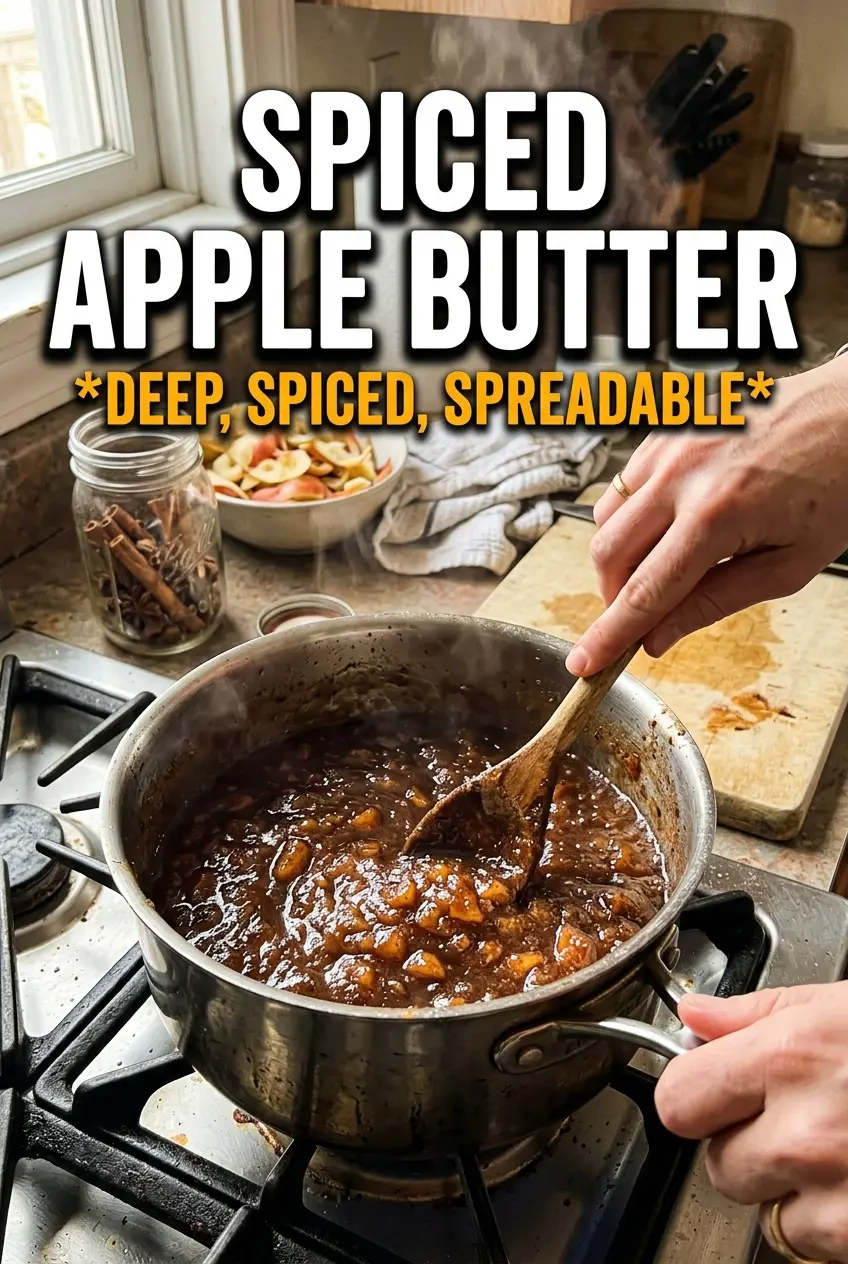
For the slow cooker, let it go on low until the apples are completely soft and collapsing, usually 8 to 10 hours. On the stovetop, keep the heat at medium-low and stir often so the bottom doesn’t scorch before the apples break down, which usually takes 45 to 60 minutes. The mixture should look loose and chunky but mash easily with the back of a spoon.
Blending Until Silky
Blend the apples until the mixture is fully smooth, either in the pot with an immersion blender or in batches in a food processor. Stop when there are no visible pieces left, because any chunks left now will still be there in the finished butter. If you use a food processor, be careful not to overfill it with hot mixture.
Reducing to a Deep Brown Finish
Return the puree to the heat and cook uncovered over low heat until it thickens and darkens, stirring often. This is where the texture turns from loose applesauce to a spread that holds its shape on a spoon. If the heat is too high, the sugars at the bottom will scorch before the center reduces, so low and patient wins here.
Finishing and Jarring
Stir in the vanilla, then taste for spice and sweetness before you ladle it into sterilized jars. The flavor should be rich, rounded, and a little deeper than it tasted at the start, because the reduction concentrates everything. If you’re water-bath canning, process the jars for 10 minutes for shelf stability; otherwise, refrigerate and use within a few weeks.
Make It Less Sweet
Reduce the white sugar a bit and keep the brown sugar in place for depth. Don’t cut both sugars too hard, or the finished butter can taste sharp once it cooks down; the long reduction concentrates everything, including the sweetness.
Dairy-Free and Naturally Gluten-Free
This recipe already fits both without any changes. The important part is using clean, unsweetened apple juice or cider only if you need a little extra liquid during cooking; keep it minimal so the butter still reduces properly.
Make It a Little Warmer
If you want a spicier finish, add a small pinch more ginger or cloves at the end instead of loading them in at the start. That keeps the flavor bright and prevents the spices from turning muddy after hours of cooking.
Storage and Reheating
- Refrigerator: Store in sealed jars for up to 3 weeks. It may thicken a little more as it chills.
- Freezer: It freezes well in freezer-safe containers, leaving headspace for expansion. Thaw in the refrigerator overnight.
- Reheating: Warm only what you need on low heat or let it sit at room temperature briefly. Don’t boil it, or the texture can loosen and the spices can taste harsher.
Questions I Get Asked About This Recipe
Spiced Apple Butter
Ingredients
Equipment
Method
- Place the chopped apples in a large slow cooker or heavy pot, then stir in granulated sugar, brown sugar, cinnamon, allspice, cloves, nutmeg, ginger, and apple cider vinegar until combined and glossy. Cook until the apples are very soft: slow cooker on Low for 8-10 hours OR stovetop over medium-low with a gentle simmer for 45-60 minutes, stirring frequently (choose one method).
- Blend the hot mixture until completely smooth using an immersion blender or food processor, scraping down as needed to remove any lumps (aim for a velvety texture). Return to heat and cook uncovered over low heat for 30-60 minutes, stirring frequently, until noticeably thickened and deep brown.
- Stir in vanilla extract, then taste and adjust spices if needed for balance (warm, fragrant, and fully combined). Ladle into sterilized jars and refrigerate up to 3 weeks, or water-bath can for 10 minutes for shelf stability.