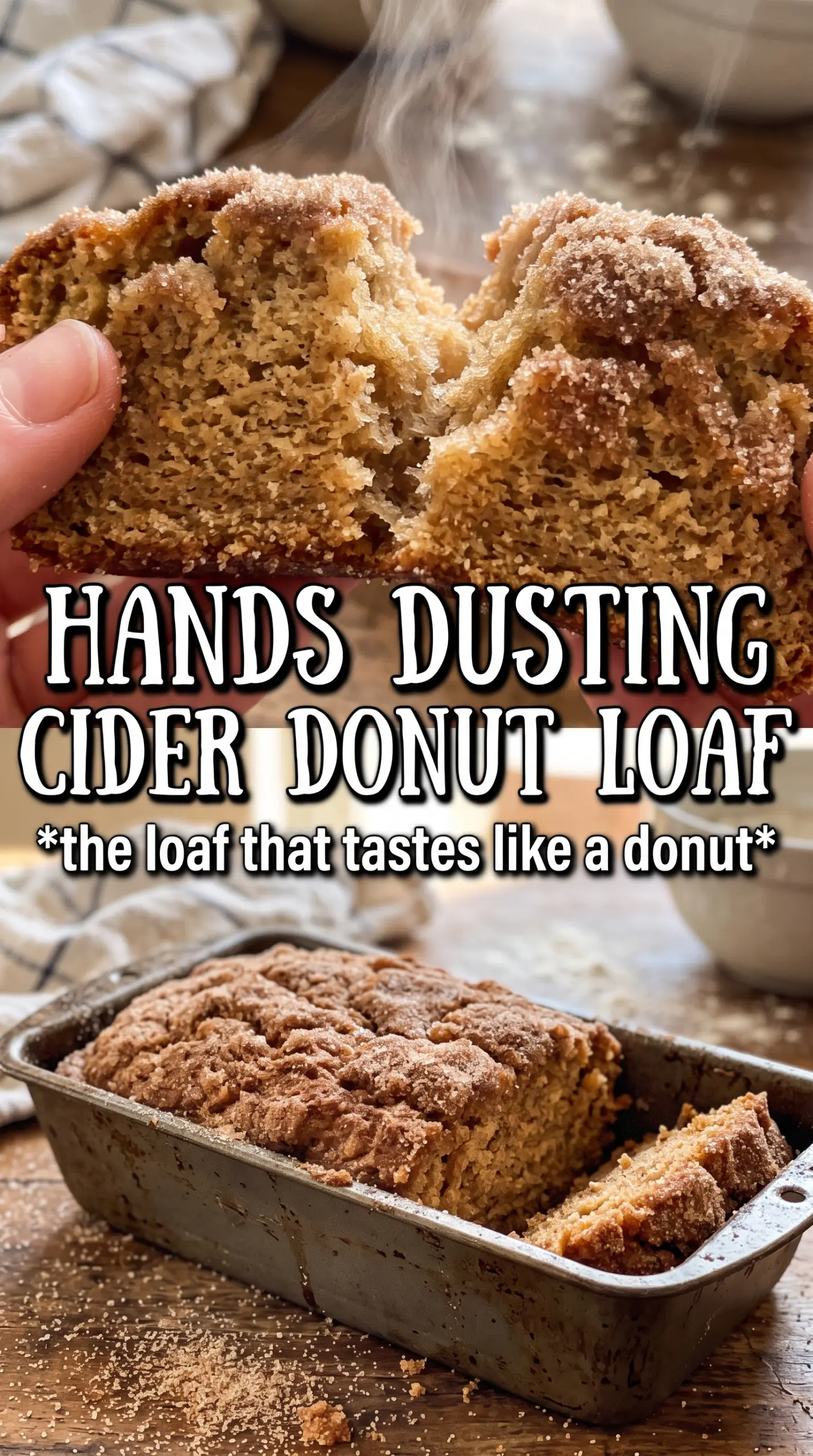
Spiced apple cider donut loaf brings all the best parts of a cider donut into a soft, sliceable loaf with a crackly cinnamon-sugar crust. The crumb stays tender and close-textured, the spice mix tastes warm without turning heavy, and that buttered sugar coating gives every slice the same nostalgic finish you expect from the best bakery donut.
The trick is in the cider reduction. Cooking it down first concentrates the apple flavor so it doesn’t disappear into the batter, and sour cream keeps the loaf moist without making it dense. The oil also helps the texture stay soft for days, which matters here because this loaf is at its best when the crumb is plush and the crust still has a little bite.
Below, I’ll walk through the small details that keep the loaf from turning gummy or bland, plus the easiest swaps if you need to work around what’s in your kitchen.
The cider flavor came through beautifully, and the cinnamon-sugar coating stayed crisp even after cooling. I loved how the loaf sliced cleanly without crumbling apart.
Love that cinnamon-sugar crust and tender spiced crumb? Save this apple cider donut loaf for the next time you want bakery-style flavor from a simple loaf pan.
The Part That Keeps the Loaf Tasting Like a Donut, Not Spiced Cake
The biggest mistake with cider loaf recipes is treating the cider like a background liquid. If you skip the reduction, the apple flavor gets lost under flour and sugar, and what you end up with tastes like a nice spice loaf instead of a cider donut. Reducing the cider first concentrates the fruit without adding extra water to the batter, which helps the crumb stay tight and tender.
The other place people go wrong is the coating. Brushing the loaf while it’s warm gives the butter something to grab onto, and the cinnamon sugar sticks before the surface dries out. If you wait until it’s fully cool, the coating will sit on top in patches instead of forming that thin, sandy crust that makes this loaf feel like a donut in every bite.
- Reduced apple cider — This is where the apple flavor comes from. Fresh cider works best because it has more body than juice, but apple juice will still work in a pinch; just expect a softer, less complex flavor.
- Sour cream — It adds moisture and keeps the loaf from drying out in the oven. Plain Greek yogurt can stand in, but use full-fat yogurt if you can because low-fat versions can make the crumb a little tighter.
- Vegetable oil — Oil gives this loaf that soft, bakery-style texture even after a day or two. Melted butter won’t give the same plush crumb, though it will make the flavor a little richer.
- Spice blend — Cinnamon, nutmeg, allspice, and cardamom build depth instead of a one-note cinnamon loaf. Cardamom is subtle here, but it’s what keeps the spice flavor from tasting flat.
What Each Ingredient Is Actually Doing in This Recipe
- Primary ingredient (the star) — Quality matters most. Choose the best you can find.
- Cooking medium (oil, butter, or broth) — This carries flavors and prevents dryness.
- Seasonings (salt, pepper, spices, herbs) — Layer flavors so nothing overpowers. Build depth gradually.
- Aromatics (garlic, onion, herbs) — Cook with fat to bloom flavors. Become the foundation.
- Supporting ingredients — Complement the main ingredient without overpowering it.
- Sauce or liquid (if applicable) — Brings flavors together. Balance richness with acid.
- Acid (lemon, vinegar, wine, or other) — Brightens and prevents flat-tasting results.
- Final finish (garnish, glaze, or sauce) — Prevents one-dimensional taste and adds visual appeal.
Getting the Batter and Coating to Work Together
Reducing the Cider First
Pour the cider into a small saucepan and cook it over medium heat until it measures about half its original volume. You’re looking for a more concentrated, slightly syrupy liquid, not a thick glaze. Let it cool before it goes into the batter, because hot cider can loosen the eggs and make the mixture look curdled.
Mixing the Wet Ingredients Smoothly
Whisk the oil, both sugars, eggs, vanilla, reduced cider, and sour cream until the mixture looks glossy and even. The batter should look cohesive before the flour goes in. If the eggs are cold, the mixture can look split at first; keep whisking and it will come together once everything warms and blends.
Stopping as Soon as the Flour Disappears
Fold the dry ingredients in just until no dry streaks remain. Overmixing is what makes quick breads heavy and a little chewy in the wrong way, and this loaf should feel tender when you slice it. A few small lumps are fine, and they usually bake out.
Baking for a Clean Center and Soft Crumb
Bake until a toothpick comes out clean or with a few moist crumbs, and the top has a deep golden color. If the loaf is browning too quickly before the center is done, tent it loosely with foil for the last part of baking. Pulling it too early leaves a gummy middle, which is the main thing that ruins this recipe.
Coating While the Loaf Is Still Warm
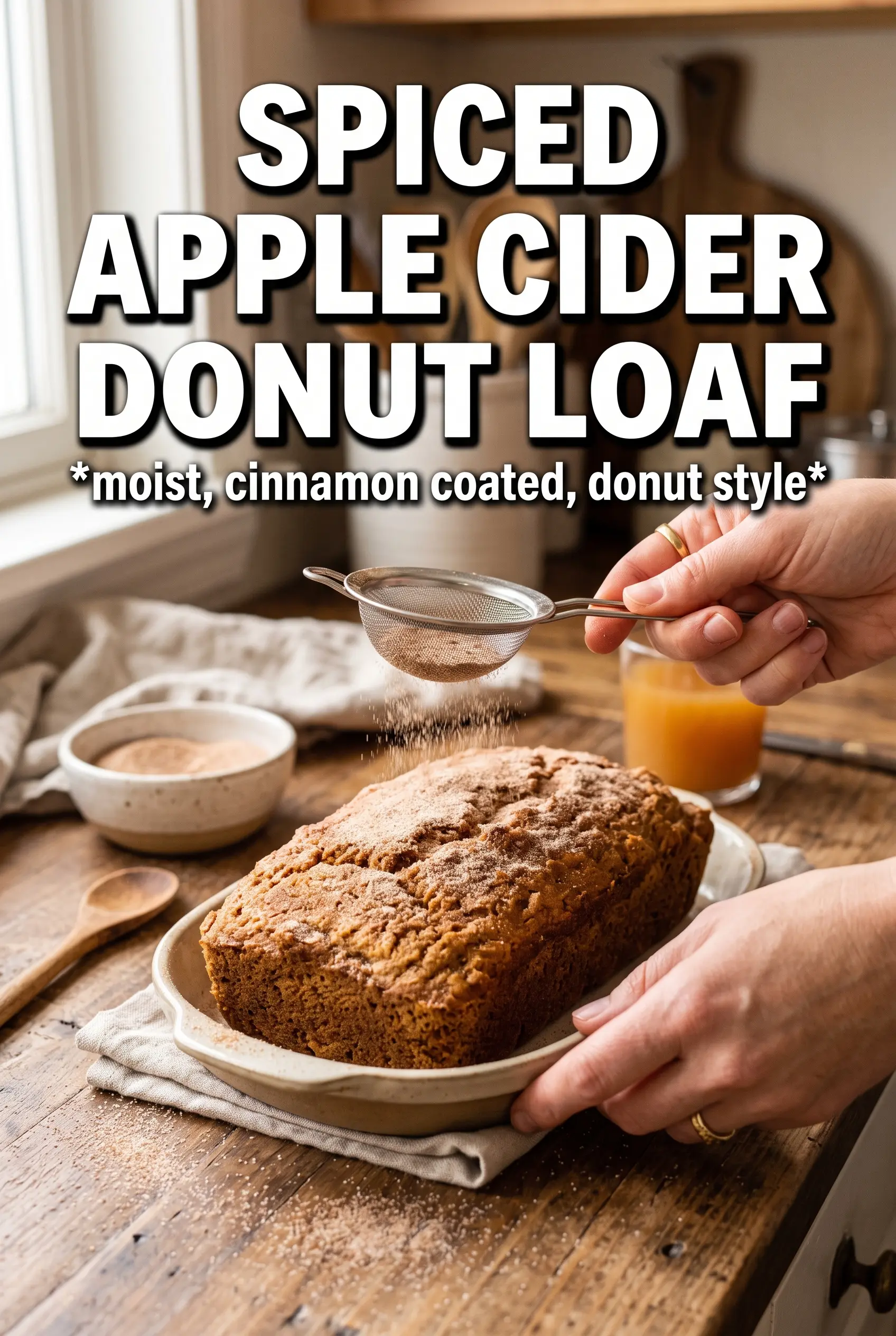
Take the loaf out of the pan while it’s warm, then brush every side with melted butter. Roll or sprinkle it immediately in cinnamon sugar so the coating clings instead of sliding off. This step works best when the loaf is warm, not hot enough to melt the sugar into syrup and not cool enough for the butter to set.
Gluten-Free Version
Use a 1:1 gluten-free baking flour that includes xanthan gum. The loaf will still be tender, but it may need an extra few minutes in the oven and it will slice best after it cools completely.
Dairy-Free Swap
Replace the sour cream with full-fat coconut yogurt or a thick dairy-free yogurt. You’ll lose a little tang, but the texture stays close if the substitute is thick and not watery.
Turning It into Muffins
Divide the batter into a lined muffin tin and bake until the centers spring back and a tester comes out clean. The cinnamon-sugar coating still works, but the crust will be thinner and a little more delicate than it is on the loaf.
Storage and Reheating
- Refrigerator: Store covered for up to 4 days. The coating softens a little, but the loaf stays moist.
- Freezer: Freeze slices tightly wrapped for up to 2 months. The sugar coating won’t stay crisp, so freeze the loaf uncoated if you want the best texture after thawing.
- Reheating: Warm slices in a 300°F oven for a few minutes or toast lightly. The mistake to avoid is microwaving too long, which makes the crumb rubbery and melts the coating into a sticky patch.
Questions I Get Asked About This Recipe
Spiced Apple Cider Donut Loaf
Ingredients
Equipment
Method
- Reduce apple cider by half over medium heat, then cool completely.
- Preheat the oven to 350F and grease a 9x5 loaf pan.
- Whisk together all-purpose flour, baking powder, baking soda, cinnamon, nutmeg, allspice, cardamom, and salt until evenly combined; the mixture should look uniformly speckled (visual cue: no streaks of spice).
- Whisk vegetable oil, granulated sugar, brown sugar, eggs, vanilla extract, reduced apple cider, and sour cream until smooth, glossy, and free of sugar lumps (visual cue: smooth batter with a light sheen).
- Fold the flour mixture into the wet ingredients until just combined, leaving the batter thick (visual cue: no visible dry flour pockets).
- Bake at 350F for 60-65 minutes, until a toothpick inserted in the center comes out clean (visual cue: top looks deep golden and springs back slightly).
- Remove the loaf from the pan while warm and brush all sides generously with melted butter (visual cue: butter sheen covers the surface).
- Roll or sprinkle immediately in cinnamon sugar to coat completely (visual cue: an even cinnamon-sugar crust forms over the entire loaf).