Roasted potato salad hits differently when the potatoes are browned instead of boiled. You get edges that hold their shape, a center that stays creamy, and a dressing that clings instead of sliding to the bottom of the bowl. The bacon brings smoke, the blue cheese adds sharpness, and the chives keep the whole thing from feeling heavy.
The part that makes this version stand out is the roast. Baby potatoes take on more flavor in the oven than they ever do in a pot of water, and that little bit of surface caramelization gives the dressing something to grab onto. Cooling the potatoes before mixing matters too, because warm potatoes melt the sour cream base and turn the salad loose instead of plush.
Below, you’ll find the exact order that keeps the texture right, plus a few smart swaps if you want to shift the balance toward tangier, milder, or more picnic-friendly.
The potatoes held their shape after chilling, and the dressing stayed creamy instead of getting watery. I swapped in extra chives for the last handful of blue cheese and it still tasted like a steakhouse side.
Love the smoky bacon, blue cheese, and roasted potato combo? Save this steakhouse potato salad for your next cookout or steak night.
The Trick to Roasted Potato Salad Is Letting the Potatoes Cool All the Way
Boiled potato salad can turn soft fast, but roasted potato salad has a different problem: if you dress the potatoes while they’re still hot, they soak up the sour cream mixture too aggressively and the salad can turn heavy or greasy. The best texture comes from potatoes that are fully cooled before they meet the dressing. That gives you chunks that stay distinct and a coating that tastes creamy instead of diluted.
The other thing worth respecting is size. Halved baby potatoes roast evenly and give you more browned surface per bite, which is where the flavor lives here. If the pieces are too small, they dry out before they color; if they’re too large, you lose that steakhouse-style contrast between crisp edges and tender centers.
- Baby potatoes — Baby potatoes keep their shape after roasting and give you enough creamy interior to balance the bacon and blue cheese. Yukon Golds work if that’s what you have, but cut them into even chunks so they roast at the same pace.
- Sour cream and mayonnaise — This combination gives the dressing body and tang. Sour cream brings the sharpness; mayonnaise smooths it out. Using only sour cream makes the salad lean too tart, while all mayo makes it taste flat.
- Blue cheese crumbles — Use a blue cheese you actually like eating on its own, because its flavor comes through clearly. A milder blue gives you a gentler finish; a stronger one makes the salad much bolder.
- Bacon — Cook it until crisp enough to crumble, not just barely done. Soft bacon turns chewy once it’s mixed into the salad, and you lose the texture contrast that makes each bite interesting.
- White wine vinegar and Worcestershire sauce — These two ingredients wake up the dressing and keep it from tasting thick and dull. If you need a swap, apple cider vinegar works, but use a little less because it reads sweeter.
- Chives — Fresh chives cut through the richness and give the salad a clean finish. Don’t replace them with dried herbs here; the bright onion note matters more than extra seasoning.
What Each Ingredient Is Actually Doing in Roasted Potato Salad
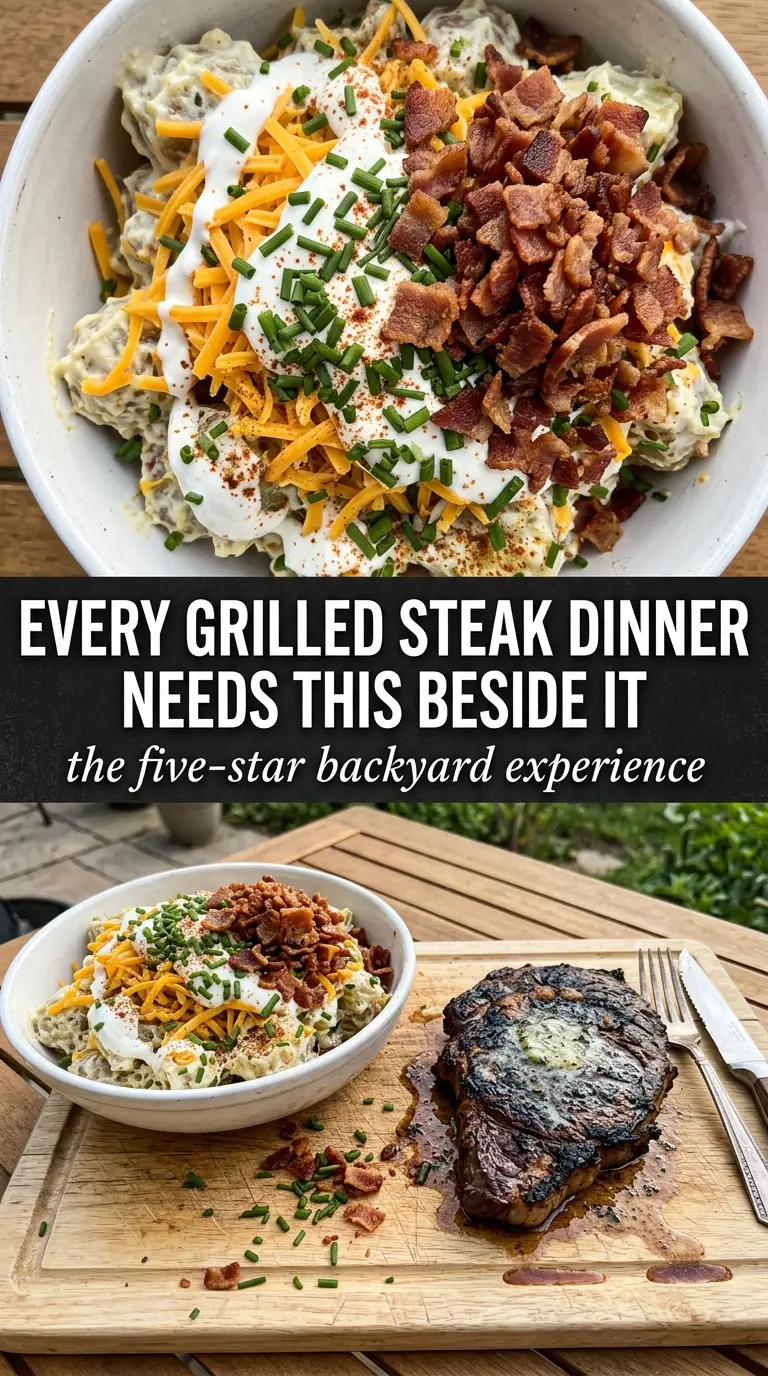
- Potatoes (roasted until crispy outside, tender inside) — The crust is where the flavor develops. Roasting instead of boiling creates a completely different texture.
- Oil for roasting (generous amount) — Oil creates the crispy crust. Roasted potatoes need more oil than boiled ones.
- High heat for roasting (so crust develops) — High heat creates the Maillard reaction that makes roasted potatoes delicious. Low heat just dries them out.
- Cooling completely (room temperature or cold) — The potato salad dressing absorbs better into cooled potatoes. Warm potatoes are mushy; cold potatoes are firm.
- Dressing applied while potatoes are cool — Cool potatoes absorb the dressing evenly without becoming mushy. The flavors integrate better.
- Oil-based dressing (complements roasted flavor) — An oil and vinegar dressing suits roasted potatoes better than creamy dressing. The roasted crust stands out.
- Fresh herbs (scattered throughout, not mixed in) — Herbs should stay visible and bright. Mix them in gently so they don’t bruise or wilt.
- Salt and pepper to taste (applied after roasting and cooling) — Season the cool salad and taste it. Adjust seasoning just before serving.
Building the Salad So It Stays Creamy, Not Heavy
Roasting the Potatoes Until the Edges Color
Toss the halved potatoes with enough oil to coat and spread them in a single layer on the pan. Roast at 425°F until the cut sides are golden and the edges look dry and lightly crisp, not pale and steamed. If the pan is crowded, the potatoes will steam instead of roast, and you’ll miss the flavor that makes this salad taste like more than dressed potatoes.
Mixing the Dressing Before It Touches the Potatoes
Stir the sour cream, mayonnaise, vinegar, Worcestershire, salt, and pepper together until smooth before you add anything else. That keeps the seasoning even and prevents pockets of sharp vinegar or bland mayo. Taste the dressing before it goes in; once it coats the potatoes, the flavor softens, so it should taste a touch bold in the bowl.
Adding the Blue Cheese in Two Stages
Fold half the blue cheese into the salad and save the rest for the top. The first addition melts slightly into the warm edges of the potatoes and seasons the whole bowl, while the finish on top gives you those little salty pockets you want in every serving. If you add all of it at once, the flavor gets lost and the presentation gets muddled.
Chilling Before Serving
Refrigerate the salad for at least 2 hours before serving. That resting time lets the dressing settle into the potatoes and tightens the texture so the bowl feels cohesive instead of loose. If you serve it right away, it still tastes good, but the flavor won’t have the same depth and the dressing will sit more on the surface.
How to Adjust This Steakhouse Potato Salad for Different Crowds
Make It Less Blue Cheese Forward
Cut the blue cheese back to 1/4 cup and add an extra tablespoon of sour cream. You’ll still get the salty tang, but the salad will taste gentler and work better for people who like steakhouse flavor without a strong cheese finish.
Dairy-Free Version
Use a dairy-free sour cream and mayonnaise, then swap the blue cheese for extra chives and a pinch of salt. You’ll lose the signature funky bite from the cheese, but the salad still keeps the roasted potato, bacon, and tangy dressing structure intact.
Make It Ahead for a Party
Roast the potatoes and cook the bacon a day ahead, then store them separately from the dressing. Combine everything a few hours before serving so the potatoes can chill in the dressing without turning soft. If you mix it the night before, the flavor gets deeper, but the potatoes will lose some of that roasted edge.
Swap the Bacon for a Vegetarian Version
Use smoky roasted mushrooms or crisped tempeh in place of the bacon. You won’t get the same salt-and-smoke hit, so add a little extra Worcestershire or a pinch of smoked paprika to keep the salad anchored in that steakhouse style.
Storage and Reheating
- Refrigerator: Store covered for up to 3 days. The potatoes will soften a little as they sit, but the flavor stays strong.
- Freezer: I don’t recommend freezing this salad. The sour cream and mayonnaise separate after thawing, and the potatoes turn mealy.
- Reheating: Don’t reheat it. Serve it cold or let it sit at room temperature for 15 to 20 minutes before serving so the dressing loosens slightly and the flavors open up.
Answers to the Questions Worth Asking
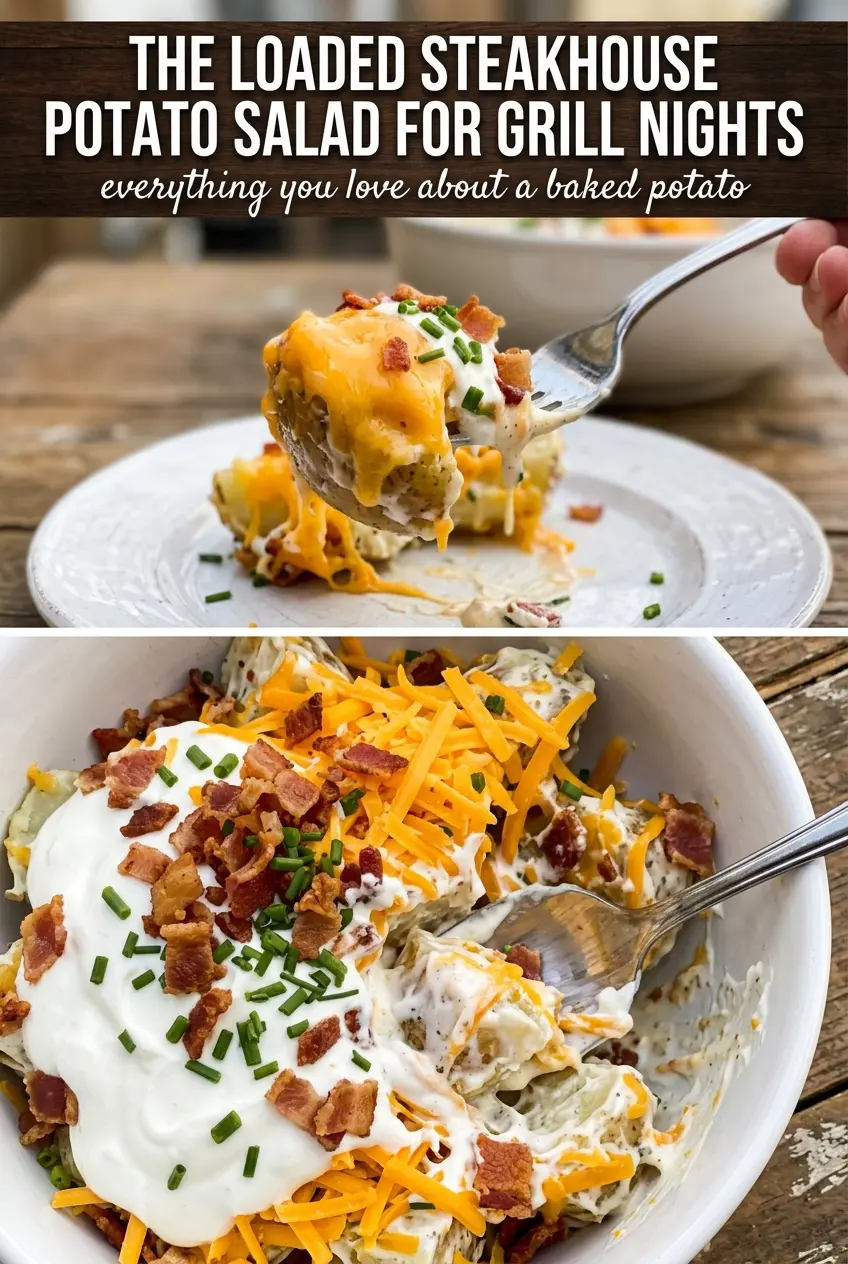
Steakhouse Potato Salad
Ingredients
Equipment
Method
- Heat the oven to 425°F and roast the potato halves on a sheet pan for 25-30 minutes until golden. Visual cue: cut sides should look browned.
- Remove the roasted potatoes and let them cool completely. Visual cue: they should no longer feel warm when touched.
- In a bowl, mix sour cream, mayonnaise, white wine vinegar, Worcestershire sauce, salt, and pepper until smooth. Visual cue: the dressing should look uniformly creamy.
- Combine the cooled potatoes, crumbled bacon, and half of the blue cheese. Visual cue: blue cheese should be streaked through the mixture.
- Toss the potato mixture with the sour cream dressing until evenly coated. Visual cue: potatoes look glossy with creamy dressing.
- Top with the remaining blue cheese and the chopped fresh chives. Visual cue: the surface should show blue flecks and green chive bits.
- Refrigerate for 2 hours before serving. Visual cue: the salad should be chilled throughout and set slightly.