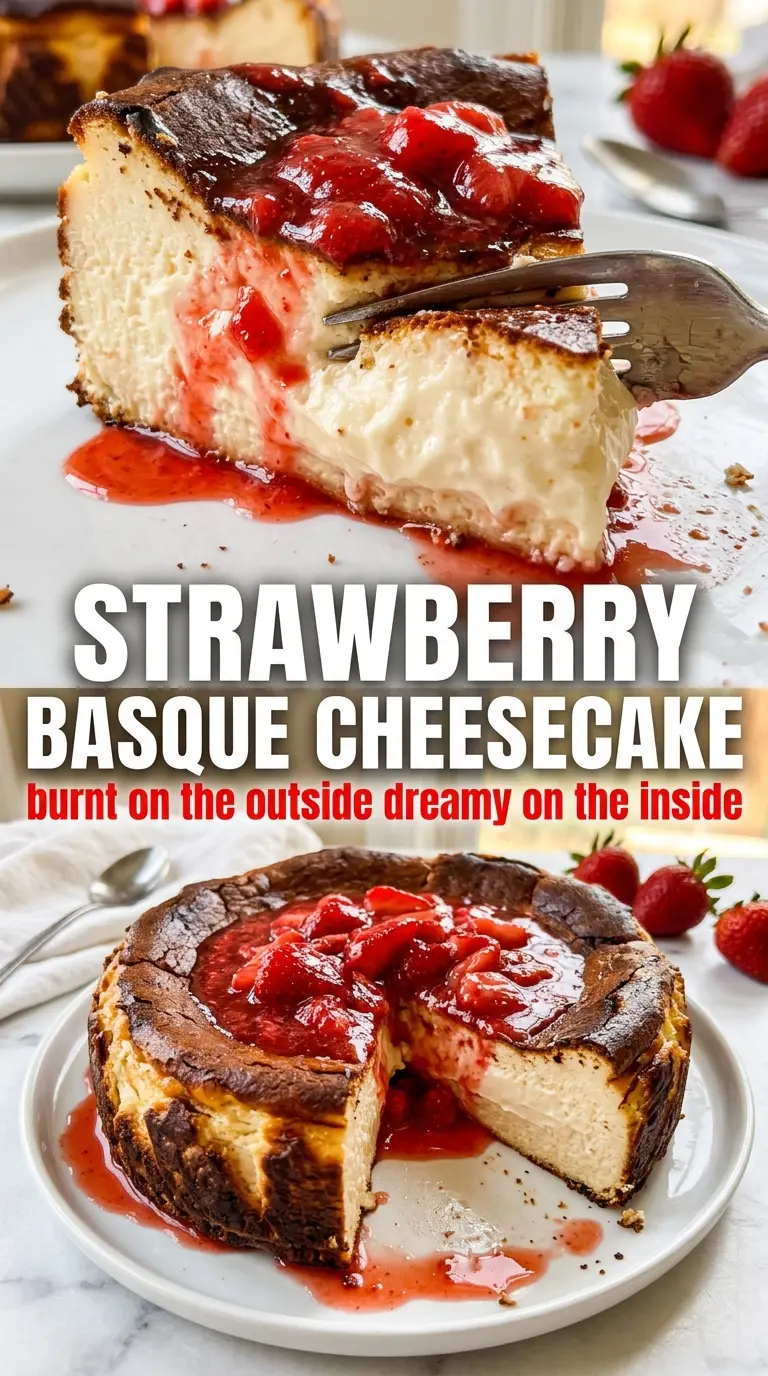
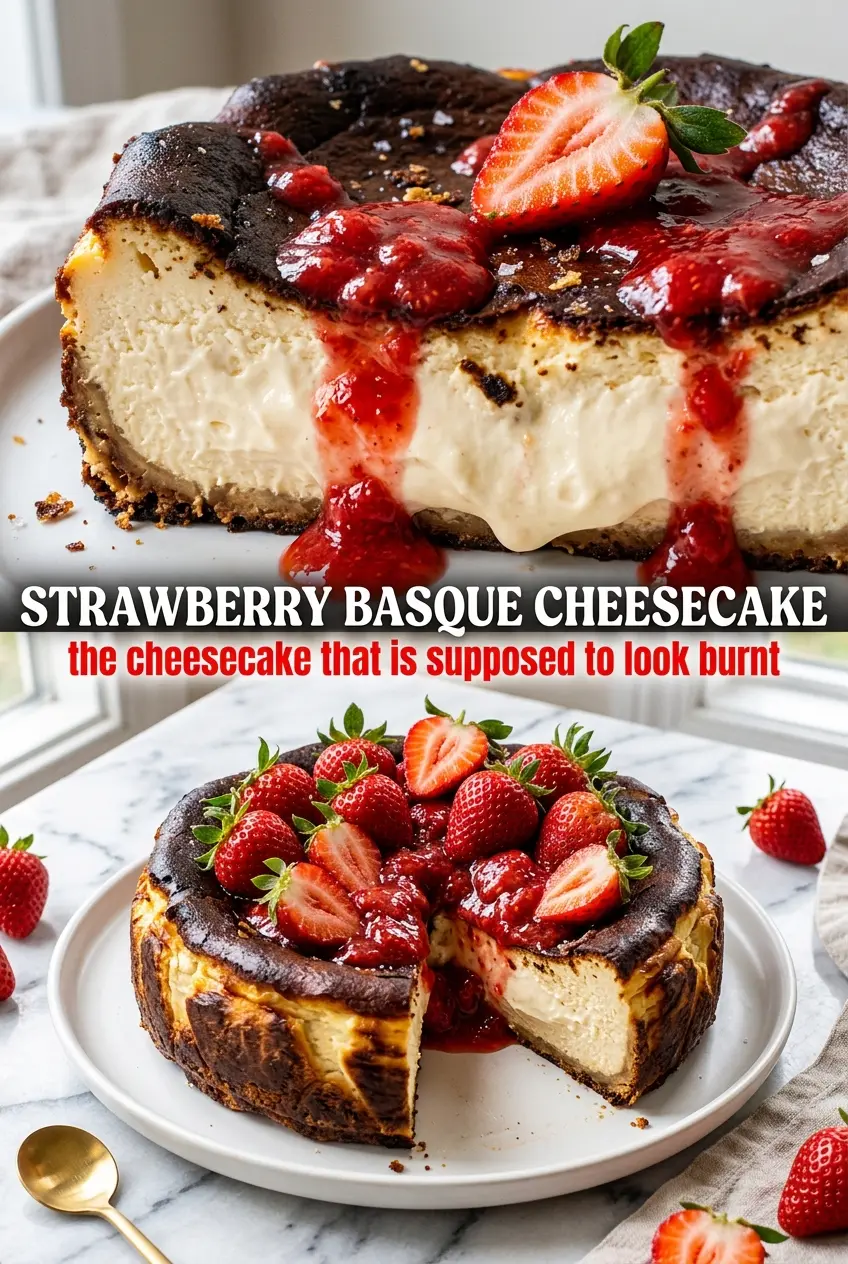
Strawberry Basque cheesecake lands with that rare mix of rustic and elegant: a deeply bronzed top, creamy center, and a tangy strawberry finish that cuts through the richness instead of sitting on top of it. The cracked surface and caramelized edges give every slice a little drama, while the middle stays soft enough to feel almost custardy.
The key is the high oven temperature and the short ingredient list. Basque cheesecake is meant to look a little wild, so the top can take on serious color before the center sets completely. That contrast is what keeps the texture from going dense. The strawberry topping is kept separate until the end, which protects the cake from turning soggy and lets the honey-balsamic mixture stay bright.
Below, you’ll find the small details that matter most: how dark the top should get, why room-temperature cream cheese changes the whole texture, and how to keep the strawberries glossy without making the slice slippery.
The top baked up beautifully dark and the center stayed creamy instead of runny. The strawberries with honey and balsamic made each slice taste finished, not just sweet.
Save this Strawberry Basque Cheesecake for the dessert table when you want a burnt top, creamy center, and fresh strawberries with a little balsamic edge.
The Reason This Cheesecake Gets Its Crackled Top Without Drying Out
Basque cheesecake needs heat, not gentleness. The dark top comes from baking at 400°F long enough for the sugars and dairy to caramelize, while the center stays soft because it is pulled before it fully sets. If you wait for a clean knife test, you’ve gone too far and the texture will turn from creamy to heavy.
Room-temperature cream cheese matters here more than in a standard cheesecake. Cold cream cheese traps little bits in the batter, and those bits stay behind as streaks no matter how long you beat them. Once the eggs go in, keep the mixer on low and stop as soon as the mixture looks smooth; too much air can puff the cake unevenly and make the center collapse hard instead of settling into that soft, dense custard.
- The high oven temperature — this is what gives the top its deep brown color and that faint caramel note.
- Room-temperature cream cheese — cold blocks create a lumpy batter that bakes up grainy.
- Eggs added one at a time — this keeps the batter emulsified so it bakes evenly instead of separating.
- Flour in a small amount — just enough to give the cheesecake a little structure without making it cakey.
What the Strawberries Are Doing Besides Looking Pretty
- Cream cheese — this is the backbone of the cake, and full-fat block cream cheese gives the best dense, silky finish. Tub-style cream cheese is softer and can make the batter looser than you want.
- Heavy cream — it loosens the batter just enough to keep the center custardy. Half-and-half works in a pinch, but the result will be a little less rich.
- Honey and balsamic vinegar — the honey sweetens the strawberries, while the balsamic sharpens them and keeps the topping from tasting flat. Don’t skip the vinegar; even a small amount gives the berries more depth.
- Fresh strawberries — use ripe berries with good flavor, not just good color. If they taste bland raw, they’ll taste bland on the cake.
- Vanilla extract — it rounds out the dairy and adds warmth without competing with the strawberries.
- All-purpose flour — this is the smallest structural ingredient, but it matters. Spoon it in and level it; packing it down can make the cheesecake more firmly set than intended.
Baking It Until the Center Still Wobbles
Building the Batter
Beat the cream cheese and sugar until the mixture looks glossy and completely smooth, with no pale lumps hiding on the sides of the bowl. Add the eggs one at a time on low speed so the batter stays thick and silky instead of foamy. Once the cream, vanilla, and flour go in, mix only until combined; overmixing after the flour comes in can make the finished cake tougher than it should be.
Reading the Oven Color
Pour the batter into parchment-lined baking dish and bake until the top is deeply browned, even almost burnt in spots, and the center still gives a noticeable jiggle when you nudge the pan. If the top is pale, the cheesecake hasn’t developed the right flavor yet. If the center is fully set in the oven, the cake will cool into something dry and tight instead of soft and creamy.
Cooling and Topping
Let the cheesecake cool completely before refrigerating it for at least 30 minutes. That resting time helps the center firm up without losing its custardy texture. Toss the sliced strawberries with honey and balsamic right before serving, then spoon them over the chilled cake so the juices stay bright and don’t soak into the top.
How to Adjust This Strawberry Basque Cheesecake Without Ruining the Texture
Make it gluten-free
Swap the all-purpose flour for a 1:1 gluten-free baking blend. You still get the small amount of structure this cheesecake needs, but the texture may set a touch more softly, so don’t overbake trying to compensate.
Skip the balsamic if you want a sweeter topping
Use just honey with the strawberries if you want a cleaner, fruitier finish. The topping will taste rounder and sweeter, but it won’t have the same sharp edge that keeps the berries from feeling one-note.
Use mixed berries instead of all strawberries
Blueberries or raspberries can be mixed in with the strawberries for a more tart topping. Keep the honey the same and add the balsamic slowly, because raspberries break down faster and can turn the topping saucy quickly.
Storage and Reheating
- Refrigerator: Keep the cheesecake covered for up to 4 days. The top softens a little, but the texture stays creamy.
- Freezer: Freeze the cheesecake without the strawberry topping for up to 1 month. Wrap slices tightly and thaw in the refrigerator overnight for the best texture.
- Reheating: This cake is best served chilled or at cool room temperature, not rewarmed. If it sits out too long after topping, the strawberries will loosen and the center can feel too soft.
Questions I Get Asked About This Recipe
Strawberry Basque Cheesecake
Ingredients
Equipment
Method
- Preheat the oven to 400°F. Line an 8x8 inch or 9-inch round baking dish with parchment paper, letting the edges hang over the sides for easy lifting.
- Beat the cream cheese and granulated sugar until smooth and combined. Add the eggs one at a time, beating on low speed each time.
- Stir in the heavy cream, vanilla extract, and all-purpose flour until just combined. Avoid overmixing so the center stays creamy.
- Pour the batter into the prepared baking dish. Bake for 45-50 minutes until the top is deeply golden brown and the center still jiggles slightly, indicating a set-yet-silky texture.
- Cool the cheesecake completely at room temperature. Refrigerate for at least 30 minutes so the slices hold their shape.
- Toss the sliced strawberries with honey and balsamic vinegar. Top the chilled cheesecake just before serving so the fruit stays fresh and juicy.
- Garnish with fresh mint for a bright finish. Serve immediately after topping.