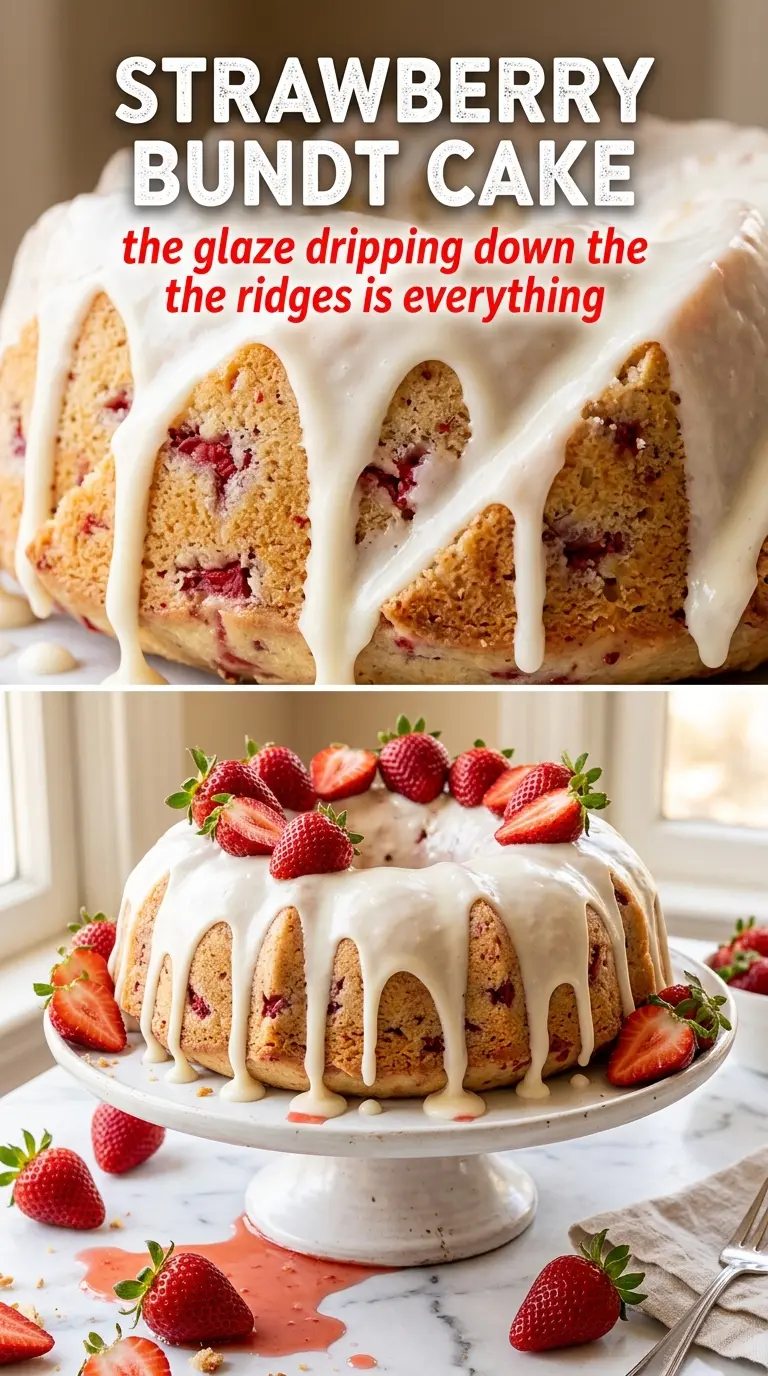
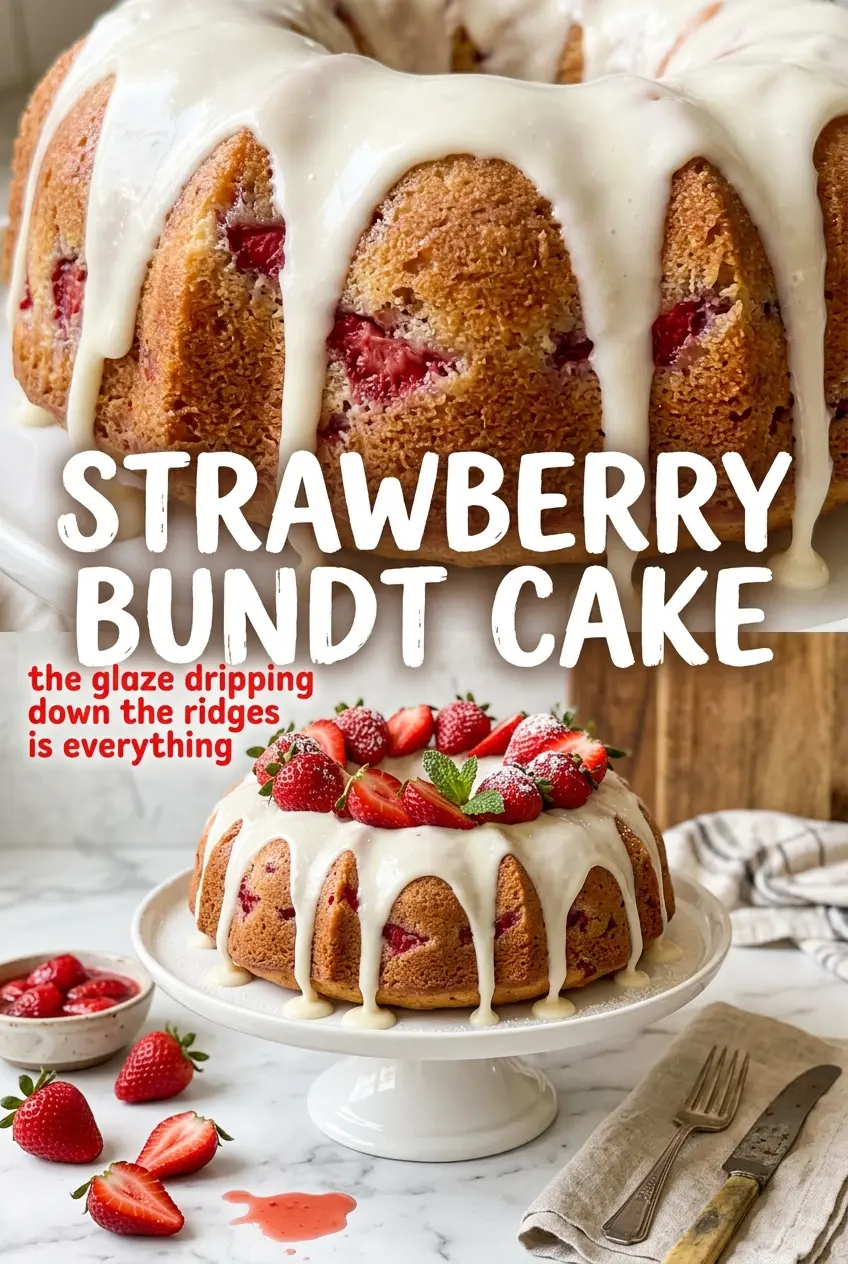
Strawberry Bundt cake lands in that sweet spot between nostalgic and polished: a tender crumb, a soft pink hue, and a glossy glaze that drips down the ridges just enough to make each slice look special. It’s the kind of cake that slices cleanly for a party but still tastes like the strawberries were there for a reason, not just decoration.
The trick is balancing moisture with structure. Fresh strawberry puree brings flavor and color, while sour cream keeps the crumb plush instead of wet. Diced strawberries add little bursts of fruit, but they need to be folded in gently and coated in the batter so they don’t sink and leave the cake dense at the bottom.
Below, I’ll walk through the part that matters most with a Bundt cake: getting it out of the pan in one piece. I’ve also included a few smart swaps for frozen berries, different glazes, and storage tips so the cake stays just as good the next day.
The cake released cleanly after 15 minutes and the strawberry glaze set with just enough shine without running off completely. The diced berries stayed evenly distributed, which made every slice look bakery-worthy.
Love the tender crumb and glossy strawberry glaze? Save this Strawberry Bundt Cake for the next time you want a fruit-forward cake that slices beautifully.
The Bundt Pan Test That Keeps the Cake in One Piece
A Strawberry Bundt cake can taste perfect and still fail at the finish if the pan isn’t handled with enough care. The issue isn’t usually the batter. It’s the combination of sugar, fruit, and all those curved edges grabbing onto the pan as the cake cools. If the pan is only lightly greased, the cake can tear when you turn it out, and no amount of glaze will hide that.
Thorough greasing matters more here than in a simple layer cake because Bundt pans have seams, ridges, and corners that catch. The cake also needs that 15-minute rest in the pan. Too short, and it breaks apart before it firms up. Too long, and the sugar cools hard against the metal and starts to glue itself in place. That small timing window is what gives you a clean release.
What Each Ingredient Is Actually Doing in This Cake
- Strawberry puree — This is the main flavor source in the batter, and it also gives the cake its soft pink color. Use a smooth puree, not a chunky mash, so the batter mixes evenly. If your berries aren’t very sweet, a little extra glaze at the end carries the fruit flavor without changing the texture.
- Sour cream — This keeps the crumb moist and tender without making the cake heavy. Plain yogurt can work in a pinch, but it brings a slightly sharper tang and a looser batter. Full-fat sour cream gives the best texture here.
- Fresh diced strawberries — These add little pockets of fruit in each slice, but they need to be folded in at the end so they don’t break down and turn the batter streaky. Tossing them lightly in a spoonful of flour helps them stay suspended instead of sinking.
- Strawberry glaze or jelly — This is what gives the cake that finished look and adds a concentrated hit of berry flavor. Warm it with a little water until it’s pourable, but don’t thin it so much that it runs straight off the cake.
- Butter and sugar — This is where the cake gets its airy structure. Beat them until the mixture looks pale and fluffy; that step traps air and keeps the crumb from turning dense.
Building the Batter Without Crushing the Fruit
Start with a Properly Prepared Pan
Heat the oven to 350°F and grease every ridge of the Bundt pan thoroughly. Use softened butter or baking spray with flour, then get into the seams with a pastry brush or folded paper towel if needed. If the pan has any dry spots, the cake will cling there first.
Make the Base Light Before the Fruit Goes In
Beat the butter and sugar until the mixture looks pale and fluffy, not just combined. Add the eggs one at a time so the batter stays smooth and emulsified. If it looks curdled after an egg, keep going; it comes back together once the dry ingredients and dairy are added.
Alternate the Dry Mix and Strawberry Mixture
Add the flour mixture in batches, alternating with the strawberry puree mixed with sour cream, and begin and end with flour. That pattern keeps the batter from splitting and prevents overmixing, which is the fastest way to get a tight, bready crumb. Stop mixing as soon as the last streaks disappear.
Fold in the Berries and Bake Until Set
Stir in the vanilla, then fold in the diced strawberries with a light hand. Pour the batter into the pan and bake until a toothpick comes out clean, with just a few moist crumbs attached. If the top browns before the center sets, tent it loosely with foil for the last 10 minutes.
Glaze After the Cake Has Cooled
Let the cake cool in the pan for 15 minutes, then invert it onto a rack and cool completely. Warm the strawberry glaze with water until it flows in a slow ribbon, then drizzle it over the cake so it catches on the ridges instead of disappearing into the crumb. Dust with powdered sugar only after the glaze has set a little, or the sugar will melt into the surface.
How to Adjust This Strawberry Bundt Cake for Different Kitchens
Make It Gluten-Free
Use a good 1:1 gluten-free baking flour in place of the all-purpose flour. The cake will still rise well, but the crumb may be a little more delicate, so let it cool fully before turning it out. A flour blend with xanthan gum built in works best for keeping the slices intact.
Use Frozen Strawberries When Fresh Aren’t Great
Frozen strawberries can replace the fresh diced berries, but thaw and drain them first or they’ll water down the batter. The puree can also come from frozen berries, which is helpful when fresh fruit is pale or bland. Expect the flavor to be a little softer, so the glaze matters even more.
Switch the Glaze for a Lighter Finish
If you want less sweetness, skip the jelly glaze and dust the cooled cake with powdered sugar instead. You’ll lose the shiny finish, but the strawberry flavor in the crumb becomes more noticeable. A thin lemon glaze also works well if you want more brightness.
Storage and Reheating
- Refrigerator: Store covered for up to 4 days. The crumb stays moist, but the glaze may soften slightly on the surface.
- Freezer: Freeze unglazed slices tightly wrapped for up to 2 months. Thaw at room temperature, then glaze after thawing for the cleanest finish.
- Reheating: Warm individual slices for 10 to 15 seconds in the microwave if you want a just-baked feel. Don’t overheat it, or the strawberries can turn soft and the glaze will melt into a puddle.
Questions I Get Asked About This Strawberry Bundt Cake
Strawberry Bundt Cake
Ingredients
Equipment
Method
- Preheat the oven to 350°F and grease a 12-cup Bundt pan thoroughly, ensuring every groove is coated (no bare spots).
- Whisk together all-purpose flour, baking powder, and salt in a mixing bowl until evenly combined and free of lumps.
- Beat butter and granulated sugar until light and fluffy, using a smooth, pale texture as your visual cue.
- Add eggs one at a time, beating well after each addition so the batter stays glossy and cohesive.
- Add the flour mixture and the strawberry puree mixture in alternating additions, beginning and ending with flour so the batter remains thick and well mixed.
- Stir in vanilla extract and fold in the fresh strawberries, just until distributed so the berries stay suspended.
- Pour the batter into the prepared Bundt pan and smooth the top for even rising.
- Bake at 350°F for 45-50 minutes, until a toothpick inserted in the center comes out clean with only a few moist crumbs.
- Cool the cake in the pan for 15 minutes, letting the edges set for easier unmolding.
- Invert the cake onto a wire rack and cool completely so the crumb firms up before glazing.
- Warm the strawberry glaze or jelly with water until pourable, stirring until it loosens to a smooth, flowing consistency.
- Drizzle the warm glaze over the cooled cake, allowing it to run down the sides for glossy coverage.
- Dust with powdered sugar before serving for a light, snowy finish on top of the glaze.