Ruby strawberries tucked into a flaky, golden crust make this strawberry cardamom galette one of those desserts that looks special without asking for much fuss. The edges bake up deeply bronzed and crisp while the center stays jammy and bright, with cardamom adding a warm floral note that makes the fruit taste even more like itself. It’s the kind of dessert that lands in the middle of the table and disappears fast.
What makes this version work is the balance. The strawberries are tossed with just enough sugar to draw out their juices, but the cornstarch keeps that juice from running across the pan. Cold butter and minimal handling give the crust its shattery layers, and the dough only needs to be brought together, not kneaded into submission. That small restraint is what keeps a galette tender instead of tough.
Below you’ll find the simple trick for keeping the bottom from going soggy, plus the one variation I reach for when strawberries are especially sweet or a little underwhelming. It’s a forgiving dessert, but a few small details make the difference between rustic in the good way and rustic in the collapsed way.
The crust baked up crisp on the bottom and the cardamom made the strawberries taste even brighter. I loved that the juices stayed put instead of leaking everywhere.
Like this strawberry cardamom galette? Save it to Pinterest for the days when you want a rustic fruit dessert with crisp edges and a buttery pastry shell.
The Trick to Keeping the Bottom Crisp Instead of Soggy
A galette only looks effortless if the fruit behaves, and strawberries love to give up juice the second they hit sugar. That’s why the cornstarch matters here. It thickens the filling just enough to turn those juices glossy instead of watery, which helps the pastry stay crisp under the fruit instead of turning soft and damp.
The other piece is the dough itself. If the butter melts before the galette goes into the oven, you lose the flaky layers and end up with a sturdier, less tender crust. Work fast, use cold water sparingly, and chill the disk before rolling it out. That rest gives the flour time to hydrate and keeps the dough from shrinking back when it bakes.
What the Strawberries and Cardamom Are Each Doing Here
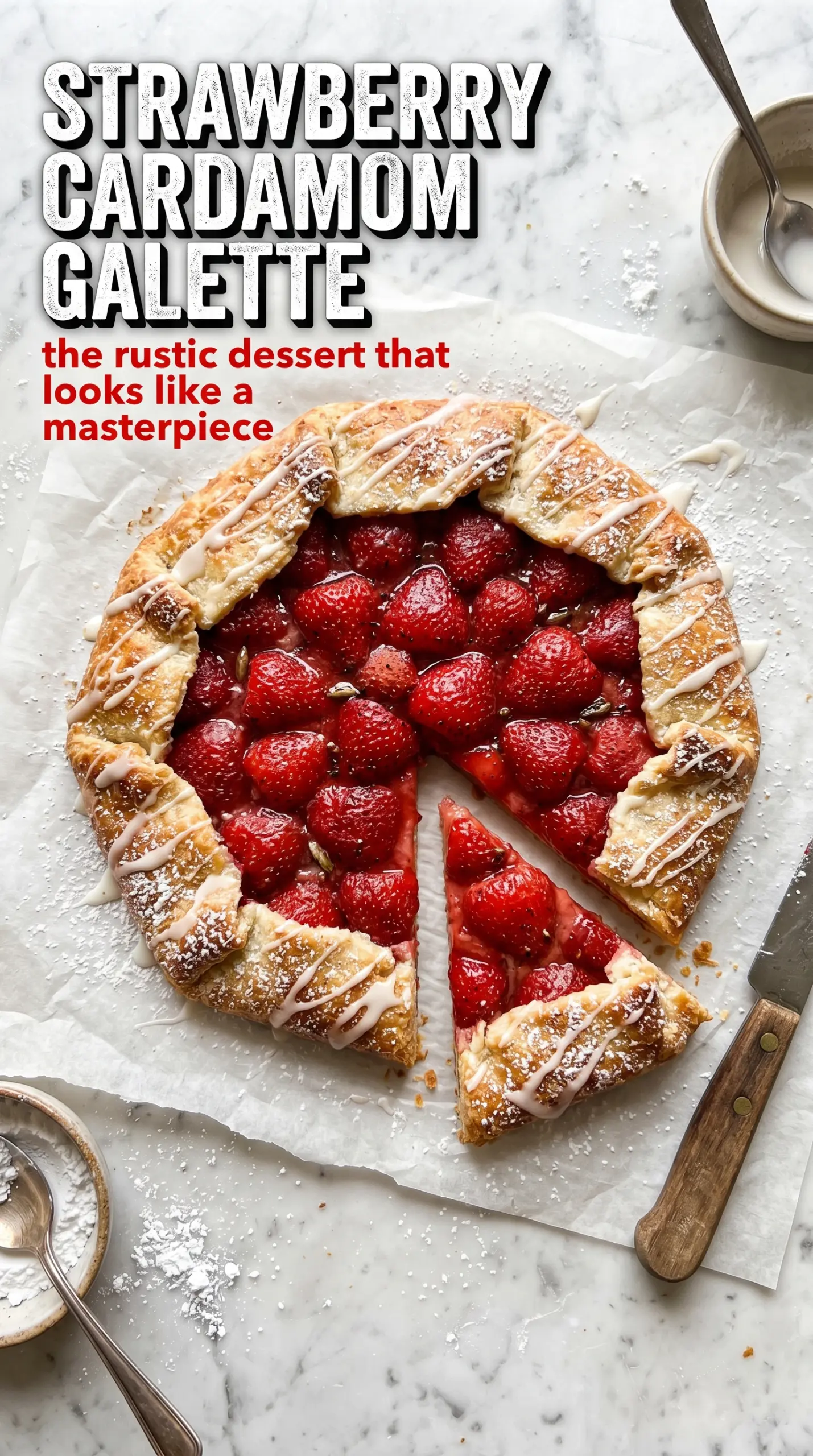
- Strawberries — Use ripe berries with good color and scent. If they’re pale and watery, the galette will taste flat no matter how much sugar you add. Halving them keeps the filling from turning mushy while still letting the juices pool and caramelize.
- Ground cardamom — This is what makes the filling taste lifted instead of just sweet. Freshly opened cardamom is worth using if you have it; stale cardamom fades fast and the whole dessert loses its edge. Don’t overdo it, though, because the goal is fragrance, not perfume.
- Cornstarch — This is the insurance policy against a runny center. Flour won’t thicken the berry juices as cleanly here, and tapioca can make the filling a little slippery. Cornstarch gives you a clean set without muting the fruit.
- Butter — Cold butter is nonnegotiable for the crust. Cubes should still look distinct when you stop cutting them in, because those pockets melt in the oven and create flake. If the butter starts getting soft, chill the bowl for a few minutes before adding water.
Rolling, Filling, and Folding Without Losing the Shape
Cutting the Butter Into the Flour
Start by working the butter into the flour and salt until the mixture looks like coarse breadcrumbs with a few pea-sized bits still visible. Those larger pieces are what create layers in the oven, so don’t grind the mixture into a uniform powder. If the butter smears, the dough will bake up dense instead of flaky.
Bringing the Dough Together Just Enough
Add the ice water a little at a time and stop as soon as the dough holds together when pressed. It should look a little shaggy, not smooth. Too much water makes the crust tough, and too much mixing develops gluten fast, which is how a galette turns elastic and hard to roll.
Building the Fruit Mound
Roll the dough into a 12-inch circle on parchment so you can move it without tearing it later. Pile the strawberries in the center and leave that 2-inch border clear all the way around. If the fruit reaches the edge, the fold won’t hold and the juices will run out onto the pan.
Folding and Baking to a Deep Golden Finish
Fold the dough over the berries in sections, letting the pastry pleat naturally. Brush the crust with beaten egg for color, then bake at 400°F until the edges are deeply golden and the filling is bubbling at the center. If you pull it early, the bottom won’t finish setting, so wait for visible bubbling before calling it done.
Swap in Mixed Berries for a Brighter Filling
Use part strawberries and part raspberries or blackberries if you want a sharper, more jammy filling. Raspberries soften faster and release more juice, so keep the cornstarch in place and don’t overload the center. The result tastes a little more tart and looks especially pretty once baked.
Make It Dairy-Free With a Firm Plant Butter
A good plant-based butter works here if it stays firm when cold. Choose one with a higher fat content and keep it well chilled, because soft spreads melt too fast and don’t produce the same flaky layers. The flavor is a little less rich, but the texture can still be excellent.
Skip the Egg Wash for a Vegan Finish
Brush the crust with a little plant milk instead of egg if you want to keep the whole dessert vegan. The browning will be a touch softer and less glossy, but the galette will still bake up beautifully. A light sprinkle of coarse sugar on the edge helps make up for the missing sheen.
Storage and Reheating
- Refrigerator: Store leftovers covered for up to 3 days. The crust softens a little as it sits, but the flavor stays good.
- Freezer: Freeze baked slices wrapped tightly for up to 1 month. The texture is best when frozen after baking, not before, because the fruit releases too much liquid on thawing.
- Reheating: Warm slices in a 325°F oven until the crust crisps again, about 10 minutes. The microwave will make the pastry limp and the filling too loose.
Answers to the Questions Worth Asking
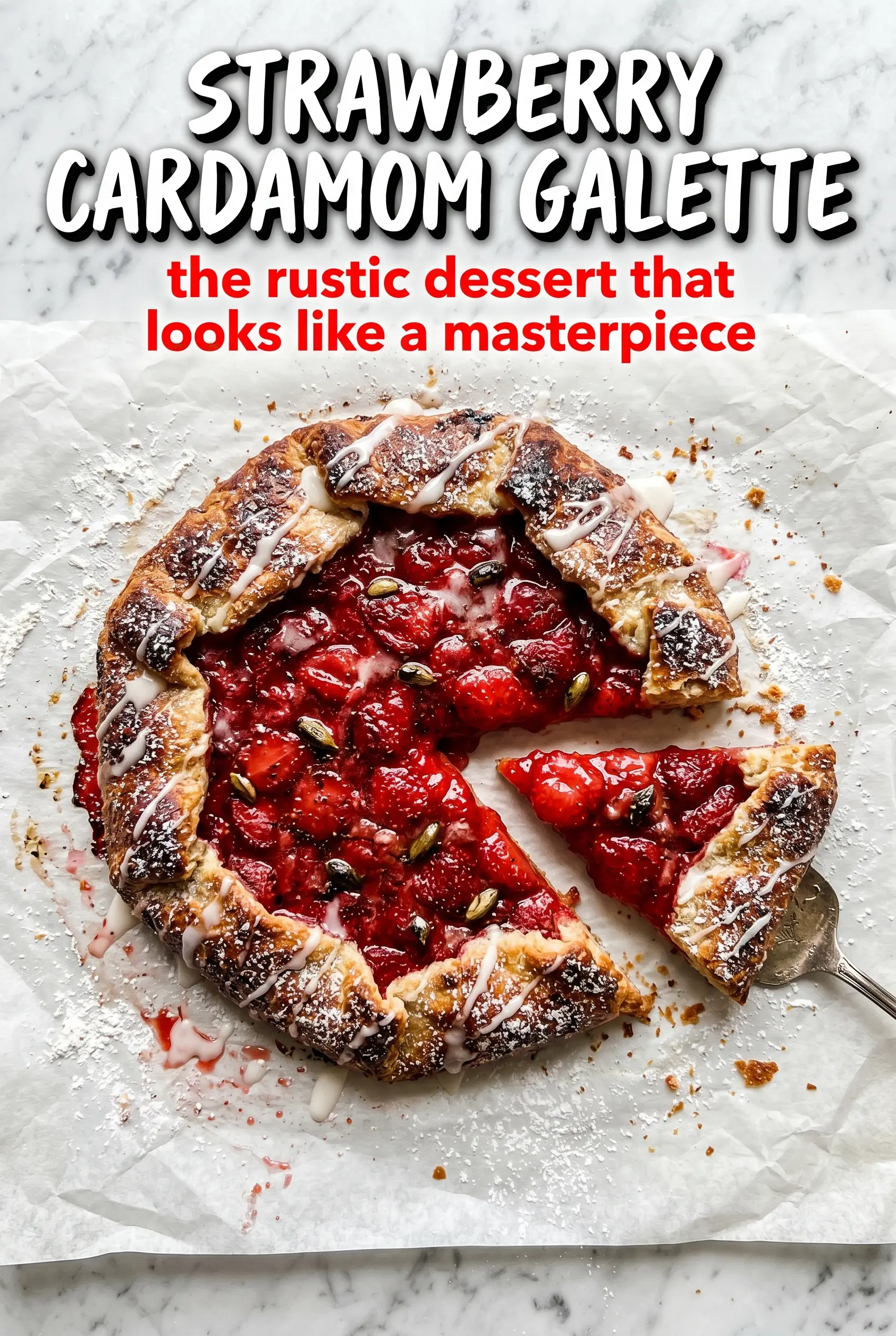
Strawberry Cardamom Galette
Ingredients
Equipment
Method
- Mix the all-purpose flour and salt in a mixing bowl. Add the cold butter cubes and cut until the mixture resembles coarse breadcrumbs, with visible butter bits throughout.
- Add ice water a little at a time, mixing between additions until the dough just comes together. Stop as soon as it forms and looks slightly shaggy, not wet.
- Shape the dough into a disk, wrap in plastic, and refrigerate for at least 30 minutes. Keep it chilled until firm enough to roll, around the 15-minute mark of this bake cycle you’ll do later.
- Toss the halved fresh strawberries with granulated sugar, ground cardamom, and cornstarch. Mix until the berries look evenly coated and the cornstarch has no dry pockets.
- Roll the chilled dough into a 12-inch circle on parchment paper. Keep the center thicker enough to hold filling, and aim for an even edge for clean folds.
- Arrange the strawberries in the center of the dough, leaving about a 2-inch border. Spread in an even layer so the filling bakes to bubbly consistency.
- Fold the dough edges up and over the strawberries to form a rustic shape. Leave the center exposed, with the folded seams gently standing up.
- Brush the folded crust with the beaten egg to promote browning. Bake at 400°F for 35 minutes, until the crust is golden and the filling is visibly bubbly.
- Cool the galette for 15 minutes after baking. Letting it rest firms the juices so slices hold together.
- Dust the cooled galette with powdered sugar right before serving. Serve warm or at room temperature for the best contrast between tender fruit and crisp edges.