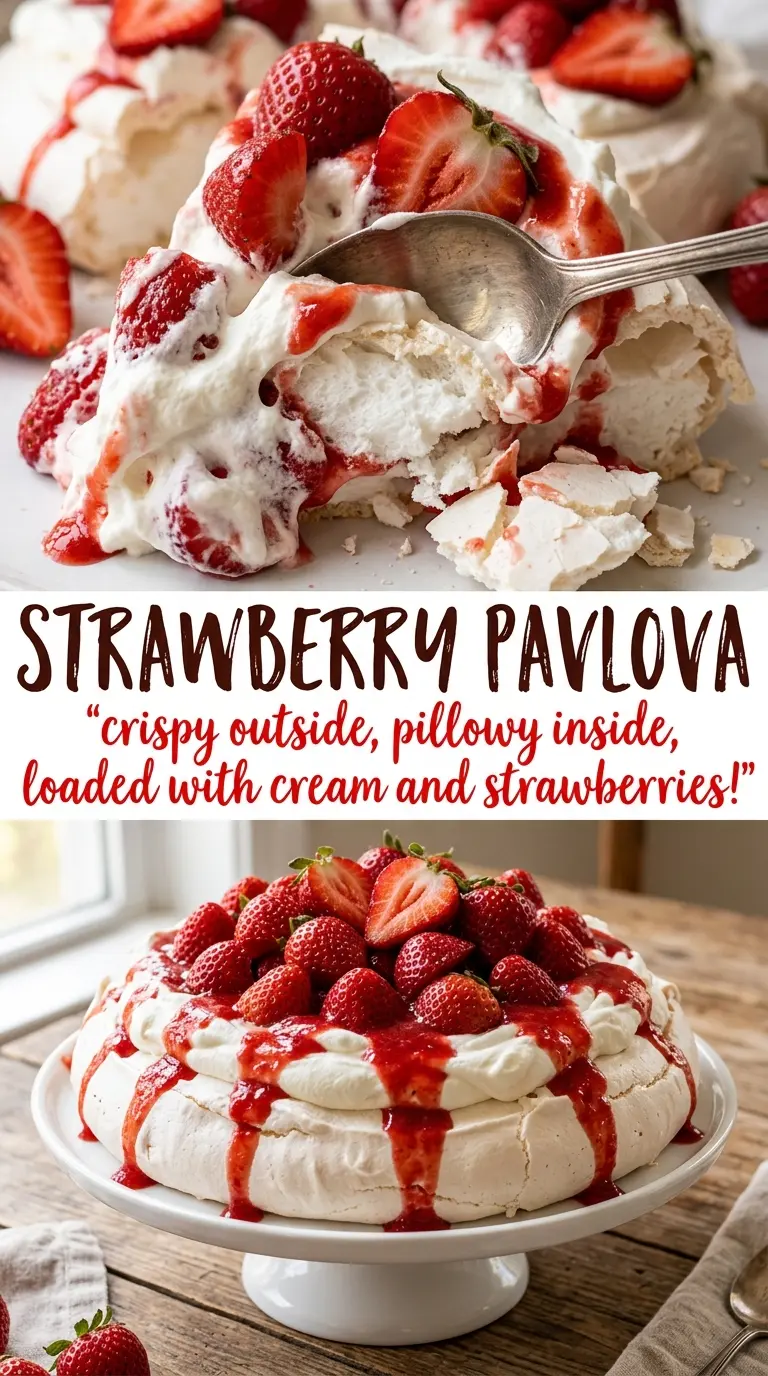
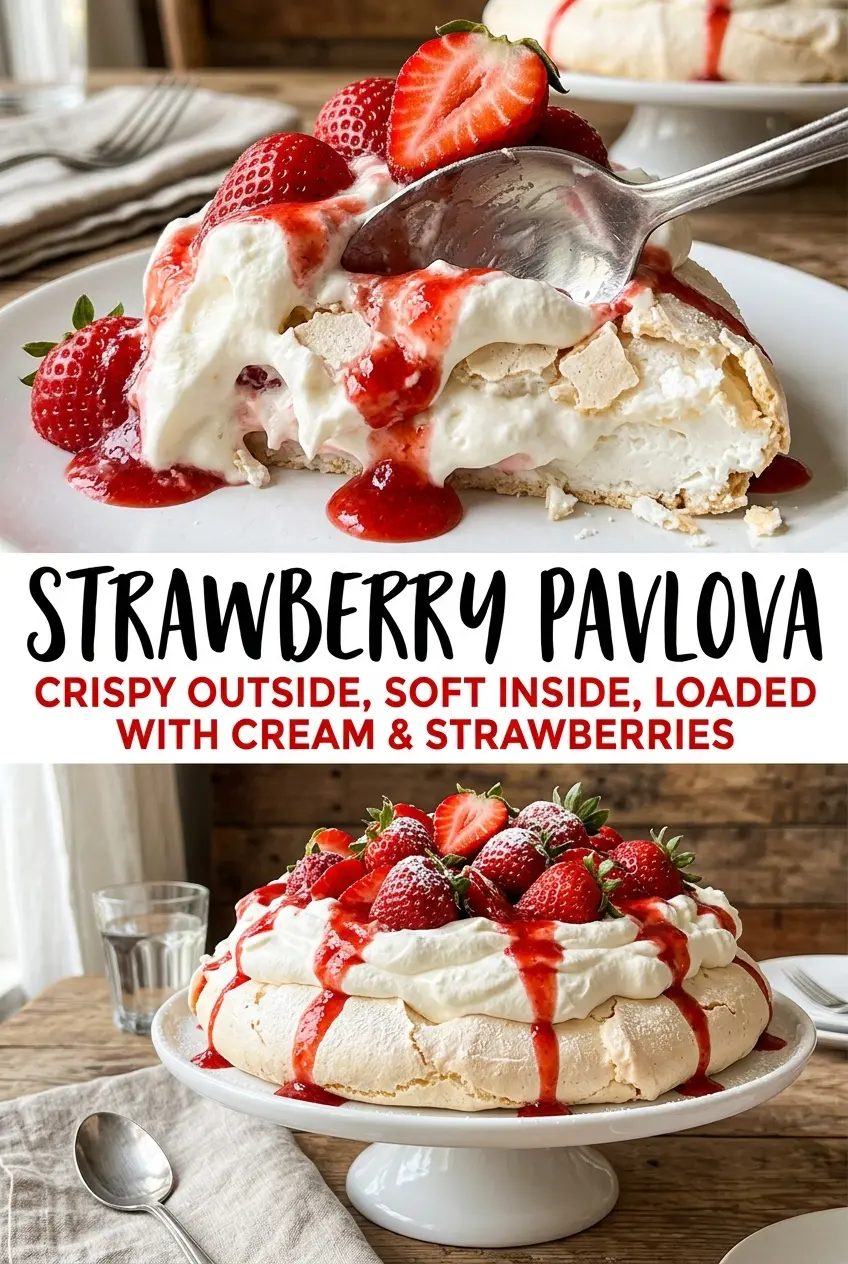
Strawberry pavlova is all about contrast: a crisp shell that cracks under the spoon, a marshmallow-soft center, and billows of cream finished with juicy strawberries. When it’s done right, each bite gives you crunch, cream, and fresh fruit in the same forkful, which is exactly why this dessert feels elegant without being fussy.
The part that makes pavlova work is the meringue itself. Superfine sugar dissolves more cleanly into the egg whites, which helps the shell bake up glossy instead of gritty, and the vinegar with cornstarch steadies the structure so the center stays tender. That slow oven cool-down matters too; if you rush it, the shell can collapse or turn sticky before it’s had time to set.
Below, I’ve laid out the small details that keep the meringue stable, plus the one timing rule that keeps the toppings fresh instead of soggy. The strawberries are best tossed just before serving, and that little bit of honey gives the fruit enough shine to look as good as it tastes.
The meringue baked up crisp on the outside and stayed soft in the middle, and the strawberries with honey gave it the perfect finish. I was nervous about the center collapsing, but it held beautifully once it cooled in the oven.
Save this Strawberry Pavlova for the dessert table when you want a crisp meringue shell, soft center, and fresh strawberry topping that looks as special as it tastes.
The Reason Strawberry Pavlova Stays Crisp Instead of Weeping
Pavlova falls apart for one of two reasons: the sugar never fully dissolves, or the meringue cools too fast and traps moisture on the surface. The first problem gives you a sandy texture. The second leaves you with a sticky shell that softens before you get it to the table. Superfine sugar helps because it melts into the whites faster, and beating to stiff, glossy peaks tells you the base is strong enough to hold its shape in the oven.
The vinegar and cornstarch are not decoration. They give the meringue a little flexibility, which is what creates that marshmallow center while the outside dries into a shell. If you spread it too thin, it bakes up fragile and dry; if you leave the center flat, you lose the soft middle that makes pavlova worth making in the first place.
What Each Ingredient Is Actually Doing In This Dessert
- Egg whites — Room-temperature whites whip to more volume and give you a more stable foam. Cold whites can still work, but they take longer to build structure, and that extra beating can make them dry or grainy.
- Superfine sugar — This is the ingredient that gives pavlova its smooth shell. Regular granulated sugar can work if you let it rain in slowly and keep beating until it disappears, but superfine sugar makes the process much easier and lowers the risk of grit.
- White vinegar — A small amount of acid tightens the foam and helps keep the center soft. Lemon juice can stand in if that’s what you have, but it brings a little more flavor, which changes the clean, neutral base pavlova is known for.
- Cornstarch — This is what protects the marshmallow-like middle. Without it, the shell tends to bake drier and the center loses that soft bite.
- Heavy whipping cream — Use real heavy cream here. Lighter cream won’t hold the same plush texture under the fruit, and it can loosen too fast once the strawberries go on top.
- Strawberries and honey — The honey draws out the berry juices just enough to make a glossy topping without turning them into syrup. Slice the berries evenly so the topping stays balanced and doesn’t slide off the pavlova.
Building The Meringue So It Holds Its Shape
Whipping The Egg Whites
Start with a clean, grease-free bowl and beat the egg whites until soft peaks form. At that point, the foam should look cloudy and hold a gentle curl, not collapse immediately. If any yolk sneaks in, the whites can still whip, but they’ll take longer and the final structure won’t be as steady.
Adding Sugar Without Breaking The Foam
Add the sugar gradually while the mixer runs, giving each addition time to dissolve before the next one goes in. The mixture should turn thick, shiny, and almost marshmallow-like. If it looks dull or gritty, keep beating; that grit is what causes a brittle shell and a meringue that cracks unevenly.
Shaping And Baking Low And Slow
Spread the meringue into an 8-inch circle with a slight dip in the center so the cream has a place to sit later. Bake until the outside is pale gold and crisp, then turn the oven off and leave it inside to cool. If you pull it out too soon, the sudden change in temperature can make the shell slump or split before it sets.
Make It Dairy-Free With Coconut Whip
Swap the whipped cream for chilled coconut cream whipped with powdered sugar and vanilla. It changes the finish a little, adding a faint coconut note, but it still gives you that soft, creamy layer against the crisp meringue.
Use Mixed Berries Instead Of Only Strawberries
Blueberries, raspberries, or blackberries work well here, especially if you toss them with a little honey to soften their sharp edges. The topping turns a little juicier and more colorful, though raspberries can weep faster, so add them just before serving.
Make Smaller Individual Pavlovas
Pipe or spoon the meringue into six smaller rounds instead of one large nest and reduce the baking time until the shells are crisp on the outside. Smaller pavlovas bake faster and are a little easier to serve cleanly, especially for a dinner party.
Storage And Assembly Timing
- Refrigerator: Store the baked meringue uncovered or in a very loosely covered container for up to 2 days. Once topped with cream and fruit, it should be served right away because the shell softens fast.
- Freezer: The unfilled meringue doesn’t freeze well; moisture is the enemy here and it tends to turn sticky after thawing.
- Assembly: Whip the cream and prep the strawberries ahead, but keep everything separate until the last minute. If you assemble too early, the fruit juices will soak into the meringue and erase the crisp edge.
Questions I Get Asked About This Recipe
Strawberry Pavlova
Ingredients
Equipment
Method
- Preheat oven to 300°F and line a sheet pan with parchment paper.
- Beat the egg whites until soft peaks form.
- Gradually add the superfine granulated sugar while beating until stiff, glossy peaks form.
- Fold in vanilla extract, white vinegar, and cornstarch.
- Spread the meringue onto the parchment in a circle about 8 inches across, making a slight indent in the center with the back of a spoon (visual cue: a shallow crater).
- Bake at 300°F for 60 minutes until pale golden and crisp.
- Turn off the oven and let the pavlova cool completely inside for about 30 minutes, leaving it undisturbed.
- Transfer the baked pavlova to a serving plate.
- Whip the heavy whipping cream with powdered sugar and vanilla extract until stiff peaks form (visual cue: peaks stand straight).
- Toss the fresh strawberries with honey.
- Top the pavlova with whipped cream, strawberries, and mint just before serving (visual cue: strawberries sit on top of the cream).