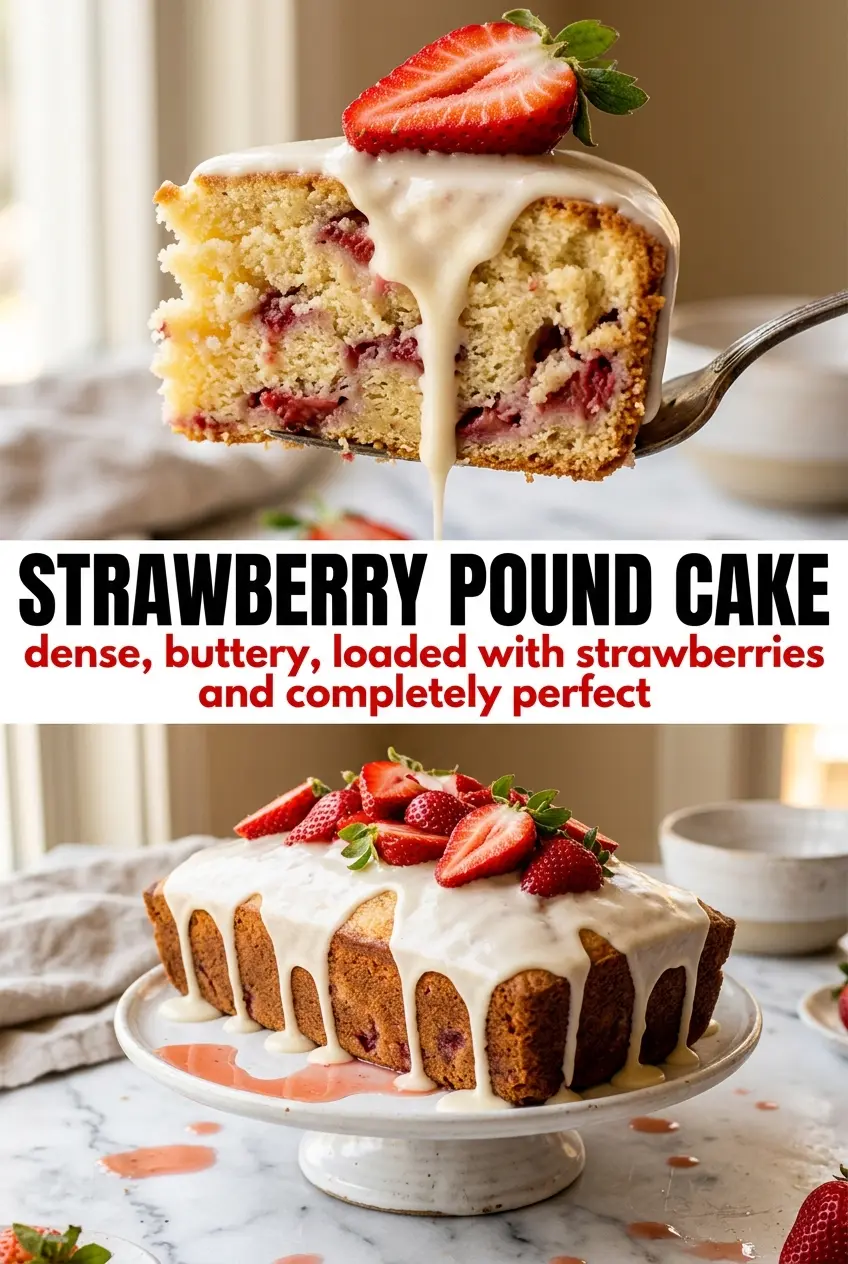
Strawberry pound cake should slice cleanly, hold its shape, and still taste like fresh strawberries all the way through. The crumb stays dense and tender instead of turning airy and cake-like, and the glaze gives each slice a bright finish that keeps the sweetness in check. When it’s done right, you get little pockets of strawberry in every bite without the cake turning wet or gummy.
The trick is balancing moisture. Fresh strawberry puree brings flavor, but too much fruit can make the batter loose and the center sink before the loaf sets. Sour cream helps keep the crumb plush without thinning the structure, and folding in the diced strawberries at the end keeps them from staining the whole batter pink or dropping to the bottom. The oven temperature matters too; pound cake needs steady heat so the outside doesn’t brown before the middle catches up.
Below, I’m walking through the one step that keeps the crumb tight, the ingredient choices that matter most, and the small adjustment that makes the glaze taste fresh instead of just sweet.
The cake baked up with a tight, buttery crumb and the strawberry pieces stayed where they belonged instead of sinking. The lemon glaze was the perfect finish and the slices held together beautifully.
Save this strawberry pound cake for the day you want a dense, buttery loaf with fresh berry ribbons and a lemon glaze.
The Part That Keeps the Strawberries from Ruining the Crumb
Pound cake fails when the fruit gets too heavy for the batter. Fresh strawberry puree adds flavor, but it also adds water, and that extra moisture can make the center turn dense in the wrong way or leave a tunnel near the top. The fix is the structure from the butter, sugar, eggs, and flour doing most of the work while the puree plays a supporting role, not the lead.
That’s why the batter gets built in stages. Creaming the butter and sugar long enough traps air, and adding the eggs one at a time keeps the emulsion stable instead of greasy. When the flour and sour cream mixture goes in alternately, the batter stays thick enough to hold the diced strawberries instead of letting them sink straight to the bottom.
- Beating the butter and sugar properly gives the cake its lift. If that mixture still looks dense and slick, the loaf will bake up heavy.
- Strawberry puree is there for flavor, not volume. Use fresh puree, but don’t add extra unless you’re ready to adjust the flour and risk a looser crumb.
- Sour cream brings tenderness without thinning the batter as much as milk would. Full-fat sour cream works best here.
- Diced strawberries need to be folded in gently at the end so they stay suspended and don’t break down into streaks.
What Each Ingredient Is Actually Doing in This Cake
- Butter gives the pound cake its rich, tight crumb and that classic sliceable texture. It needs to be softened, not melted, so it can hold air when beaten with the sugar.
- All-purpose flour gives enough structure without making the loaf tough. Cake flour would make it softer, but not as sturdy for the strawberries.
- Sour cream is the ingredient that keeps the cake tender after the berries go in. If you don’t have it, full-fat Greek yogurt is the best swap, though the crumb will be a touch tangier.
- Fresh strawberry puree carries the strawberry flavor through the whole loaf. Frozen berries can be used for the puree if you cook them down first and cool them completely before mixing.
- Diced fresh strawberries add the juicy pockets you want in the finished slices. Pat them dry before folding them in so they don’t bleed excess moisture into the batter.
- Lemon juice in the glaze keeps the finish bright. It cuts through the sweetness and makes the strawberry flavor taste fresher.
Building the Loaf So It Bakes Up Evenly
Creaming the Butter and Sugar
Beat the softened butter and sugar until the mixture looks pale and fluffy, not grainy and heavy. Three minutes is a better guide than the clock alone if your mixer runs slower or faster. This step creates the structure that lets a pound cake rise without needing a lot of leavening, so stopping too soon leaves you with a compact, greasy loaf.
Adding the Eggs Without Breaking the Batter
Add the eggs one at a time and beat well after each addition. The batter should look smooth before the next egg goes in. If it looks curdled, keep mixing; it usually comes back together once the flour starts going in. Dumping all the eggs in at once can split the batter and make the finished cake uneven.
Alternating the Dry and Wet Ingredients
Start and end with the flour mixture so the batter stays stable and the butter stays suspended. Add the sour cream and strawberry puree in small additions instead of all at once, and mix only until the flour disappears. Overmixing at this point tightens the crumb and beats out the air you just worked to build.
Folding in the Strawberries and Baking Through
Fold the diced strawberries in by hand so they stay intact. Pour the batter into the loaf pan and bake until a toothpick comes out clean from the center and the top feels set with a slight spring. If the top browns before the middle is done, tent it loosely with foil for the last stretch of baking.
Glazing Only After the Cake Cools
Let the loaf cool completely before adding the glaze. If the cake is even a little warm, the glaze melts and disappears instead of sitting on top in a clean drizzle. Whisk the powdered sugar with lemon juice and water until it falls in a ribbon, then spoon it over the cake and finish with fresh berries.
How to Adapt This Strawberry Pound Cake Without Losing the Texture
Make It Gluten-Free
Use a cup-for-cup gluten-free flour blend that includes xanthan gum. The cake will still slice well, though the crumb will be a little more delicate and less springy than the original. Don’t swap in almond flour here; it won’t give the loaf the structure it needs.
Make It Dairy-Free
Use a good plant-based butter with a neutral flavor and swap the sour cream for an unsweetened dairy-free yogurt with some body. The texture will be a touch softer, but the loaf will still hold together and the strawberries will shine. Choose a butter replacement that’s meant for baking, not a soft spread.
Use Frozen Strawberries for the Puree
Cook the frozen strawberries down until they’re thick and concentrated, then cool the puree completely before adding it. This keeps the batter from getting watery and helps the loaf bake through in the center. Frozen berries are fine here as long as you don’t pour in thawed juice.
Storage and Reheating
- Refrigerator: Store covered for up to 4 days. The crumb firms up a little in the fridge, but the flavor stays good.
- Freezer: Freeze the cooled, unglazed loaf or individual slices tightly wrapped for up to 2 months. Add the glaze after thawing for the cleanest finish.
- Reheating: Warm slices briefly at room temperature or for a few seconds in the microwave. Long reheating dries pound cake out fast, so stop as soon as the slice loses its chill.
Questions I Get Asked About This Recipe
Strawberry Pound Cake
Ingredients
Equipment
Method
- Preheat oven to 325°F, then grease a 9x5 inch loaf pan. Set the pan on a sheet pan for easy handling and transfer.
- Whisk together all-purpose flour, baking powder, and salt in a bowl. Mix until evenly combined with no visible streaks of baking powder.
- Beat butter and granulated sugar until light and fluffy, about 3 minutes. Scrape the bowl to keep the texture uniform before moving on.
- Add eggs one at a time, beating well after each addition. Continue until the batter looks smooth and glossy.
- Alternate adding the flour mixture and the sour cream mixed with fresh strawberry puree, beginning and ending with flour. Stop mixing as soon as the dry flour disappears for a tender crumb.
- Stir in vanilla extract and gently fold in diced fresh strawberries. Keep the strawberry pieces intact so you get visible fruit throughout the loaf.
- Pour batter into the prepared loaf pan and spread it level. Bake at 325°F for 50-55 minutes, until a toothpick comes out clean.
- Cool the cake in the pan for 15 minutes. It should firm up slightly before you release it.
- Turn the cake out onto a wire rack to cool completely. Let it reach room temperature before glazing so the glaze stays thick and bright.
- Whisk powdered sugar with fresh lemon juice and water to create a glaze. Drizzle the glaze over the cooled cake in a light, even ribbon.
- Garnish with fresh strawberries. Slice and serve after the glaze sets slightly.