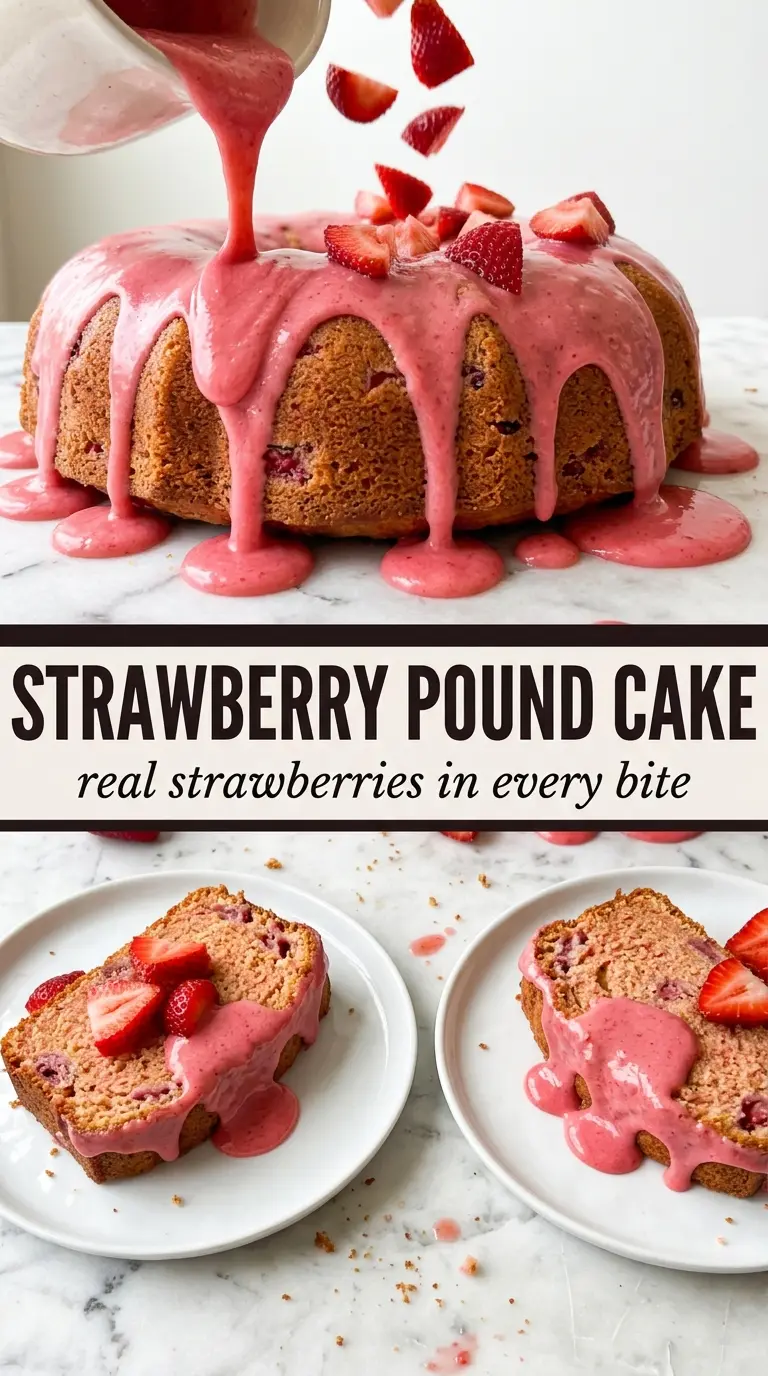
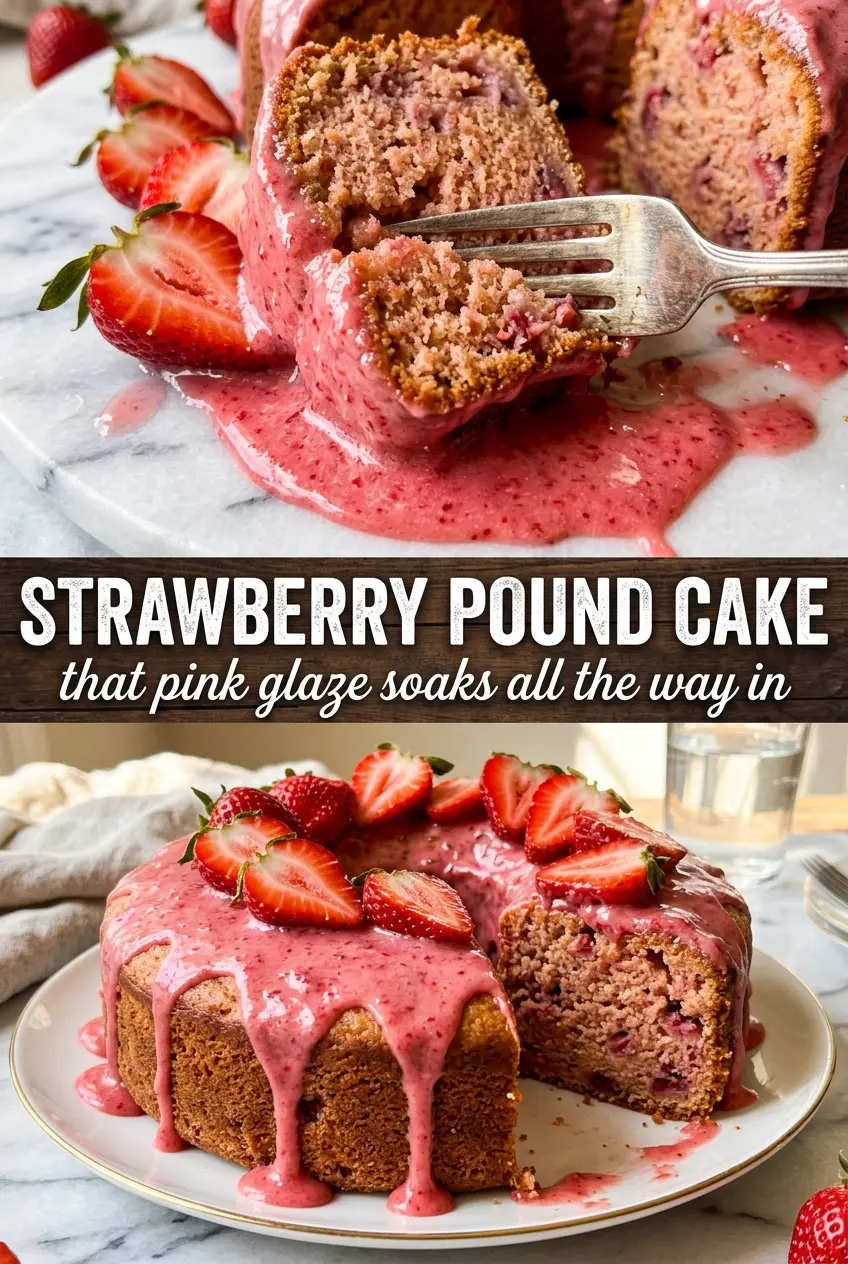
Strawberry pound cake lands somewhere between a classic butter cake and a berry-studded loaf, with a dense, tender crumb that slices cleanly and stays moist for days. The strawberries don’t get lost here; when they’re diced small and patted dry, they show up as little bursts of fruit instead of turning the batter soggy. That pink glaze on top seals the deal, giving each slice a bright finish that tastes like fresh berries instead of candy.
The texture comes from the old-school pound cake method: plenty of butter, a good amount of sugar whipped until pale, and eggs added one at a time so the batter stays smooth and plush. Sour cream keeps the crumb soft without making it loose, and the strawberry extract carries the berry flavor through the whole cake so you don’t end up depending on the fruit alone. Fresh strawberries add the real fruit character, but they need to be dry before they go in or they’ll sink and streak the batter.
Below, I’m walking through the small details that matter most: how to keep the berries from watering down the batter, why the glaze should wait until the cake is completely cool, and a few variations that still keep the cake’s structure intact.
The crumb stayed tight and moist, and the strawberries didn’t sink like they usually do in my pound cakes. I also loved that the glaze set up enough to slice cleanly after about 20 minutes.
Love the moist crumb and pink strawberry glaze? Save this Strawberry Pound Cake for the next time you want a bakery-style Bundt without a fussy frosting.
The Trick to Keeping Strawberry Pound Cake Dense Without Becoming Heavy
Pound cake should feel substantial, but it shouldn’t eat like a brick. The line between the two is all in how much air you build at the start and how gently you finish the batter. If the butter and sugar aren’t beaten until light and fluffy, the cake will bake up tight and a little dull. If you overmix after the flour goes in, the crumb turns tough before it ever reaches the oven.
The other place people lose the texture is the fruit. Strawberries carry a lot of moisture, and that extra liquid can make the middle gummy if the pieces are too large or still wet from washing. Small dice and a dry towel solve most of that problem. You want the berries folded through at the end, just until they’re distributed, so they stay suspended instead of bleeding into the batter.
What the Butter, Sour Cream, and Strawberry Extract Are Doing Here
- Butter — This is the flavor base and the reason the cake has that rich, close crumb pound cake is known for. Softened butter creams properly; melted butter won’t trap air and the cake will bake up denser.
- Sour cream — This keeps the crumb tender and adds enough acidity to balance the sweetness. Full-fat sour cream gives the best texture, but plain full-fat Greek yogurt works in a pinch if that’s what you have.
- Strawberry extract — Fresh berries give you fruit, but the extract makes the strawberry flavor carry through every bite. Don’t skip it unless you’re okay with a much subtler berry note.
- Fresh strawberries — Dice them small and pat them dry before folding them in. Large pieces sink more easily, and wet berries can create pockets of steam that leave the cake gummy.
- Strawberry juice or puree in the glaze — This gives the glaze its color and keeps it tasting like actual berries instead of just sweet icing. If your puree is thick, whisk in a few drops more at a time so the glaze stays pourable.
Building the Batter and Baking the Bundt the Right Way
Start With a Properly Prepared Pan
Grease every ridge of the Bundt pan, then dust it with flour so nothing sticks in the curves. Strawberry pound cake is too pretty to leave half behind in the pan, and a thin, missed spot can tear the whole cake when you invert it. Tap out the excess flour so you don’t end up with a dusty exterior.
Cream the Butter and Sugar Until It Looks Pale
Beat the butter and sugar until the mixture turns noticeably lighter in color and looks fluffy rather than grainy. That step traps air, which gives the cake its lift. If the mixture still looks dense and sandy, keep beating; under-creamed butter is one of the main reasons pound cakes turn out compact.
Alternate the Flour and Sour Cream
Add the dry ingredients and sour cream in alternating additions so the batter stays smooth and emulsified. Start and end with flour, and mix only until the last streak disappears. If you dump everything in at once, the batter can curdle or overwork, and the crumb won’t stay tender.
Fold in the Strawberries and Bake Until Set
Stir in the diced strawberries by hand so they stay intact and don’t break down into the batter. Spoon the batter into the pan, level the top, and bake until a toothpick comes out clean from the thickest part. The cake should spring back lightly when touched, and the edges will pull just slightly from the pan. Let it rest in the pan for 15 minutes before inverting so it releases cleanly without collapsing.
Glaze Only After the Cake Cools
Whisk the glaze until smooth, then wait until the cake is fully cool before pouring it on. If the cake is warm, the glaze slides right off and disappears into the crust instead of setting into those glossy drips. Once the glaze is on, give it a few minutes to thicken before slicing.
How to Adapt This Cake Without Losing Its Structure
Make It Gluten-Free
Use a 1:1 gluten-free baking flour that includes xanthan gum. The cake will still be tender, but it may be a touch more delicate when you slice it, so let it cool completely before cutting.
Swap the Sour Cream for Greek Yogurt
Full-fat plain Greek yogurt works well here and keeps the same tangy richness. The crumb may bake up a little firmer, but the cake still stays moist and slices neatly.
Use Frozen Strawberries in a Pinch
Thaw them completely, drain them well, and pat them dry before dicing. Frozen berries tend to soften more than fresh ones, so the cake can turn a little more streaked, but it still works if fresh strawberries aren’t in season.
Storage and Reheating
- Refrigerator: Store covered for up to 5 days. The crumb stays moist, but the glaze softens a bit after the first day.
- Freezer: Freeze individual slices tightly wrapped for up to 2 months. The glazed top can dull slightly after thawing, but the cake itself freezes well.
- Reheating: Thaw at room temperature, then warm a slice briefly in the microwave for 10 to 15 seconds if you want it softer. Don’t heat it too long or the strawberries can turn mushy.
Questions I Get Asked About This Recipe
Strawberry Pound Cake
Ingredients
Equipment
Method
- Preheat the oven to 325°F, then generously grease and flour a Bundt pan so the dense crumb releases cleanly after baking.
- Beat the butter and granulated sugar until very light and fluffy, then add the eggs one at a time and mix just until smooth.
- Whisk together the all-purpose flour, baking soda, and salt, then alternately mix in the dry ingredients and sour cream until no dry streaks remain.
- Stir in the vanilla extract and strawberry extract, then fold in the diced fresh strawberries just until evenly distributed.
- Pour the batter into the prepared Bundt pan and bake for 60-70 minutes at 325°F, until a toothpick comes out clean; the cake should look set and lightly golden.
- Cool the cake in the pan for 15 minutes, then invert onto a plate so it releases while still warm.
- Whisk the powdered sugar, fresh strawberry juice or puree, and lemon juice until smooth to create a vivid pink glaze.
- Pour the glaze over the completely cooled cake, letting it drip dramatically down the Bundt ridges.
- Let the glaze set before slicing, then garnish with fresh strawberries for a fresh, bright finish.