Strawberry slab pie is the kind of dessert that disappears fast because it hits all the right notes at once: flaky crust, juicy berry filling, and enough surface area for every slice to get a good bite of pastry. The lattice top bakes into crisp, golden strips that keep the filling visible, so you get that old-fashioned pie look without needing perfect crimping or a deep dish pan.
What makes this version work is the balance inside the filling. Fresh strawberries bring brightness, but they also release a lot of juice, so cornstarch does the heavy lifting and keeps the filling from running across the pan. Lemon juice sharpens the sweetness, and a little vanilla plus cinnamon gives the berries more depth without pushing the pie into jam territory. The crust bakes directly on a sheet pan, which means more room, more slices, and faster baking than a traditional round pie.
Below, you’ll find the details that matter most: how to keep the bottom crust from turning soggy, how to cut the lattice so it stays manageable, and the small adjustments that help this dessert hold together cleanly once it cools.
The filling set up beautifully after cooling, and the lattice stayed crisp instead of getting soggy even on the second day. I used the full 30 minutes of rest and the slices came out clean.
Save this strawberry slab pie for the berry desserts that need clean slices, a crisp lattice top, and enough servings for a crowd.
The Secret to a Slab Pie That Slices Cleanly
The biggest mistake with slab pie is treating it like a giant fruit salad under pastry. Strawberries need structure, and they need it before they hit the oven. Cornstarch has to be mixed evenly through the berries so the juices thicken as they bake instead of pooling under the crust and turning the center soft.
The second part is patience. This pie looks ready when the crust turns deep gold and the filling bubbles at the edges, but the juices keep moving after it comes out of the oven. That 30-minute rest is what lets the filling set enough for neat squares instead of a syrupy mess.
- Overlapping crusts — A half-sheet pan needs more than one crust sheet, and the seams matter. Press them firmly together so the bottom bakes as one layer instead of separating when you cut the pie.
- Bubble cue — Don’t pull it early just because the top looks browned. The filling should bubble at the edges, which tells you the starch has activated and the pie will thicken properly as it cools.
- Cooling time — Cutting too soon is the fastest way to lose the filling. Let it rest on a wire rack so air can move underneath and keep the bottom crust from steaming.
What Each Ingredient Is Actually Doing in This Pie
- Fresh strawberries — Four pounds looks like a lot, but that volume is what gives slab pie its full, generous filling. Fresh berries hold their shape better than frozen ones, which release more liquid and can make the pie watery unless you add extra thickener.
- Cornstarch — This is the ingredient that keeps the filling sliceable. Flour won’t thicken as cleanly here, and tapioca gives a different texture, so cornstarch is the best choice for a glossy filling that sets once cooled.
- Lemon juice — It sharpens the strawberries and keeps the filling from tasting flat. Bottled lemon juice works in a pinch, but fresh juice gives a cleaner finish.
- Pie crusts — Store-bought refrigerated crusts are the easiest route because they roll out quickly and stay tender. Homemade crust works too, but it should be chilled and rolled thin enough to cover the full sheet pan without turning thick and bready.
- Coarse sugar — The sugar on top adds crunch and makes the lattice sparkle once baked. Regular granulated sugar won’t give the same texture, so keep the coarse sugar if you want that bakery-style finish.
Building the Filling and Baking the Crust Evenly
Preparing the Pan and Bottom Crust
Line the half-sheet pan with the bottom crust and press the seams together with your fingertips so there are no gaps along the edges or in the middle. A sealed base matters because strawberry juices will find every weak spot. Trim any overhang that hangs too far down the sides, since that can bake into thick, doughy folds instead of crisp edges.
Mixing the Strawberry Filling
Stir the strawberries with sugar, cornstarch, lemon juice, vanilla, and cinnamon until every slice looks lightly coated and the cornstarch disappears. If you see dry pockets of starch, those spots can turn pasty in the oven. Spread the filling evenly so the pie bakes at the same rate from corner to corner.
Cutting and Laying the Lattice
Cut the top crust into strips that are wide enough to handle without tearing. Lay half in one direction, then weave the rest over and under to form the lattice. If the dough warms up and starts stretching, chill it for a few minutes before finishing the pattern so the strips keep their shape in the oven.
Baking Until the Filling Bubbles
Brush the top with egg wash and scatter on the coarse sugar, then bake until the crust is deeply golden and the filling is bubbling at the edges. The bubbling matters more than the timer. If the crust browns too fast before the filling moves, lay a loose piece of foil over the top for the last few minutes so the center has time to finish.
Three Ways to Change the Pie Without Losing the Point
Use frozen strawberries when fresh aren’t available
Thaw them first and drain off excess liquid before mixing the filling. Frozen berries soften more than fresh ones, so the pie will taste a little softer and less distinct in texture, but the flavor still works if you keep the cornstarch in place and don’t skip the cooling time.
Make it dairy-free without changing the result
This pie is already dairy-free if you use a crust that doesn’t contain butter. Check the label on refrigerated crusts, because some brands use dairy and some don’t. The filling itself doesn’t need any swaps, so this is an easy one to adapt without losing texture.
Swap the lattice for a full top crust
If weaving strips feels fussy, cover the filling with a solid top crust and cut a few vents for steam. You’ll lose the crisp lattice texture and the visible berry filling, but the pie will still bake well and slices will hold together just the same.
Add a little extra spice for a warmer finish
A small pinch of cardamom or nutmeg can replace the cinnamon if you want a more aromatic pie. Keep the amount light, because strawberries need support, not competition.
Storage and Reheating
- Refrigerator: Store covered for up to 4 days. The crust softens a little over time, but the filling stays nicely set.
- Freezer: Freeze baked squares tightly wrapped for up to 2 months. Thaw overnight in the refrigerator before serving so the pastry doesn’t turn soggy.
- Reheating: Warm slices in a 325°F oven for 8 to 10 minutes. The oven brings back the crust better than the microwave, which makes the pastry limp and can loosen the filling.
Questions I Get Asked About This Recipe
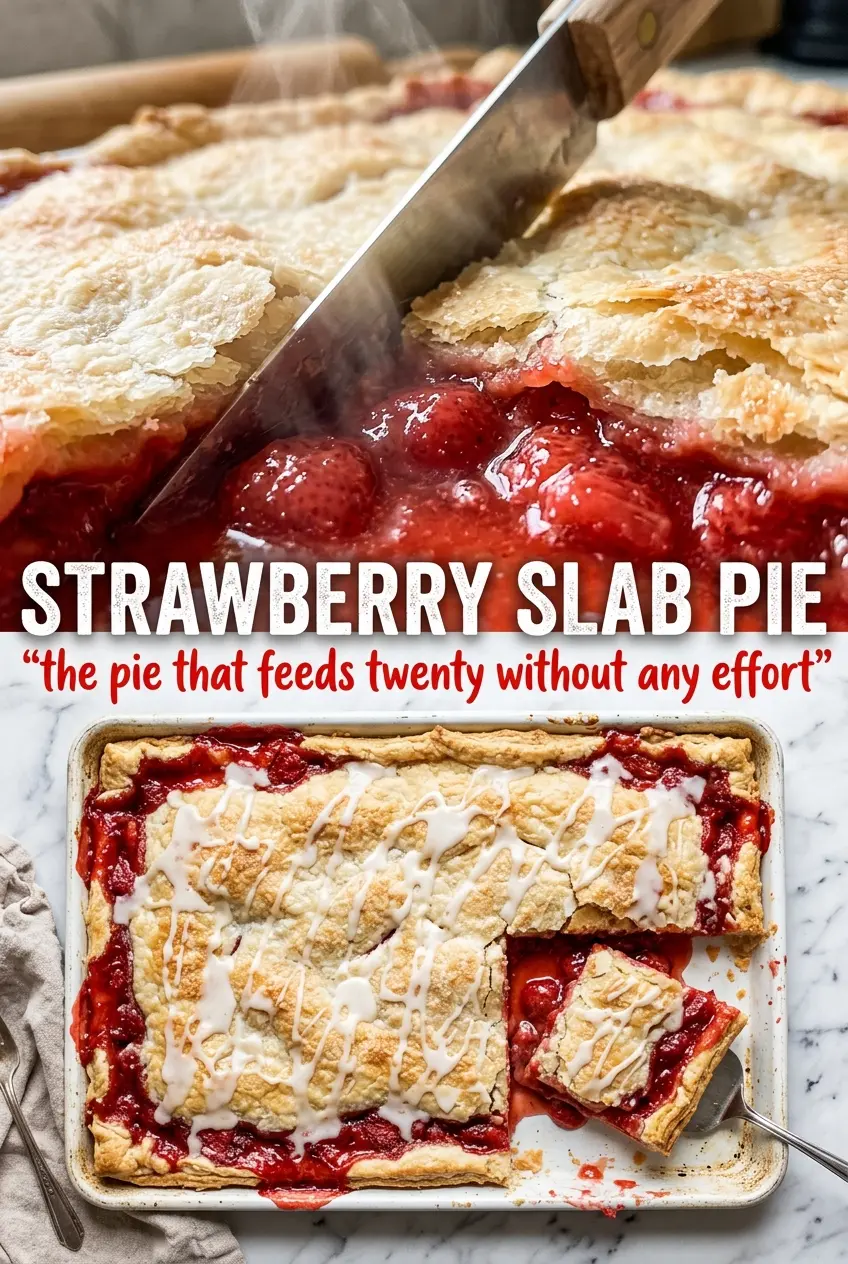
Strawberry Slab Pie
Ingredients
Equipment
Method
- Preheat the oven to 375°F. Use a half-sheet pan (13x18 inches) and set it up for baking.
- Unroll the pie crusts and fit them into the half-sheet pan (13x18 inches), overlapping as needed and pressing to seal. Make sure the pastry reaches the corners and is smooth where seams meet.
- Mix strawberries, granulated sugar, cornstarch, lemon juice, vanilla extract, and cinnamon together until evenly coated. Let it sit briefly while you prep the lattice strips so the juices start to thicken.
- Spread the strawberry filling evenly over the crust in an even layer. Spread to the edges without leaving big dry gaps.
- Unroll the second batch of pie crusts and cut into strips. Arrange the strips into a lattice pattern over the filling.
- Whisk together the egg and water, then brush over the pastry lattice. Sprinkle coarse sugar over the top for crunch.
- Bake at 375°F for 30-35 minutes until the crust is golden and the filling is bubbly at the edges. Rotate the pan halfway through if your oven browns unevenly.
- Cool the slab pie on a wire rack for 30 minutes before cutting. This rest helps the strawberry juices thicken so slices hold their shape.