Golden chicken breasts tucked into a bright tomato basil skillet sauce hit that sweet spot between weeknight simple and company-worthy. The chicken stays juicy, the cherry tomatoes collapse into their own glossy sauce, and the basil comes in at the end with enough freshness to keep every bite lively instead of heavy. It’s the kind of dish that looks like you worked harder than you did, which is always a good place to be on a busy night.
This version works because the chicken gets a real sear before anything else touches the pan. That browned surface gives the sauce depth, and the same skillet picks up all those browned bits when the garlic, tomatoes, wine, and balsamic go in. The tomatoes cook just long enough to burst but not so long that they turn dull or jammy, and the basil is added off the heat so it keeps its clean, peppery edge.
Below you’ll find the part that matters most: how to keep the chicken from drying out while the sauce finishes around it, plus the small ingredient choices that make the whole pan taste polished.
The tomatoes burst into the prettiest sauce and the basil stayed bright instead of turning muddy. I only had chicken broth, and it still came out with that glossy finish and tons of flavor.
Like this tomato basil chicken breasts recipe? Save it to Pinterest for the nights when you want a glossy skillet dinner with juicy chicken and burst tomatoes.
The Sear That Keeps the Chicken Juicy While the Tomatoes Turn Into Sauce
Chicken breasts dry out fastest when they go straight into a sauce and stay there too long. Here, the skillet does double duty: first it builds a browned crust on the chicken, then it turns those browned bits into the base of the tomato sauce. That’s what gives the dish depth without needing a long simmer.
The chicken only goes back into the pan at the end for a short finish. That last two minutes warms it through and lets the juices mingle with the sauce without pushing the meat past tender. If your breasts are very thick, pound them to even thickness first so the outside doesn’t overcook before the center is done.
What Each Ingredient Is Actually Doing in This Skillet
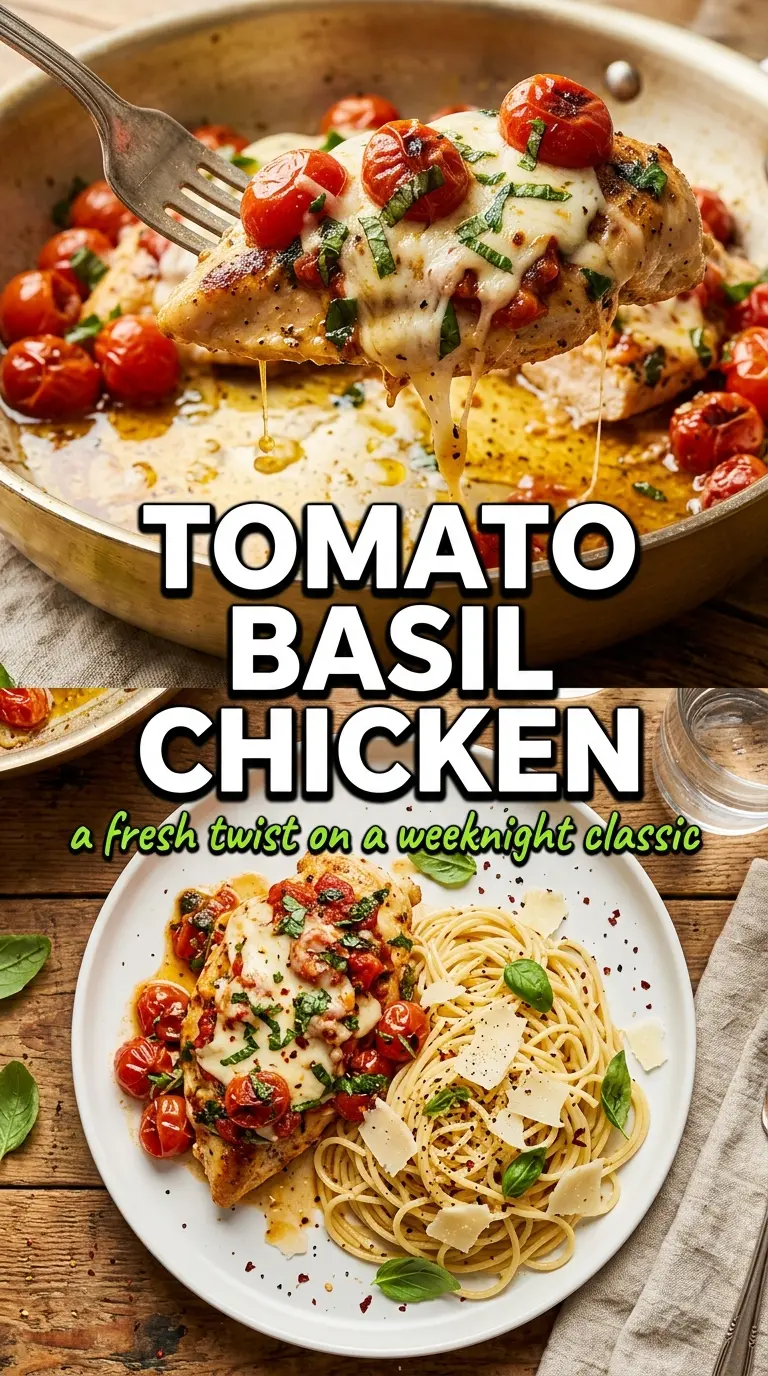
- Chicken breasts — Boneless, skinless breasts keep this fast and lean, but they need even thickness more than anything. If one end is much thicker, flatten it lightly so the whole piece finishes at the same time. That’s the difference between juicy chicken and dry edges.
- Cherry tomatoes — These are worth using because they burst into a sauce with both sweetness and acidity. Larger tomatoes can work, but they usually need longer cooking and release more water before they get glossy. Halve them so they collapse quickly in the pan.
- White wine or chicken broth — Wine gives the sauce a brighter, slightly sharper finish, while broth keeps it rounder and a little softer. If you use broth, add an extra small splash of balsamic at the end to replace some of the lift that wine would have brought.
- Fresh basil — Fresh basil is not just garnish here; it changes the whole dish by cutting through the richness of the pan sauce. Add it at the end so it stays fragrant and green. Dried basil won’t give you the same effect.
- Balsamic vinegar — This is the ingredient that makes the tomatoes taste fuller and a little more complex. Use just enough to deepen the sauce, not enough to make it sweet. If your tomatoes are very ripe, you can use a touch less.
- Parmesan — The shaved Parmesan adds salt and a little nutty finish over the top. Grated Parmesan melts in more quickly, but shaved gives you little pockets of flavor and a nicer look on the plate.
How to Build the Sauce So It Stays Bright, Not Watery
Seasoning the Chicken First
Season the chicken generously before it goes into the pan. Salt, pepper, garlic powder, and Italian seasoning all belong on the meat itself, not just in the sauce, because that’s how you get flavor all the way through. If the chicken is still damp from packaging, pat it dry first or it will steam instead of sear.
Getting the Golden Sear
Heat the olive oil until it shimmers, then lay the chicken in and leave it alone long enough for a crust to form. If you move it too soon, the surface will stick and tear. The chicken is ready to turn when it releases more easily from the pan and has a deep golden color, not pale patches.
Letting the Tomatoes Burst
Once the garlic has had a quick 30 seconds, add the tomatoes and let them cook until the skins split and the flesh softens into juices. Don’t rush this by cranking the heat, because garlic burns fast and bitter garlic will take over the sauce. You want the tomatoes to soften, collapse, and leave the pan looking glossy, not dry.
Finishing Without Overcooking
When the wine has bubbled and the balsamic is in, return the chicken and spoon the sauce over the top. The last simmer should be short; the chicken is already cooked, and this stage is about warming it through and coating it with sauce. Basil and Parmesan go on at the end so their flavors stay fresh and sharp.
How to Adapt This for Different Kitchens and Different Eaters
Dairy-Free Tomato Basil Chicken
Leave off the Parmesan and finish with a little extra olive oil and a pinch more salt. You’ll lose the salty, nutty top note, but the sauce stays lively and the basil still carries the dish. A spoonful of chopped olives on top can replace some of that savory finish if you want more depth.
Using Chicken Thighs Instead of Breasts
Boneless thighs work well and stay extra juicy, but they usually need a few more minutes in the pan. They also bring a richer flavor, so the sauce tastes a little deeper and less lean. Keep the same method, then cook until the center reaches 165°F.
Gluten-Free Dinner Plate
This recipe is naturally gluten-free as written as long as your broth is certified gluten-free. That makes it an easy skillet dinner to serve with rice, mashed potatoes, or roasted vegetables without changing the cooking method at all.
What to Do When Fresh Tomatoes Aren’t at Their Best
If your cherry tomatoes are pale or bland, add an extra teaspoon of balsamic and a pinch of sugar to wake up the sauce. You don’t need much. The goal is to round out the tomatoes, not make the dish taste sweet.
Storage and Reheating
- Refrigerator: Store leftovers in an airtight container for up to 3 days. The sauce thickens as it chills, and the basil will darken a bit, but the flavor holds up well.
- Freezer: Freeze the chicken and sauce together for up to 2 months. The tomatoes will soften more after thawing, but the dish still reheats well if you want an easy make-ahead dinner.
- Reheating: Warm gently in a covered skillet over low heat with a splash of broth or water. High heat can tighten the chicken and make the sauce look oily, so keep the heat low and stop as soon as everything is hot.
Questions I Get Asked About This Recipe
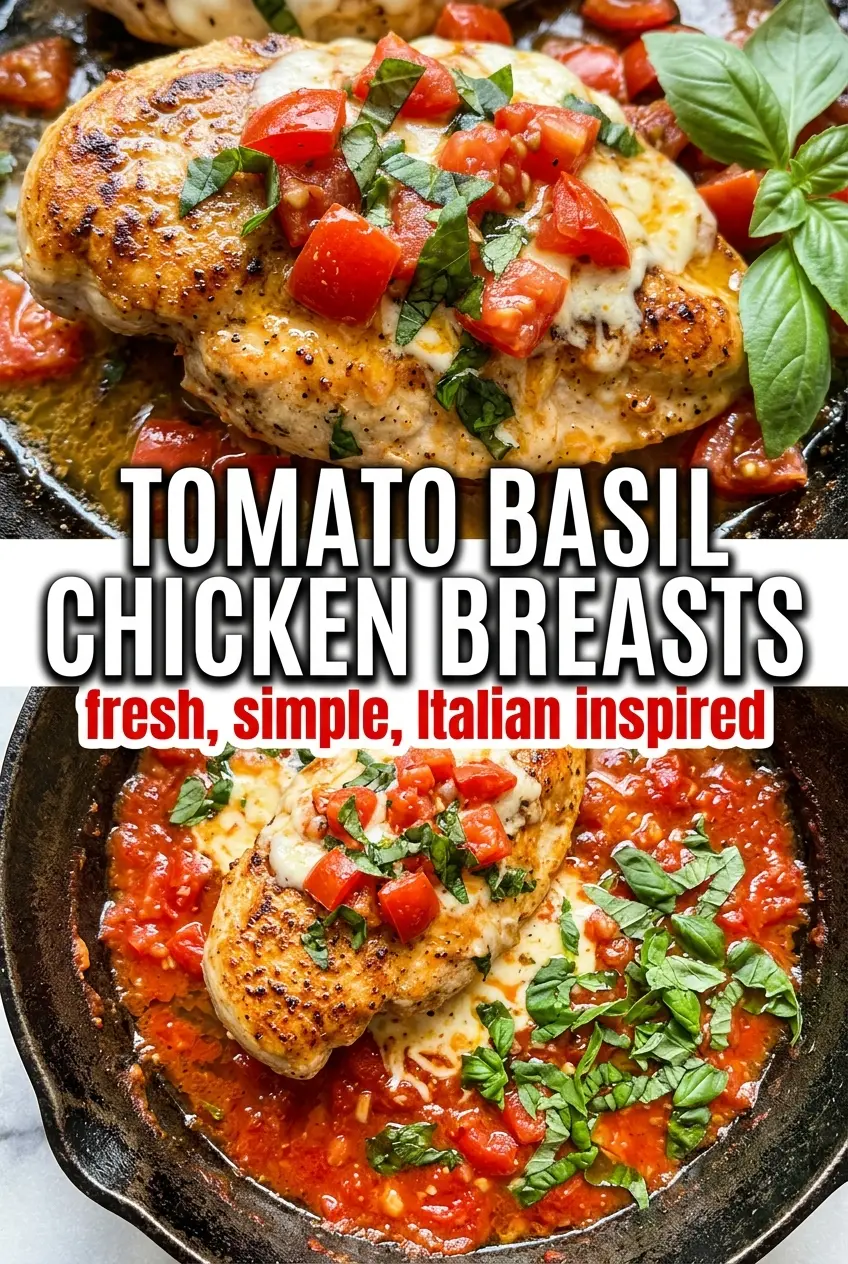
Tomato Basil Chicken Breasts
Ingredients
Equipment
Method
- Pat the chicken dry and season both sides with salt, pepper, garlic powder, and Italian seasoning to taste. Heat olive oil in a large cast iron skillet over medium-high until shimmering.
- Place the chicken in the skillet and sear for 5-6 minutes per side until golden. Cook until the internal temperature reaches 165°F, then remove the chicken to a plate.
- Reduce heat slightly and cook the minced garlic in the same pan for 30 seconds, stirring until fragrant. Avoid browning the garlic.
- Add the halved cherry tomatoes and cook for 3-4 minutes, stirring, until they burst and release their juices. Keep the sauce bubbling gently.
- Pour in the white wine (or chicken broth) and let it bubble for 1 minute, scraping up browned bits. Stir in dried Italian seasoning, red pepper flakes, and balsamic vinegar.
- Return the chicken to the pan and spoon the tomato sauce over each breast. Simmer for 2 minutes until the chicken is warmed through.
- Scatter fresh basil over the top, reserving some whole leaves for garnish. Finish with shaved Parmesan and a drizzle of extra olive oil before serving.