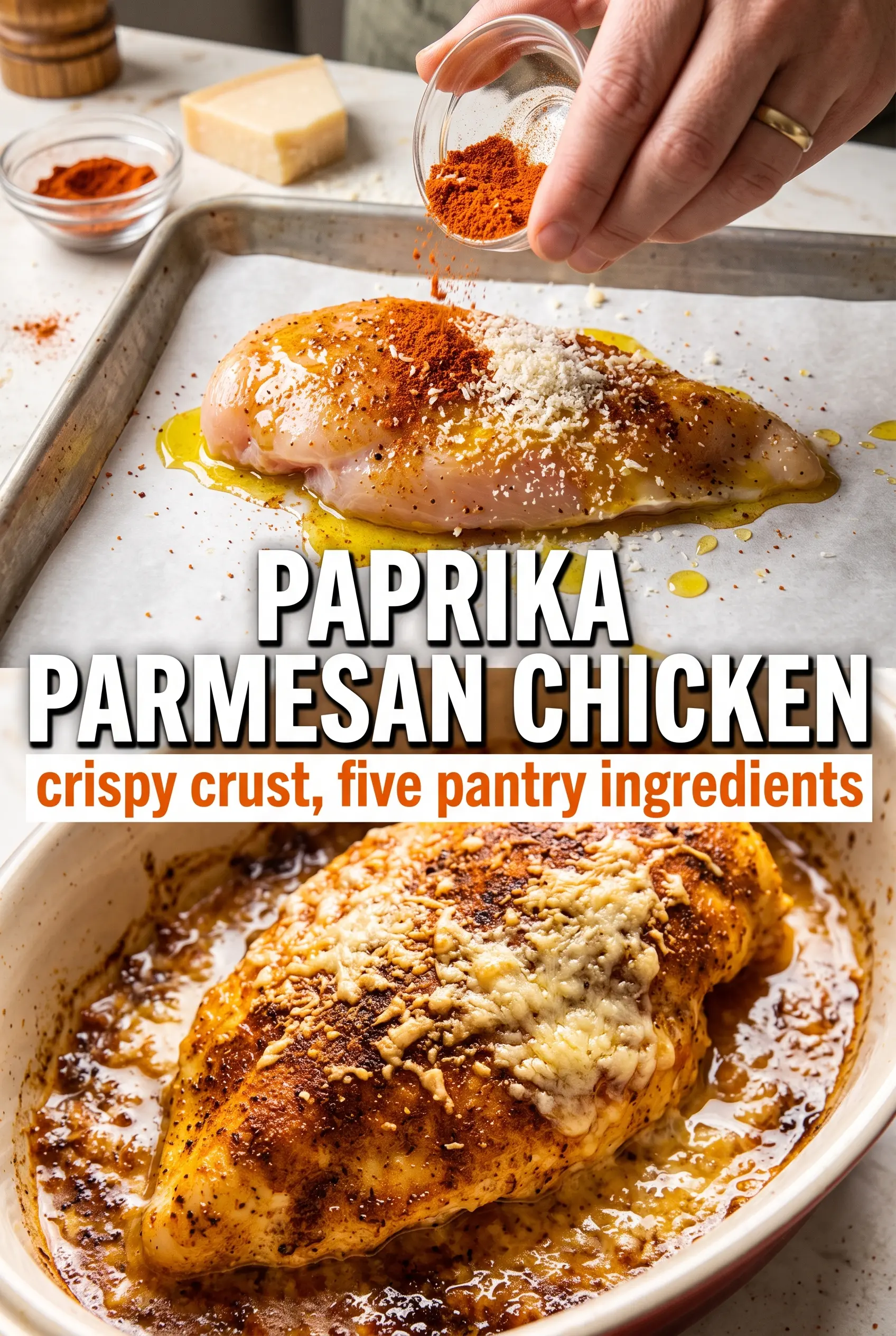
Golden paprika Parmesan chicken comes out of the oven with a crust that looks almost lacquered: deeply orange-red, crisp at the edges, and salty enough to taste good before you even add the lemon. The chicken stays juicy because the coating is thin and the heat is high, so you get color and crunch without drying out the meat. It’s the kind of dinner that looks like you put in a lot more effort than you actually did.
The trick is building flavor in layers. Smoked paprika brings warmth and color, sweet paprika softens the edge, and the Parmesan-panko mixture gives you a crust that actually browns instead of turning soggy. Brushing the chicken with seasoned oil first helps the coating stick and keeps the top from tasting dusty or dry. Freshly grated Parmesan matters here because the pre-shredded kind won’t melt and crisp the same way.
Below you’ll find the small details that make this work: how to keep the crust attached, what to watch for in the final minutes of baking, and the best swaps if you need to work with what’s already in your kitchen.
The crust got this gorgeous crackly finish and the chicken stayed juicy all the way through. I used the lemon at the end like you suggested and it made the paprika and Parmesan taste even better.
Save this baked paprika Parmesan chicken for nights when you want a crackly, bronzed crust and dinner on the table fast.
The Difference Between a Crisp Crust and a Soggy One
This chicken works because the coating is built to brown instead of steam. A lot of baked breaded chicken goes soft when the crumbs sit in too much moisture or the oven runs too low. Here, the oil and paprika are brushed on first, which helps the Parmesan-panko cling and gives the top a chance to toast before the chicken releases too much juice.
The other thing that matters is thickness. If one breast is much thicker than the others, it’ll still be pale in the center when the thinner pieces are done. Pound the chicken lightly or slice extra-thick pieces in half so everything finishes in the same window and the crust doesn’t overbake while you wait.
- Smoked paprika — This is the ingredient that gives the crust its bold color and that gentle woodsy heat. Standard paprika will work in a pinch, but you’ll lose some of the depth that makes the crust taste bigger than the ingredient list.
- Freshly grated Parmesan — Pre-shredded Parmesan often contains anti-caking agents, which can keep it from melting and crisping properly. Grate it yourself for the best browning and the cleanest salty finish.
- Panko breadcrumbs — Panko keeps the crust light and crunchy instead of dense. Regular breadcrumbs work, but the coating will be tighter and less crisp.
- Olive oil — This carries the spices and helps the coating adhere to the chicken. You need enough to moisten the surface; if the chicken looks dry after brushing, the crust won’t grab evenly.
Building the Coating So It Stays Put
Mix the Seasoned Oil First
Stir the olive oil with the paprika, garlic powder, onion powder, salt, and pepper until the mixture looks evenly brick-red. That step matters because dry spice spots can burn, while an even coating gives the chicken a uniform color. Brush it over every exposed side of the chicken so the crust has something to cling to. If the surface still looks patchy, add a little more oil rather than piling on dry seasoning.
Press the Crust, Don’t Sprinkle It
Combine the Parmesan and panko, then press the mixture firmly onto the oiled tops of the chicken breasts. A gentle press helps the crumbs sink into the oil and hold through baking. If you just scatter it on, the crust falls off when you move the pan. Leave the bottom bare so the chicken can sit cleanly on the parchment and the top stays the star.
Bake Hot Until the Top Turns Deep Red-Brown
Slide the tray into a 425°F oven and bake until the crust looks golden-red and the chicken reaches 165°F in the center. The high heat is what gives you the crackly edge and keeps the coating from going limp. If the tops color too quickly before the middle is done, tent the pan loosely with foil for the last few minutes. Let the chicken rest a couple of minutes before serving so the juices settle back into the meat.
Make It Gluten-Free
Swap the panko for gluten-free panko or crushed gluten-free crackers. You’ll still get good crunch, but the texture may be a little more delicate, so press the coating on firmly and avoid moving the chicken around once it’s on the pan.
Dairy-Free Version
Use nutritional yeast in place of the Parmesan and add a pinch of extra salt. You’ll lose some of the sharp, nutty bite, but the coating still turns savory and crisp, especially with the smoked paprika doing the heavy lifting.
Use Chicken Thighs Instead
Boneless skinless thighs work well if you want juicier meat. They usually need a few extra minutes in the oven, and the crust may not look quite as tall because thighs are thinner, but the flavor is excellent and the chicken stays tender.
Storage and Reheating
- Refrigerator: Store leftovers in an airtight container for up to 3 days. The crust softens a bit, but the chicken stays flavorful.
- Freezer: It freezes fine, though the crust won’t stay fully crisp. Wrap tightly and freeze for up to 2 months, then thaw in the fridge before reheating.
- Reheating: Reheat on a baking sheet in a 375°F oven until warmed through. The microwave will make the coating soggy, which is the fastest way to lose the texture that makes this dish worth making.
Questions I Get Asked About This Recipe
Baked Paprika Parmesan Chicken
Ingredients
Equipment
Method
- Preheat oven to 425°F and line a sheet pan with parchment for easy cleanup.
- Mix olive oil with smoked paprika, sweet paprika, garlic powder, onion powder, salt, and pepper until evenly combined.
- Brush the paprika oil generously over both sides of each chicken breast so it’s well coated.
- Combine Parmesan and panko, then press firmly onto the oiled chicken tops so the crust adheres.
- Bake for 22-25 minutes at 425°F until the crust is golden-red and caramelized and the internal temperature reaches 165°F.
- Garnish with fresh parsley and serve with lemon wedges for bright contrast.